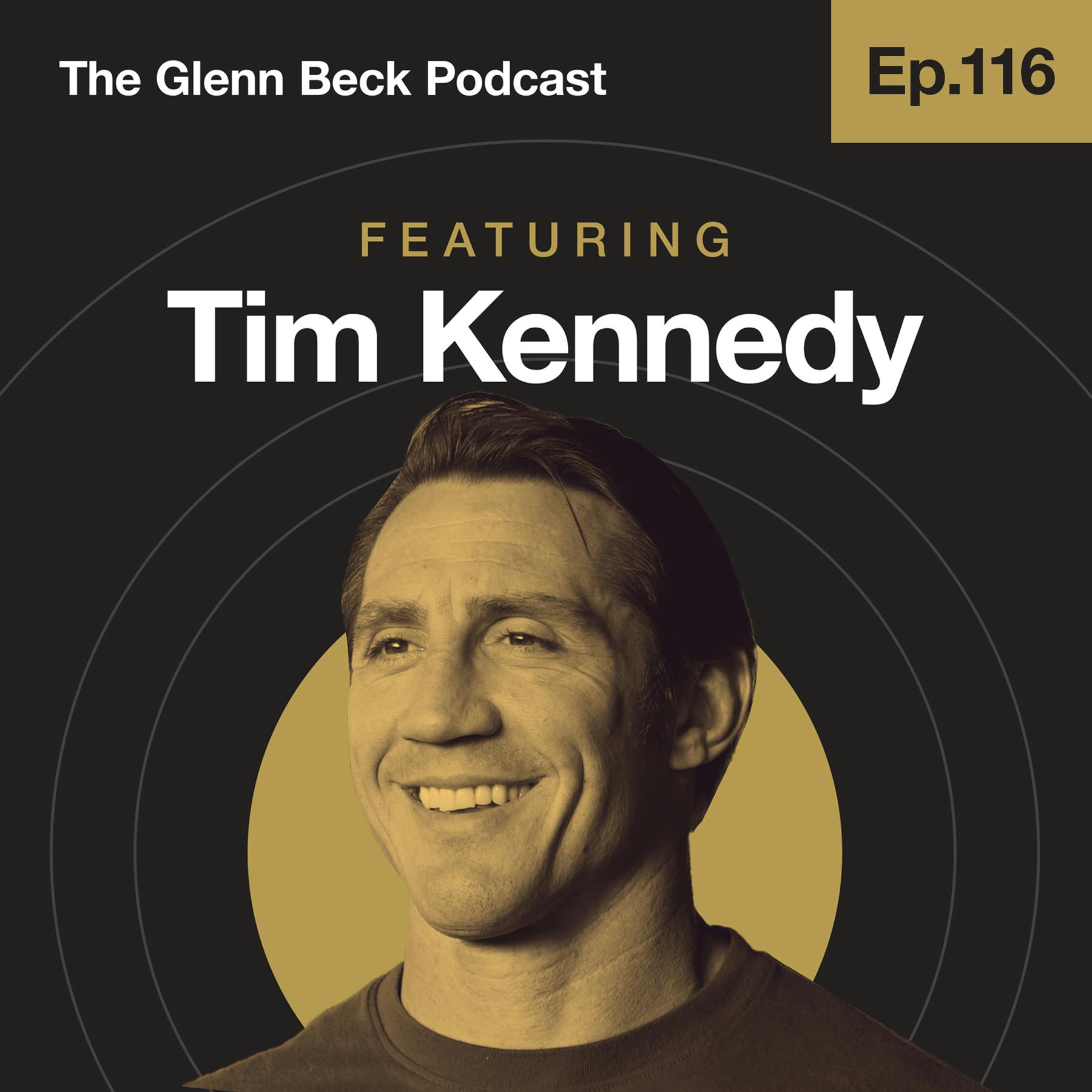
Ep 116 | Why Vets DEFIED the Taliban in INSANE Rescue Mission | Tim Kennedy | The Glenn Beck Podcast
Tim Kennedy got a call about Afghanistan: “We have a few hundred orphan girls. They’re about to be executed. Can you come help us?” Without hesitation, he and three other special operations veterans were soon on the ground in Kabul saving lives. Tim joins Glenn to tell this incredible story, the truth about the Taliban and ISIS-K, what he saw at the Kabul airport on the day of the suicide bombings, and why “this is not how wars are won.” But that’s just the latest chapter of this real-life Captain America’s life. On top of Tim’s 17 years of military experience, he’s also a decorated MMA fighter, teaches self-defense, owns seven businesses, and loves Jesus, and Joe Rogan loves having him on his podcast. Tim and Glenn discuss all this, along with COVID-19, “fatphobia,” the struggle with China, and the future for women and girls in Afghanistan.
This Week’s Sponsors:
AR500 Armor. Plan now for how to protect yourself and your family. Get yourself the body armor we trust from AR500 Armor. Go to https://AR500ARMOR.com/BECK to see this package, and use code “BECK” for 20% OFF anything else in their entire store.
Learn more about your ad choices. Visit megaphone.fm/adchoices
Available Results
Generated results are saved to your library for reuse and search.
Choose Template
Pick the result you want. You can review provider and model before generating.
A concise first-pass summary for understanding the episode quickly.
A comprehensive, source-grounded extraction of the reusable knowledge in an episode.
A comprehensive extraction focused on opportunities, strategy, markets, and company building.
Explicit actions, next steps, habits, recommendations, and things to avoid.
Repeatable methods, frameworks, mental models, processes, and systems.
A dedicated inventory of concrete resources named in the episode.
A concise first-pass summary for understanding the episode quickly.
A detailed readable summary organized by chapter or topic.
A navigable map of subjects, topic flow, and suggested chapters.
A comprehensive, source-grounded extraction of the reusable knowledge in an episode.
Reusable atomic knowledge units extracted from the episode.
A comprehensive extraction focused on health practices, protocols, claims, and safety caveats.
A comprehensive extraction focused on opportunities, strategy, markets, and company building.
Explicit actions, next steps, habits, recommendations, and things to avoid.
A dedicated inventory of concrete resources named in the episode.
A dedicated analysis of warnings, limitations, trade-offs, weak evidence, and uncertainty.
A concise first-pass summary for understanding the episode quickly.
A detailed readable summary organized by chapter or topic.
A navigable map of subjects, topic flow, and suggested chapters.
A comprehensive, source-grounded extraction of the reusable knowledge in an episode.
Reusable atomic knowledge units extracted from the episode.
A comprehensive extraction focused on health practices, protocols, claims, and safety caveats.
A comprehensive extraction focused on opportunities, strategy, markets, and company building.
Scientific findings, mechanisms, studies, hypotheses, and the limits of the evidence discussed.
Technologies, AI models, technical methods, capabilities, limitations, and adoption implications.
Investment theses, assets, catalysts, valuation reasoning, time horizons, and risks.
Chronologies, actors, causes, consequences, turning points, and competing historical interpretations.
Policies, proposals, stakeholders, arguments, implementation constraints, and predicted effects.
Career paths, skills, hiring signals, workplace decisions, transitions, and limitations of the advice.
Behavioral mechanisms, biases, motivation, habits, emotions, interventions, and evidence limitations.
Economic mechanisms, incentives, indicators, market structure, forecasts, and uncertainty.
Leadership principles, team systems, organizational design, culture, feedback, and failure modes.
Audience, positioning, messaging, acquisition, retention, experiments, metrics, and failed approaches.
Teaching methods, learning strategies, practice, feedback, assessment, and effectiveness evidence.
Theses, premises, arguments, objections, values, thought experiments, and unresolved questions.
Communication patterns, conflict, boundaries, expectations, repair methods, and contextual limitations.
Books, papers, authors, courses, and other learning resources mentioned in the episode.
Repeatable methods, frameworks, mental models, processes, and systems.
Explicit actions, next steps, habits, recommendations, and things to avoid.
Memorable statements and important claims with attribution and source context.
A dedicated inventory of concrete resources named in the episode.
A dedicated analysis of warnings, limitations, trade-offs, weak evidence, and uncertainty.