How To Biohack The Ultimate Healthy Home: Part 2
In the podcast episode How To Biohack The Ultimate Healthy Home: Part 1, Jack Kruse taught us about microwaves, EMF's, infrared lighting, and much more...
...and in Part 2, which you can now listen to below or download for later, architect Stephanie Horowitz fills us in on the best design concepts for a new home, ways that the air, lighting and flooring in your home can affect your health, and how to fix an old home to make it healthier.
During this audio, you'll discover:
-Why a brand new home can still destroy your health and negatively affect your family...
-How your home’s lighting affects your health, and specific lighting strategies to increase your exposure to natural light...
-How the airflow in your home affects your health, and the best air filters to use...
-Exactly what to do about mold, mildew and other mycotoxins in your home...
-Why carpet is one of the worst things you could have in your home...
-How to screen for volatile organic compounds (VOC's) and formaldehyde...
-Why you need to be worried if you have an attached garage, and what you can do about it...
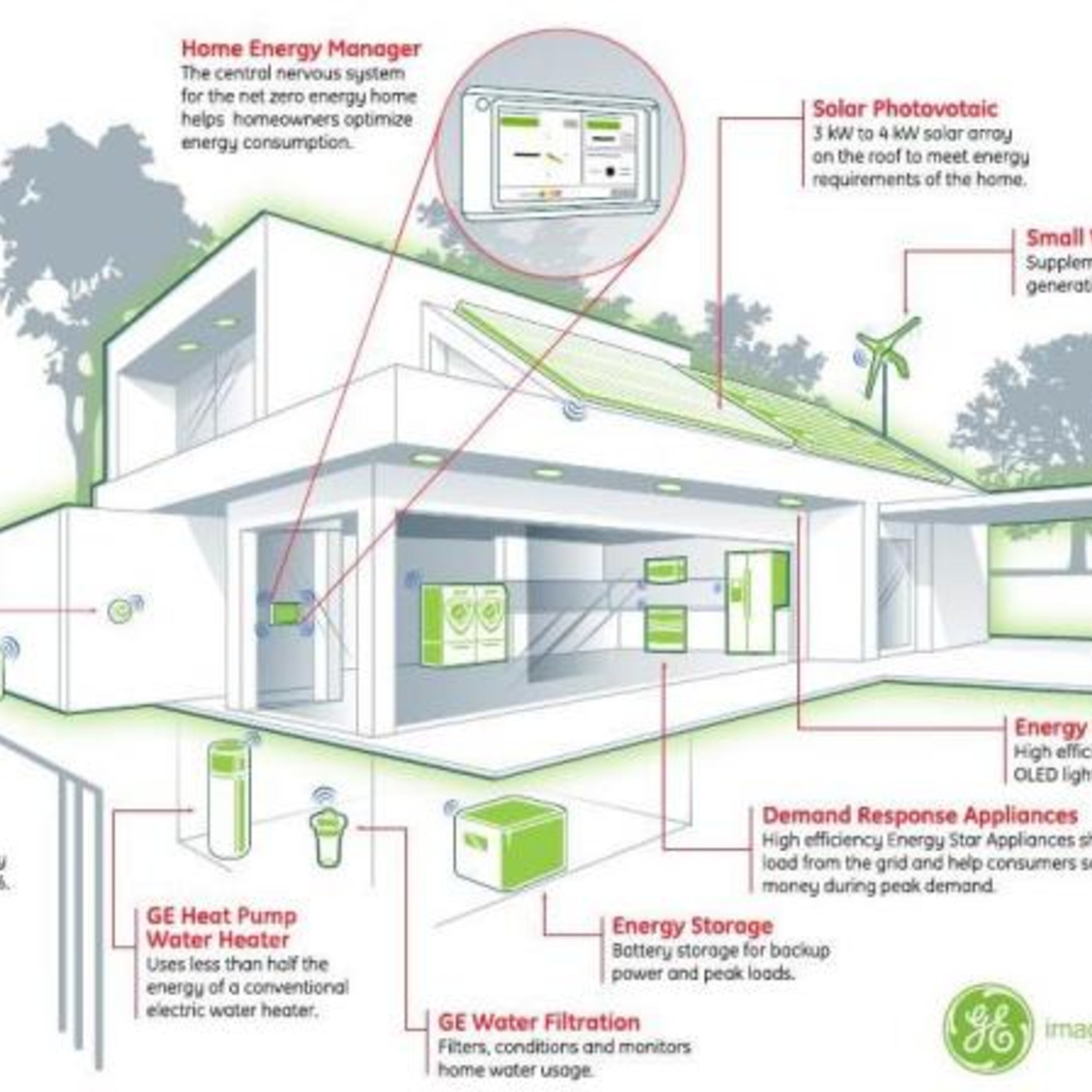
-How you can use alternate energy sources to save money on your home...
-Why a free energy audit is one of the best things you can do this year...
Resources Stephanie and I discuss during this episode:
-Stephanie's Ultra Low Energy Lifestyle TedX talk
-Black out shades for the bedroom
-Green Label plus carpets and flooring
-Environmental Working Group (EWG) website
-Building A Healthy House (free .pdf)
-Free energy audits from Energy.gov
Leave your questions, comments and feedback at BenGreenfieldFitness.com, and be sure to tune into "Biohacking A Healthy Home: Part 3" podcast coming up next month with Bulletproof Exec Dave Asprey!
See omnystudio.com/listener for privacy information.
Available Results
Generated results are saved to your library for reuse and search.
Choose Template
Pick the result you want. You can review provider and model before generating.
A concise first-pass summary for understanding the episode quickly.
A comprehensive, source-grounded extraction of the reusable knowledge in an episode.
A comprehensive extraction focused on health practices, protocols, claims, and safety caveats.
A dedicated analysis of warnings, limitations, trade-offs, weak evidence, and uncertainty.
Repeatable methods, frameworks, mental models, processes, and systems.
Technologies, AI models, technical methods, capabilities, limitations, and adoption implications.
A concise first-pass summary for understanding the episode quickly.
A detailed readable summary organized by chapter or topic.
A navigable map of subjects, topic flow, and suggested chapters.
A comprehensive, source-grounded extraction of the reusable knowledge in an episode.
Reusable atomic knowledge units extracted from the episode.
A comprehensive extraction focused on health practices, protocols, claims, and safety caveats.
A comprehensive extraction focused on opportunities, strategy, markets, and company building.
Explicit actions, next steps, habits, recommendations, and things to avoid.
A dedicated inventory of concrete resources named in the episode.
A dedicated analysis of warnings, limitations, trade-offs, weak evidence, and uncertainty.
A concise first-pass summary for understanding the episode quickly.
A detailed readable summary organized by chapter or topic.
A navigable map of subjects, topic flow, and suggested chapters.
A comprehensive, source-grounded extraction of the reusable knowledge in an episode.
Reusable atomic knowledge units extracted from the episode.
A comprehensive extraction focused on health practices, protocols, claims, and safety caveats.
A comprehensive extraction focused on opportunities, strategy, markets, and company building.
Scientific findings, mechanisms, studies, hypotheses, and the limits of the evidence discussed.
Technologies, AI models, technical methods, capabilities, limitations, and adoption implications.
Investment theses, assets, catalysts, valuation reasoning, time horizons, and risks.
Chronologies, actors, causes, consequences, turning points, and competing historical interpretations.
Policies, proposals, stakeholders, arguments, implementation constraints, and predicted effects.
Career paths, skills, hiring signals, workplace decisions, transitions, and limitations of the advice.
Behavioral mechanisms, biases, motivation, habits, emotions, interventions, and evidence limitations.
Economic mechanisms, incentives, indicators, market structure, forecasts, and uncertainty.
Leadership principles, team systems, organizational design, culture, feedback, and failure modes.
Audience, positioning, messaging, acquisition, retention, experiments, metrics, and failed approaches.
Teaching methods, learning strategies, practice, feedback, assessment, and effectiveness evidence.
Theses, premises, arguments, objections, values, thought experiments, and unresolved questions.
Communication patterns, conflict, boundaries, expectations, repair methods, and contextual limitations.
Books, papers, authors, courses, and other learning resources mentioned in the episode.
Repeatable methods, frameworks, mental models, processes, and systems.
Explicit actions, next steps, habits, recommendations, and things to avoid.
Memorable statements and important claims with attribution and source context.
A dedicated inventory of concrete resources named in the episode.
A dedicated analysis of warnings, limitations, trade-offs, weak evidence, and uncertainty.