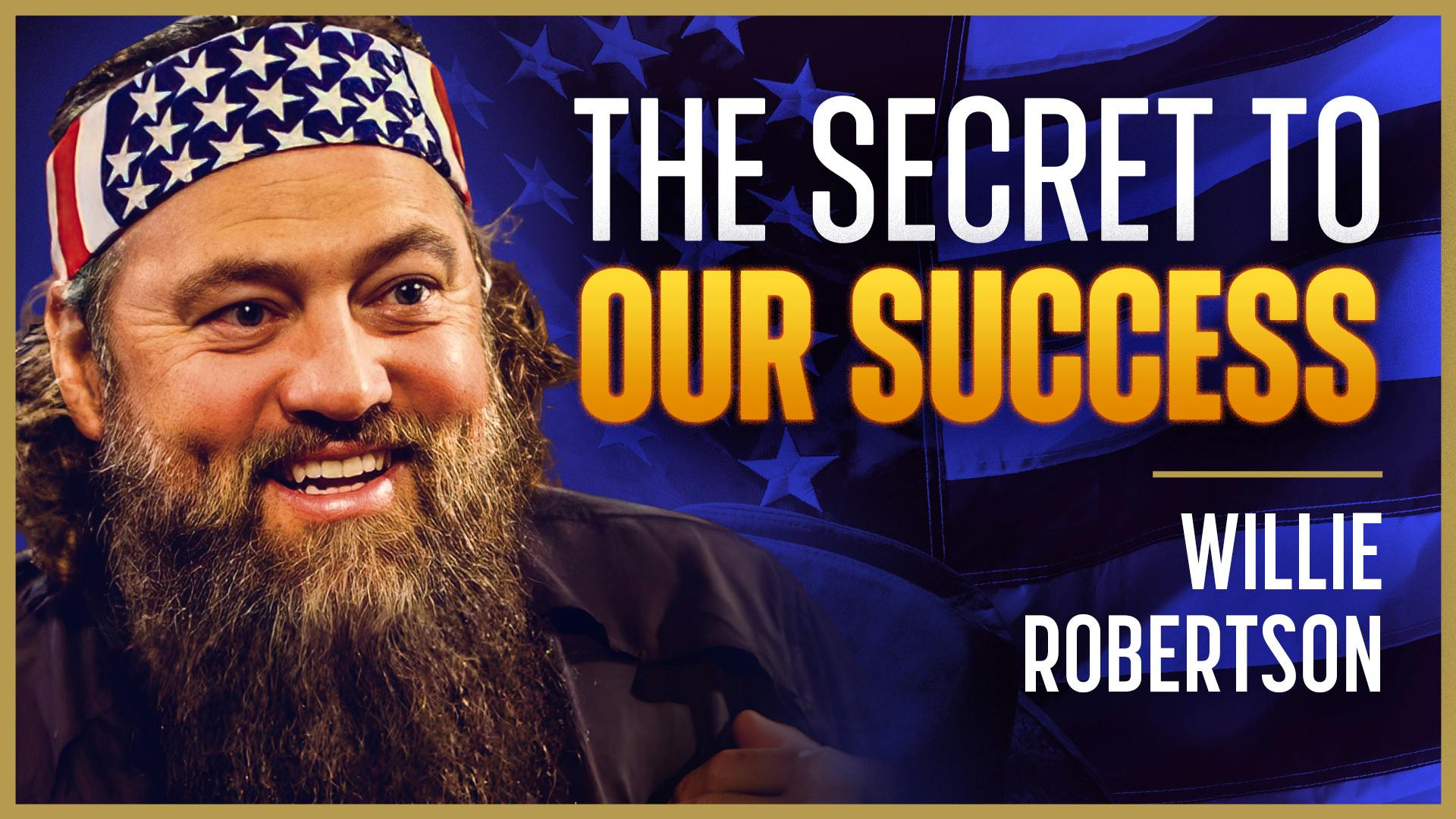
Ep 221 | Willie Robertson's Wild Ride from Worm Farms to 'Duck Dynasty' Fame | The Glenn Beck Podcast
Willie Robertson, star of "Duck Dynasty," reflects on his journey from Italy to running Duck Commander. In Florence, he gained an appreciation for art and culture, but you'll never believe what his actual college degree was. His entrepreneurial spirit began early with Willie’s Worms. Influenced by his father, Phil, and supported by his wife, Korie, he embraced the idea of a reality show to spread the gospel. Discussing his new book, "Gospeler," Willie emphasizes the importance of active discipleship and connecting with others to spread faith, showcasing a story of hope, faith, and authenticity. In this episode, Willie shares the lessons he learned about business, the impact of family, and the importance of stepping out of comfort zones to make lasting connections. His journey from early entrepreneurial ventures to leading a multimillion-dollar hunting and outdoor business highlights the significance of resilience and vision. He discusses how his family’s authenticity, faith, and humor made "Duck Dynasty" a hit and stresses the need for believers to actively engage and share their faith with others. He also discusses the real-life situations that led to the hit movie “The Blind,” a biopic of patriarch Phil Robertson.
Sponsors:
Relief Factor
See how Relief Factor can help you get out of pain. The three-week quick start is only $19.95 and comes with Relief Factor’s “feel better or your money back” guarantee. Visit https://www.relieffactor.com or call 1-800-4-RELIEF.
Jase Medical
Get your personalized emergency medical kit today, use code BECK at checkout. Visit https://jasemedical.com/
Learn more about your ad choices. Visit megaphone.fm/adchoices
Available Results
Generated results are saved to your library for reuse and search.
Choose Template
Pick the result you want. You can review provider and model before generating.
A concise first-pass summary for understanding the episode quickly.
A comprehensive, source-grounded extraction of the reusable knowledge in an episode.
A comprehensive extraction focused on opportunities, strategy, markets, and company building.
Explicit actions, next steps, habits, recommendations, and things to avoid.
Repeatable methods, frameworks, mental models, processes, and systems.
A dedicated inventory of concrete resources named in the episode.
A concise first-pass summary for understanding the episode quickly.
A detailed readable summary organized by chapter or topic.
A navigable map of subjects, topic flow, and suggested chapters.
A comprehensive, source-grounded extraction of the reusable knowledge in an episode.
Reusable atomic knowledge units extracted from the episode.
A comprehensive extraction focused on health practices, protocols, claims, and safety caveats.
A comprehensive extraction focused on opportunities, strategy, markets, and company building.
Explicit actions, next steps, habits, recommendations, and things to avoid.
A dedicated inventory of concrete resources named in the episode.
A dedicated analysis of warnings, limitations, trade-offs, weak evidence, and uncertainty.
A concise first-pass summary for understanding the episode quickly.
A detailed readable summary organized by chapter or topic.
A navigable map of subjects, topic flow, and suggested chapters.
A comprehensive, source-grounded extraction of the reusable knowledge in an episode.
Reusable atomic knowledge units extracted from the episode.
A comprehensive extraction focused on health practices, protocols, claims, and safety caveats.
A comprehensive extraction focused on opportunities, strategy, markets, and company building.
Scientific findings, mechanisms, studies, hypotheses, and the limits of the evidence discussed.
Technologies, AI models, technical methods, capabilities, limitations, and adoption implications.
Investment theses, assets, catalysts, valuation reasoning, time horizons, and risks.
Chronologies, actors, causes, consequences, turning points, and competing historical interpretations.
Policies, proposals, stakeholders, arguments, implementation constraints, and predicted effects.
Career paths, skills, hiring signals, workplace decisions, transitions, and limitations of the advice.
Behavioral mechanisms, biases, motivation, habits, emotions, interventions, and evidence limitations.
Economic mechanisms, incentives, indicators, market structure, forecasts, and uncertainty.
Leadership principles, team systems, organizational design, culture, feedback, and failure modes.
Audience, positioning, messaging, acquisition, retention, experiments, metrics, and failed approaches.
Teaching methods, learning strategies, practice, feedback, assessment, and effectiveness evidence.
Theses, premises, arguments, objections, values, thought experiments, and unresolved questions.
Communication patterns, conflict, boundaries, expectations, repair methods, and contextual limitations.
Books, papers, authors, courses, and other learning resources mentioned in the episode.
Repeatable methods, frameworks, mental models, processes, and systems.
Explicit actions, next steps, habits, recommendations, and things to avoid.
Memorable statements and important claims with attribution and source context.
A dedicated inventory of concrete resources named in the episode.
A dedicated analysis of warnings, limitations, trade-offs, weak evidence, and uncertainty.