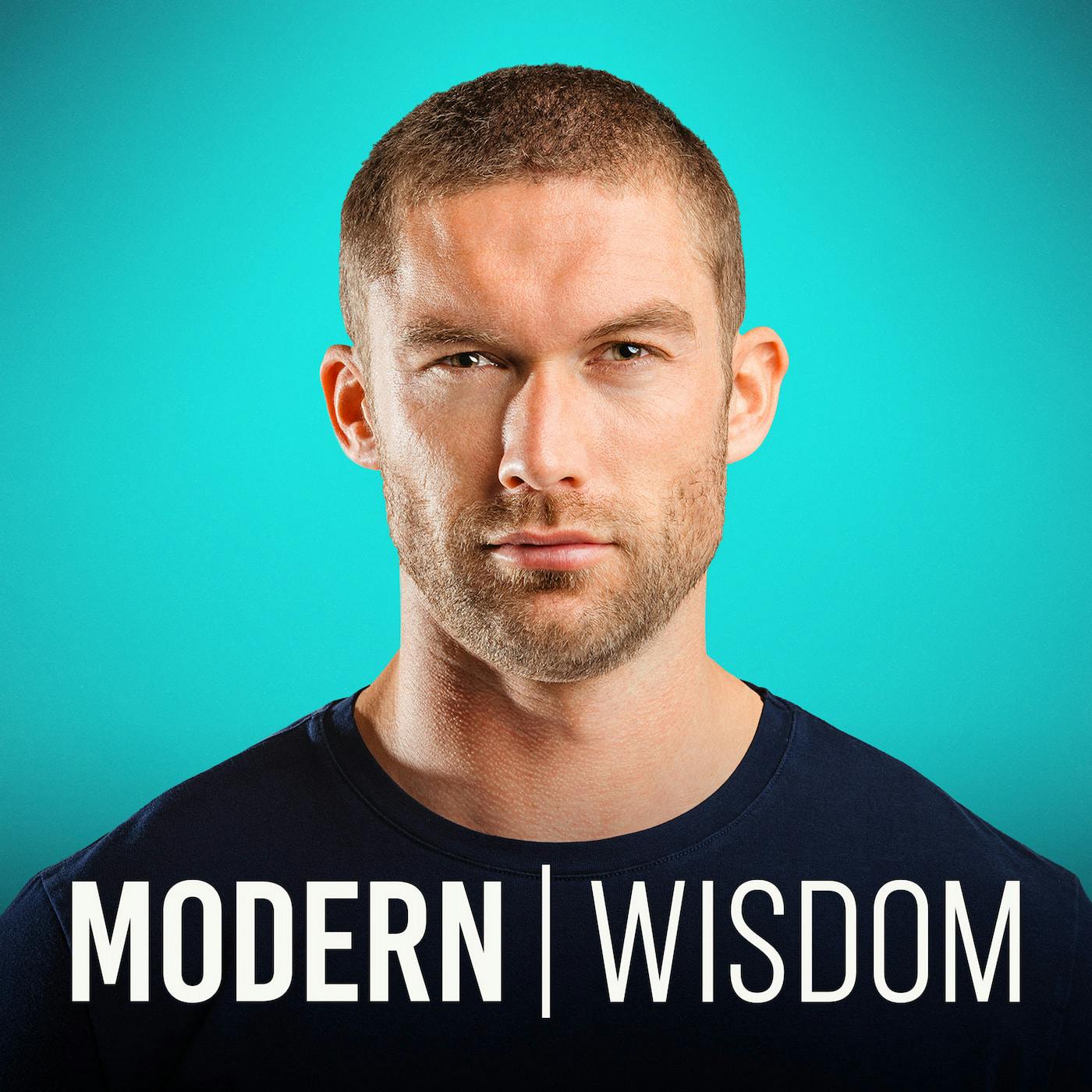
Why Are Young Men Feeling So Lost? - Mike Thurston - #607
Mike Thurston is a podcaster, YouTuber and a fitness model.
Me and Mike went to university together 15 years ago. Even though we were odd, awkward creatures, there was no pressure to get our life together. In 2023, it seems like there is much more pressure on both men and women to sort it out. What's changed, and why is life more confusing than ever before?
Expect to learn why Mike wants Derek from More Plates More Dates to test him for steroids, why going to university wasn't a waste of time, why Mike stopped drinking alcohol, what he thinks about Greg Doucette's Youtube Channel, why women are just as lost as men, the problems of masculinity in the modern world and much more...
Sponsors:
Get 10% discount on all Gymshark’s products at https://bit.ly/sharkwisdom (use code: MW10)
Get 20% discount & free shipping on your Lawnmower 4.0 at https://manscaped.com/modernwisdom (use code MODERNWISDOM)
Get $100 off plus an extra 15% discount on Qualia Mind at https://neurohacker.com/modernwisdom (use code MW15)
Timestamps:
(00:00) Intro (01:30) How Mike Created a Platform Without the Drama (06:20) Would Mike Get Tested by Derek MPMD? (12:50) Will Jesse James Will Burn Out? (19:20) Advice for YouTube Beginners (23:14) Why Are Men Feeling Lost? (33:56) The Essence of True Masculinity (38:00) Spending Time with Andrew Tate (44:17) The Lack of Female Role Models (51:41) Mike’s Relationship with Alcohol (1:01:35) Developing New Skills (1:07:14) Why Logan & Jake Paul Seem Indestructible (1:13:41) What Mike is Doing Next (1:19:01) Where to Find Mike
Extra Stuff:
Follow Mike on Instagram - https://www.instagram.com/mikethurston/
Follow Mike on YouTube - https://www.youtube.com/channel/UCzGLDaTu81nJDtWK10MniGg
Get my free Reading List of 100 books to read before you die → https://chriswillx.com/books/
To support me on Patreon (thank you): https://www.patreon.com/modernwisdom
-
Episodes You Might Enjoy:
This Is How To Master Your Life - David Goggins - #577: lnkfi.re/SN-Goggins
How To Destroy Your Negative Beliefs - Dr Jordan Peterson - #712: lnkfi.re/SN-Peterson
The Secret Tools To Hack Your Brain - Dr Andrew Huberman - #700: lnkfi.re/SN-Huberman
Get in touch.
Instagram: https://www.instagram.com/chriswillx
Twitter: https://www.twitter.com/chriswillx
YouTube: https://www.youtube.com/modernwisdompodcast
Email: https://chriswillx.com/contact/
Learn more about your ad choices. Visit megaphone.fm/adchoices
Available Results
Generated results are saved to your library for reuse and search.
Choose Template
Pick the result you want. You can review provider and model before generating.
A concise first-pass summary for understanding the episode quickly.
A comprehensive, source-grounded extraction of the reusable knowledge in an episode.
A comprehensive extraction focused on health practices, protocols, claims, and safety caveats.
A dedicated analysis of warnings, limitations, trade-offs, weak evidence, and uncertainty.
Repeatable methods, frameworks, mental models, processes, and systems.
Technologies, AI models, technical methods, capabilities, limitations, and adoption implications.
A concise first-pass summary for understanding the episode quickly.
A detailed readable summary organized by chapter or topic.
A navigable map of subjects, topic flow, and suggested chapters.
A comprehensive, source-grounded extraction of the reusable knowledge in an episode.
Reusable atomic knowledge units extracted from the episode.
A comprehensive extraction focused on health practices, protocols, claims, and safety caveats.
A comprehensive extraction focused on opportunities, strategy, markets, and company building.
Explicit actions, next steps, habits, recommendations, and things to avoid.
A dedicated inventory of concrete resources named in the episode.
A dedicated analysis of warnings, limitations, trade-offs, weak evidence, and uncertainty.
A concise first-pass summary for understanding the episode quickly.
A detailed readable summary organized by chapter or topic.
A navigable map of subjects, topic flow, and suggested chapters.
A comprehensive, source-grounded extraction of the reusable knowledge in an episode.
Reusable atomic knowledge units extracted from the episode.
A comprehensive extraction focused on health practices, protocols, claims, and safety caveats.
A comprehensive extraction focused on opportunities, strategy, markets, and company building.
Scientific findings, mechanisms, studies, hypotheses, and the limits of the evidence discussed.
Technologies, AI models, technical methods, capabilities, limitations, and adoption implications.
Investment theses, assets, catalysts, valuation reasoning, time horizons, and risks.
Chronologies, actors, causes, consequences, turning points, and competing historical interpretations.
Policies, proposals, stakeholders, arguments, implementation constraints, and predicted effects.
Career paths, skills, hiring signals, workplace decisions, transitions, and limitations of the advice.
Behavioral mechanisms, biases, motivation, habits, emotions, interventions, and evidence limitations.
Economic mechanisms, incentives, indicators, market structure, forecasts, and uncertainty.
Leadership principles, team systems, organizational design, culture, feedback, and failure modes.
Audience, positioning, messaging, acquisition, retention, experiments, metrics, and failed approaches.
Teaching methods, learning strategies, practice, feedback, assessment, and effectiveness evidence.
Theses, premises, arguments, objections, values, thought experiments, and unresolved questions.
Communication patterns, conflict, boundaries, expectations, repair methods, and contextual limitations.
Books, papers, authors, courses, and other learning resources mentioned in the episode.
Repeatable methods, frameworks, mental models, processes, and systems.
Explicit actions, next steps, habits, recommendations, and things to avoid.
Memorable statements and important claims with attribution and source context.
A dedicated inventory of concrete resources named in the episode.
A dedicated analysis of warnings, limitations, trade-offs, weak evidence, and uncertainty.