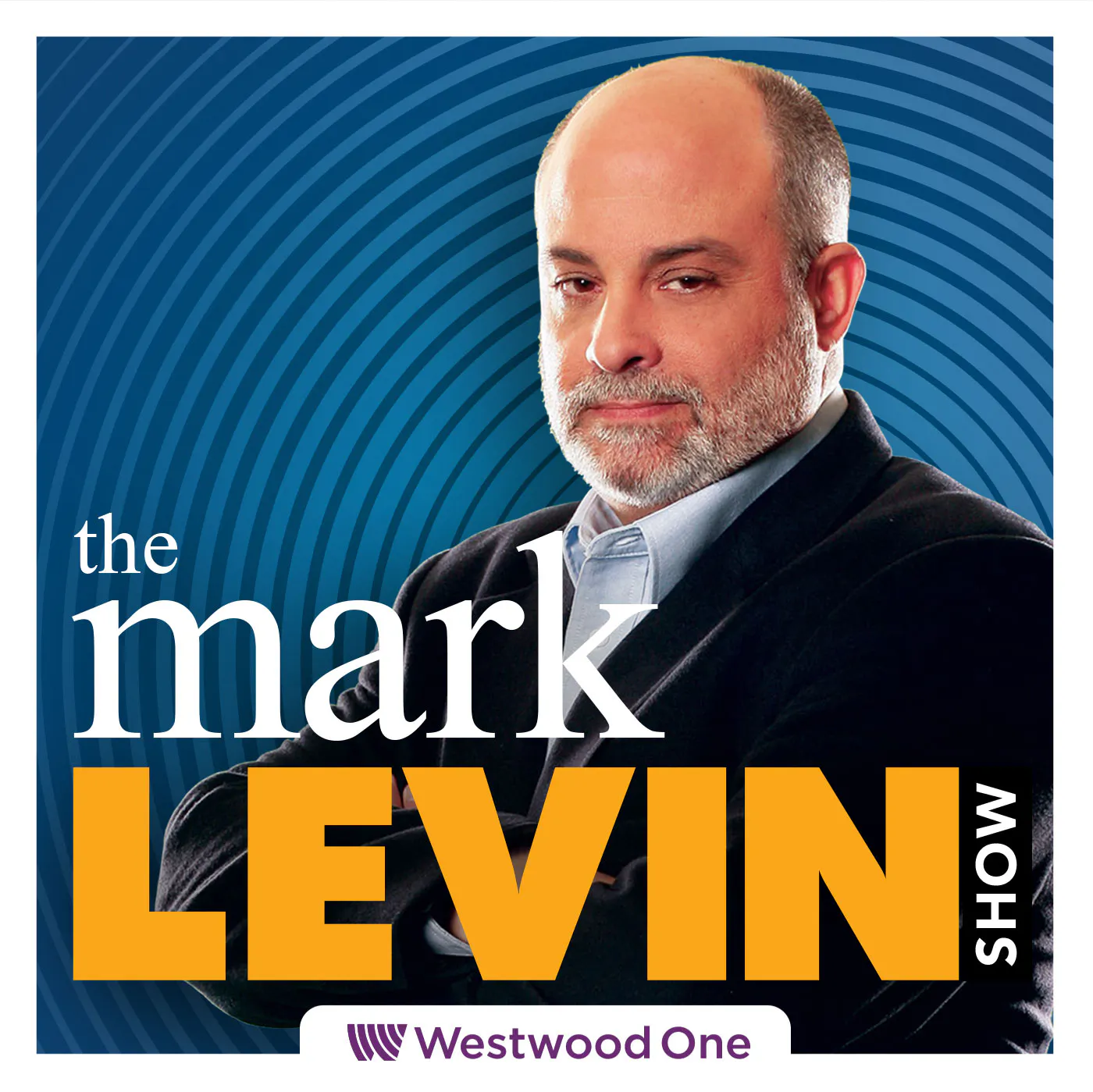
Mark Levin Audio Rewind - 11/19/20
On Thursday's Mark Levin Show, the reporting on the Trump campaign's legal challenges is just as bad as the reporting on the Russia hoax. CNN and MSNBC don't care about the facts at all. America deserves better. There are two types of challenges being brought: Constitutional challenges citing the 14th Amendment's equal protection clause as referenced by SCOTUS in Bush v. Gore; if there's disparate treatment of votes it's unfair. Period. Plus, there are Article II challenges with respect to who has the authority to make election laws. This can have an effect on results states across the country. Secondly, there are fraud allegations and the quantity of fraud is not the test. The Trump team has multiple affidavits and there isn't even another case in history that even comes close to having this many sworn affidavits. The mere fact of fraud lends itself to voter disenfranchisement and the Court can create a remedy to address that. Then, Sen. Tom Cotton calls in to highlight the importance of truth in American history, unlike the revisionist charlatans who wrote the 1619 Project. Cotton also pointed out how dangerous consent decrees are to the republic. Afterward, President Trump defied the odds, while not only following the science on coronavirus but making strides in science with Operation Warp Speed to accelerate the China virus vaccine creation and distribution.
Learn more about your ad choices. Visit podcastchoices.com/adchoices
Available Results
Generated results are saved to your library for reuse and search.
Choose Template
Pick the result you want. You can review provider and model before generating.
A concise first-pass summary for understanding the episode quickly.
A comprehensive, source-grounded extraction of the reusable knowledge in an episode.
Scientific findings, mechanisms, studies, hypotheses, and the limits of the evidence discussed.
A dedicated analysis of warnings, limitations, trade-offs, weak evidence, and uncertainty.
Memorable statements and important claims with attribution and source context.
Technologies, AI models, technical methods, capabilities, limitations, and adoption implications.
A concise first-pass summary for understanding the episode quickly.
A detailed readable summary organized by chapter or topic.
A navigable map of subjects, topic flow, and suggested chapters.
A comprehensive, source-grounded extraction of the reusable knowledge in an episode.
Reusable atomic knowledge units extracted from the episode.
A comprehensive extraction focused on health practices, protocols, claims, and safety caveats.
A comprehensive extraction focused on opportunities, strategy, markets, and company building.
Explicit actions, next steps, habits, recommendations, and things to avoid.
A dedicated inventory of concrete resources named in the episode.
A dedicated analysis of warnings, limitations, trade-offs, weak evidence, and uncertainty.
A concise first-pass summary for understanding the episode quickly.
A detailed readable summary organized by chapter or topic.
A navigable map of subjects, topic flow, and suggested chapters.
A comprehensive, source-grounded extraction of the reusable knowledge in an episode.
Reusable atomic knowledge units extracted from the episode.
A comprehensive extraction focused on health practices, protocols, claims, and safety caveats.
A comprehensive extraction focused on opportunities, strategy, markets, and company building.
Scientific findings, mechanisms, studies, hypotheses, and the limits of the evidence discussed.
Technologies, AI models, technical methods, capabilities, limitations, and adoption implications.
Investment theses, assets, catalysts, valuation reasoning, time horizons, and risks.
Chronologies, actors, causes, consequences, turning points, and competing historical interpretations.
Policies, proposals, stakeholders, arguments, implementation constraints, and predicted effects.
Career paths, skills, hiring signals, workplace decisions, transitions, and limitations of the advice.
Behavioral mechanisms, biases, motivation, habits, emotions, interventions, and evidence limitations.
Economic mechanisms, incentives, indicators, market structure, forecasts, and uncertainty.
Leadership principles, team systems, organizational design, culture, feedback, and failure modes.
Audience, positioning, messaging, acquisition, retention, experiments, metrics, and failed approaches.
Teaching methods, learning strategies, practice, feedback, assessment, and effectiveness evidence.
Theses, premises, arguments, objections, values, thought experiments, and unresolved questions.
Communication patterns, conflict, boundaries, expectations, repair methods, and contextual limitations.
Books, papers, authors, courses, and other learning resources mentioned in the episode.
Repeatable methods, frameworks, mental models, processes, and systems.
Explicit actions, next steps, habits, recommendations, and things to avoid.
Memorable statements and important claims with attribution and source context.
A dedicated inventory of concrete resources named in the episode.
A dedicated analysis of warnings, limitations, trade-offs, weak evidence, and uncertainty.