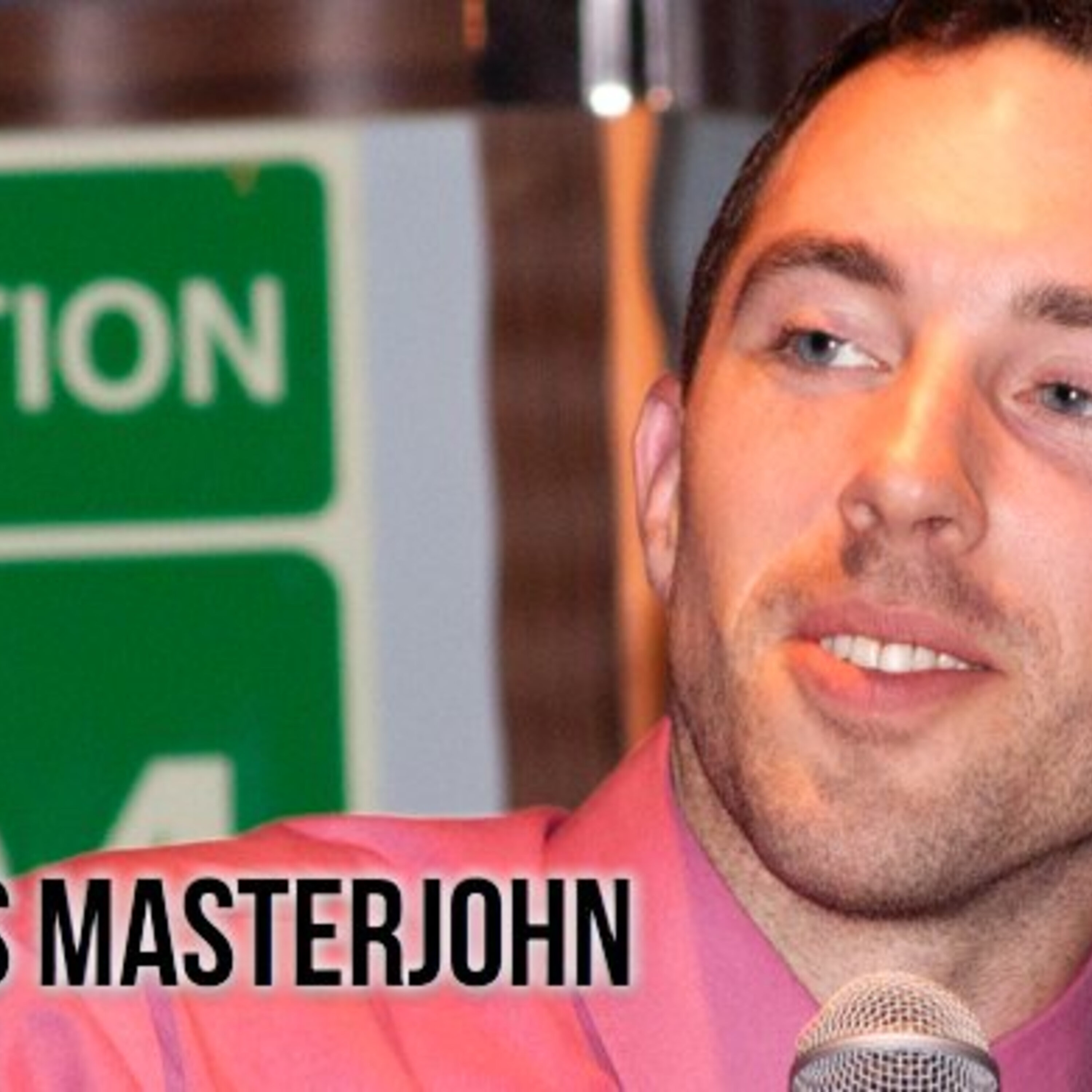
Why Sugar Isn't As Dangerous As You Might Think, How Your Genetics Affect Your Sleep, Liver Toxicity & More With Dr. Chris Masterjohn.
Dr. Chris Masterjohn is one smart dude. You'll understand why when you listen to today's podcast episode, which we recorded face-to-face at PaleoFX in Austin, Texas. Chris earned his PhD in Nutritional Science in 2012 from the University of Connecticut at Storrs, where he studied the role of glutathione and dietary antioxidants in regulating the accumulation of methylglyoxal. He served as a postdoctoral research associate from 2012 to 2014 at the University of Illinois at Urbana-Champaign, where he studied interactions between vitamins A, D and K. He is now Assistant Professor of Health and Nutrition Sciences at Brooklyn College in Brooklyn, NY, where he is continuing his research on fat-soluble vitamins. Chris has authored or co-authored ten peer-reviewed publications. His writes a blog, The Daily Lipid, and produces a podcast by the same name. You can also follow his professional work on Facebook, Twitter, Instagram, YouTube, and Snapchat.
During our discussion, you'll discover:
-The #1 thing that affects your circadian rhythm and ability (or inability) to sleep...
-Why some people are more sensitive to blue light than others, and how you can figure out your own sensitivity to blue light...
-Why Chris plays video games at night... -How much sugar you really need (you'll be surprised at the answer)...
-The best time of day to eat carbohydrates...
-The best time of day to eat amino acids, and why you should use a collagen form if you have protein at night...
-Whether eating liver is really toxic...
-The single most important stretch that Chris does with a broom handle...
-Why advanced glycation end products (AGE's) aren't really the biggest culprit when it comes to aging...
-How ketones can actually cause damage to your body...
-Which nutrition deficiencies affect your body's ability to make melatonin at night...
-And much more!
Resources from this episode: -Chris's post about how to determine your own genetic sensitivity to blue light -Headspace app -My podcast on marine phytoplankton/stem cells -My article on algae -Sleep Cocktail -USWellnessMeats -Glutathione
Do you have questions, comments or feedback for Chris Masterjohn or I? Leave your thoughts at BenGreenfieldFitness.com and one of use will reply!
See omnystudio.com/listener for privacy information.
Available Results
Generated results are saved to your library for reuse and search.
Choose Template
Pick the result you want. You can review provider and model before generating.
A concise first-pass summary for understanding the episode quickly.
A comprehensive, source-grounded extraction of the reusable knowledge in an episode.
A comprehensive extraction focused on health practices, protocols, claims, and safety caveats.
A dedicated analysis of warnings, limitations, trade-offs, weak evidence, and uncertainty.
Repeatable methods, frameworks, mental models, processes, and systems.
Scientific findings, mechanisms, studies, hypotheses, and the limits of the evidence discussed.
A concise first-pass summary for understanding the episode quickly.
A detailed readable summary organized by chapter or topic.
A navigable map of subjects, topic flow, and suggested chapters.
A comprehensive, source-grounded extraction of the reusable knowledge in an episode.
Reusable atomic knowledge units extracted from the episode.
A comprehensive extraction focused on health practices, protocols, claims, and safety caveats.
A comprehensive extraction focused on opportunities, strategy, markets, and company building.
Explicit actions, next steps, habits, recommendations, and things to avoid.
A dedicated inventory of concrete resources named in the episode.
A dedicated analysis of warnings, limitations, trade-offs, weak evidence, and uncertainty.
A concise first-pass summary for understanding the episode quickly.
A detailed readable summary organized by chapter or topic.
A navigable map of subjects, topic flow, and suggested chapters.
A comprehensive, source-grounded extraction of the reusable knowledge in an episode.
Reusable atomic knowledge units extracted from the episode.
A comprehensive extraction focused on health practices, protocols, claims, and safety caveats.
A comprehensive extraction focused on opportunities, strategy, markets, and company building.
Scientific findings, mechanisms, studies, hypotheses, and the limits of the evidence discussed.
Technologies, AI models, technical methods, capabilities, limitations, and adoption implications.
Investment theses, assets, catalysts, valuation reasoning, time horizons, and risks.
Chronologies, actors, causes, consequences, turning points, and competing historical interpretations.
Policies, proposals, stakeholders, arguments, implementation constraints, and predicted effects.
Career paths, skills, hiring signals, workplace decisions, transitions, and limitations of the advice.
Behavioral mechanisms, biases, motivation, habits, emotions, interventions, and evidence limitations.
Economic mechanisms, incentives, indicators, market structure, forecasts, and uncertainty.
Leadership principles, team systems, organizational design, culture, feedback, and failure modes.
Audience, positioning, messaging, acquisition, retention, experiments, metrics, and failed approaches.
Teaching methods, learning strategies, practice, feedback, assessment, and effectiveness evidence.
Theses, premises, arguments, objections, values, thought experiments, and unresolved questions.
Communication patterns, conflict, boundaries, expectations, repair methods, and contextual limitations.
Books, papers, authors, courses, and other learning resources mentioned in the episode.
Repeatable methods, frameworks, mental models, processes, and systems.
Explicit actions, next steps, habits, recommendations, and things to avoid.
Memorable statements and important claims with attribution and source context.
A dedicated inventory of concrete resources named in the episode.
A dedicated analysis of warnings, limitations, trade-offs, weak evidence, and uncertainty.