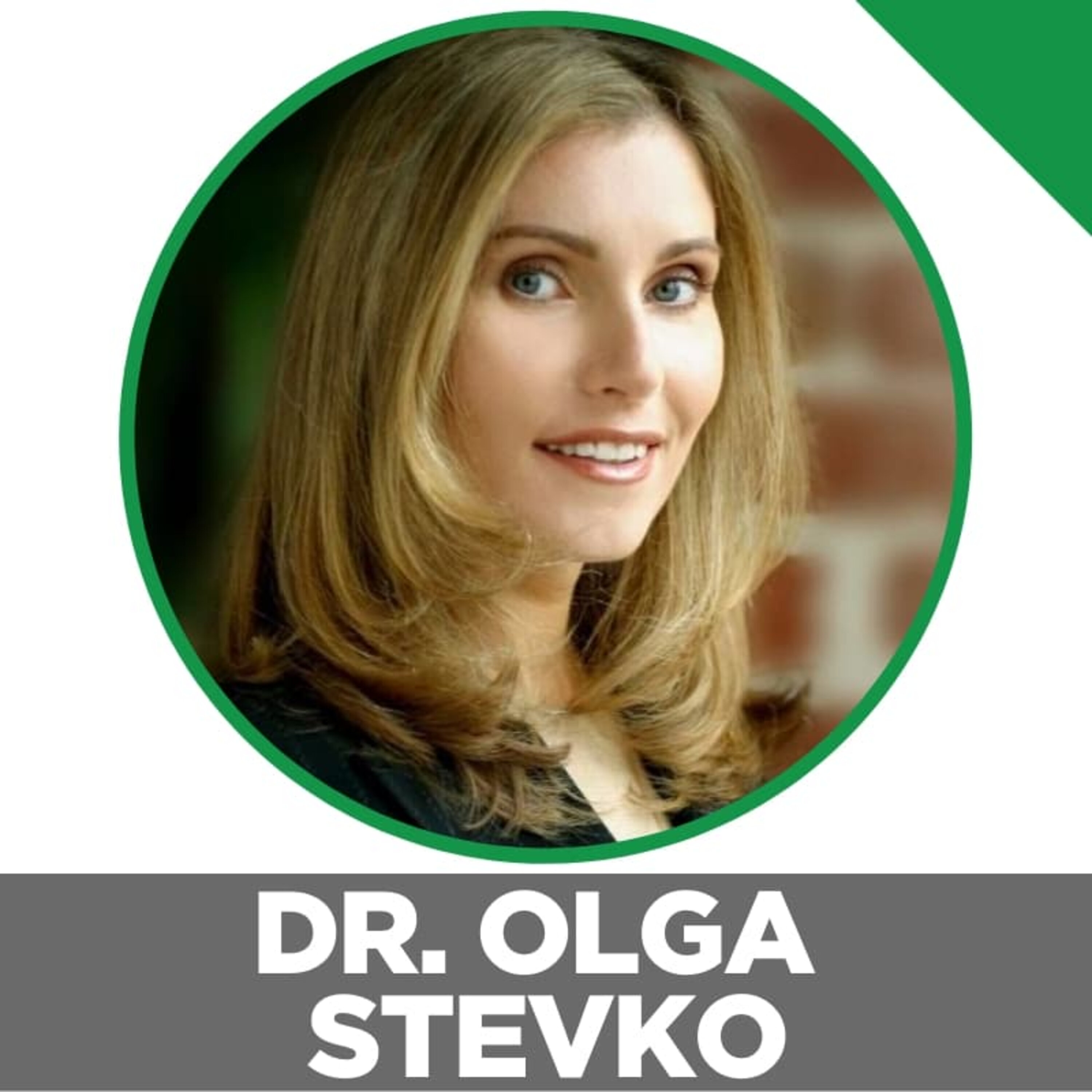
How To Know If You Are Subconsciously In Fight, Flight Or Freeze Mode (And What To Do About It) - An Interview With Dr. Olga Stevko.
bengreenfieldfitness.com/olga
Dr. Olga Stevko is an expert at helping people achieve rapid transformation for professional and personal growth, and a Medical Doctor from Russia. Dr. Stevko’s clients include over 1,000 entrepreneurs, CEOs, executives, celebrities, doctors, and other professionals and their family members. She helps her clients to identify and transform unconscious programs that create issues in various areas of their life, including health, relationships and business.
Dr. Olga Stevko's unique methodology allows her to see patterns how nervous system reacts to everything around with flight, fight and freeze responses. These patterns affect both the mind and body, and how people look, think, feel, react, communicate and behave. These patterns also affect client's aging and longevity.
Through observation (of clients face, posture, quality of voice, verbal non-verbal communication), Dr. Stevko can rapidly assess people's patterns in life and what unconscious programs cause them. After transforming key limiting unconscious programs, Dr. Olga Stevko's clients experience fast and permanent results. Clients have also reported dramatic positive changes in their face, posture, voice, mental processing, communication, behavior and energy.
During our discussion, you'll discover:
-How unconscious shapes life experience and is tied to the nervous system...7:06
-Epigenetic trauma...8:41
-Training to link deductive and observational analysis with neuro-linguistic programming and physiology...9:57
Identifying trauma using neuro-muscular indicators...12:13
-How unconscious programs affect behavior...18:50
-Link between physiological presentation and interpretation of trauma...24:30
-Combination of treatment modalities to treat unconscious mind...29:30
-Piecing together evidence to affect physical change...41:48
-Analysis of Ben’s physiological indicators of psychological profile...46:36
-Analysis of Ben’s drawing as psychological indicator...51:37
-Indications of multi-tasking proficiency and efficiency...55:20
-FOMO and scarcity versus abundance...1:00:19
-Affecting behavior change...1:01:02
-Being guarded and reserving trust...1:03:50
-Chasing challenges and the sense of achievement...1:08:36
-Dr. Olga Stevko individual and group services, including audio and video resources...1:14:12
-Psycho-immunology...1:15:19
-High blood-pressure and hypertension...1:16:42
Episode sponsors: Kion, Organifi, Water and Wellness, Pique Tea
bengreenfieldfitness.com/olga
See omnystudio.com/listener for privacy information.
Available Results
Generated results are saved to your library for reuse and search.
Choose Template
Pick the result you want. You can review provider and model before generating.
A concise first-pass summary for understanding the episode quickly.
A comprehensive, source-grounded extraction of the reusable knowledge in an episode.
A comprehensive extraction focused on health practices, protocols, claims, and safety caveats.
A dedicated analysis of warnings, limitations, trade-offs, weak evidence, and uncertainty.
Repeatable methods, frameworks, mental models, processes, and systems.
A comprehensive extraction focused on opportunities, strategy, markets, and company building.
A concise first-pass summary for understanding the episode quickly.
A detailed readable summary organized by chapter or topic.
A navigable map of subjects, topic flow, and suggested chapters.
A comprehensive, source-grounded extraction of the reusable knowledge in an episode.
Reusable atomic knowledge units extracted from the episode.
A comprehensive extraction focused on health practices, protocols, claims, and safety caveats.
A comprehensive extraction focused on opportunities, strategy, markets, and company building.
Explicit actions, next steps, habits, recommendations, and things to avoid.
A dedicated inventory of concrete resources named in the episode.
A dedicated analysis of warnings, limitations, trade-offs, weak evidence, and uncertainty.
A concise first-pass summary for understanding the episode quickly.
A detailed readable summary organized by chapter or topic.
A navigable map of subjects, topic flow, and suggested chapters.
A comprehensive, source-grounded extraction of the reusable knowledge in an episode.
Reusable atomic knowledge units extracted from the episode.
A comprehensive extraction focused on health practices, protocols, claims, and safety caveats.
A comprehensive extraction focused on opportunities, strategy, markets, and company building.
Scientific findings, mechanisms, studies, hypotheses, and the limits of the evidence discussed.
Technologies, AI models, technical methods, capabilities, limitations, and adoption implications.
Investment theses, assets, catalysts, valuation reasoning, time horizons, and risks.
Chronologies, actors, causes, consequences, turning points, and competing historical interpretations.
Policies, proposals, stakeholders, arguments, implementation constraints, and predicted effects.
Career paths, skills, hiring signals, workplace decisions, transitions, and limitations of the advice.
Behavioral mechanisms, biases, motivation, habits, emotions, interventions, and evidence limitations.
Economic mechanisms, incentives, indicators, market structure, forecasts, and uncertainty.
Leadership principles, team systems, organizational design, culture, feedback, and failure modes.
Audience, positioning, messaging, acquisition, retention, experiments, metrics, and failed approaches.
Teaching methods, learning strategies, practice, feedback, assessment, and effectiveness evidence.
Theses, premises, arguments, objections, values, thought experiments, and unresolved questions.
Communication patterns, conflict, boundaries, expectations, repair methods, and contextual limitations.
Books, papers, authors, courses, and other learning resources mentioned in the episode.
Repeatable methods, frameworks, mental models, processes, and systems.
Explicit actions, next steps, habits, recommendations, and things to avoid.
Memorable statements and important claims with attribution and source context.
A dedicated inventory of concrete resources named in the episode.
A dedicated analysis of warnings, limitations, trade-offs, weak evidence, and uncertainty.