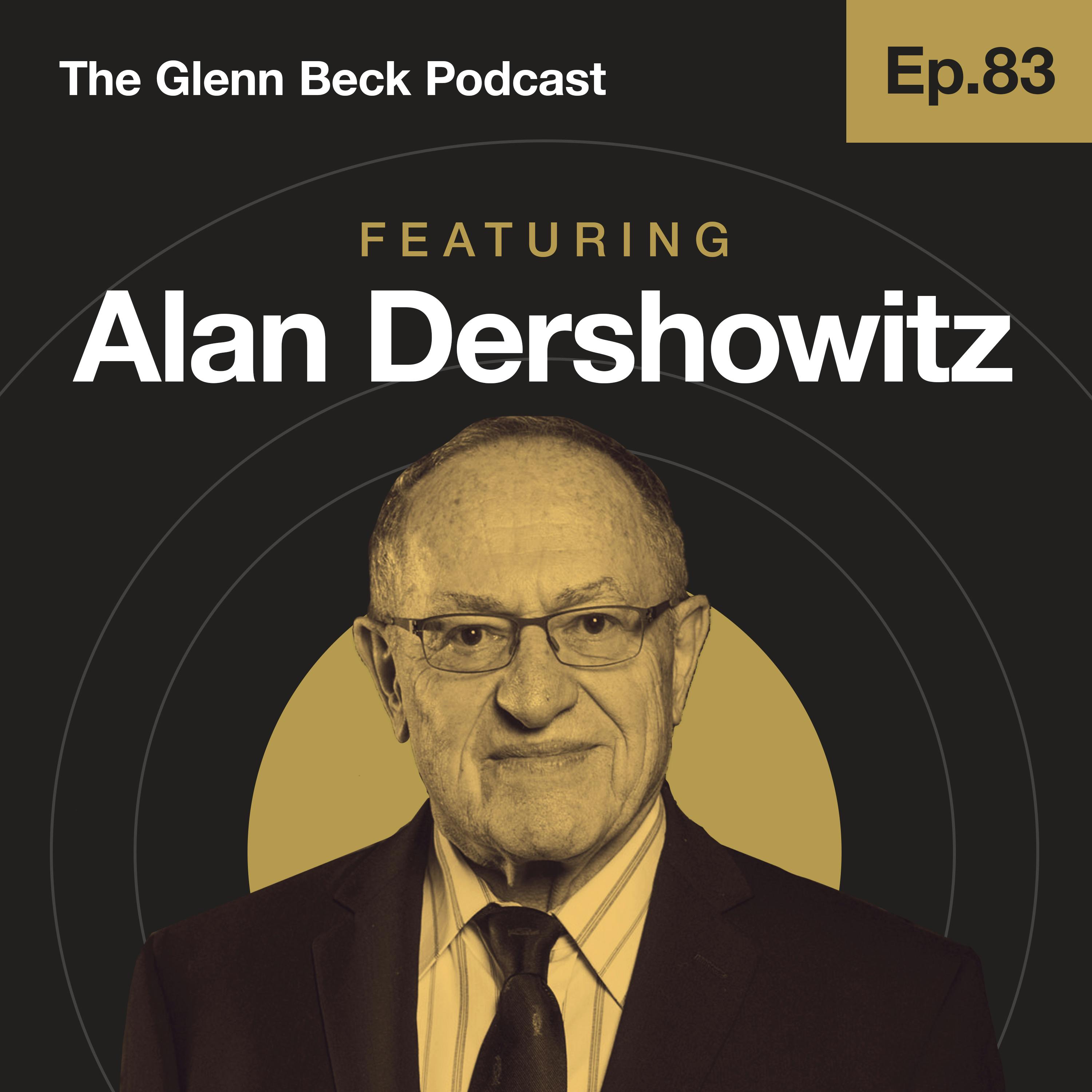
Ep 83 | How to Fix SCOTUS | Alan Dershowitz | The Glenn Beck Podcast
Legal scholar and defense attorney Alan Dershowitz has a message for partisans dividing America: "A plague on both your houses." He voted for Hillary Clinton. He endorsed Joe Biden. He’s a man who is basically the Forrest Gump of American judicial history. Look up a big court case over the past few decades, and you’ll probably see him standing in the background. He’s represented notorious clients like Mike Tyson, Patty Hearst, Harry Reems, Harvey Weinstein, Jeffrey Epstein, and yes, Donald Trump. It’s made him a target for both the Left and Right. He describes himself as a “civil libertarian," and that's probably why he and Glenn get along despite their opposing politics. His story is like a history lesson, spanning half a century. It also just might be the key to bridging the political divide. Alan explains why he trusts the Supreme Court despite losing high-profile cases there and how he played a "teeny tiny role" in Trump's Middle East peace process. At 82 years old, Alan is still a fighter, and while it annoys him that he has to defend his legacy and reputation against accusations surrounding the Epstein case, he says, "I will win!"
This Week’s Sponsors:
Losing your hair is no fun. KEEPS offers the same doctor-recommended, FDA-approved hair loss treatment – but for about half the cost! And it’s all online and shipped directly to your door. Go to https://keeps.com/save for 50% off your first order of KEEPS hair loss treatments.
Want to know the secret to staying sweat-free this summer? Glenn recommends Tommy John’s ultra-breathable underwear! They have a range of summer-ready, breathable options, but their Cool Cotton underwear for men and women is like having your own on-body AC. For a limited time, go to https://TommyJohn.com/BECK to get 20% off your first order.
Learn more about your ad choices. Visit megaphone.fm/adchoices
Available Results
Generated results are saved to your library for reuse and search.
Choose Template
Pick the result you want. You can review provider and model before generating.
A concise first-pass summary for understanding the episode quickly.
A comprehensive, source-grounded extraction of the reusable knowledge in an episode.
Technologies, AI models, technical methods, capabilities, limitations, and adoption implications.
Repeatable methods, frameworks, mental models, processes, and systems.
A dedicated analysis of warnings, limitations, trade-offs, weak evidence, and uncertainty.
A dedicated inventory of concrete resources named in the episode.
A concise first-pass summary for understanding the episode quickly.
A detailed readable summary organized by chapter or topic.
A navigable map of subjects, topic flow, and suggested chapters.
A comprehensive, source-grounded extraction of the reusable knowledge in an episode.
Reusable atomic knowledge units extracted from the episode.
A comprehensive extraction focused on health practices, protocols, claims, and safety caveats.
A comprehensive extraction focused on opportunities, strategy, markets, and company building.
Explicit actions, next steps, habits, recommendations, and things to avoid.
A dedicated inventory of concrete resources named in the episode.
A dedicated analysis of warnings, limitations, trade-offs, weak evidence, and uncertainty.
A concise first-pass summary for understanding the episode quickly.
A detailed readable summary organized by chapter or topic.
A navigable map of subjects, topic flow, and suggested chapters.
A comprehensive, source-grounded extraction of the reusable knowledge in an episode.
Reusable atomic knowledge units extracted from the episode.
A comprehensive extraction focused on health practices, protocols, claims, and safety caveats.
A comprehensive extraction focused on opportunities, strategy, markets, and company building.
Scientific findings, mechanisms, studies, hypotheses, and the limits of the evidence discussed.
Technologies, AI models, technical methods, capabilities, limitations, and adoption implications.
Investment theses, assets, catalysts, valuation reasoning, time horizons, and risks.
Chronologies, actors, causes, consequences, turning points, and competing historical interpretations.
Policies, proposals, stakeholders, arguments, implementation constraints, and predicted effects.
Career paths, skills, hiring signals, workplace decisions, transitions, and limitations of the advice.
Behavioral mechanisms, biases, motivation, habits, emotions, interventions, and evidence limitations.
Economic mechanisms, incentives, indicators, market structure, forecasts, and uncertainty.
Leadership principles, team systems, organizational design, culture, feedback, and failure modes.
Audience, positioning, messaging, acquisition, retention, experiments, metrics, and failed approaches.
Teaching methods, learning strategies, practice, feedback, assessment, and effectiveness evidence.
Theses, premises, arguments, objections, values, thought experiments, and unresolved questions.
Communication patterns, conflict, boundaries, expectations, repair methods, and contextual limitations.
Books, papers, authors, courses, and other learning resources mentioned in the episode.
Repeatable methods, frameworks, mental models, processes, and systems.
Explicit actions, next steps, habits, recommendations, and things to avoid.
Memorable statements and important claims with attribution and source context.
A dedicated inventory of concrete resources named in the episode.
A dedicated analysis of warnings, limitations, trade-offs, weak evidence, and uncertainty.