How a Daring Band of Misfits Mastered the Lost Secrets of Strength and Endurance.
I just finished reading what I consider to be one of the best books of 2015: Natural Born Heroes: How a Daring Band of Misfits Mastered the Lost Secrets of Strength and Endurance.
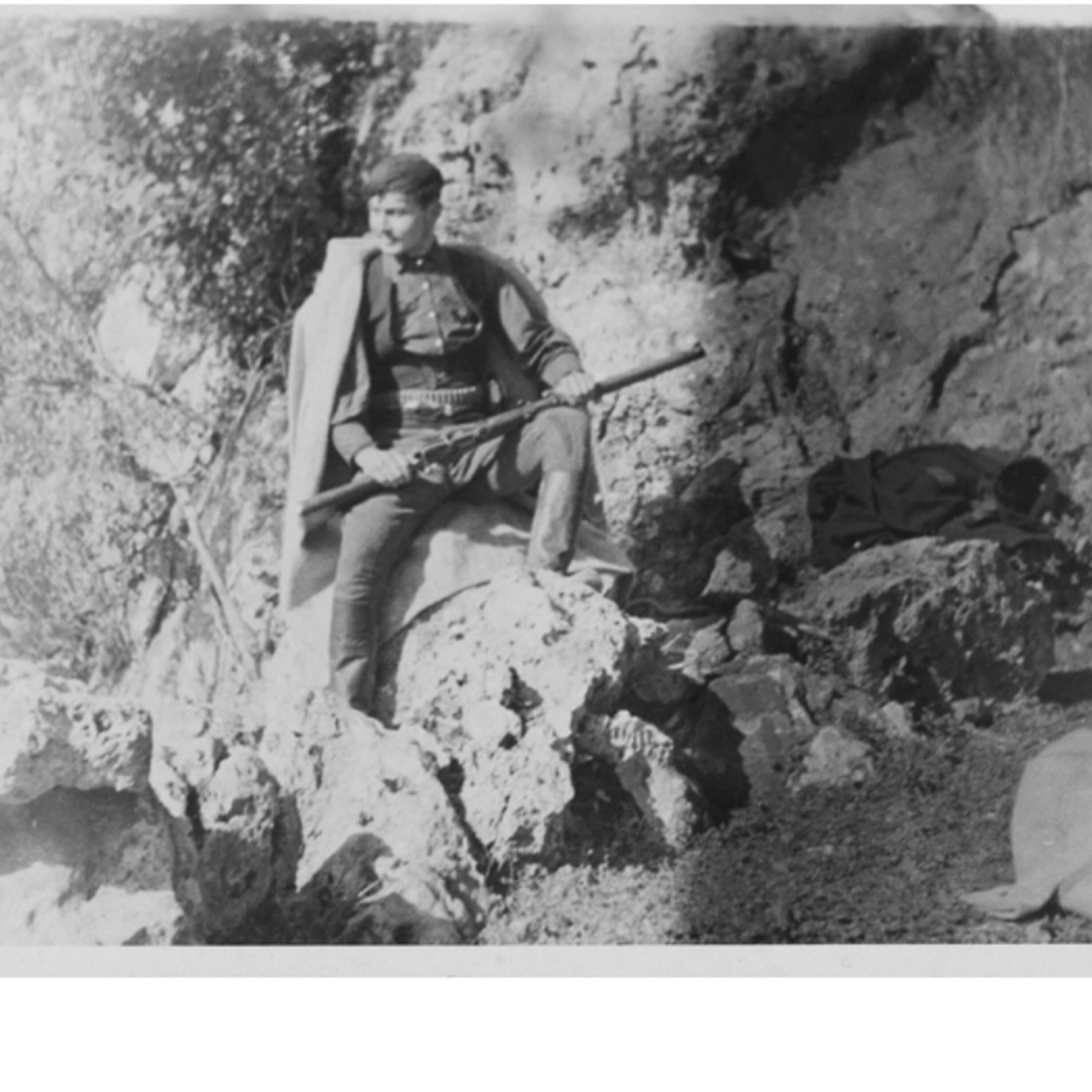
In the book, best-selling author Christopher McDougall, today's podcast guest and a guy who you may recognize as the same author of Born to Run: A Hidden Tribe, Superathletes, and the Greatest Race the World Has Never Seen travels to the Mediterranean, where he discovers that the secrets of ancient Greek heroes are still alive and well in the razor-sharp mountains on the island of Crete - ready to be unleashed in the muscles and minds of casual athletes and aspiring heroes everywhere. In the story, Chris recreates an amazing true tale of a band of Resistance fighters in World War II who plotted the daring abduction of a German general from the heart of the Nazi occupation.
He makes his way to the island to experience firsthand the extreme physical challenges the Resistance fighters and their local allies faced, and on Crete, the birthplace of the classical Greek heroism that spawned the likes of amazing physical specimens such as Herakles and Odysseus, McDougall discovers the tools of the heroes, including skills such as natural movement, extraordinary endurance, and efficient nutrition, skills that are still practiced in far-flung pockets throughout the world today.
If you want to be a modern-day athlete who can hone ancient skills to be ready for anything, then this podcast episode is for you.
Prepare to get inspired to leave the gym and take your fitness routine to nature—to climb, swim, skip, throw, and jump their way to your own heroic feats.
So who is Christopher McDougall ? Trained as a foreign correspondent for the Associated Press, Chris covered wars in Rwanda and Angola before writing the international bestseller, Born to Run: A Hidden Tribe, Superathletes, and the Greatest Race the World Has Never Seen.
His fascination with the limits of human potential also led him to create the Outside magazine web series, “Art of the Hero”, and then most recently, the book Natural Born Heroes: How a Daring Band of Misfits Mastered the Lost Secrets of Strength and Endurance.
During this audio interview with Chris, you'll discover: -How Chris combines a life of immersive journalism and juggling family life with a study of extreme sports... -Why the tiny island of Crete was such an important part of World War II, and how the Cretans developed such amazing athleticism... -How to manipulate your body's own fascia to generate huge amounts of force, to run faster and to master natural movement... -The only form of hand-to-hand combat that you should learn if you really want to learn to fight as efficiently as possible... -Why Chris studied Parkour to prepare for his trip to Crete... -How the mighty Cretan runners ran dozens and dozens of miles on virtually no calories, and how you can learn to do it too... -Why it's a myth that running a marathon killed the first person that did it... -And much more!
Resources from this episode: -ParkourGenerations.com -Wing Chun -My podcast with Barry Murray on becoming fat-adapted -Chris Mcdougall's Amazon author page -ChrisMcDougall.com
Do you have questions, comments or feedback for me or Chris? Leave your thoughts at BenGreenfieldFitness.com and one of us with reply.
See omnystudio.com/listener for privacy information.
Available Results
Generated results are saved to your library for reuse and search.
Choose Template
Pick the result you want. You can review provider and model before generating.
A concise first-pass summary for understanding the episode quickly.
A comprehensive, source-grounded extraction of the reusable knowledge in an episode.
A comprehensive extraction focused on health practices, protocols, claims, and safety caveats.
A dedicated analysis of warnings, limitations, trade-offs, weak evidence, and uncertainty.
Repeatable methods, frameworks, mental models, processes, and systems.
Scientific findings, mechanisms, studies, hypotheses, and the limits of the evidence discussed.
A concise first-pass summary for understanding the episode quickly.
A detailed readable summary organized by chapter or topic.
A navigable map of subjects, topic flow, and suggested chapters.
A comprehensive, source-grounded extraction of the reusable knowledge in an episode.
Reusable atomic knowledge units extracted from the episode.
A comprehensive extraction focused on health practices, protocols, claims, and safety caveats.
A comprehensive extraction focused on opportunities, strategy, markets, and company building.
Explicit actions, next steps, habits, recommendations, and things to avoid.
A dedicated inventory of concrete resources named in the episode.
A dedicated analysis of warnings, limitations, trade-offs, weak evidence, and uncertainty.
A concise first-pass summary for understanding the episode quickly.
A detailed readable summary organized by chapter or topic.
A navigable map of subjects, topic flow, and suggested chapters.
A comprehensive, source-grounded extraction of the reusable knowledge in an episode.
Reusable atomic knowledge units extracted from the episode.
A comprehensive extraction focused on health practices, protocols, claims, and safety caveats.
A comprehensive extraction focused on opportunities, strategy, markets, and company building.
Scientific findings, mechanisms, studies, hypotheses, and the limits of the evidence discussed.
Technologies, AI models, technical methods, capabilities, limitations, and adoption implications.
Investment theses, assets, catalysts, valuation reasoning, time horizons, and risks.
Chronologies, actors, causes, consequences, turning points, and competing historical interpretations.
Policies, proposals, stakeholders, arguments, implementation constraints, and predicted effects.
Career paths, skills, hiring signals, workplace decisions, transitions, and limitations of the advice.
Behavioral mechanisms, biases, motivation, habits, emotions, interventions, and evidence limitations.
Economic mechanisms, incentives, indicators, market structure, forecasts, and uncertainty.
Leadership principles, team systems, organizational design, culture, feedback, and failure modes.
Audience, positioning, messaging, acquisition, retention, experiments, metrics, and failed approaches.
Teaching methods, learning strategies, practice, feedback, assessment, and effectiveness evidence.
Theses, premises, arguments, objections, values, thought experiments, and unresolved questions.
Communication patterns, conflict, boundaries, expectations, repair methods, and contextual limitations.
Books, papers, authors, courses, and other learning resources mentioned in the episode.
Repeatable methods, frameworks, mental models, processes, and systems.
Explicit actions, next steps, habits, recommendations, and things to avoid.
Memorable statements and important claims with attribution and source context.
A dedicated inventory of concrete resources named in the episode.
A dedicated analysis of warnings, limitations, trade-offs, weak evidence, and uncertainty.