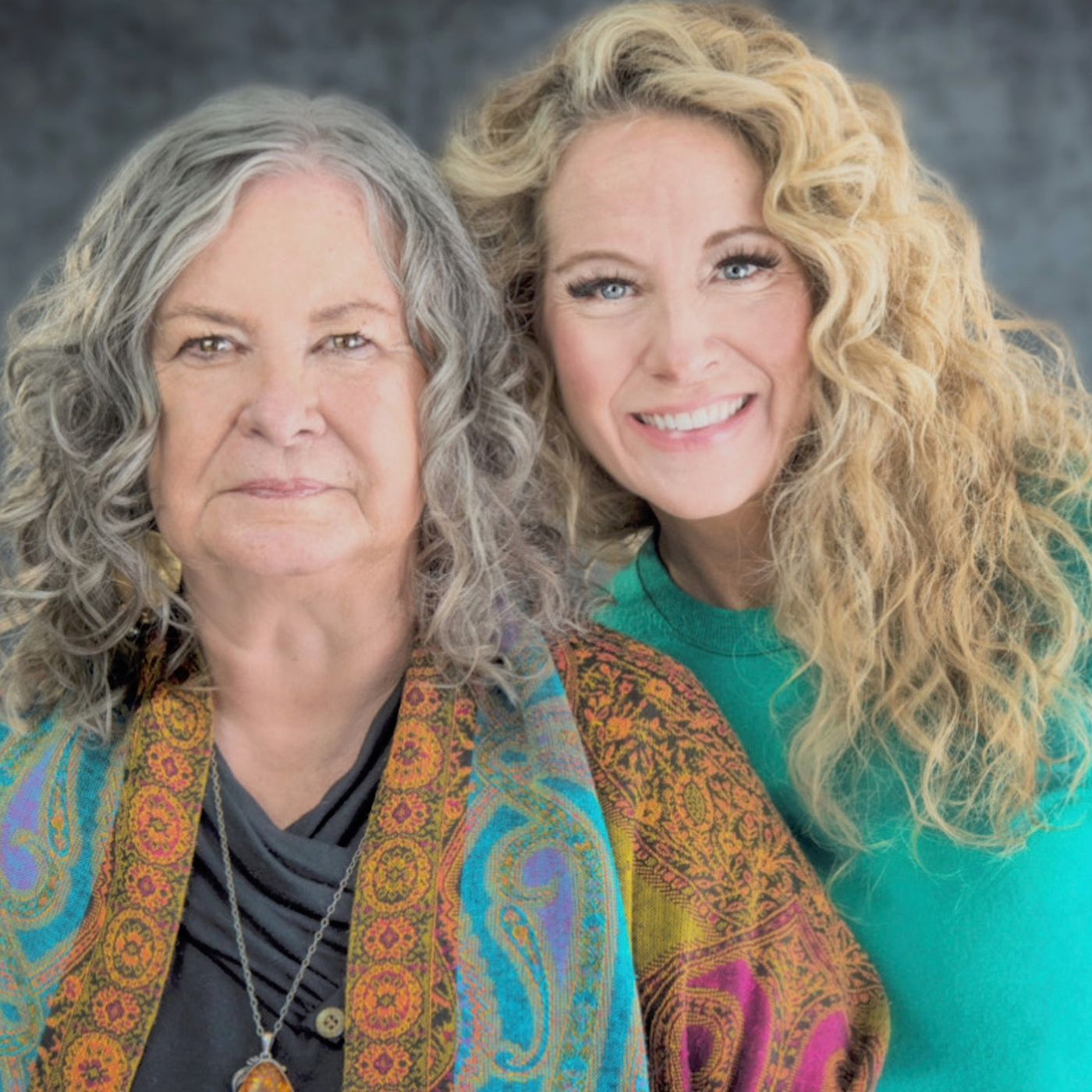
Wicca Made Easy with Phyllis Curott
An interfaith activist for many years, Phyllis was the Vice Chair of the 2015 Parliament of the World’s Religions, creator of the historic Inaugural Women’s Assembly and drafter of the Declaration for the Dignity and Human Rights of Women, adopted by the 2015 Parliament. She is the founder of the Temple of Ara, one of the oldest Wiccan congregations in America, a shamanic tradition rooted in the experience and ethics of immanent divinity.
Phyllis was inducted into the Martin Luther King Jr. Collegium of Scholars and honored by Jane Magazine as one of the Ten Gutsiest Women of the Year. New York Magazine described her teaching on Earth-based spirituality and the Divine Feminine as one of the culture’s “next big ideas” and Time Magazine featured her writing in their Ideas column, a forum for America’s “leading voices.” She has been widely profiled in the national and international media including the New York Times, Los Angeles Times, Washington Post, USA Today, The Nation, Marie Claire, Harper’s Bazaar, Self, The View, The O’Reilly Factor, Lifetime, Oxygen, and CNN & Company. She is featured in the Howcast Youtube series on Wicca, Beliefnet’s “Preachers and Teachers,” PBS’s What’s Your Calling? and in the documentary Many Voices, One Faith. She is currently producing a short film on the emergence of the Divine Feminine and women’s spiritual leadership at the 2015 Parliament of the World’s Religions. As an attorney and outspoken advocate for the rights of Wiccans and other religious minorities. Phyllis has successfully won the right of Wiccan clergy to perform legally binding marriages in New York City and rituals in the public parks of Chicago and has been a pro bono consultant on numerous religious liberties cases. She is a co-founder of the Religious Liberties Lawyers Network, a member of the Lady Liberty League and a long-standing member of the American Civil Liberties Union. And she is currently working on a new and spiritually revolutionary Witch’s Tarot Deck, also for Hay House.
Available Results
Generated results are saved to your library for reuse and search.
Choose Template
Pick the result you want. You can review provider and model before generating.
A concise first-pass summary for understanding the episode quickly.
A comprehensive, source-grounded extraction of the reusable knowledge in an episode.
A comprehensive extraction focused on opportunities, strategy, markets, and company building.
Explicit actions, next steps, habits, recommendations, and things to avoid.
Repeatable methods, frameworks, mental models, processes, and systems.
A dedicated inventory of concrete resources named in the episode.
A concise first-pass summary for understanding the episode quickly.
A detailed readable summary organized by chapter or topic.
A navigable map of subjects, topic flow, and suggested chapters.
A comprehensive, source-grounded extraction of the reusable knowledge in an episode.
Reusable atomic knowledge units extracted from the episode.
A comprehensive extraction focused on health practices, protocols, claims, and safety caveats.
A comprehensive extraction focused on opportunities, strategy, markets, and company building.
Explicit actions, next steps, habits, recommendations, and things to avoid.
A dedicated inventory of concrete resources named in the episode.
A dedicated analysis of warnings, limitations, trade-offs, weak evidence, and uncertainty.
A concise first-pass summary for understanding the episode quickly.
A detailed readable summary organized by chapter or topic.
A navigable map of subjects, topic flow, and suggested chapters.
A comprehensive, source-grounded extraction of the reusable knowledge in an episode.
Reusable atomic knowledge units extracted from the episode.
A comprehensive extraction focused on health practices, protocols, claims, and safety caveats.
A comprehensive extraction focused on opportunities, strategy, markets, and company building.
Scientific findings, mechanisms, studies, hypotheses, and the limits of the evidence discussed.
Technologies, AI models, technical methods, capabilities, limitations, and adoption implications.
Investment theses, assets, catalysts, valuation reasoning, time horizons, and risks.
Chronologies, actors, causes, consequences, turning points, and competing historical interpretations.
Policies, proposals, stakeholders, arguments, implementation constraints, and predicted effects.
Career paths, skills, hiring signals, workplace decisions, transitions, and limitations of the advice.
Behavioral mechanisms, biases, motivation, habits, emotions, interventions, and evidence limitations.
Economic mechanisms, incentives, indicators, market structure, forecasts, and uncertainty.
Leadership principles, team systems, organizational design, culture, feedback, and failure modes.
Audience, positioning, messaging, acquisition, retention, experiments, metrics, and failed approaches.
Teaching methods, learning strategies, practice, feedback, assessment, and effectiveness evidence.
Theses, premises, arguments, objections, values, thought experiments, and unresolved questions.
Communication patterns, conflict, boundaries, expectations, repair methods, and contextual limitations.
Books, papers, authors, courses, and other learning resources mentioned in the episode.
Repeatable methods, frameworks, mental models, processes, and systems.
Explicit actions, next steps, habits, recommendations, and things to avoid.
Memorable statements and important claims with attribution and source context.
A dedicated inventory of concrete resources named in the episode.
A dedicated analysis of warnings, limitations, trade-offs, weak evidence, and uncertainty.