How To Instantly Shift Your State of Consciousness From Anxiety To Relaxation, Wakefulness to Sleep or Brain Fogginess to Focus, With Brain.fm.
BenGreenfieldFitness.com/brainfmshow
26 February 2022
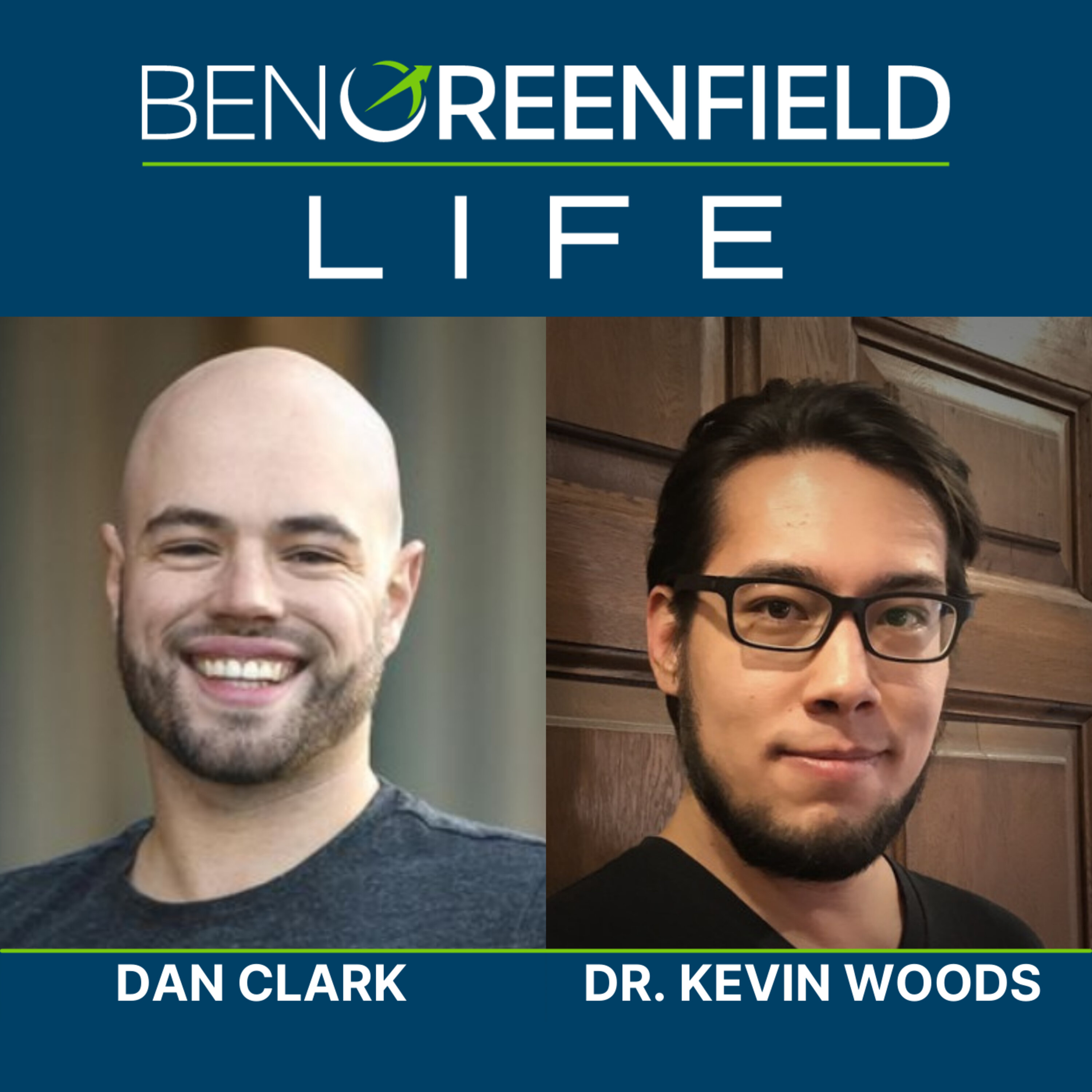
My podcast guest for this show, Dan Clark, previously worked as a website and app developer, but switched careers from building an advertising agency and came across Brain.fm. In his first session, he bought an account and was so excited after a week of use, he needed to be part of the company. He called 12 times. He finally got a job and worked the first month for free. Fast forward, he’s now the CEO, and 2019's Forbes 30 under 30. Dan is always excited about how technology can change the world, and Brain.fm is no exception - via non-invasive neurotechnology that does not require plant medicines, nootropics or drugs to shift you into an altered or elevated state of consciousness.
Brain.fm holds patents on key processes for creating functional music, including technology to elicit strong neural phase locking—allowing populations of neurons to engage in various kinds of coordinated activity—and technology to remove distraction in sound. This makes their music unique, purpose-built to steer you into a desired mental state. In other words, they've found new ways to create music that helps you do what you need to do.
Scientists atBrain.fm work with collaborators at academic institutions to run experiments. They looked at the effects of our technology on the brain, using fMRI and EEG, and also run large-scale behavioral tests, measuring performance on simple games. Their experiments always include a control condition (‘placebo’) of the same underlying music without Brain.fm technology applied, so they can be sure our tech is what makes the difference. In this podcast, you'll discover what their science has found, and much more.
Also joining us on today's call is Dr. Kevin J.P. Woods, Director of Science at Brain.fm.
During our discussion, you'll discover: -What is Brain.fm and how Dan got involved with the company... -The science behind Brain.fm and what differentiates it from other focus apps... -How the Brain.fm music tracks are developed... -How Brain.fm is different from binaural beats... -Slow wave sleep and long-term memory... -About the "focus" mode on Brain.fm... -Why it's not advisable to combine Brain.fm with popular music... -How to maximize the Brain.fm experience... -And much more...Click here to try Brain.fm today!
Episode sponsors: Do you have questions, thoughts or feedback for Dan Clark or me? Leave your comments at BenGreenfieldFitness.com/brainfmshow and one of us will reply!See omnystudio.com/listener for privacy information.
Available Results
Generated results are saved to your library for reuse and search.
Choose Template
Pick the result you want. You can review provider and model before generating.
A concise first-pass summary for understanding the episode quickly.
A comprehensive, source-grounded extraction of the reusable knowledge in an episode.
A comprehensive extraction focused on health practices, protocols, claims, and safety caveats.
A dedicated analysis of warnings, limitations, trade-offs, weak evidence, and uncertainty.
Repeatable methods, frameworks, mental models, processes, and systems.
A comprehensive extraction focused on opportunities, strategy, markets, and company building.
A concise first-pass summary for understanding the episode quickly.
A detailed readable summary organized by chapter or topic.
A navigable map of subjects, topic flow, and suggested chapters.
A comprehensive, source-grounded extraction of the reusable knowledge in an episode.
Reusable atomic knowledge units extracted from the episode.
A comprehensive extraction focused on health practices, protocols, claims, and safety caveats.
A comprehensive extraction focused on opportunities, strategy, markets, and company building.
Explicit actions, next steps, habits, recommendations, and things to avoid.
A dedicated inventory of concrete resources named in the episode.
A dedicated analysis of warnings, limitations, trade-offs, weak evidence, and uncertainty.
A concise first-pass summary for understanding the episode quickly.
A detailed readable summary organized by chapter or topic.
A navigable map of subjects, topic flow, and suggested chapters.
A comprehensive, source-grounded extraction of the reusable knowledge in an episode.
Reusable atomic knowledge units extracted from the episode.
A comprehensive extraction focused on health practices, protocols, claims, and safety caveats.
A comprehensive extraction focused on opportunities, strategy, markets, and company building.
Scientific findings, mechanisms, studies, hypotheses, and the limits of the evidence discussed.
Technologies, AI models, technical methods, capabilities, limitations, and adoption implications.
Investment theses, assets, catalysts, valuation reasoning, time horizons, and risks.
Chronologies, actors, causes, consequences, turning points, and competing historical interpretations.
Policies, proposals, stakeholders, arguments, implementation constraints, and predicted effects.
Career paths, skills, hiring signals, workplace decisions, transitions, and limitations of the advice.
Behavioral mechanisms, biases, motivation, habits, emotions, interventions, and evidence limitations.
Economic mechanisms, incentives, indicators, market structure, forecasts, and uncertainty.
Leadership principles, team systems, organizational design, culture, feedback, and failure modes.
Audience, positioning, messaging, acquisition, retention, experiments, metrics, and failed approaches.
Teaching methods, learning strategies, practice, feedback, assessment, and effectiveness evidence.
Theses, premises, arguments, objections, values, thought experiments, and unresolved questions.
Communication patterns, conflict, boundaries, expectations, repair methods, and contextual limitations.
Books, papers, authors, courses, and other learning resources mentioned in the episode.
Repeatable methods, frameworks, mental models, processes, and systems.
Explicit actions, next steps, habits, recommendations, and things to avoid.
Memorable statements and important claims with attribution and source context.
A dedicated inventory of concrete resources named in the episode.
A dedicated analysis of warnings, limitations, trade-offs, weak evidence, and uncertainty.