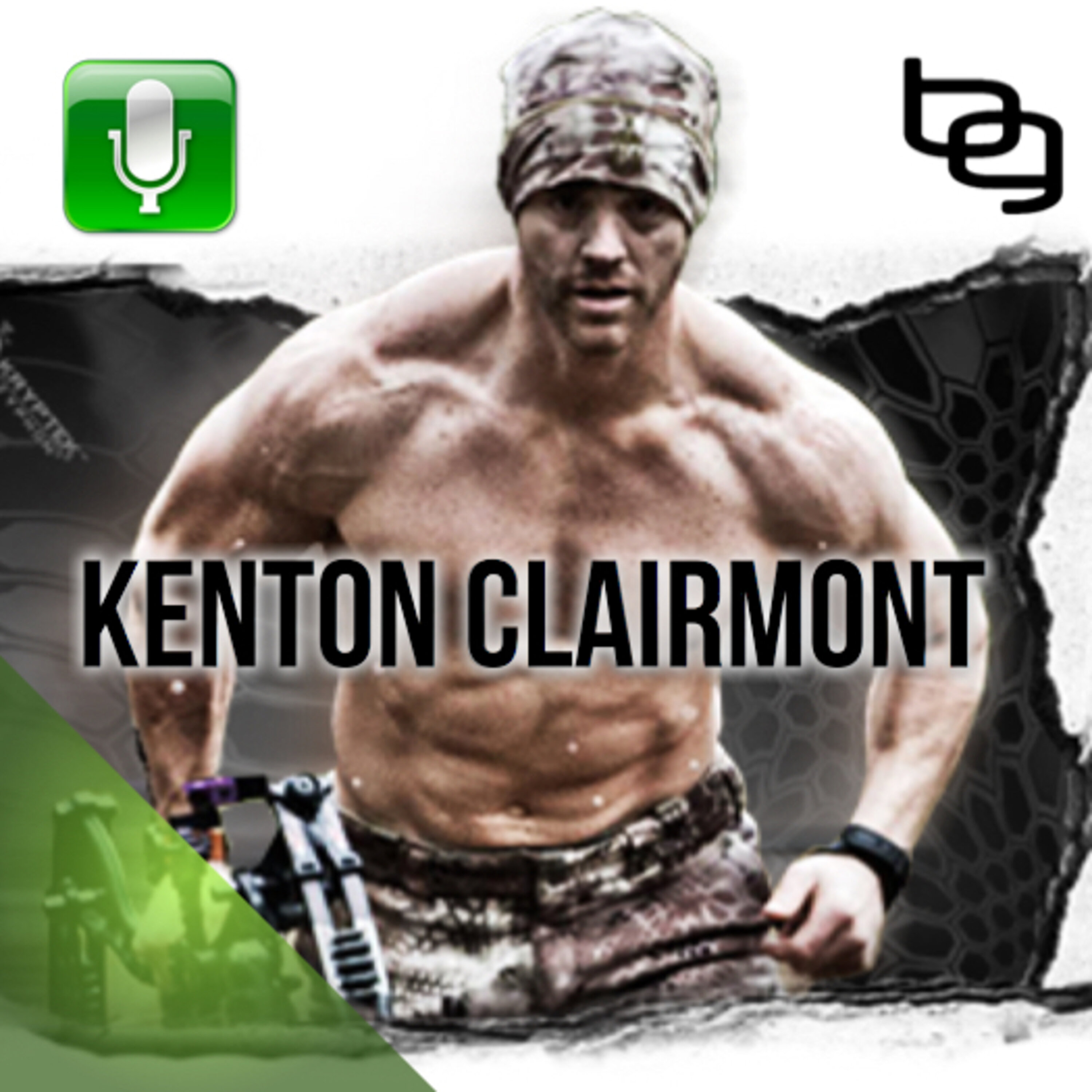
Blue Lips, Meat Packs, Baling Hay & Beyond: The Man Responsible For Sparking A Fitness Revolution In The Hunting Industry.
https://bengreenfieldfitness.com/kenton2
I've raced plenty of triathlons, from Sprint distance to Ironman. I've also done many, many obstacle races, including the toughest Spartan challenges in the world. And adventure races. And brutal workouts that claim to be the "hardest workout in the world". And SEALFit training, Agoge challenges, the World's Toughest Mudder and beyond. But my lungs have never sucked as much, my brain and body have never been simultaneously challenged as much and I've never experience any other form of competition so freaking functional until I started doing Train To Hunt Challenges. My guest today is a repeat guest. His name is Kenton Clairmont and he is the owner and creator of Train To Hunt, a unique mashup of bowhunting and obstacle racing that is taking the nation by storm.
During our discussion, you'll discover:
-The nasty autoimmune disease that took Kenton out of commission and sidelined him from a career as a professional baseball player...[12:20]
-The natural Chinese remedy alternative to common immunosuppressant drugs for issues like rheumatoid arthritis...[20:12]
-Why being fit for hunting goes far, far beyond simply needing to be able to "ruck" or hike...[22:25]
-What a sample Train To Hunt work out looks like...[38:30]
-How a typical Train To Hunt workout looks, and why something called "vagus nerve stimulation" is a huge part of each workout...[42:20]
-Why the Train To Hunt national champion's key workout is "baling hay"...[54:30]
-Why Kenton introduced the skill orienteering and GPS wayfinding into the Train To Hunt competition...[57:00]
-How the Train To Hunt "3D shoot" is far different and far more practical for hunting situations than any other style of a 3D shoot...[58:45]
-Why something called a "meat pack" is one of the hardest things Ben has ever done in his life (and why his lips turned blue after doing it)...[65:00]
-What the brand new Train To Hunt challenge course now looks like, and why it's now extremely spectator friendly...[70:10]
-How the meat pack portion of the challenge is going to change significantly in 2016...[79:00]
-And much more!
Resources from this episode: -Chinese herbal remedy as a replacement for methotrexate -Other hunting episodes: -Are Hunters The Fittest People In The World? -How To Get Into Hunting, Build Hunting Fitness, The Most Challenging Hunts & More! -Backpacking, Wilderness Survival, Combat Conditioning, Hunting Fitness & More With Aron Snyder. -Backpacking, Bowhunting & Shooting Tips From A Natural Born Hunter. -3 Ways Hunting Can Get You Ripped And 10 Ways To Get Fit For Hunting. -How To Build Primal Fitness And Endurance By Hunting: An Interview With A Bowhunting Triathlete -The National Champion & Poster Boy For One Of The Most Extreme Obstacle Races That Exists. -Train To Hunt: Train To Hunt was born out of necessity. All hunters alike want to hunt harder, longer, and farther. Fitness is the only piece of equipment that you can make better or worse. The team at Train To Hunt wants to extend wellness and longevity as well as improve performance for hunters. The workouts are a launching pad for serious outdoor enthusiast who want to learn the best way to be fit for their sport. Athletes hunt, and they have the formula to make you a better mountain athlete. Whether you’re a flatlander, hunt out West, or past your prime, they want to make you a better hunter through fitness. Their online program is designed to be your coach, trainer, and guide as you shape up for your passion. Click here to start into Train To Hunt online program now or to sign up for a challenge.
Do you have questions, thoughts or feedback for Kenton or me? Leave your comments at BenGreenfieldFitness.com and one of us will reply!
See omnystudio.com/listener for privacy information.
Available Results
Generated results are saved to your library for reuse and search.
Choose Template
Pick the result you want. You can review provider and model before generating.
A concise first-pass summary for understanding the episode quickly.
A comprehensive, source-grounded extraction of the reusable knowledge in an episode.
A comprehensive extraction focused on health practices, protocols, claims, and safety caveats.
A dedicated analysis of warnings, limitations, trade-offs, weak evidence, and uncertainty.
Repeatable methods, frameworks, mental models, processes, and systems.
Technologies, AI models, technical methods, capabilities, limitations, and adoption implications.
A concise first-pass summary for understanding the episode quickly.
A detailed readable summary organized by chapter or topic.
A navigable map of subjects, topic flow, and suggested chapters.
A comprehensive, source-grounded extraction of the reusable knowledge in an episode.
Reusable atomic knowledge units extracted from the episode.
A comprehensive extraction focused on health practices, protocols, claims, and safety caveats.
A comprehensive extraction focused on opportunities, strategy, markets, and company building.
Explicit actions, next steps, habits, recommendations, and things to avoid.
A dedicated inventory of concrete resources named in the episode.
A dedicated analysis of warnings, limitations, trade-offs, weak evidence, and uncertainty.
A concise first-pass summary for understanding the episode quickly.
A detailed readable summary organized by chapter or topic.
A navigable map of subjects, topic flow, and suggested chapters.
A comprehensive, source-grounded extraction of the reusable knowledge in an episode.
Reusable atomic knowledge units extracted from the episode.
A comprehensive extraction focused on health practices, protocols, claims, and safety caveats.
A comprehensive extraction focused on opportunities, strategy, markets, and company building.
Scientific findings, mechanisms, studies, hypotheses, and the limits of the evidence discussed.
Technologies, AI models, technical methods, capabilities, limitations, and adoption implications.
Investment theses, assets, catalysts, valuation reasoning, time horizons, and risks.
Chronologies, actors, causes, consequences, turning points, and competing historical interpretations.
Policies, proposals, stakeholders, arguments, implementation constraints, and predicted effects.
Career paths, skills, hiring signals, workplace decisions, transitions, and limitations of the advice.
Behavioral mechanisms, biases, motivation, habits, emotions, interventions, and evidence limitations.
Economic mechanisms, incentives, indicators, market structure, forecasts, and uncertainty.
Leadership principles, team systems, organizational design, culture, feedback, and failure modes.
Audience, positioning, messaging, acquisition, retention, experiments, metrics, and failed approaches.
Teaching methods, learning strategies, practice, feedback, assessment, and effectiveness evidence.
Theses, premises, arguments, objections, values, thought experiments, and unresolved questions.
Communication patterns, conflict, boundaries, expectations, repair methods, and contextual limitations.
Books, papers, authors, courses, and other learning resources mentioned in the episode.
Repeatable methods, frameworks, mental models, processes, and systems.
Explicit actions, next steps, habits, recommendations, and things to avoid.
Memorable statements and important claims with attribution and source context.
A dedicated inventory of concrete resources named in the episode.
A dedicated analysis of warnings, limitations, trade-offs, weak evidence, and uncertainty.