How A Manual Treadmill Can Teach You To Run, And How To Use One Properly (Even At A Desk).
Last year, I posted an article entitled "How To Turn Your Desk Into A Calorie Decimating Workstation", and created the video "How Should You Stand At A Standing Desk?" In both those resources, and on many podcasts (including this one on "How To Burn More Fat At Work), I've talked about and featured a special kind of treadmill called a "TrueForm" treadmill. See, when I set about to modify my standing workstation into a treadmill desk, I ran into a two big problems, namely... 1. Treadmills Have Motors. Treadmills with motors – the kind you’d normally need for running, and the kind typically used at treadmill workstations – are not only big and bulky, but produce enormous amounts of electromagnetic fields (EMF) and “dirty electricity”, which has been linked to brain fog, altered cellular metabolism, cancer risk, and much more. In addition, a treadmill belt that runs on a motor allows you to walk and run while leaning slightly backwards and engaging in a full-on heel strike, which alters your running and walking gait, destroys your biomechanics and can actually turn you into a worse runner or a sloppy walker. 2. Manual Treadmills Are Too Slow For Running. So a non-motorized treadmill (also known as a manual treadmill) is a good solution compared to a motorized treadmill. But the problem is that most manual treadmills only reach a maximum speed of 3.5-4.0 miles per hour, and this means that you can never use a manual treadmill for running. Since I wanted to intersperse short fitness and metabolism boosting sprints into my walking workday, (e.g. stopping every hour to do a brief 2 minute sprint, or doing a bit of jogging in between consults and phone calls) this means I’d have to buy and find space for two separate treadmills – one for walking and one for running! So over several months, I searched high and low for a treadmill that is A) a manual treadmill without a motor; B) compact enough to fit under my standing desk; and C) didn’t produce electrical pollution and D) could operate at both casual walking paces, light jogs and high running speeds.
---------------------
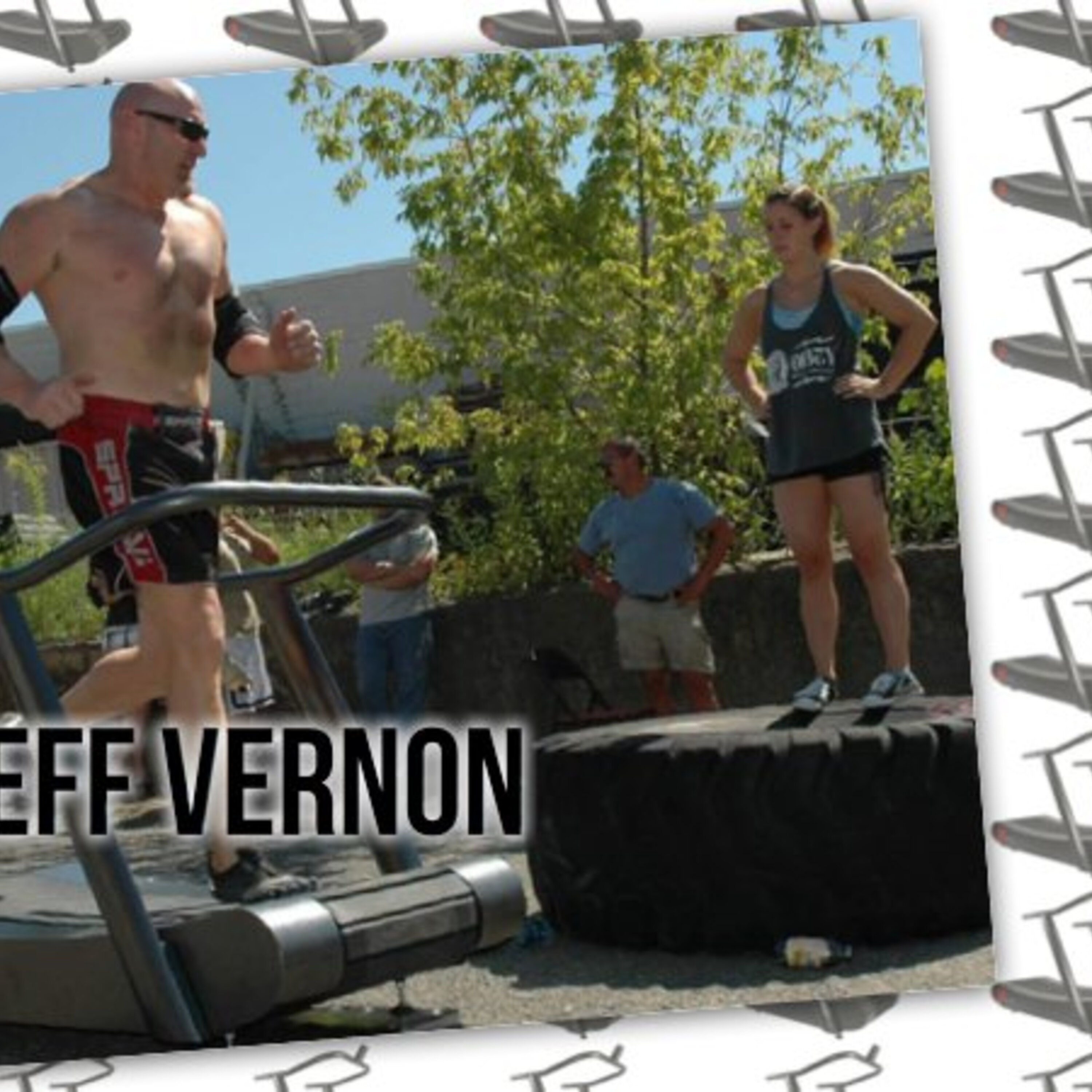
The solution that I eventually found is something called a “TrueForm treadmill” made by Samsara Fitness. The unique looking TrueForm has several extremely unique characteristics that set it apart from any treadmill on the face of the planet, and is unlike any treadmill you’ve ever tried. First, there is no motor and there are no buttons. The treadmill is entirely manual and is powered by you, which means that you are not only exposing yourself to zero electrical pollution and saving 100% on electrical costs, but also moving far more naturally due to the non-motorized belt design. When you walk on a TrueForm treadmill, you burn more calories, get better balance (especially if you don’t use the rails) and build stronger leg and core muscles, since you’re doing the work instead of a treadmill motor. And the faster you move, the faster the treadmill goes, just like when you walk, jog or sprint outside. But it gets even better, because the TrueForm treadmill is the first and only treadmill to actually teach you the skill of running. This is because the only way to really get the belt moving is to lean slightly forward, strike with your mid to front-forefoot, and maintain a high cadence, which means your body learns to run exactly like the most elite runners on the face of the planet run. This honestly took me a little bit of getting used to, because I’m used to being able to “lean back” and be lazy on a treadmill, and frankly, this treadmill instead forces you to move with pristine form. Finally, the rails are removable. And although TrueForm is legally required to send you the treadmill with the rails attached, you can take them off for the ultimate balance-enhancing experience as you walk, jog and run.
------------------------------
So that's great and all, but can this thing really teach you how to run with proper biomechanics? On today's audio podcast, I get Jeff Vernon the owner of SamsaraFitness on the show and we address this question and much more. You'll discover:
-How the Trueform actually works, and why it is shaped the way it is...
-How to use a manual treadmill properly...
-Specific drills you can do on a manual treadmill to enhance your running form...
-What a standard running treadmill won't work on a stand-up desk...
-The difference between the different Trueform models (the low-rider, the enduro and the performance)...
-Why the Trueform is different than other manual treadmills, and why it's "built like a tank"...
-And much more!
Do you have questions, comments or feedback for Jeff or me? Leave your thoughts at BenGreenfieldFitness.com and one of us will reply! And click here to use code BEN for a 10% discount on your Trueform.
See omnystudio.com/listener for privacy information.
Available Results
Generated results are saved to your library for reuse and search.
Choose Template
Pick the result you want. You can review provider and model before generating.
A concise first-pass summary for understanding the episode quickly.
A comprehensive, source-grounded extraction of the reusable knowledge in an episode.
A comprehensive extraction focused on health practices, protocols, claims, and safety caveats.
A dedicated analysis of warnings, limitations, trade-offs, weak evidence, and uncertainty.
Repeatable methods, frameworks, mental models, processes, and systems.
Technologies, AI models, technical methods, capabilities, limitations, and adoption implications.
A concise first-pass summary for understanding the episode quickly.
A detailed readable summary organized by chapter or topic.
A navigable map of subjects, topic flow, and suggested chapters.
A comprehensive, source-grounded extraction of the reusable knowledge in an episode.
Reusable atomic knowledge units extracted from the episode.
A comprehensive extraction focused on health practices, protocols, claims, and safety caveats.
A comprehensive extraction focused on opportunities, strategy, markets, and company building.
Explicit actions, next steps, habits, recommendations, and things to avoid.
A dedicated inventory of concrete resources named in the episode.
A dedicated analysis of warnings, limitations, trade-offs, weak evidence, and uncertainty.
A concise first-pass summary for understanding the episode quickly.
A detailed readable summary organized by chapter or topic.
A navigable map of subjects, topic flow, and suggested chapters.
A comprehensive, source-grounded extraction of the reusable knowledge in an episode.
Reusable atomic knowledge units extracted from the episode.
A comprehensive extraction focused on health practices, protocols, claims, and safety caveats.
A comprehensive extraction focused on opportunities, strategy, markets, and company building.
Scientific findings, mechanisms, studies, hypotheses, and the limits of the evidence discussed.
Technologies, AI models, technical methods, capabilities, limitations, and adoption implications.
Investment theses, assets, catalysts, valuation reasoning, time horizons, and risks.
Chronologies, actors, causes, consequences, turning points, and competing historical interpretations.
Policies, proposals, stakeholders, arguments, implementation constraints, and predicted effects.
Career paths, skills, hiring signals, workplace decisions, transitions, and limitations of the advice.
Behavioral mechanisms, biases, motivation, habits, emotions, interventions, and evidence limitations.
Economic mechanisms, incentives, indicators, market structure, forecasts, and uncertainty.
Leadership principles, team systems, organizational design, culture, feedback, and failure modes.
Audience, positioning, messaging, acquisition, retention, experiments, metrics, and failed approaches.
Teaching methods, learning strategies, practice, feedback, assessment, and effectiveness evidence.
Theses, premises, arguments, objections, values, thought experiments, and unresolved questions.
Communication patterns, conflict, boundaries, expectations, repair methods, and contextual limitations.
Books, papers, authors, courses, and other learning resources mentioned in the episode.
Repeatable methods, frameworks, mental models, processes, and systems.
Explicit actions, next steps, habits, recommendations, and things to avoid.
Memorable statements and important claims with attribution and source context.
A dedicated inventory of concrete resources named in the episode.
A dedicated analysis of warnings, limitations, trade-offs, weak evidence, and uncertainty.