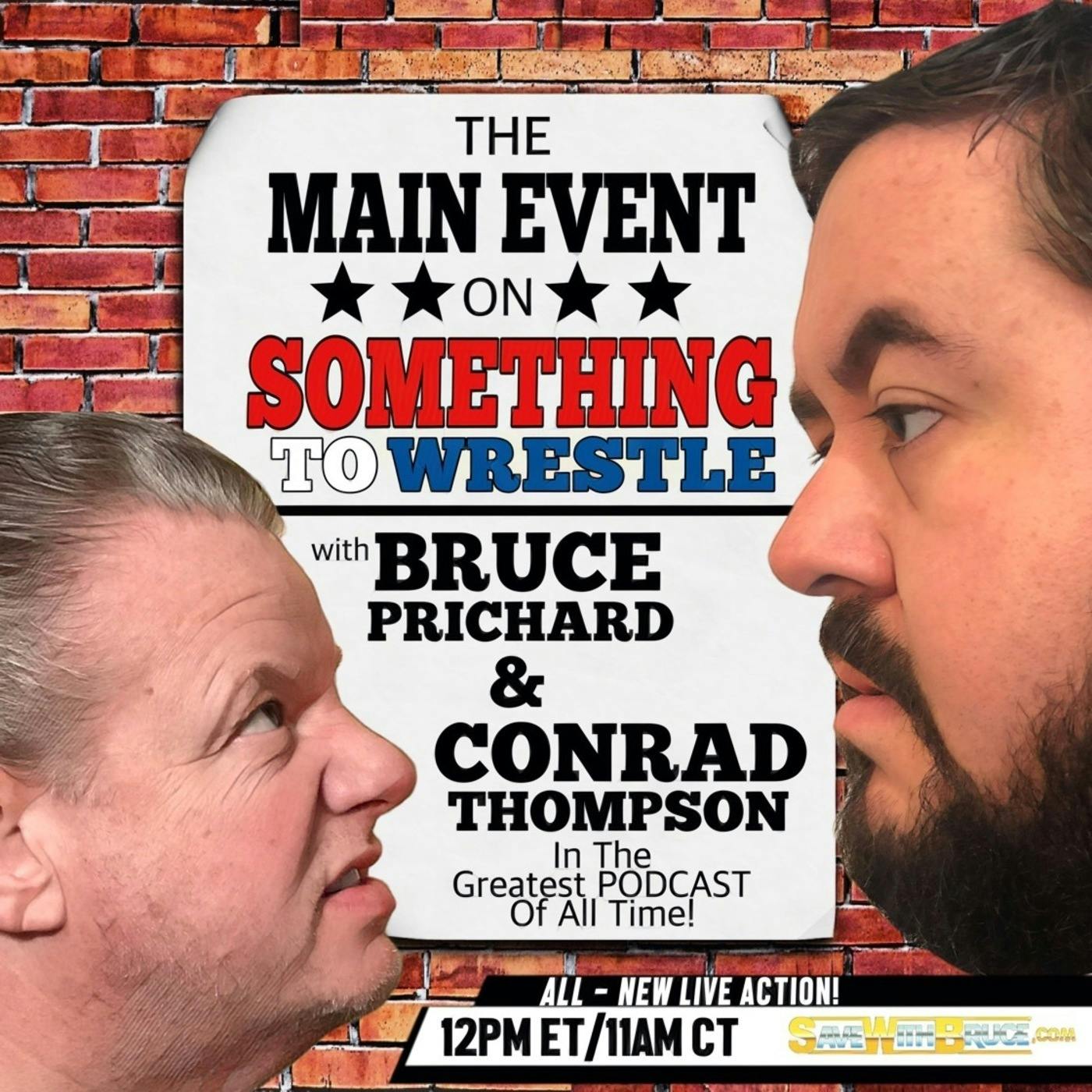
Episode 85: The Main Event on NBC: Hogan vs. Andre '88
WWE still refers to our topic today as, "the most watched wrestling program in American TV history." February 5, 1988, was the first time pro-wrestling had been on network TV since 1955 and 33 million viewers tuned into NBC to see the biggest rematch in history: Hulk Hogan vs. Andre the Giant for the WWF World Championship. The largest audience in wrestling history was in for a treat: "How can there be two Dave Hebners?" Bruce breaks down arguably the best angle in WWF history and it was so good Meltzer even wrote, "Everything worked so well it was scary." We break down everything from that night and the weeks leading up to it. How did the WWF negotiate to get a slot during prime time, when was the decision made to switch the title, how did word leak out, how were tickets selling for WrestleMania IV relative to III, why did this show happen in Indianapolis, what was Ebersol's involvement since he wasn't with NBC at the time, who put together the graphics and backdrops, who produced the promos for the show, when and where were those shot, why didn't the main event close the show, what was different between Saturday Night's Main Event and the Main Event, whose idea was Peggy Sue, when was it decided that Honky wouldn't drop the IC title, who bought thousands of tickets to WrestleMania, the new World Title, who gets the credit for the evil twin idea, why there were empty seats in the arena, who the director was, who shot the Hulk Hogan training montage and why they used Jake Robert's theme, and much more about the biggest show in WWF history! Wake up with the Morning Deuce with Bruce: www.Facebook.com/SomethingToWrestle Ask your questions for "Undertaker 95/96/97" next week: www.twitter.com/PrichardShow Don't miss our live show in Vegas on 2/24: www.NotARib.com Join us in Florida for St. Patrick's Day with the Florida Panthers 3/17: www.BoxOfGimmicks.com Win a Free Shirt This Week: www.instagram.com/PrichardShow Buy a Shirt, Get a Call from Bruce: www.BrucePrichard.com Save Yourself Some Money: www.SaveWithBruce.com ONLY Official STW YouTube: www.youtube.com/SomethingToWrestle
Learn more about your ad choices. Visit megaphone.fm/adchoices
Available Results
Generated results are saved to your library for reuse and search.
Choose Template
Pick the result you want. You can review provider and model before generating.
A concise first-pass summary for understanding the episode quickly.
A comprehensive, source-grounded extraction of the reusable knowledge in an episode.
Technologies, AI models, technical methods, capabilities, limitations, and adoption implications.
Repeatable methods, frameworks, mental models, processes, and systems.
A dedicated analysis of warnings, limitations, trade-offs, weak evidence, and uncertainty.
A dedicated inventory of concrete resources named in the episode.
A concise first-pass summary for understanding the episode quickly.
A detailed readable summary organized by chapter or topic.
A navigable map of subjects, topic flow, and suggested chapters.
A comprehensive, source-grounded extraction of the reusable knowledge in an episode.
Reusable atomic knowledge units extracted from the episode.
A comprehensive extraction focused on health practices, protocols, claims, and safety caveats.
A comprehensive extraction focused on opportunities, strategy, markets, and company building.
Explicit actions, next steps, habits, recommendations, and things to avoid.
A dedicated inventory of concrete resources named in the episode.
A dedicated analysis of warnings, limitations, trade-offs, weak evidence, and uncertainty.
A concise first-pass summary for understanding the episode quickly.
A detailed readable summary organized by chapter or topic.
A navigable map of subjects, topic flow, and suggested chapters.
A comprehensive, source-grounded extraction of the reusable knowledge in an episode.
Reusable atomic knowledge units extracted from the episode.
A comprehensive extraction focused on health practices, protocols, claims, and safety caveats.
A comprehensive extraction focused on opportunities, strategy, markets, and company building.
Scientific findings, mechanisms, studies, hypotheses, and the limits of the evidence discussed.
Technologies, AI models, technical methods, capabilities, limitations, and adoption implications.
Investment theses, assets, catalysts, valuation reasoning, time horizons, and risks.
Chronologies, actors, causes, consequences, turning points, and competing historical interpretations.
Policies, proposals, stakeholders, arguments, implementation constraints, and predicted effects.
Career paths, skills, hiring signals, workplace decisions, transitions, and limitations of the advice.
Behavioral mechanisms, biases, motivation, habits, emotions, interventions, and evidence limitations.
Economic mechanisms, incentives, indicators, market structure, forecasts, and uncertainty.
Leadership principles, team systems, organizational design, culture, feedback, and failure modes.
Audience, positioning, messaging, acquisition, retention, experiments, metrics, and failed approaches.
Teaching methods, learning strategies, practice, feedback, assessment, and effectiveness evidence.
Theses, premises, arguments, objections, values, thought experiments, and unresolved questions.
Communication patterns, conflict, boundaries, expectations, repair methods, and contextual limitations.
Books, papers, authors, courses, and other learning resources mentioned in the episode.
Repeatable methods, frameworks, mental models, processes, and systems.
Explicit actions, next steps, habits, recommendations, and things to avoid.
Memorable statements and important claims with attribution and source context.
A dedicated inventory of concrete resources named in the episode.
A dedicated analysis of warnings, limitations, trade-offs, weak evidence, and uncertainty.