How To Use Boxing, Sparring & Fighting To Turn Your Body Into The Ultimate Fitness Weapon.
https://bengreenfieldfitness.com/boxing
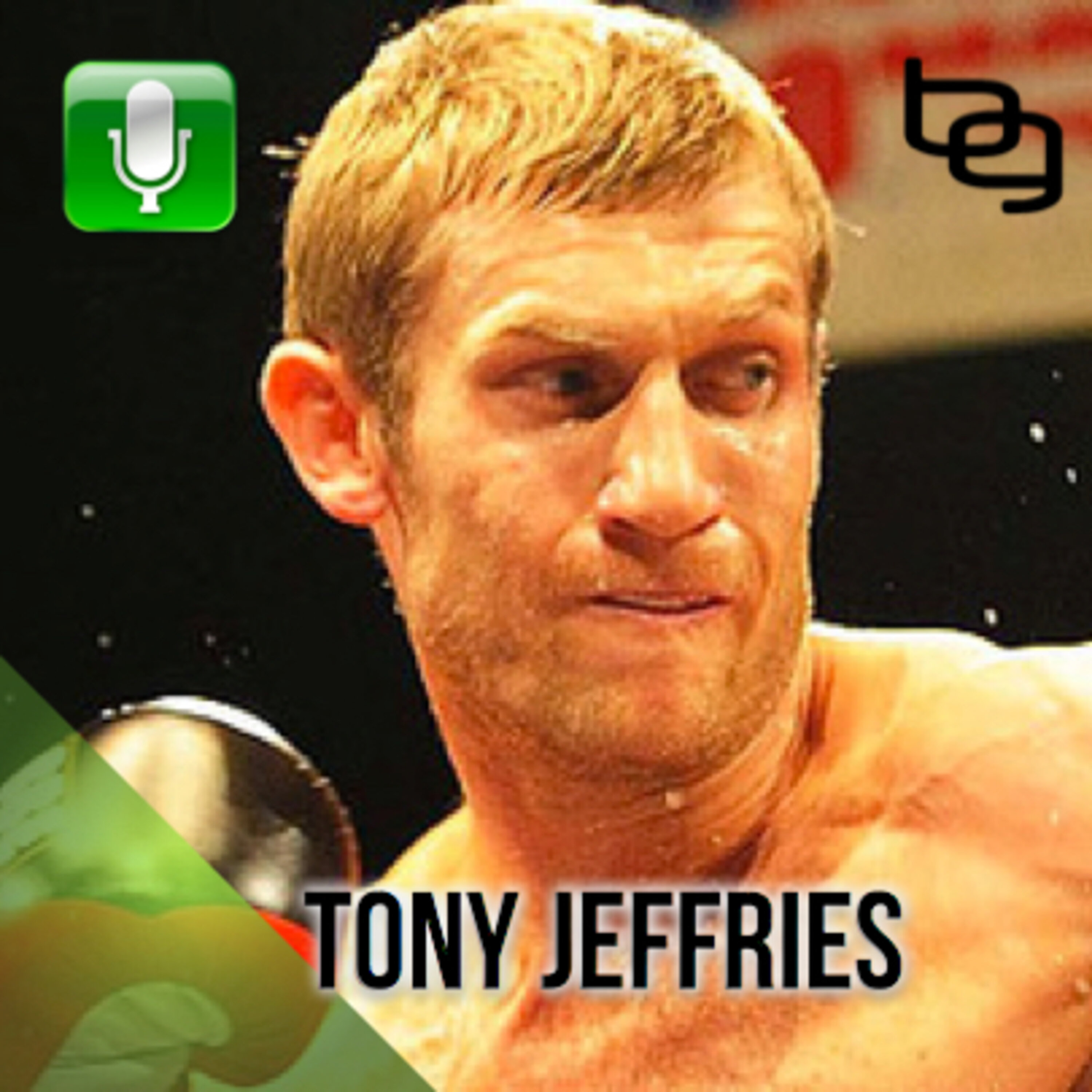
The last few times I've visited LA, I've had the privilege of getting my butt kicked in boxing and sparring with an English former professional boxer who won a bronze medal in the 2008 Summer Olympics, was a 7 time national champion boxer, and was undefeated in the sport all the way up to his 2012 retirement.
His name is Tony Jeffries, and in this episode, you get to tune in as Tony descends upon my home in Spokane, WA to podcast in my own backyard - just after our sparring session in my basement and workout on my home obstacle course.
Originally from Sunderland, England, Tony Jeffries moved to Los Angeles, California after being forced to retire from his career as professional boxer due to hand injuries. It was in LA that Tony met business partner, Kevan Watson. The pair started teaching boxing classes on Santa Monica Beach for which demand grew so much that the two are now proud owners of two of Southern California’s most prestige boxing gyms, Box ‘N Burn. Ranked number 1 gym in California by Men’s Fitness Magazine and named number 1 boxing class in LA by Time Out magazine, Box ‘N Burn provides clients – which for Tony, now includes the likes of Chris Hemsworth, Travis Barker, Tim Tebow and singer/songwriter Skyler Grey – with a highly effective, unique workout, teaching them real boxing technique through 1-on-1 mitt work. World-class athlete turned businessman, Tony, is also co-creator of the Box ‘N Burn Academy – the world’s number 1 boxing fitness and certification course for Personal Trainers and fitness enthusiasts. Tony shares his motivation and passion for both business and boxing through his weekly Box ‘N Life podcast. Hosted with Head Trainer of Box ‘N Burn Santa Monica, Glenn Holmes, the two have featured notable names from the worlds of business, fighting, and the arts on the show, including Gary Vaynerchuck, Dan Pena, Chris Shifflet and Brendan Schaub to name a few!
During our discussion, you'll discover:
-What Tony thinks about the upcoming Connor Mcgregor vs. Floyd Mayweather fight...[8:10]
-How common TBI's are and if Tony has had to deal with concussions/concussion repair...[13:50]
-What the training regimen of a professional boxer looks like...[21:20]
-What the physiological requirements of boxing are...[33:00]
-How the box n' burn sessions work...[36:15]
-Tony's recommendations to anybody who wants to step into the ring and fight...[43:00]
-What got Tony into boxing in the first place...[47:10]
-How Tony came to be undefeated...[48:10]
Resources from this episode: -Tony's Box n' Burn gyms -Box n' Burn academy -Teloyears podcast -Concussion Repair Manual by Dr. Dan Engle -Peak Brain Institute -Professor In The Cage book
Show Sponsors:
-Four Sigmatic - Go to FourSigmatic.com/Greenfield and use couple code "BENGREENFIELD" for 15% off.
-HealthGains - Text the word "GAIN" to 313131 for $250 off any HealthGains treatment.
-Antrantil - For all of your Bloating, SIBO, IBS, Leaky Gut issues, go to LoveMyTummy.com/Ben. Use code "BEN" at the checkout to get 15% off your order.
Do you have questions, thoughts or feedback for Tony or me? Leave your comments below and one of us will reply!
See omnystudio.com/listener for privacy information.
Available Results
Generated results are saved to your library for reuse and search.
Choose Template
Pick the result you want. You can review provider and model before generating.
A concise first-pass summary for understanding the episode quickly.
A comprehensive, source-grounded extraction of the reusable knowledge in an episode.
A comprehensive extraction focused on health practices, protocols, claims, and safety caveats.
A dedicated analysis of warnings, limitations, trade-offs, weak evidence, and uncertainty.
Repeatable methods, frameworks, mental models, processes, and systems.
A comprehensive extraction focused on opportunities, strategy, markets, and company building.
A concise first-pass summary for understanding the episode quickly.
A detailed readable summary organized by chapter or topic.
A navigable map of subjects, topic flow, and suggested chapters.
A comprehensive, source-grounded extraction of the reusable knowledge in an episode.
Reusable atomic knowledge units extracted from the episode.
A comprehensive extraction focused on health practices, protocols, claims, and safety caveats.
A comprehensive extraction focused on opportunities, strategy, markets, and company building.
Explicit actions, next steps, habits, recommendations, and things to avoid.
A dedicated inventory of concrete resources named in the episode.
A dedicated analysis of warnings, limitations, trade-offs, weak evidence, and uncertainty.
A concise first-pass summary for understanding the episode quickly.
A detailed readable summary organized by chapter or topic.
A navigable map of subjects, topic flow, and suggested chapters.
A comprehensive, source-grounded extraction of the reusable knowledge in an episode.
Reusable atomic knowledge units extracted from the episode.
A comprehensive extraction focused on health practices, protocols, claims, and safety caveats.
A comprehensive extraction focused on opportunities, strategy, markets, and company building.
Scientific findings, mechanisms, studies, hypotheses, and the limits of the evidence discussed.
Technologies, AI models, technical methods, capabilities, limitations, and adoption implications.
Investment theses, assets, catalysts, valuation reasoning, time horizons, and risks.
Chronologies, actors, causes, consequences, turning points, and competing historical interpretations.
Policies, proposals, stakeholders, arguments, implementation constraints, and predicted effects.
Career paths, skills, hiring signals, workplace decisions, transitions, and limitations of the advice.
Behavioral mechanisms, biases, motivation, habits, emotions, interventions, and evidence limitations.
Economic mechanisms, incentives, indicators, market structure, forecasts, and uncertainty.
Leadership principles, team systems, organizational design, culture, feedback, and failure modes.
Audience, positioning, messaging, acquisition, retention, experiments, metrics, and failed approaches.
Teaching methods, learning strategies, practice, feedback, assessment, and effectiveness evidence.
Theses, premises, arguments, objections, values, thought experiments, and unresolved questions.
Communication patterns, conflict, boundaries, expectations, repair methods, and contextual limitations.
Books, papers, authors, courses, and other learning resources mentioned in the episode.
Repeatable methods, frameworks, mental models, processes, and systems.
Explicit actions, next steps, habits, recommendations, and things to avoid.
Memorable statements and important claims with attribution and source context.
A dedicated inventory of concrete resources named in the episode.
A dedicated analysis of warnings, limitations, trade-offs, weak evidence, and uncertainty.