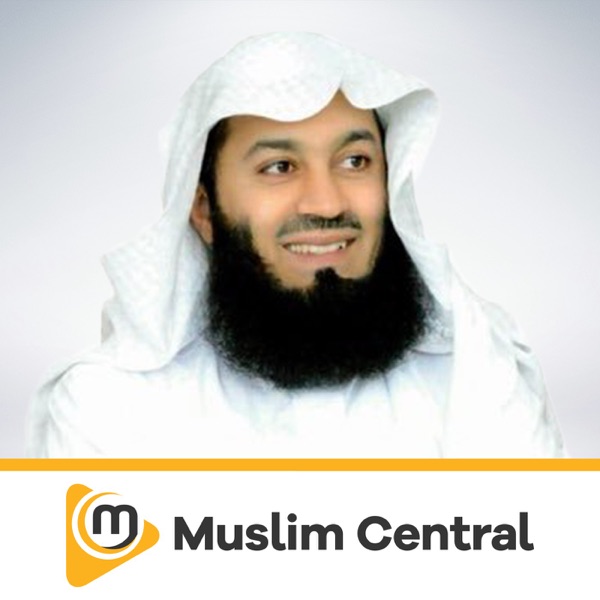
Mufti Menk, (Doctor, Mufti, Ismail Menk) is a leading global Islamic scholar born and raised in Zimbabwe. He studied Shariah in Madinah and holds a Doctorate of Social Guidance from Aldersgate University.
Mufti Menk’s work has gained worldwide recognition and he has been named one of “The Top 500 Most Influential Muslims in the World” since 2010.
He has millions of followers across his social media platforms. Mufti Menk’s personable style and down to earth approach has made him one of the most sought after scholars in our time. He has endeared himself to people with his much loved lecture series, a Mufti Menk hallmark.
He travels the world spreading a simple but profound message: “Do good, help others while preparing for the Hereafter”.
He is active in the international arena and is a strong proponent of peace and justice, speaking up against all forms of terrorism.
Friday lecture delivered in Accra Ghana- Curing the heart Here, the mufti takes to the mimbar to educate and inform us about the importance of a clean heart, one that is pure from impurities.
Just like scum that leave their mark in our baths, so do habits like envy, anger, selfishness, pride leave marks on our Iman. If not cured, these lead to violence resulting in deaths and in some places are already leading to killings, as was predicted by our beloved prophet Muhammad s.a.w.
Withverses of the Quran and hadiths, our mufti educates us on the crucially required curing of our hearts. Listen to this talk and increase our knowledge and our chances of earning the pleasure of Allah.
Final Episode of the Ramadan 2017 series.
Taraweeh Lecture at Masjidul Quds Gatesville Cape Town
Date : 21st June 2017
Topic : Save Ourselves Part 2
Speaker : Mufti Ismail Menk
Taraweeh Lecture at Masjidul Quds Gatesville Cape Town
Date : 5th June 2017
Topic : Save Ourselves Part 2
Speaker : Mufti Ismail Menk
This episode continues the story of Musa (a.s.) that was mentioned in the previous episode. But first here is a reminder: Sometimes Muslims that are born in Muslim families take Islam for granted, whereas a revert might care more for his new religion. We should understand that Islam is a gift and should not take our deen too lightly.
Now the continuation of the story: After the mages prostrated, the pharaoh said (approx.): "I have not yet allowed you to believe him." (This also shows that he knows that he is not god himself, but he still remains with pride.) Therefore he threatened them with a big punishment, but the newly become Muslims had no fear. They knew that they are going to Allah (s.w.t.). Allah forgave them and promised them paradise.
Important lesson: Change yourself for the sake of Allah (s.w.t.), Even if it feels hard, the reward is far beyond imagination! Don't be irritated if you are being tested, as this is a part of the believe.
May Allah (s.w.t.) give us this type of conviction to us, too, ameen. A similar case happened with Umar (r.a.).
Allah (s.w.t.) then commanded later Musa (a.s.) to go to the sea with this people. The pharaoh followed them with an army. The children of Israel became fearful but Musa (a.s.) knew that Allah (s.w.t.) will help them. He opened with the stick the sea for them to flee. The pharaoh with full pride said, that he opened the sea and marched with his army to Musa's (a.s.) way. But this path in the sea was mentioned to be the death punishment for the pharaoh. Only in his last second of life he accepted Islam, but this type of believe cannot be accepted, as Allah (s.w.t.) mentions. This is the end of story of Musa (a.s.) in the 26th surah.
Here we also learn: The pharaoh was with his people the majority of his time and yet he was totally wrong. So even if the majority nowadays is wrong, we are still obliged to follow that which is right.
Allah (s.w.t.) has the highest rank of mercy. He has the ability to punish (he will in certain cases) but his mercy encompasses his anger/punishment. Therefore a believer should often ask for Allah's forgiveness, as he is the most forgiving, the most merciful.
Taraweeh Lecture at Masjidul Quds, Gatesville, Cape Town
In this episode we were reminded that Allah has prepared paradise for us and it is not out of reach. Allah grants freedom every night of Ramadhan and save from hell fire.
The characteristics of people that will enter Jannah are :
They say we have believed and want you to forgive us
They are patient
They are truthful
They are obedient
Therefore don't lose hope, but change your ways and habits.
Save yourself by following the prophet S.A.W has Allah has instructed and He will love you and forgive your sins.
Don't question the decree of Allah instead keep asking, hoping and trying but never lose hope in Allah.
Help yourself by believing in Allah and do not associate partners with him. Listen to belief in Jesus, avoiding unnecessary argument and many more in this episode.
Taraweeh Lecture at Masjidul Quds, Gatesville, Cape Town.
Uploaded May 29, 2017
Transcribed on 30/05/17 and 01/06/17
Asalam alaikom wa rathmathullahi wa barakatu
Bismillah irahaman irahim wal hamdulillah rabbial amin “... ...”
All praise is indeed due to Allah, subhana wa t’ala. Blessings and salutations upon Mohammed sallahu alaihi wa salam, his household, his companions. May Allah, subhana wa t’ala, bless them all and bless every one of us. Amin.
My brothers and sisters we know that it is important for us to visit one another, especially when one of us is not doing too well. So, on this day, we remember those from amongst us who are ill, sickly, who could not make it here this evening, or where ever they are across the globe, whether they are listening right now, or listen later or may not listen, we ask Allah to grant them cure.
Remember, when a person’s heart is softened, it is actually when they are not doing too well. When they are in need of prayers, when they are in a condition that may not be 100%, generally their heart is ready to receive any goodness. This is why it is important for us to make it our business to go out to visit those who are not doing too well. A good word can go a long way in not only boosting their morale, making them feel better but even in drawing them closer to Allah, subhana wa t’ala. So therefore we always remember one another, we always pray for one another. I receive so many messages on a daily basis, please pray for this person, that person, sometimes by name, sometimes without a name. I’m sure it happens to a lot of us. Let’s pray that Allah grants them shifaa. May Allah, subhana t’ala, grant them good health. Remember, when you pray for someone else, the angels are making the same prayer, for you! So, it’s actually du’a for your own good health.
The same applies to those who are incarcerated, those who are in the prisons at the moment. I actually receive e-mails and letters from the inmates who listen to this program, live and even later on. It’s amazing! I wouldn’t have guessed this, but for a few years it has been happening. My brothers, my sisters, we remember you. Our hearts are with you. No matter what has happened, we are not really too interested in what has happened, the fact that the correctional services are taking care of you, we are quite confident that, by the time you come out of there, you will have corrected yourself and we are ready to accept you back in society, and community. Amin.
My beloved brothers and sisters, the reason I start this way, is because sometimes, even if there is nothing wrong, it’s important for us to visit one another. You maintain family relations. You go for a reason, that purpose is in order to boost the relationship. We have something known as al Rahim or the will, Qoorba, those who are related to us through the womb, those who have a relationship through blood with us, we should be keeping some ties with them. It does not have to be so much that they get irritated with us. Nor should it be so little that we don’t even know who our relatives are and we cannot fulfil their rights. If we don’t know who our family members are, if we have not introduced our children to the broader family, how then would we be able to fulfil the great act of worship known as “maintaining family ties” when we don’t even know who they are? So, it is important.
A lot of the older people used to take pride in the family unit. I hope it is not done in order to draw ‘tribal lines’ or lines in terms of ‘caste’ etc because those lines are the lines of the period of ignorance. They mean nothing in the eyes of Allah, subhana wa t’ala. How many families are suffering because the parents think that they are above the others because they come from a family that belongs to a caste, audhu billah, that they claim is higher, yet the Prophet, sallallahu alaihi wa salam, says ... ...”There is no virtue of an Arab over a non-Arab or a non-Arab over an Arab or a White over a Black except by piety” which is known by Allah, subhana wa t’ala. So you treat your brothers as equals, and your sisters as equals, and you never ever use this because if you DO you will never be able to save yourself from the wrath of Allah, subhana wa t’ala, when it descends. Imagine, when Allah’s punishment comes it will be too late! May Allah subhana wa'tala grant us the ability to understand.
Wallahi.
Today, I was... I received a clip of a young boy from the Gambia reading the Qur’an. There were actually 3 or 4 boys. Each one wanted to read the Qur’an and their Qur'an was so melodious. I chose the smallest or the youngest person and I posted it up on Instagram with a caption encouraging us to do more regarding our connection with the Qur'an. Who would have guessed, that in West Africa there are thousands of people who only speak the Arabic language? Did you know that? And it is not their mother tongue. They have ensured from a young age that they speak Arabic. And, they have memorized the Qur'an better than you and I can imagine from a very early age. They have competitions and contests in Sierra Leone, in the Gambia, in Ghana, in Nigeria, in so many places subhan Allah, in Mali such that our little competitions would actually be dwarfed by the size of theirs. They have stadiums filled with hundreds of thousands of people, subhan Allah. They are serving Allah. They are worshipping Allah, subhana wa t'ala, and we, sitting comfortable here, think that we are a big deal sometimes. And when we look at them, sometimes, shaytain makes us think that we are better. Never ever. Never. We are not better. In fact it is Allah, subhana wa t'ala who knows the level of piety. Those who are struggling in the townships, in the villages – only Allah knows their struggle – yet they are dedicated to worshipping Allah, subhana wa t'ala. May Allah make it easy for us. This is why we say there is no room for pride and arrogance. You never know where you are going to be the minute you close your eyes. May Allah, subhana wa t'ala, grant us Jennaht al Firdous.
May Allah open our doors.
So, when we visit each other we should be visiting for the right reasons. But, there is an etiquette, or, there are rules and regulations governing how you visit someone. Allah subhana wa t'ala in Surat al Nur makes mention of some of these rules. In verse 27 Allah says “... ...” “Oh you who believe! Do not enter homes that are not yours until you have done something known as ‘Istinass’ you have made your presence known.” You have actually sought permission to enter a house that is not yours. Now, this happens in so many ways. Sometimes, a long time back, we used to get to the door, sometimes clear the throat a little bit maybe, maybe people can hear you as you’re talking a little bit loudly and you knock the door so that they know there is someone at the door. They would then ask you who you were. It is important to answer that with a correct, straightforward answer. Don’t say “it’s me” because “me” – every one of us is a “me”, isn’t it? So if I say “me”, you say “me”, we all me “me”s. May Allah, subhana wa t'ala, grant us goodness. So you say your name, loud and clear. They should know, and thereafter, guess what? They have a right to tell you to go back home. Did you know that? Allahu akhbar!
Imagine you have arrived at someone’s house. You knock the door and they say “Brother, we’re a little bit busy now. Please can you come back later?” And you say “But I came from so far!” Well Allah has made it easy for us. You know in the Qur'an in verse number 28 Allah says “... ...”...“If you are told to go back then go back, it is purer for you. It is better for you. They might be busy. They might be having an intimate moment. They might be having for example another plan. They may have decided to lay the table and this brings me to the point.
Some people, it seems, intentionally go for a free meal. So they arrive at the time of a meal. Knock the door. Where are we going for lunch today? “Eh! Let’s go to Butta Mohammed there, man! You know. We’ll go to his house. There is some nice food all the time. Arrive at his house at exactly 12:29 because at 12:30 they lay the table. Then open the door, we’ll have a chow and we’ll come back.” That’s how some people think! (Well, I hope not, but that’s what it seems like, right?) People go at the wrong time. So learn to go at the right time. Today Allah has made it easy for us. We have technology. Phone! I think it is against the etiquette of a Muslim to actually go without communicating, without phoning, without making prior arrangements. Before we needed an appointment for a doctor, now you need an appointment to visit your brother’s house on a Sunday morning. It’s not so difficult. But you communicate. They might have had a plan, they might want to go out. So as you enter the door everyone is edgy. “Salam alaikom” “wa alaikom salam”. They are waiting for you. Ok. What are you going to say? “How are you doing?” “Fine.” That means “Get lost. Please leave. Can you please go. We were planning an outing. You have spoiled our morning”. Remember this, my brothers and sisters, it’s a reality. Allah speaks about this in Surah tul Noor in a different way, but I’m giving you a current day example. It’s a reality. Send a message. “Can we please visit you on Sunday morning 10 o’clock?” They’ll tell you “No. Visit at 3 in the afternoon” But my brothers and sisters, something even more interesting than the visit...
To go is one thing. But to know when to leave is more important. Allahu akbar! Sometimes, we enter the house subhan Allah, we sit there for hours on end. I know of cases where family members dread the coming of a certain Granny because she doesn’t know when to go. So they say if she comes she is going to sit all afternoon, so now when she knocks the door she’s not welcome, not because we are busy, but because she doesn’t know when to leave. Well,...
Warming up and warming down are understood by sportsmen. However, in the spiritual sense it needs to be understood. This talk reminds us of why and how to prepare for such a blessed season - Ramadhaan.
A lecture delivered "At The Peak" Convention in Hong Kong. Mention is made of some of the trials and the glad tidings that followed within the lives of the Messengers of Allah Almighty peace be upon them all. Lessons drawn for us to be inspired by and learn from.
Friday Jumu'ah Sermon from the Kowloon Masjid in Hong Kong. A beautiful encouragement of how to live your life and die in a good condition with the Almighty pleased with you.
Summary of points covered by Mufti in his talk:
The question of why is answered? Why am I alive, why do I need to work, what is my purpose?
Allah choses for us, who we are, where we were born. Allah will test us.
Mufti explains and advises about reading the Quran daily. We all have mobile phones, download a Quran App and read a few verses daily. We check our phones constantly. We use our phones to communicate, communicate using the phone by reading Quran on it. The Quran will testify for us.
Everyone has challenges.
How you live is how you will die. Spread the Salaam, with a smile. Muslims must lead the way in greeting with a smile.
Janah can be earned through simple deeds.
The Straight Path Convention in Kuala Lumpur discusses the Divine Rights this year. This lecture explains some aspects of the Farewell Message of the Prophet pbuh.
The Straight Path Convention in Kuala Lumpur discusses the Divine Rights this year. This lecture is regarding the rights of Muslims upon other Muslims.
The "Inspire" Tour of the Caribbean brings us to the Muslim Fair at the National Cricket Centre in Trinidad and Tobago where this lecture was delivered.
A lecture delivered at Al Falaah Centre in Bridgetown Barbados as part of the "Inspire" Tour of the Caribbean on issues surrounding the five pillars of Islam.
A lecture delivered in Georgetown Guyana at the Inspire Convention. It is based on the three categories of life and what each category entails. Practical issues mentioned with much humour. Emphasis of character development.
A lecture delivered in Georgetown Guyana at the Inspire Convention. It deals with the tests of mankind and lessons from the way the Prophets dealt with their trials and supplicated.