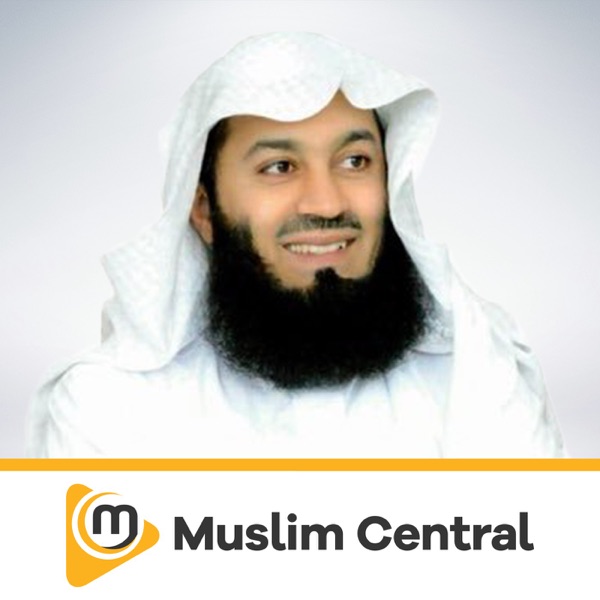
Mufti Menk, (Doctor, Mufti, Ismail Menk) is a leading global Islamic scholar born and raised in Zimbabwe. He studied Shariah in Madinah and holds a Doctorate of Social Guidance from Aldersgate University.
Mufti Menk’s work has gained worldwide recognition and he has been named one of “The Top 500 Most Influential Muslims in the World” since 2010.
He has millions of followers across his social media platforms. Mufti Menk’s personable style and down to earth approach has made him one of the most sought after scholars in our time. He has endeared himself to people with his much loved lecture series, a Mufti Menk hallmark.
He travels the world spreading a simple but profound message: “Do good, help others while preparing for the Hereafter”.
He is active in the international arena and is a strong proponent of peace and justice, speaking up against all forms of terrorism.
Mufti Ismail Ibn Musa Menk of Zimbabwe. A Lecture from Series: Subjects In Noble Quran (2009).
Mufti Menk Explaining the Importance of using the Duas of the Prophets (AS) as Mentioned in the Quran. He also mentions specifics duas of Prophet Mohammad (PBUH).
Do you have problems in life? Watch This!
Our Time In This World Is Limited, Make Every Moment Count -
ADVICE FROM QURAN & LIFE OF PROPHET MUHAMMED (pbuh) FOR YOUR WHOLE LIFE.
Part 2 of the Sisters Lesson from Surah Jaathiyah Verse 16. Delivered in Harare, Zimbabwe.
Part 1 was delivered by other tutors in the absence of Mufti Menk.
Lecture Entitled Who Was Muhammad pbuh
At Doha Islamic Convention 2015
February 5th 2015
Lecture Delivered in Doha, Qatar
Katara Cultural Village Amphitheatre
Part 2 of the Sisters Lesson from Surah Dukhaan Verse 17. Delivered in Harare, Zimbabwe.
Part 1 was delivered by other tutors in the absence of Mufti Menk.
Actions That Spoil Our Good Deeds, #1 Bid'ah (Innovation).
Verily, the permissible things are clear and the forbidden things are clear. And between them are some matter which are doubtful. Therefore, leave that which makes you doubt for what does not make you doubt.” Hadith – (Recorded in al-Nisaai)