Search this show’s transcripts

SHE MD

en us

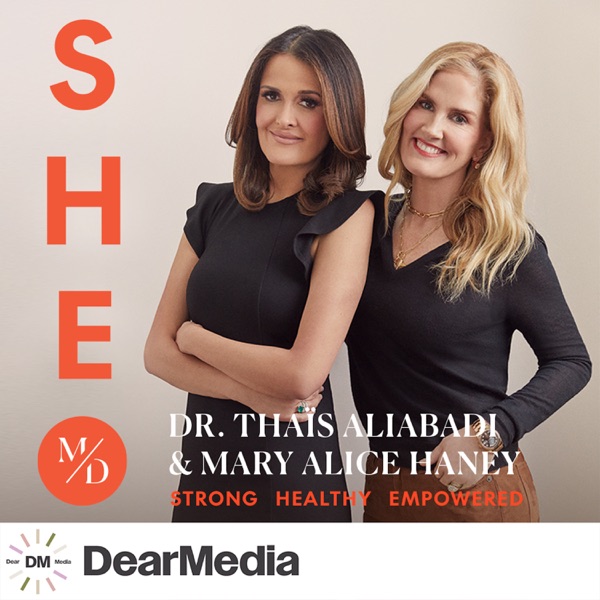
SHE MD is a weekly podcast hosted by world-renowned OBGYN, Dr. Thais Aliabadi, “Dr. A,” and women's advocate and influencer, Mary Alice Haney. Their candid conversations with celebrity guests and today's leading experts about women's health topics, such as menopause, endometriosis, PCOS, and fertility empower their audience with the knowledge and tools to become their own health advocates.

Dr. A and Mary Alice dive deep into critical health issues, offering women the knowledge and tools to become their best health advocates.

At SHE MD, we believe that every woman deserves access to the latest medical insights, personalized care strategies, and expert advice to navigate their health journey. From breaking down myths to providing practical tips, Dr. Aliabadi and Mary Alice Haney create a welcoming and informative space for women to take control of their health. The podcast features exclusive interviews with top-tier celebrity guests and leading experts across the medical, wellness, and health industries. Together, they explore real-world stories, struggles, and successes to ensure that every listener can feel heard and supported.

SHE MD aims to change that by providing a platform where women can receive trustworthy, expert advice on key health issues affecting their lives. Whether you’re dealing with painful menstrual cycles, navigating fertility challenges, or going through menopause, SHE MD brings clarity to these topics in a way that feels personal, approachable, and actionable. Dr. Thais Aliabadi provides expert insights into the most pressing women’s health issues, offering listeners a chance to learn from one of the leading voices in the field. Her knowledge is complemented by Mary Alice Haney's ability to relate to everyday challenges, offering a compassionate and approachable perspective on complex topics.

Meet the Hosts

Dr. Thais Aliabadi, "Dr. A"

Dr. Thais Aliabadi is a renowned board-certified OBGYN, known for her compassionate, patient-first approach. Specializing in fertility, high-risk pregnancies, menopause, and minimally invasive surgeries, Dr. A has spent her career guiding women through all stages of life. With experience treating high-profile patients and a commitment to public health education, she’s a trusted voice advocating for better healthcare access for women globally. Dr. Aliabadi frequently appears in major media to discuss key women’s health issues.

Mary Alice Haney

Mary Alice Haney is a prominent women's advocate and lifestyle influencer who empowers women to take control of their health and wellness. With a background in fashion and lifestyle, she brings a holistic approach to well-being. As co-host of SHE MD, Mary Alice fosters open, relatable conversations on often-overlooked women's health topics, helping women break down barriers and gain the knowledge they need to advocate for themselves. Her commitment to providing practical, actionable advice has made her a trusted figure in the health community.


Resources

SHE M/D- https://www.shemdpodcast.com

SHE M/D YouTube- https://www.youtube.com/@SHEMDPodcast

Instagram- https://www.instagram.com/shemdpodcast/

Mary Alice Haney Instagram- https://www.instagram.com/haneyofficial/

Dr A Instagram- https://www.instagram.com/drthaisaliabadi/

Tik Tok- https://www.tiktok.com/@shemdpodcast

Facebook- https://www.facebook.com/profile.php?id=61556530329981&sk=about

Twitter- https://x.com/shemdpodcast


#SHEMDPodcast #WomensHealth #HealthAdvocacy #DrThaisAliabadi #MaryAliceHaney #MenopauseMatters #EndometriosisAwareness #PCOS #FertilityJourney #OBGYN #HealthAndWellness #MedicalInsights #HealthEducation #EmpoweringWomen #HealthcareSelfAdvocacy #HealthTips #BreakingHealthMyths #WomenSupportingWomen #HealthJourney

More details

SHE MD is a weekly podcast hosted by world-renowned OBGYN, Dr. Thais Aliabadi, “Dr. A,” and women's advocate and influencer, Mary Alice Haney. Their candid conversations with celebrity guests and today's leading experts about women's health topics, such as menopause, endometriosis, PCOS, and fertility empower their audience with the knowledge and tools to become their own health advocates.

Dr. A and Mary Alice dive deep into critical health issues, offering women the knowledge and tools to become their best health advocates.

At SHE MD, we believe that every woman deserves access to the latest medical insights, personalized care strategies, and expert advice to navigate their health journey. From breaking down myths to providing practical tips, Dr. Aliabadi and Mary Alice Haney create a welcoming and informative space for women to take control of their health. The podcast features exclusive interviews with top-tier celebrity guests and leading experts across the medical, wellness, and health industries. Together, they explore real-world stories, struggles, and successes to ensure that every listener can feel heard and supported.

SHE MD aims to change that by providing a platform where women can receive trustworthy, expert advice on key health issues affecting their lives. Whether you’re dealing with painful menstrual cycles, navigating fertility challenges, or going through menopause, SHE MD brings clarity to these topics in a way that feels personal, approachable, and actionable. Dr. Thais Aliabadi provides expert insights into the most pressing women’s health issues, offering listeners a chance to learn from one of the leading voices in the field. Her knowledge is complemented by Mary Alice Haney's ability to relate to everyday challenges, offering a compassionate and approachable perspective on complex topics.

Meet the Hosts

Dr. Thais Aliabadi, "Dr. A"

Dr. Thais Aliabadi is a renowned board-certified OBGYN, known for her compassionate, patient-first approach. Specializing in fertility, high-risk pregnancies, menopause, and minimally invasive surgeries, Dr. A has spent her career guiding women through all stages of life. With experience treating high-profile patients and a commitment to public health education, she’s a trusted voice advocating for better healthcare access for women globally. Dr. Aliabadi frequently appears in major media to discuss key women’s health issues.

Mary Alice Haney

Mary Alice Haney is a prominent women's advocate and lifestyle influencer who empowers women to take control of their health and wellness. With a background in fashion and lifestyle, she brings a holistic approach to well-being. As co-host of SHE MD, Mary Alice fosters open, relatable conversations on often-overlooked women's health topics, helping women break down barriers and gain the knowledge they need to advocate for themselves. Her commitment to providing practical, actionable advice has made her a trusted figure in the health community.


Resources

SHE M/D- https://www.shemdpodcast.com

SHE M/D YouTube- https://www.youtube.com/@SHEMDPodcast

Instagram- https://www.instagram.com/shemdpodcast/

Mary Alice Haney Instagram- https://www.instagram.com/haneyofficial/

Dr A Instagram- https://www.instagram.com/drthaisaliabadi/

Tik Tok- https://www.tiktok.com/@shemdpodcast

Facebook- https://www.facebook.com/profile.php?id=61556530329981&sk=about

Twitter- https://x.com/shemdpodcast


#SHEMDPodcast #WomensHealth #HealthAdvocacy #DrThaisAliabadi #MaryAliceHaney #MenopauseMatters #EndometriosisAwareness #PCOS #FertilityJourney #OBGYN #HealthAndWellness #MedicalInsights #HealthEducation #EmpoweringWomen #HealthcareSelfAdvocacy #HealthTips #BreakingHealthMyths #WomenSupportingWomen #HealthJourney

Sources and links

Episodes

Page 1 · 50 per page

Could your nervous system be playing a bigger role in chronic illness than you realize? In this episode of SHE MD, Mary Alice Haney is joined by founder of The Tick Chicks, Alicia White, and Primal Trust founder, Cathleen King, to discuss the connection between Lyme disease, mold exposure, autoimmune conditions, trauma, and nervous system dysregulation. Alicia shares her 12-year journey to recovery after years of debilitating symptoms and misdiagnoses, while Cathleen explains how brain retraining, breathwork, and nervous system regulation can help the body heal.

They also explore why so many women are told their symptoms are “just anxiety,” how chronic stress impacts the immune system, and the small daily practices that can help shift the body out of survival mode. Whether you’re navigating chronic illness, burnout, or anxiety, this episode offers hopeful insights and practical tools for healing.

Subscribe to SHE MD Podcast for expert tips on PCOS, endometriosis, fertility, hormonal balance, mental health, and more. Share with friends and visit SHE MD website and Ovii for research-backed resources, holistic health strategies, and expert guidance on women’s health and well-being.


Sponsors

Sera: To learn more you can visit PreTRM.com (new line)Talk with your provider about whether the PreTRM Test might be right for you.

Midi: Ready to feel your best and write your second act script? (new line) Visit JoinMidi.com today to book your personalized, insurance-covered virtual visit.

Cotton: Learn more at TheFabricOfOurLives.com, and follow @discovercotton with the hashtag #ShopCotton

Myriad: Go to GetMyRisk.com to learn more about hereditary cancer testing and how you can use Myriad’s virtual care option for fast, at-home testing - no office visit required.

Talkiaitry: Head to Talkiatry.com/sheMD to complete the short assessment and get matched with an in‑network psychiatrist in just a few minutes.

Peloton: Let yourself run, lift, sculpt, push and GO. Explore the new Peloton Cross Training Tread+ at onepeloton.com


What You’ll Learn

  • What Alpha-Gal syndrome is and why it’s rapidly increasing
  • The early signs and symptoms of Lyme disease
  • Why chronic illness is often misdiagnosed in women
  • How mold exposure can impact autoimmune symptoms
  • The connection between trauma, stress, and physical illness
  • What nervous system dysregulation actually means
  • How “survival mode” affects healing and inflammation
  • Simple nervous system “pattern interrupts” to reduce stress
  • What vagus nerve regulation and brain retraining are
  • Why chronic illness often requires a holistic approach to healing
  • How breathwork can calm the body’s stress response
  • The emotional toll of living with invisible illness
  • Why prevention is critical when it comes to tick-borne illnesses


Key Timestamps

00:00 Introduction

01:39 Alicia White’s Lyme Disease Journey Begins

03:05 Why Lyme Disease Cases Are Exploding

05:51 The Most Common Lyme Disease Symptoms

06:35 How To Properly Test for Lyme Disease

08:52 Dangerous Tick Co Infections Explained

09:24 What Is Alpha-Gal Syndrome?

10:29 What To Do Immediately After a Tick Bite

13:19 What Causes Chronic Lyme Disease?

14:54 Alicia’s Holistic Lyme Recovery Journey

21:24 How Fear Blocks Chronic Illness Recovery

27:52 Lyme Disease and Nervous System Dysregulation

32:18 How To Hack Your Nervous System

34:08 The “Pattern Interrupt” Technique Explained

39:01 The Physiological Sigh Breathing Exercise

41:17 Dr. Cat’s Recovery From Being Bedbound

46:05 How Brain Retraining Actually Works

50:52 Trauma Processing and Somatic Healing

59:53 What Is Alpha Gal Syndrome?

01:13:24 How To Prevent Lyme Disease and Alpha Gal Syndrome

01:16:32 Final Thoughts on Tick Prevention and Awareness


Key Takeaways

  • Chronic illness often affects both the body and nervous system
  • Lyme disease and tick-borne illnesses are becoming more common
  • Women with chronic symptoms are frequently dismissed or misdiagnosed
  • Nervous system regulation can play a major role in healing
  • Chronic stress and trauma can worsen physical symptoms
  • Breathwork and nervous system “resets” can help calm the body
  • Mold exposure may contribute to chronic inflammatory symptoms
  • Healing often requires both physical and emotional support
  • Small daily habits can create meaningful changes in health
  • Hope and recovery are possible, even after years of illness


Guest Bio: Alicia White

Alicia White is the founder of The Tick Chicks, a platform dedicated to educating and supporting people living with Lyme disease and tick-borne illnesses. After suffering through a 12-year battle with chronic Lyme disease and multiple co-infections, Alicia became an advocate for awareness, prevention, and holistic healing approaches. Through her podcast, resources, and online community, she shares expert insights and practical tools to help others navigate chronic illness and recovery.


Guest Bio: Dr. Cathleen King

Dr. Cathleen King is a physical therapist, nervous system expert, and founder of Primal Trust, a brain retraining and nervous system regulation program designed to help people recover from chronic illness, trauma, and nervous system dysregulation. After overcoming her own debilitating health challenges, Dr. King developed a holistic approach that combines neuroscience, vagus nerve regulation, trauma processing, and mind-body healing practices to support long-term recovery and resilience.

See Privacy Policy at https://art19.com/privacy and California Privacy Notice at https://art19.com/privacy#do-not-sell-my-info.

More description

Could your nervous system be playing a bigger role in chronic illness than you realize? In this episode of SHE MD, Mary Alice Haney is joined by founder of The Tick Chicks, Alicia White, and Primal Trust founder, Cathleen King, to discuss the connection between Lyme disease, mold exposure, autoimmune conditions, trauma, and nervous system dysregulation. Alicia shares her 12-year journey to recovery after years of debilitating symptoms and misdiagnoses, while Cathleen explains how brain retraining, breathwork, and nervous system regulation can help the body heal.

They also explore why so many women are told their symptoms are “just anxiety,” how chronic stress impacts the immune system, and the small daily practices that can help shift the body out of survival mode. Whether you’re navigating chronic illness, burnout, or anxiety, this episode offers hopeful insights and practical tools for healing.

Subscribe to SHE MD Podcast for expert tips on PCOS, endometriosis, fertility, hormonal balance, mental health, and more. Share with friends and visit SHE MD website and Ovii for research-backed resources, holistic health strategies, and expert guidance on women’s health and well-being.


Sponsors

Sera: To learn more you can visit PreTRM.com (new line)Talk with your provider about whether the PreTRM Test might be right for you.

Midi: Ready to feel your best and write your second act script? (new line) Visit JoinMidi.com today to book your personalized, insurance-covered virtual visit.

Cotton: Learn more at TheFabricOfOurLives.com, and follow @discovercotton with the hashtag #ShopCotton

Myriad: Go to GetMyRisk.com to learn more about hereditary cancer testing and how you can use Myriad’s virtual care option for fast, at-home testing - no office visit required.

Talkiaitry: Head to Talkiatry.com/sheMD to complete the short assessment and get matched with an in‑network psychiatrist in just a few minutes.

Peloton: Let yourself run, lift, sculpt, push and GO. Explore the new Peloton Cross Training Tread+ at onepeloton.com


What You’ll Learn

  • What Alpha-Gal syndrome is and why it’s rapidly increasing
  • The early signs and symptoms of Lyme disease
  • Why chronic illness is often misdiagnosed in women
  • How mold exposure can impact autoimmune symptoms
  • The connection between trauma, stress, and physical illness
  • What nervous system dysregulation actually means
  • How “survival mode” affects healing and inflammation
  • Simple nervous system “pattern interrupts” to reduce stress
  • What vagus nerve regulation and brain retraining are
  • Why chronic illness often requires a holistic approach to healing
  • How breathwork can calm the body’s stress response
  • The emotional toll of living with invisible illness
  • Why prevention is critical when it comes to tick-borne illnesses


Key Timestamps

00:00 Introduction

01:39 Alicia White’s Lyme Disease Journey Begins

03:05 Why Lyme Disease Cases Are Exploding

05:51 The Most Common Lyme Disease Symptoms

06:35 How To Properly Test for Lyme Disease

08:52 Dangerous Tick Co Infections Explained

09:24 What Is Alpha-Gal Syndrome?

10:29 What To Do Immediately After a Tick Bite

13:19 What Causes Chronic Lyme Disease?

14:54 Alicia’s Holistic Lyme Recovery Journey

21:24 How Fear Blocks Chronic Illness Recovery

27:52 Lyme Disease and Nervous System Dysregulation

32:18 How To Hack Your Nervous System

34:08 The “Pattern Interrupt” Technique Explained

39:01 The Physiological Sigh Breathing Exercise

41:17 Dr. Cat’s Recovery From Being Bedbound

46:05 How Brain Retraining Actually Works

50:52 Trauma Processing and Somatic Healing

59:53 What Is Alpha Gal Syndrome?

01:13:24 How To Prevent Lyme Disease and Alpha Gal Syndrome

01:16:32 Final Thoughts on Tick Prevention and Awareness


Key Takeaways

  • Chronic illness often affects both the body and nervous system
  • Lyme disease and tick-borne illnesses are becoming more common
  • Women with chronic symptoms are frequently dismissed or misdiagnosed
  • Nervous system regulation can play a major role in healing
  • Chronic stress and trauma can worsen physical symptoms
  • Breathwork and nervous system “resets” can help calm the body
  • Mold exposure may contribute to chronic inflammatory symptoms
  • Healing often requires both physical and emotional support
  • Small daily habits can create meaningful changes in health
  • Hope and recovery are possible, even after years of illness


Guest Bio: Alicia White

Alicia White is the founder of The Tick Chicks, a platform dedicated to educating and supporting people living with Lyme disease and tick-borne illnesses. After suffering through a 12-year battle with chronic Lyme disease and multiple co-infections, Alicia became an advocate for awareness, prevention, and holistic healing approaches. Through her podcast, resources, and online community, she shares expert insights and practical tools to help others navigate chronic illness and recovery.


Guest Bio: Dr. Cathleen King

Dr. Cathleen King is a physical therapist, nervous system expert, and founder of Primal Trust, a brain retraining and nervous system regulation program designed to help people recover from chronic illness, trauma, and nervous system dysregulation. After overcoming her own debilitating health challenges, Dr. King developed a holistic approach that combines neuroscience, vagus nerve regulation, trauma processing, and mind-body healing practices to support long-term recovery and resilience.

See Privacy Policy at https://art19.com/privacy and California Privacy Notice at https://art19.com/privacy#do-not-sell-my-info.

Extract Knowledge
Listen elsewhere

Following the overwhelming response to the Hailey Bieber episode, SHE MD sits down with Sera Prognostics CEO Zhenya Lindgardt and Chief Medical Officer Dr. Tiffany Inglis for a powerful, science-backed conversation about preterm birth, maternal health, and the pregnancy blood test most women, and most doctors, have never heard of. They unpack how a simple test taken between 18 and 20 weeks can predict and help prevent preterm birth in women who would otherwise be considered "low risk."

This conversation goes deep into the science behind the PreTRM test and the two proteins it measures. The doctors explain why other current screening methods miss nearly 80% of women who will go on to deliver prematurely, and how the preTRM® test is changing maternal care from reactive to preventive. They break down the role inflammation and placental health play in pregnancy, and how the preventive protocol used in the PRIME study helped reduce early preterm births by 56%. They also dive into the emotional, physical, and financial toll of NICU stays, disparities in maternal healthcare, and why women need better access to personalized pregnancy care.

This episode is ultimately about agency: knowing your individual risk, advocating for the care you deserve, and shifting maternal medicine from reactive to preventive. Whether you're pregnant, planning to be, or supporting someone who is, this conversation delivers the science, the resources, and the mindset shift that could change the trajectory of a pregnancy and the lives that depend on it.

Learn more here: https://pretrm.com/?utm_source=shemd&utm_medium=podcast&utm_campaign=founders_ep 

Subscribe to SHE MD Podcast for expert tips on PCOS, endometriosis, fertility, hormonal balance, mental health, and more. Share with friends and visit SHE MD website and Ovii for research-backed resources, holistic health strategies, and expert guidance on women’s health and well-being.


What You’ll Learn

  • What the PreTRM blood test is and how it predicts your individual risk of preterm birth
  • The difference between high-risk and "low-risk" pregnancies (and why most women who deliver preterm were never previously identified as “high risk”)
  • How a simple test at 18 to 20 weeks can change the trajectory of a pregnancy
  • Why current screening tools like cervical length and patient history only catch about 20% of preterm cases
  • The two proteins the test measures and what they reveal about placental health
  • The simple preventive protocol that works: vaginal progesterone, low-dose aspirin, and weekly check-ins
  • The landmark PRIME study results, including a 56% reduction in early preterm birth and 20% fewer NICU admissions
  • How preterm birth affects babies, families, and the healthcare system long after delivery
  • Why women's health innovation has lagged decades behind oncology and other fields
  • The disparities Black and Hispanic mothers face, and how the test performs across populations
  • How to access the PreTRM test even if your doctor doesn't offer it yet
  • How to advocate with your insurance for coverage of preventive maternal testing
  • The "three-legged stool" of pregnancy health: physical, behavioral, and social factors
  • Why stress, trauma, and emotional distress can directly impact pregnancy outcomes
  • The future of personalized, preventive maternal care and what every pregnant woman deserves


Key Timestamps

0:00 Welcome Zhenya Lindgardt & Dr. Tiffany Inglis

1:05 Why Preterm Birth Can Happen to Anyone

2:51 How They Met and The Story Behind Sera Prognostics

5:39 What Counts as a Preterm Birth?

6:49 The Dangerous Complications of Early Delivery

9:11 How the PreTRM Blood Test Works

13:35 What Happens After a High-Risk Result

15:08 The Science Behind the Proteins

16:16 The PRIME Study Results Explained

18:39 Why Most Doctors Still Don’t Use This Test

20:25 The Emotional & Financial Cost of NICU Stays

23:09 Why Some Women Face Higher Risk

24:39 How Pregnant Women Can Access the Test

25:54 The Stats Every Expecting Mom Should Know

33:14 The Future of Preventive Maternal Care

36:17 What To Do If You Live in a Rural Area


Key Takeaways

  • Women are driving the future of maternal health innovation
  • Anyone can be at risk for preterm birth, even in a "low-risk" pregnancy
  • Prevention is more powerful than reaction
  • Knowledge is power, knowing your risk lets you act on it
  • Your body sends signals long before symptoms appear
  • A simple blood test can change the trajectory of an entire pregnancy
  • Stress, trauma & emotional health directly affect pregnancy outcomes
  • Every pregnancy is different and deserves personalized care
  • Women's health innovation has lagged for decades, advocacy is how it changes
  • It takes a woman to solve a woman's problem
  • Don't wait for symptoms to ask the hard questions
  • The cost of inaction is enormous, financially, emotionally & physically
  • Insurance coverage lags behind science, but you can push for it
  • Asking your doctor questions is the most powerful tool a pregnant woman has


Guest Bio: Zhenya Lindgardt

Zhenya Lindgardt is the CEO of Sera Prognostics, a women’s health biotechnology company focused on improving pregnancy outcomes through predictive diagnostics. Under her leadership, Sera has advanced groundbreaking research in maternal health, including the development of the preTRM® test, a first-of-its-kind blood test designed to identify a woman’s risk for spontaneous preterm birth before symptoms begin. Passionate about preventive and personalized maternal care, Zhenya is committed to expanding access to innovative tools that empower women and improve outcomes for mothers and babies worldwide.

Guest Bio: Dr. Tiffany Inglis

Dr. Tiffany Inglis is the Chief Medical Officer of Sera Prognostics and a board-certified OB-GYN with extensive experience in maternal healthcare, patient education, and pregnancy risk management. Before joining Sera, she worked in clinical practice and healthcare innovation, developing programs focused on improving outcomes for pregnant women through early intervention and personalized care. At Sera, Dr. Inglis helps lead research and education surrounding the preTRM® test and advocates for a more proactive approach to maternal health.


See Privacy Policy at https://art19.com/privacy and California Privacy Notice at https://art19.com/privacy#do-not-sell-my-info.

More description

Following the overwhelming response to the Hailey Bieber episode, SHE MD sits down with Sera Prognostics CEO Zhenya Lindgardt and Chief Medical Officer Dr. Tiffany Inglis for a powerful, science-backed conversation about preterm birth, maternal health, and the pregnancy blood test most women, and most doctors, have never heard of. They unpack how a simple test taken between 18 and 20 weeks can predict and help prevent preterm birth in women who would otherwise be considered "low risk."

This conversation goes deep into the science behind the PreTRM test and the two proteins it measures. The doctors explain why other current screening methods miss nearly 80% of women who will go on to deliver prematurely, and how the preTRM® test is changing maternal care from reactive to preventive. They break down the role inflammation and placental health play in pregnancy, and how the preventive protocol used in the PRIME study helped reduce early preterm births by 56%. They also dive into the emotional, physical, and financial toll of NICU stays, disparities in maternal healthcare, and why women need better access to personalized pregnancy care.

This episode is ultimately about agency: knowing your individual risk, advocating for the care you deserve, and shifting maternal medicine from reactive to preventive. Whether you're pregnant, planning to be, or supporting someone who is, this conversation delivers the science, the resources, and the mindset shift that could change the trajectory of a pregnancy and the lives that depend on it.

Learn more here: https://pretrm.com/?utm_source=shemd&utm_medium=podcast&utm_campaign=founders_ep 

Subscribe to SHE MD Podcast for expert tips on PCOS, endometriosis, fertility, hormonal balance, mental health, and more. Share with friends and visit SHE MD website and Ovii for research-backed resources, holistic health strategies, and expert guidance on women’s health and well-being.


What You’ll Learn

  • What the PreTRM blood test is and how it predicts your individual risk of preterm birth
  • The difference between high-risk and "low-risk" pregnancies (and why most women who deliver preterm were never previously identified as “high risk”)
  • How a simple test at 18 to 20 weeks can change the trajectory of a pregnancy
  • Why current screening tools like cervical length and patient history only catch about 20% of preterm cases
  • The two proteins the test measures and what they reveal about placental health
  • The simple preventive protocol that works: vaginal progesterone, low-dose aspirin, and weekly check-ins
  • The landmark PRIME study results, including a 56% reduction in early preterm birth and 20% fewer NICU admissions
  • How preterm birth affects babies, families, and the healthcare system long after delivery
  • Why women's health innovation has lagged decades behind oncology and other fields
  • The disparities Black and Hispanic mothers face, and how the test performs across populations
  • How to access the PreTRM test even if your doctor doesn't offer it yet
  • How to advocate with your insurance for coverage of preventive maternal testing
  • The "three-legged stool" of pregnancy health: physical, behavioral, and social factors
  • Why stress, trauma, and emotional distress can directly impact pregnancy outcomes
  • The future of personalized, preventive maternal care and what every pregnant woman deserves


Key Timestamps

0:00 Welcome Zhenya Lindgardt & Dr. Tiffany Inglis

1:05 Why Preterm Birth Can Happen to Anyone

2:51 How They Met and The Story Behind Sera Prognostics

5:39 What Counts as a Preterm Birth?

6:49 The Dangerous Complications of Early Delivery

9:11 How the PreTRM Blood Test Works

13:35 What Happens After a High-Risk Result

15:08 The Science Behind the Proteins

16:16 The PRIME Study Results Explained

18:39 Why Most Doctors Still Don’t Use This Test

20:25 The Emotional & Financial Cost of NICU Stays

23:09 Why Some Women Face Higher Risk

24:39 How Pregnant Women Can Access the Test

25:54 The Stats Every Expecting Mom Should Know

33:14 The Future of Preventive Maternal Care

36:17 What To Do If You Live in a Rural Area


Key Takeaways

  • Women are driving the future of maternal health innovation
  • Anyone can be at risk for preterm birth, even in a "low-risk" pregnancy
  • Prevention is more powerful than reaction
  • Knowledge is power, knowing your risk lets you act on it
  • Your body sends signals long before symptoms appear
  • A simple blood test can change the trajectory of an entire pregnancy
  • Stress, trauma & emotional health directly affect pregnancy outcomes
  • Every pregnancy is different and deserves personalized care
  • Women's health innovation has lagged for decades, advocacy is how it changes
  • It takes a woman to solve a woman's problem
  • Don't wait for symptoms to ask the hard questions
  • The cost of inaction is enormous, financially, emotionally & physically
  • Insurance coverage lags behind science, but you can push for it
  • Asking your doctor questions is the most powerful tool a pregnant woman has


Guest Bio: Zhenya Lindgardt

Zhenya Lindgardt is the CEO of Sera Prognostics, a women’s health biotechnology company focused on improving pregnancy outcomes through predictive diagnostics. Under her leadership, Sera has advanced groundbreaking research in maternal health, including the development of the preTRM® test, a first-of-its-kind blood test designed to identify a woman’s risk for spontaneous preterm birth before symptoms begin. Passionate about preventive and personalized maternal care, Zhenya is committed to expanding access to innovative tools that empower women and improve outcomes for mothers and babies worldwide.

Guest Bio: Dr. Tiffany Inglis

Dr. Tiffany Inglis is the Chief Medical Officer of Sera Prognostics and a board-certified OB-GYN with extensive experience in maternal healthcare, patient education, and pregnancy risk management. Before joining Sera, she worked in clinical practice and healthcare innovation, developing programs focused on improving outcomes for pregnant women through early intervention and personalized care. At Sera, Dr. Inglis helps lead research and education surrounding the preTRM® test and advocates for a more proactive approach to maternal health.


See Privacy Policy at https://art19.com/privacy and California Privacy Notice at https://art19.com/privacy#do-not-sell-my-info.

Extract Knowledge
Listen elsewhere

Most of us spend our teens and 20s trying not to get pregnant and our 30s and 40s desperately trying to. But no one ever taught us how any of this actually works.

In this episode, Mary Alice Haney and Dr. Aliabadi sit down with Dr. Lucky Sekhon, New York City-based reproductive endocrinologist and fertility expert and author of The Lucky Egg, for one of the most comprehensive conversations on fertility we've ever had. Whether you're trying to conceive, thinking about egg freezing, navigating a diagnosis like PCOS or endometriosis, or simply want to understand your own body this episode is for you.

Subscribe to SHE MD Podcast for expert tips on PCOS, endometriosis, fertility, hormonal balance, mental health, and more. Share with friends and visit SHE MD website and Ovii for research-backed resources, holistic health strategies, and expert guidance on women’s health and well-being.

What You'll Learn

  • Why human reproduction is naturally inefficient even when everything is working
  • What ovarian reserve actually tells you (and what it doesn't)
  • Why egg quality matters more than egg quantity
  • When fertility actually starts to decline (and why 35 isn't a cliff)
  • What you can and can't control about your egg quality
  • How PCOS, endometriosis, and insulin resistance silently affect fertility
  • Why every woman in her 20s should get a baseline pelvic ultrasound
  • The full fertility workup explained: ultrasound, AMH, hormone panel, tube test, and sperm analysis
  • When to track ovulation, when to seek help, and when to skip straight to IVF
  • The difference between IUI ("speed dating for the reproductive tract") and IVF
  • How embryo genetic testing has revolutionized success rates
  • Egg freezing vs. embryo freezing and the real tradeoffs of each
  • The truth about autoimmune conditions and infertility
  • Why men have a biological clock too and why sperm freezing is underrated
  • Myth-busting on IVF and cancer, bed rest, birth control, and "using up your eggs"


Key Timestamps

00:00 Meet Dr. Lucky & The Lucky Egg

07:14 Why Human Reproduction Is Inefficient By Design

09:48 You're Born With All Your Eggs: The Basics

14:03 When Does Fertility Actually Start to Decline?

15:45 Can You Protect Your Egg Quality?

19:09 PCOS, Insulin Resistance & Fertility

22:29 Why PCOS & Endometriosis Get Missed So Often

29:47 Why Every Woman Needs a Baseline Pelvic Ultrasound

32:22 The Four Components of Getting Pregnant

41:56 How to Track Ovulation the Right Way

47:55 IUI vs. IVF: When to Move On

59:15 Egg Freezing vs. Embryo Freezing: The Real Difference

1:04:47 Does IVF Cause Cancer? Myth Busted

1:11:03 Men Have a Biological Clock Too

1:13:42 Does Birth Control Cause Infertility? Myth Busted

1:16:47 Where to Find Dr. Lucky & The Lucky Egg


Key Takeaways

  • Fertility is on a continuum, not a cliff at 35
  • Egg quality matters more than egg quantity
  • Human reproduction is naturally inefficient, persistence is part of the design
  • PCOS, endometriosis & insulin resistance are the most-missed causes of infertility
  • Every woman in her 20s should know her baseline pelvic anatomy
  • Standard of care is often the bare minimum, not the gold standard
  • Sperm testing is cheap, easy, and skipped far too often
  • "Unexplained infertility" usually has an explanation
  • 50% of fertility cases involve a male factor
  • Track ovulation from the start, don't wait six months to learn your cycle
  • IVF does not cause cancer or use up your eggs
  • Egg freezing preserves potential, embryo freezing preserves certainty
  • Men have a biological clock too, just a different one
  • Information is the most underrated fertility tool a woman has


Guest Bio

Dr. Lucky Sekhon is a New York City-based reproductive endocrinologist, board-certified OB/GYN, and one of the most followed fertility experts on social media. Over the course of her career, she has helped thousands of patients build families through IVF, IUI, and egg freezing, and counseled many more through the realities of PCOS, endometriosis, recurrent loss, and unexplained infertility. Frustrated by the fragmented nature of online fertility education and the persistent knowledge gap she saw in her own consult room, Dr. Lucky wrote The Lucky Egg, a comprehensive guide that distills the science of fertility into accessible, actionable information for every stage of the journey. Her book and her widely read blog at theluckyegg.com offer interactive tools, including an egg freezing calculator and an AMH calculator, to help women understand where they stand and make informed decisions about their reproductive health.


See Privacy Policy at https://art19.com/privacy and California Privacy Notice at https://art19.com/privacy#do-not-sell-my-info.

More description

Most of us spend our teens and 20s trying not to get pregnant and our 30s and 40s desperately trying to. But no one ever taught us how any of this actually works.

In this episode, Mary Alice Haney and Dr. Aliabadi sit down with Dr. Lucky Sekhon, New York City-based reproductive endocrinologist and fertility expert and author of The Lucky Egg, for one of the most comprehensive conversations on fertility we've ever had. Whether you're trying to conceive, thinking about egg freezing, navigating a diagnosis like PCOS or endometriosis, or simply want to understand your own body this episode is for you.

Subscribe to SHE MD Podcast for expert tips on PCOS, endometriosis, fertility, hormonal balance, mental health, and more. Share with friends and visit SHE MD website and Ovii for research-backed resources, holistic health strategies, and expert guidance on women’s health and well-being.

What You'll Learn

  • Why human reproduction is naturally inefficient even when everything is working
  • What ovarian reserve actually tells you (and what it doesn't)
  • Why egg quality matters more than egg quantity
  • When fertility actually starts to decline (and why 35 isn't a cliff)
  • What you can and can't control about your egg quality
  • How PCOS, endometriosis, and insulin resistance silently affect fertility
  • Why every woman in her 20s should get a baseline pelvic ultrasound
  • The full fertility workup explained: ultrasound, AMH, hormone panel, tube test, and sperm analysis
  • When to track ovulation, when to seek help, and when to skip straight to IVF
  • The difference between IUI ("speed dating for the reproductive tract") and IVF
  • How embryo genetic testing has revolutionized success rates
  • Egg freezing vs. embryo freezing and the real tradeoffs of each
  • The truth about autoimmune conditions and infertility
  • Why men have a biological clock too and why sperm freezing is underrated
  • Myth-busting on IVF and cancer, bed rest, birth control, and "using up your eggs"


Key Timestamps

00:00 Meet Dr. Lucky & The Lucky Egg

07:14 Why Human Reproduction Is Inefficient By Design

09:48 You're Born With All Your Eggs: The Basics

14:03 When Does Fertility Actually Start to Decline?

15:45 Can You Protect Your Egg Quality?

19:09 PCOS, Insulin Resistance & Fertility

22:29 Why PCOS & Endometriosis Get Missed So Often

29:47 Why Every Woman Needs a Baseline Pelvic Ultrasound

32:22 The Four Components of Getting Pregnant

41:56 How to Track Ovulation the Right Way

47:55 IUI vs. IVF: When to Move On

59:15 Egg Freezing vs. Embryo Freezing: The Real Difference

1:04:47 Does IVF Cause Cancer? Myth Busted

1:11:03 Men Have a Biological Clock Too

1:13:42 Does Birth Control Cause Infertility? Myth Busted

1:16:47 Where to Find Dr. Lucky & The Lucky Egg


Key Takeaways

  • Fertility is on a continuum, not a cliff at 35
  • Egg quality matters more than egg quantity
  • Human reproduction is naturally inefficient, persistence is part of the design
  • PCOS, endometriosis & insulin resistance are the most-missed causes of infertility
  • Every woman in her 20s should know her baseline pelvic anatomy
  • Standard of care is often the bare minimum, not the gold standard
  • Sperm testing is cheap, easy, and skipped far too often
  • "Unexplained infertility" usually has an explanation
  • 50% of fertility cases involve a male factor
  • Track ovulation from the start, don't wait six months to learn your cycle
  • IVF does not cause cancer or use up your eggs
  • Egg freezing preserves potential, embryo freezing preserves certainty
  • Men have a biological clock too, just a different one
  • Information is the most underrated fertility tool a woman has


Guest Bio

Dr. Lucky Sekhon is a New York City-based reproductive endocrinologist, board-certified OB/GYN, and one of the most followed fertility experts on social media. Over the course of her career, she has helped thousands of patients build families through IVF, IUI, and egg freezing, and counseled many more through the realities of PCOS, endometriosis, recurrent loss, and unexplained infertility. Frustrated by the fragmented nature of online fertility education and the persistent knowledge gap she saw in her own consult room, Dr. Lucky wrote The Lucky Egg, a comprehensive guide that distills the science of fertility into accessible, actionable information for every stage of the journey. Her book and her widely read blog at theluckyegg.com offer interactive tools, including an egg freezing calculator and an AMH calculator, to help women understand where they stand and make informed decisions about their reproductive health.


See Privacy Policy at https://art19.com/privacy and California Privacy Notice at https://art19.com/privacy#do-not-sell-my-info.

Extract Knowledge
Listen elsewhere

She's 70 years old, holds a PhD she earned in her late 60s, and looks like she cracked the code on aging. But Dr. Catharine Arnston isn't selling a beauty secret she's sharing 17 years of research into two of the most scientifically documented superfoods on Earth: spirulina and chlorella.

In this episode of SHE MD, Mary Alice Haney and Dr. Aliabadi sit down with Dr. Catharine Arnston, Chief Scientific Officer of ENERGYbits, for one of the most eye-opening conversations we've had on this show. It started with her sister's breast cancer diagnosis and a pivot away from a 25-year corporate career. What she found in the research changed everything she thought she knew about energy, brain health, aging, and women's bodies.

This isn't wellness fluff. There are over 100,000 peer-reviewed studies on these two algae. NASA has been feeding them to astronauts for 50 years. The United Nations endorsed spirulina as the answer to world hunger. And yet most women in the Western world have never heard of them.

Learn More Here: https://energybits.com/discount/SHEMD?rfsn=9096638.6abd9cc1&utm_source=refersion&utm_medium=affiliate&utm_campaign=9096638.6abd9cc1

What You'll Learn

  • Why algae was the first life on Earth and why that matters for your body
  • The difference between macroalgae (seaweed, kelp) and microalgae (spirulina, chlorella)
  • How spirulina creates cellular energy without the crash of caffeine or sugar
  • What phycocyanin is and how this blue pigment behaves differently in healthy versus unhealthy cells
  • Why mitochondria decline with age and how to protect them with nutrition
  • The role of superoxide dismutase (SOD) and why your body stops making it after age 30
  • Why menopause damages women's mitochondria twice as fast as men's
  • How chlorella detoxes heavy metals, glyphosate, aluminum, and other environmental toxins
  • Why chlorella is essential for anyone on a GLP-1 or any weight loss journey
  • How chlorella naturally supports serotonin, melatonin, sleep, and bowel motility
  • The right dosage of each algae by age, condition, and time of day
  • Why high heat in processing kills the benefits of most algae on the market
  • The truth about excess stored iron, inflammation, and "rusting from the inside" after menopause
  • How ENERGYbits are sourced in Taiwan in triple-filtered mountain spring water
  • How to use algae for weight loss, sleep, brain fog, skin health, and longevity


Key Timestamps

  • 00:00 Welcome Dr. Catharine Arnston & Why Algae Matters
  • 00:25 Catharine's Sister, Cancer, and the Origin of ENERGYbits
  • 01:49 Plant-Based Nutrition and the Otto Warburg Discovery
  • 02:46 Why People Don't Eat Vegetables (and What to Do About It)
  • 03:28 Why No One Knows About Algae Despite 100,000 Studies
  • 04:19 Why NASA Feeds Algae to Astronauts
  • 04:43 Algae Is Food, Not a Supplement
  • 06:45 "Aging Is Natural, Declining Is Not"
  • 07:08 Macroalgae vs. Microalgae Explained
  • 08:24 Why Lake & Ocean Algae Can Be Toxic
  • 09:27 Spirulina: Energy at the Cellular Level
  • 10:22 Why Algae Protein Beats Animal Protein
  • 10:49 Dosage 101: When and How Much to Take
  • 12:13 Phycocyanin: The Blue Pigment That Targets Unhealthy Cells
  • 14:34 The Electron Transport Chain & ATP (The "Ferrari" Analogy)
  • 15:48 Aging, Mitochondria & Cellular Decline
  • 16:13 Superoxide Dismutase (SOD): The Hidden Antioxidant
  • 17:53 Why Menopause Hits Women's Mitochondria Twice as Hard
  • 19:38 Brain Fog, Depression & Damaged Mitochondria
  • 20:37 Mary Alice's Family History & The Case for Prevention
  • 22:10 How Fast You'll Feel It & Mitochondrial DNA Regeneration
  • 23:16 Anti-Angiogenesis & Stopping Tumor Blood Supply
  • 24:10 Chlorella: The Body's Tow Truck for Toxins
  • 27:45 Chlorophyll, Hemoglobin & Building Your Blood
  • 28:35 Glutathione, Liver Health & Tryptophan
  • 29:03 Chlorella, Serotonin & Mood
  • 29:34 Chlorella for Bowel Motility
  • 30:25 The Athlete Protocol (NHL & NFL Dosing)
  • 31:12 Sleep, Melatonin & Why Chlorella Works at Night
  • 32:54 Chlorella for Chemotherapy Recovery
  • 36:01 Pricing, Daily Cost & the Discount Code
  • 36:45 Important: Talk to Your Oncologist Before Combining
  • 38:17 Algae for Weight Loss & GLP-1 Support
  • 40:32 Safety, Sourcing & Why ENERGYbits Are Grown in Taiwan
  • 42:20 Catharine's Trip to Taiwan & Why It Matters
  • 43:31 Excess Iron, Menopause & "Rusting From the Inside"
  • 46:07 Final Thoughts & Why Consistency Wins
  • 47:32 Absorption, Exosomes & Why Algae Works So Fast
  • 48:39 Dosage for Kids, Husbands & Pets
  • 49:41 Beauty Bits: The Pink Spirulina for Skin & Hair
  • 51:07 Mary Alice Starts Her Algae Journey


Key Takeaways

  • Aging is natural, declining is not
  • Algae is food, not a supplement, so your body recognizes and absorbs it instantly
  • Spirulina nourishes & energizes, chlorella detoxes & repairs
  • You need both algaes for different reasons, especially after 40
  • Most brain issues trace back to damaged mitochondria
  • Women lose antioxidant and hormone protection twice as fast as men in menopause
  • The right dosage matters more than the right ingredient
  • Consistency beats intensity, your body is not a light switch
  • Most supplements are artificial, your body wastes up to 90% of them
  • Toxins live in your fat, so detoxing is part of any weight loss journey
  • The science exists, the connection between scientists and women is what's missing
  • Mother Nature provided answers long before pharmaceutical companies did
  • What you can't see at the cellular level is often what's hurting you most


Guest Bio

Dr. Catharine Arnston is the founder and Chief Scientific Officer of ENERGYbits, the medical-grade algae company she launched 17 years ago after pivoting from a 25-year international corporate career to research plant-based nutrition for her sister, who had been diagnosed with breast cancer. Her research led her to spirulina and chlorella, two microalgae backed by more than 100,000 scientific studies, and to a mission of bringing clean, hand-sourced algae nutrition to women, families, and elite athletes around the world. Catharine earned her health coaching certificate from the Institute for Integrative Nutrition and went on to complete her PhD in her late 60s, becoming one of the most credentialed and outspoken advocates for algae nutrition in the world. Her upcoming book, Love Your Health to Bits with Algae, set for an October release, distills 17 years of research into accessible, "science with sarcasm" guidance for the everyday reader. Catharine lives by the philosophy that "aging is natural, declining is not" and is on a mission to make algae as common in the Western world as it has been in Asia for the past 60 years.


See Privacy Policy at https://art19.com/privacy and California Privacy Notice at https://art19.com/privacy#do-not-sell-my-info.

More description

She's 70 years old, holds a PhD she earned in her late 60s, and looks like she cracked the code on aging. But Dr. Catharine Arnston isn't selling a beauty secret she's sharing 17 years of research into two of the most scientifically documented superfoods on Earth: spirulina and chlorella.

In this episode of SHE MD, Mary Alice Haney and Dr. Aliabadi sit down with Dr. Catharine Arnston, Chief Scientific Officer of ENERGYbits, for one of the most eye-opening conversations we've had on this show. It started with her sister's breast cancer diagnosis and a pivot away from a 25-year corporate career. What she found in the research changed everything she thought she knew about energy, brain health, aging, and women's bodies.

This isn't wellness fluff. There are over 100,000 peer-reviewed studies on these two algae. NASA has been feeding them to astronauts for 50 years. The United Nations endorsed spirulina as the answer to world hunger. And yet most women in the Western world have never heard of them.

Learn More Here: https://energybits.com/discount/SHEMD?rfsn=9096638.6abd9cc1&utm_source=refersion&utm_medium=affiliate&utm_campaign=9096638.6abd9cc1

What You'll Learn

  • Why algae was the first life on Earth and why that matters for your body
  • The difference between macroalgae (seaweed, kelp) and microalgae (spirulina, chlorella)
  • How spirulina creates cellular energy without the crash of caffeine or sugar
  • What phycocyanin is and how this blue pigment behaves differently in healthy versus unhealthy cells
  • Why mitochondria decline with age and how to protect them with nutrition
  • The role of superoxide dismutase (SOD) and why your body stops making it after age 30
  • Why menopause damages women's mitochondria twice as fast as men's
  • How chlorella detoxes heavy metals, glyphosate, aluminum, and other environmental toxins
  • Why chlorella is essential for anyone on a GLP-1 or any weight loss journey
  • How chlorella naturally supports serotonin, melatonin, sleep, and bowel motility
  • The right dosage of each algae by age, condition, and time of day
  • Why high heat in processing kills the benefits of most algae on the market
  • The truth about excess stored iron, inflammation, and "rusting from the inside" after menopause
  • How ENERGYbits are sourced in Taiwan in triple-filtered mountain spring water
  • How to use algae for weight loss, sleep, brain fog, skin health, and longevity


Key Timestamps

  • 00:00 Welcome Dr. Catharine Arnston & Why Algae Matters
  • 00:25 Catharine's Sister, Cancer, and the Origin of ENERGYbits
  • 01:49 Plant-Based Nutrition and the Otto Warburg Discovery
  • 02:46 Why People Don't Eat Vegetables (and What to Do About It)
  • 03:28 Why No One Knows About Algae Despite 100,000 Studies
  • 04:19 Why NASA Feeds Algae to Astronauts
  • 04:43 Algae Is Food, Not a Supplement
  • 06:45 "Aging Is Natural, Declining Is Not"
  • 07:08 Macroalgae vs. Microalgae Explained
  • 08:24 Why Lake & Ocean Algae Can Be Toxic
  • 09:27 Spirulina: Energy at the Cellular Level
  • 10:22 Why Algae Protein Beats Animal Protein
  • 10:49 Dosage 101: When and How Much to Take
  • 12:13 Phycocyanin: The Blue Pigment That Targets Unhealthy Cells
  • 14:34 The Electron Transport Chain & ATP (The "Ferrari" Analogy)
  • 15:48 Aging, Mitochondria & Cellular Decline
  • 16:13 Superoxide Dismutase (SOD): The Hidden Antioxidant
  • 17:53 Why Menopause Hits Women's Mitochondria Twice as Hard
  • 19:38 Brain Fog, Depression & Damaged Mitochondria
  • 20:37 Mary Alice's Family History & The Case for Prevention
  • 22:10 How Fast You'll Feel It & Mitochondrial DNA Regeneration
  • 23:16 Anti-Angiogenesis & Stopping Tumor Blood Supply
  • 24:10 Chlorella: The Body's Tow Truck for Toxins
  • 27:45 Chlorophyll, Hemoglobin & Building Your Blood
  • 28:35 Glutathione, Liver Health & Tryptophan
  • 29:03 Chlorella, Serotonin & Mood
  • 29:34 Chlorella for Bowel Motility
  • 30:25 The Athlete Protocol (NHL & NFL Dosing)
  • 31:12 Sleep, Melatonin & Why Chlorella Works at Night
  • 32:54 Chlorella for Chemotherapy Recovery
  • 36:01 Pricing, Daily Cost & the Discount Code
  • 36:45 Important: Talk to Your Oncologist Before Combining
  • 38:17 Algae for Weight Loss & GLP-1 Support
  • 40:32 Safety, Sourcing & Why ENERGYbits Are Grown in Taiwan
  • 42:20 Catharine's Trip to Taiwan & Why It Matters
  • 43:31 Excess Iron, Menopause & "Rusting From the Inside"
  • 46:07 Final Thoughts & Why Consistency Wins
  • 47:32 Absorption, Exosomes & Why Algae Works So Fast
  • 48:39 Dosage for Kids, Husbands & Pets
  • 49:41 Beauty Bits: The Pink Spirulina for Skin & Hair
  • 51:07 Mary Alice Starts Her Algae Journey


Key Takeaways

  • Aging is natural, declining is not
  • Algae is food, not a supplement, so your body recognizes and absorbs it instantly
  • Spirulina nourishes & energizes, chlorella detoxes & repairs
  • You need both algaes for different reasons, especially after 40
  • Most brain issues trace back to damaged mitochondria
  • Women lose antioxidant and hormone protection twice as fast as men in menopause
  • The right dosage matters more than the right ingredient
  • Consistency beats intensity, your body is not a light switch
  • Most supplements are artificial, your body wastes up to 90% of them
  • Toxins live in your fat, so detoxing is part of any weight loss journey
  • The science exists, the connection between scientists and women is what's missing
  • Mother Nature provided answers long before pharmaceutical companies did
  • What you can't see at the cellular level is often what's hurting you most


Guest Bio

Dr. Catharine Arnston is the founder and Chief Scientific Officer of ENERGYbits, the medical-grade algae company she launched 17 years ago after pivoting from a 25-year international corporate career to research plant-based nutrition for her sister, who had been diagnosed with breast cancer. Her research led her to spirulina and chlorella, two microalgae backed by more than 100,000 scientific studies, and to a mission of bringing clean, hand-sourced algae nutrition to women, families, and elite athletes around the world. Catharine earned her health coaching certificate from the Institute for Integrative Nutrition and went on to complete her PhD in her late 60s, becoming one of the most credentialed and outspoken advocates for algae nutrition in the world. Her upcoming book, Love Your Health to Bits with Algae, set for an October release, distills 17 years of research into accessible, "science with sarcasm" guidance for the everyday reader. Catharine lives by the philosophy that "aging is natural, declining is not" and is on a mission to make algae as common in the Western world as it has been in Asia for the past 60 years.


See Privacy Policy at https://art19.com/privacy and California Privacy Notice at https://art19.com/privacy#do-not-sell-my-info.

Extract Knowledge
Listen elsewhere

In this special Mother’s Day episode of SHE MD, Kris Jenner sits down for a raw, emotional, and deeply insightful conversation about motherhood, resilience, and building a life you’re proud of. From raising six children to navigating divorce and launching a global empire at 52, Kris shares the real story behind the woman the world thinks it knows.

The conversation dives into everything from her highly publicized hysterectomy and approach to proactive health, to how she built an unbreakable bond with her children. She opens up about the hardest moments of her life, how she pushed through them, and why surrounding yourself with strong women is one of the most important decisions you can make.

This episode is ultimately about perspective: motherhood as a lifelong journey, success as something you build step by step, and the reminder that it’s never too late to start over. Whether you're a new mom, navigating a tough season, or redefining your purpose, Kris shares the mindset shifts that helped her turn challenges into opportunities and create a life filled with meaning, connection, and joy.

Subscribe to SHE MD Podcast for expert tips on PCOS, endometriosis, fertility, hormonal balance, mental health, and more. Share with friends and visit SHE MD website and Ovii for research-backed resources, holistic health strategies, and expert guidance on women’s health and well-being.

Sponsorships:

Transcendental Meditation: Release stress at the root with a natural, effortless technique practiced 20 minutes twice a day. Visit tm.org to find a certified teacher near you and learn more about getting started.

Babbel: Make fast, lasting progress on a new language with a science-backed app designed by over 200 language experts. Get up to 55% off your Babbel subscription at Babbel.com/SHEMD. Rules and restrictions may apply.

OSEA: Clean, clinically tested, seaweed-powered body care made in Malibu — including the award-winning Undaria Algae Body Oil and the new Dream Bio-Retinol Body Serum. Get 10% off your first order sitewide with code SHEMD at OSEAMalibu.com.

Midi Health: Specialized, virtual, expert care for women navigating perimenopause and menopause — created by women, for women. Book your virtual visit today at joinmidi.com.

Momentous: Fiber Plus is a complete 3-in-1 formula with soluble fiber, insoluble fiber, and prebiotic resistant starch to support gut health from multiple angles. Get up to 35% off your first order with promo code SHEMD at livemomentous.com.

Myriad Genetics: The MyRisk Hereditary Cancer Test with RiskScore can help you understand your risk for 11 different types of cancer, including breast and ovarian. Most patients face no out-of-pocket costs. Learn more at GetMyRisk.com and talk with your healthcare provider about whether the MyRisk test might be right for you.


What You’ll Learn

  • How Kris approached her hysterectomy decision and why proactive health matters
  • The difference between hysterectomy vs. ovary removal (and why it matters)
  • How to navigate fear and uncertainty when it comes to your health
  • Why financial independence and awareness are essential for women
  • How to rebuild your life after divorce or a major life shift
  • The mindset that helped Kris go from overwhelmed mom → global businesswoman
  • How to raise confident, ambitious, and emotionally connected children
  • Why being “friends” with your kids can actually strengthen your relationship
  • How to balance motherhood and career (without sacrificing connection)
  • The importance of female friendships and building a support system
  • Why your 50s (and beyond) can be your most powerful era
  • How to handle chaos, stress, and “fires” as a parent
  • The role of routine, discipline, and energy management in success


Key Timestamps

0:00 Introduction to SHE MD

02:58 Introducing Kris Jenner — "America's Mother"

07:57 Kris's Hysterectomy Story

09:08 Why Postmenopausal Ovarian Cysts Matter

11:39 Hysterectomy vs. Salpingo-Oophorectomy Explained

13:25 Becoming a Mom (Six Times Over)

16:48 From Stay-at-Home Mom to Working Mom

19:28 Learning Financial Literacy After Divorce

27:25 Confidence, Grandma's Candle Store & a Donut Shop

30:20 Raising Strong Daughters by Example

32:10 Pivotal Moments, Faith & "Show Me Who Your Friends Are"

36:32 The Decision to Bring Cameras Into Their Lives

39:36 The Stripper Pole Heard 'Round the World

43:14 Turning Lemons Into Lemonade

46:29 Kris's 4:30 AM Morning Routine

55:00 The LA Fires: What She'd Grab From Her Closet

57:12 Working With Family — No Boundaries, Just Love

1:05:21 Advice for Moms Who Are Struggling

1:11:13 It's Never Too Late

1:13:31 Rapid Fire: The Daughters

1:15:24 Khloé's Sneaky Side & Big Heart

1:17:10 Facelifts, Peptides, Hormones & Supplements

1:20:25 Strength Training, Pilates & Walking

1:21:30 Non-Negotiables for Health: Get the Scan

1:23:22 Protecting Mental Health & Brain Health

1:25:32 A Mother's Day Message


Key Takeaways

  • Everything in life builds & no experience is wasted
  • You can start over at any age (Kris started her show at 52)
  • Motherhood is not a phase, it’s a lifelong relationship
  • Your kids learn more from what you do than what you say
  • Adversity is inevitable & resilience is a skill you build
  • Keep your circle small, but meaningful and supportive
  • Strong female friendships are a lifelong lifeline
  • It’s okay to feel overwhelmed, those moments pass
  • Preparation (financial, emotional, physical) creates freedom
  • Success comes from consistency, not perfection
  • Health is non-negotiable. Don’t ignore warning signs!
  • Loving yourself makes you a better parent


Guest Bio

Kris Jenner is a globally recognized businesswoman, producer, and media personality best known for building one of the most influential families and brands in modern pop culture. As the manager behind her children’s multi-billion-dollar ventures, Kris has redefined what it means to be both a mother and an entrepreneur.

Kris turned a family reality show into a global empire, becoming a pioneer in personal branding, media, and business strategy. Beyond her professional success, she is a devoted mother of six and grandmother of thirteen, known for her unwavering commitment to family, resilience through adversity, and ability to lead with both strength and heart

See Privacy Policy at https://art19.com/privacy and California Privacy Notice at https://art19.com/privacy#do-not-sell-my-info.

More description

In this special Mother’s Day episode of SHE MD, Kris Jenner sits down for a raw, emotional, and deeply insightful conversation about motherhood, resilience, and building a life you’re proud of. From raising six children to navigating divorce and launching a global empire at 52, Kris shares the real story behind the woman the world thinks it knows.

The conversation dives into everything from her highly publicized hysterectomy and approach to proactive health, to how she built an unbreakable bond with her children. She opens up about the hardest moments of her life, how she pushed through them, and why surrounding yourself with strong women is one of the most important decisions you can make.

This episode is ultimately about perspective: motherhood as a lifelong journey, success as something you build step by step, and the reminder that it’s never too late to start over. Whether you're a new mom, navigating a tough season, or redefining your purpose, Kris shares the mindset shifts that helped her turn challenges into opportunities and create a life filled with meaning, connection, and joy.

Subscribe to SHE MD Podcast for expert tips on PCOS, endometriosis, fertility, hormonal balance, mental health, and more. Share with friends and visit SHE MD website and Ovii for research-backed resources, holistic health strategies, and expert guidance on women’s health and well-being.

Sponsorships:

Transcendental Meditation: Release stress at the root with a natural, effortless technique practiced 20 minutes twice a day. Visit tm.org to find a certified teacher near you and learn more about getting started.

Babbel: Make fast, lasting progress on a new language with a science-backed app designed by over 200 language experts. Get up to 55% off your Babbel subscription at Babbel.com/SHEMD. Rules and restrictions may apply.

OSEA: Clean, clinically tested, seaweed-powered body care made in Malibu — including the award-winning Undaria Algae Body Oil and the new Dream Bio-Retinol Body Serum. Get 10% off your first order sitewide with code SHEMD at OSEAMalibu.com.

Midi Health: Specialized, virtual, expert care for women navigating perimenopause and menopause — created by women, for women. Book your virtual visit today at joinmidi.com.

Momentous: Fiber Plus is a complete 3-in-1 formula with soluble fiber, insoluble fiber, and prebiotic resistant starch to support gut health from multiple angles. Get up to 35% off your first order with promo code SHEMD at livemomentous.com.

Myriad Genetics: The MyRisk Hereditary Cancer Test with RiskScore can help you understand your risk for 11 different types of cancer, including breast and ovarian. Most patients face no out-of-pocket costs. Learn more at GetMyRisk.com and talk with your healthcare provider about whether the MyRisk test might be right for you.


What You’ll Learn

  • How Kris approached her hysterectomy decision and why proactive health matters
  • The difference between hysterectomy vs. ovary removal (and why it matters)
  • How to navigate fear and uncertainty when it comes to your health
  • Why financial independence and awareness are essential for women
  • How to rebuild your life after divorce or a major life shift
  • The mindset that helped Kris go from overwhelmed mom → global businesswoman
  • How to raise confident, ambitious, and emotionally connected children
  • Why being “friends” with your kids can actually strengthen your relationship
  • How to balance motherhood and career (without sacrificing connection)
  • The importance of female friendships and building a support system
  • Why your 50s (and beyond) can be your most powerful era
  • How to handle chaos, stress, and “fires” as a parent
  • The role of routine, discipline, and energy management in success


Key Timestamps

0:00 Introduction to SHE MD

02:58 Introducing Kris Jenner — "America's Mother"

07:57 Kris's Hysterectomy Story

09:08 Why Postmenopausal Ovarian Cysts Matter

11:39 Hysterectomy vs. Salpingo-Oophorectomy Explained

13:25 Becoming a Mom (Six Times Over)

16:48 From Stay-at-Home Mom to Working Mom

19:28 Learning Financial Literacy After Divorce

27:25 Confidence, Grandma's Candle Store & a Donut Shop

30:20 Raising Strong Daughters by Example

32:10 Pivotal Moments, Faith & "Show Me Who Your Friends Are"

36:32 The Decision to Bring Cameras Into Their Lives

39:36 The Stripper Pole Heard 'Round the World

43:14 Turning Lemons Into Lemonade

46:29 Kris's 4:30 AM Morning Routine

55:00 The LA Fires: What She'd Grab From Her Closet

57:12 Working With Family — No Boundaries, Just Love

1:05:21 Advice for Moms Who Are Struggling

1:11:13 It's Never Too Late

1:13:31 Rapid Fire: The Daughters

1:15:24 Khloé's Sneaky Side & Big Heart

1:17:10 Facelifts, Peptides, Hormones & Supplements

1:20:25 Strength Training, Pilates & Walking

1:21:30 Non-Negotiables for Health: Get the Scan

1:23:22 Protecting Mental Health & Brain Health

1:25:32 A Mother's Day Message


Key Takeaways

  • Everything in life builds & no experience is wasted
  • You can start over at any age (Kris started her show at 52)
  • Motherhood is not a phase, it’s a lifelong relationship
  • Your kids learn more from what you do than what you say
  • Adversity is inevitable & resilience is a skill you build
  • Keep your circle small, but meaningful and supportive
  • Strong female friendships are a lifelong lifeline
  • It’s okay to feel overwhelmed, those moments pass
  • Preparation (financial, emotional, physical) creates freedom
  • Success comes from consistency, not perfection
  • Health is non-negotiable. Don’t ignore warning signs!
  • Loving yourself makes you a better parent


Guest Bio

Kris Jenner is a globally recognized businesswoman, producer, and media personality best known for building one of the most influential families and brands in modern pop culture. As the manager behind her children’s multi-billion-dollar ventures, Kris has redefined what it means to be both a mother and an entrepreneur.

Kris turned a family reality show into a global empire, becoming a pioneer in personal branding, media, and business strategy. Beyond her professional success, she is a devoted mother of six and grandmother of thirteen, known for her unwavering commitment to family, resilience through adversity, and ability to lead with both strength and heart

See Privacy Policy at https://art19.com/privacy and California Privacy Notice at https://art19.com/privacy#do-not-sell-my-info.

Extract Knowledge
Listen elsewhere

In this episode of SHE MD, we sit down with entrepreneur and founder Emma Grede to unpack what it really takes to build success from the ground up. From growing up in East London to co-founding billion-dollar brands, Emma shares the unfiltered truth about ambition, confidence, and what actually creates success.

We talk about the myths holding women back… from work-life balance pressure to money mindset, imposter syndrome, and the idea that you have to “feel ready” before you start. Emma breaks down why confidence isn’t something you wait for, it’s something you build through action, failure, and repetition. She also shares how motherhood, leadership, and building businesses all collide in real life, not the curated version we see online.

Subscribe to SHE MD Podcast for expert tips on PCOS, endometriosis, fertility, hormonal balance, mental health, and more. Share with friends and visit SHE MD website and Ovii for research-backed resources, holistic health strategies, and expert guidance on women’s health and well-being.


Sponsors

Peloton: Let yourself run, lift, sculpt, push and GO. Explore the new Peloton Cross Training Tread+ at onepeloton.com 

David: Buy 4 cartons of Protein Bars and get the 5th free when you go to davidprotein.com/SHEMD

Kachava: Treat yourself to the flavor and nutrition your body craves. Go to kachava.com and use code SKINNY for 15% off your first order. Use code SHE MD at checkout. 

Prolon: For a limited time, Prolon is offering She MD listeners 15% off sitewide plus a $40 bonus gift when you subscribe to their 5-Day Program!

Cotton: Learn more at TheFabricOfOurLives.com, and follow @discovercotton with the hashtag #ShopCotton.

Sera: To learn more you can visit PreTRM.com talk with your provider about whether the PreTRM Test might be right for you.


What You’ll Learn

  • Why confidence is built after you take action, not before
  • The real reason most people stay stuck (and how to break out of it)
  • Why “work-life balance” might be holding you back
  • The mindset shift that helped Emma Grede build billion-dollar brands
  • How to stop overthinking and start making real progress
  • What actually matters when building a successful career in today’s world
  • The truth about manifestation (and what works instead)
  • How to develop resilience through failure, not avoid it
  • What young professionals should focus on in the age of AI
  • Why your relationship with money can determine your future


Key Timestamps

0:00 Introduction to SHE MD

02:08 Meet Emma Grede

02:31 Career, Motherhood and Reinvention

04:08 Growing Up Without Traditional Path

06:28 Finding Confidence at a Young Age

08:19 Confidence Comes From Taking Action

10:43 Manifestation vs Putting in Real Work

12:26 Thinking in Long-Term 10 Year Goals

13:19 Taking Ownership of Your Success

14:44 Managing Emotions and Fear in Business

20:42 The Journey to Building Good American

22:29 Spotting Opportunities Others Don’t See

23:37 When Selling Out Becomes a Problem

25:18 Fixing Mistakes and Listening Customers

26:43 How AI Is Changing Work Today

28:20 Skills That Matter More Than Ever

30:55 Why Women Need Better Money Mindset

42:47 The Failure That Changed Everything

49:25 What’s Next for Emma Grede


Key Takeaways

  • Success comes from repetition, failure, and learning. Not perfection!
  • Most fear is self-created and doesn’t reflect reality
  • Ambition without action leads nowhere. Execution is everything!
  • Curiosity and adaptability are more valuable than expertise today
  • Building a strong reputation creates opportunities money can’t buy
  • Community and connection are powerful drivers of business success
  • The biggest breakthroughs happen when you get out of your own way


Guest Bio

Emma Grede is an entrepreneur, investor, and business leader known for building and scaling globally recognized brands across fashion and consumer goods. Raised in East London and largely self-made, she began working at a young age and built her career from the ground up, eventually launching multiple successful companies and achieving several exits before the age of 31. She is the co-founder and CEO of Good American and a founding partner of SKIMS, with a track record rooted in understanding customers, building community, and executing at a high level. A mother of four, Emma is known for her candid perspective on ambition, leadership, and modern work, and continues to champion a practical, action-driven approach to success.

See Privacy Policy at https://art19.com/privacy and California Privacy Notice at https://art19.com/privacy#do-not-sell-my-info.

More description

In this episode of SHE MD, we sit down with entrepreneur and founder Emma Grede to unpack what it really takes to build success from the ground up. From growing up in East London to co-founding billion-dollar brands, Emma shares the unfiltered truth about ambition, confidence, and what actually creates success.

We talk about the myths holding women back… from work-life balance pressure to money mindset, imposter syndrome, and the idea that you have to “feel ready” before you start. Emma breaks down why confidence isn’t something you wait for, it’s something you build through action, failure, and repetition. She also shares how motherhood, leadership, and building businesses all collide in real life, not the curated version we see online.

Subscribe to SHE MD Podcast for expert tips on PCOS, endometriosis, fertility, hormonal balance, mental health, and more. Share with friends and visit SHE MD website and Ovii for research-backed resources, holistic health strategies, and expert guidance on women’s health and well-being.


Sponsors

Peloton: Let yourself run, lift, sculpt, push and GO. Explore the new Peloton Cross Training Tread+ at onepeloton.com 

David: Buy 4 cartons of Protein Bars and get the 5th free when you go to davidprotein.com/SHEMD

Kachava: Treat yourself to the flavor and nutrition your body craves. Go to kachava.com and use code SKINNY for 15% off your first order. Use code SHE MD at checkout. 

Prolon: For a limited time, Prolon is offering She MD listeners 15% off sitewide plus a $40 bonus gift when you subscribe to their 5-Day Program!

Cotton: Learn more at TheFabricOfOurLives.com, and follow @discovercotton with the hashtag #ShopCotton.

Sera: To learn more you can visit PreTRM.com talk with your provider about whether the PreTRM Test might be right for you.


What You’ll Learn

  • Why confidence is built after you take action, not before
  • The real reason most people stay stuck (and how to break out of it)
  • Why “work-life balance” might be holding you back
  • The mindset shift that helped Emma Grede build billion-dollar brands
  • How to stop overthinking and start making real progress
  • What actually matters when building a successful career in today’s world
  • The truth about manifestation (and what works instead)
  • How to develop resilience through failure, not avoid it
  • What young professionals should focus on in the age of AI
  • Why your relationship with money can determine your future


Key Timestamps

0:00 Introduction to SHE MD

02:08 Meet Emma Grede

02:31 Career, Motherhood and Reinvention

04:08 Growing Up Without Traditional Path

06:28 Finding Confidence at a Young Age

08:19 Confidence Comes From Taking Action

10:43 Manifestation vs Putting in Real Work

12:26 Thinking in Long-Term 10 Year Goals

13:19 Taking Ownership of Your Success

14:44 Managing Emotions and Fear in Business

20:42 The Journey to Building Good American

22:29 Spotting Opportunities Others Don’t See

23:37 When Selling Out Becomes a Problem

25:18 Fixing Mistakes and Listening Customers

26:43 How AI Is Changing Work Today

28:20 Skills That Matter More Than Ever

30:55 Why Women Need Better Money Mindset

42:47 The Failure That Changed Everything

49:25 What’s Next for Emma Grede


Key Takeaways

  • Success comes from repetition, failure, and learning. Not perfection!
  • Most fear is self-created and doesn’t reflect reality
  • Ambition without action leads nowhere. Execution is everything!
  • Curiosity and adaptability are more valuable than expertise today
  • Building a strong reputation creates opportunities money can’t buy
  • Community and connection are powerful drivers of business success
  • The biggest breakthroughs happen when you get out of your own way


Guest Bio

Emma Grede is an entrepreneur, investor, and business leader known for building and scaling globally recognized brands across fashion and consumer goods. Raised in East London and largely self-made, she began working at a young age and built her career from the ground up, eventually launching multiple successful companies and achieving several exits before the age of 31. She is the co-founder and CEO of Good American and a founding partner of SKIMS, with a track record rooted in understanding customers, building community, and executing at a high level. A mother of four, Emma is known for her candid perspective on ambition, leadership, and modern work, and continues to champion a practical, action-driven approach to success.

See Privacy Policy at https://art19.com/privacy and California Privacy Notice at https://art19.com/privacy#do-not-sell-my-info.

Extract Knowledge
Listen elsewhere

If you’re constantly bloated, tired, or struggling with hormone imbalances, your gut might be the missing piece. In this episode of SHE MD, we sit down with double board-certified physician Dr. Amy Shah to break down the powerful connection between gut health, hormones, metabolism, and brain function, and why so many women are overlooking it. From IBS and SIBO to PCOS and endometriosis, this conversation reveals how inflammation and gut imbalance can silently drive so many common symptoms.

Dr. Shah shares her simple, science-backed “30-30-3” framework (30g of protein at your first meal, 30g of fiber daily, and 3 probiotic foods) to help you rebuild your microbiome and feel better fast. We also dive into the truth about probiotics, why fiber is essential (and why most people aren’t getting enough), and how everyday habits like sleep, sunlight, and movement can dramatically improve your gut health.

Plus, we cover magnesium for stress and sleep, the role of antibiotics, how to approach SIBO and elimination diets, and the easiest (and most overlooked) ways to support your brain and body long-term. If you’ve been feeling off and can’t figure out why, this episode will give you actionable steps to start healing from the inside out.

Subscribe to SHE MD Podcast for expert tips on PCOS, endometriosis, fertility, hormonal balance, mental health, and more. Share with friends and visit SHE MD website and Ovii for research-backed resources, holistic health strategies, and expert guidance on women’s health and well-being.


Sponsors

Midi: Ready to feel your best and write your second act script? Visit JoinMidi.com today to book your personalized, insurance-covered virtual visit. 

Talkiatry: Head to Talkiatry.com/shemd and complete the short assessment to get matched with an in-network psychiatrist in just a few minutes. 

Premier Protein: Find your favorite flavor at PremierProtein.com or at Amazon, Walmart, and other major retailers.

Myriad: List GetMyRisk.com to learn more about hereditary cancer testing and how you can use Myriad’s virtual care option for fast, at-home testing - no office visit required. 

UnF*ck Your Brain: Listen to UnF*ck Your Brain wherever you get your podcasts. 


What You’ll Learn

  • The gut-hormone connection (and why it affects everything)
  • Dr. Shah’s “30-30-3” method for better health
  • Why 95% of people aren’t eating enough fiber
  • The difference between probiotics and prebiotics
  • How antibiotics impact your gut microbiome
  • Signs of SIBO and gut imbalance
  • How gut health affects mood, anxiety, and brain function
  • The best foods to support your microbiome
  • Why walking is one of the best things you can do for your brain
  • How magnesium supports sleep, stress, and hormone health


Key Timestamps

(0:00) Introduction to SHE MD

(2:19) Welcome, Dr. Amy Shah!

(6:23) Why Gut Health Matters

(9:02) Best High-Fiber Foods

(10:37) The 30-30-3 Rule Explained

(16:52) Apple Cider Vinegar Benefits

(22:00) Prebiotics vs Probiotics

(24:19) SIBO, Hormones & Gut Inflammation Explained

(30:07) Gut Health & Antibiotics Impact

(36:00) Organic vs Non-Organic Foods

(40:50) Magnesium Benefits, Foods, Supplements & Sleep Support

(45:19) Walking for Brain Health

(46:39) Top 5 Health Habits for Women

(47:52) Top 5 Foods

(49:27) Where to Find Dr. Amy Shah


Key Takeaways

  • Gut health is directly tied to hormones, metabolism, and brain health
  • Fiber is essential and most people are severely deficient
  • You can’t out-supplement a poor diet (food first always wins)
  • Probiotics alone won’t fix your gut—lifestyle matters more
  • Inflammation is the root cause linking many chronic conditions
  • Start small… Gradually increase fiber to avoid digestive issues
  • Exercise, sleep, and sunlight are just as important as nutrition
  • Simple daily habits can dramatically shift your health in days
  • Healing your gut often improves symptoms you didn’t realize were connected


Guest Bio

Dr. Amy Shah is a double board-certified physician in allergy, immunology, and internal medicine, trained at Cornell, Columbia, and Harvard. She is a leading voice in gut health, nutrition, and women’s wellness, known for translating complex science into practical, everyday strategies. After experiencing her own health struggles, she shifted her focus to lifestyle medicine and has since helped millions optimize their energy, metabolism, and hormones through diet and simple daily habits. She is also the bestselling author of I’m So Effing Tired and I’m So Effing Hungry.

See Privacy Policy at https://art19.com/privacy and California Privacy Notice at https://art19.com/privacy#do-not-sell-my-info.

More description

If you’re constantly bloated, tired, or struggling with hormone imbalances, your gut might be the missing piece. In this episode of SHE MD, we sit down with double board-certified physician Dr. Amy Shah to break down the powerful connection between gut health, hormones, metabolism, and brain function, and why so many women are overlooking it. From IBS and SIBO to PCOS and endometriosis, this conversation reveals how inflammation and gut imbalance can silently drive so many common symptoms.

Dr. Shah shares her simple, science-backed “30-30-3” framework (30g of protein at your first meal, 30g of fiber daily, and 3 probiotic foods) to help you rebuild your microbiome and feel better fast. We also dive into the truth about probiotics, why fiber is essential (and why most people aren’t getting enough), and how everyday habits like sleep, sunlight, and movement can dramatically improve your gut health.

Plus, we cover magnesium for stress and sleep, the role of antibiotics, how to approach SIBO and elimination diets, and the easiest (and most overlooked) ways to support your brain and body long-term. If you’ve been feeling off and can’t figure out why, this episode will give you actionable steps to start healing from the inside out.

Subscribe to SHE MD Podcast for expert tips on PCOS, endometriosis, fertility, hormonal balance, mental health, and more. Share with friends and visit SHE MD website and Ovii for research-backed resources, holistic health strategies, and expert guidance on women’s health and well-being.


Sponsors

Midi: Ready to feel your best and write your second act script? Visit JoinMidi.com today to book your personalized, insurance-covered virtual visit. 

Talkiatry: Head to Talkiatry.com/shemd and complete the short assessment to get matched with an in-network psychiatrist in just a few minutes. 

Premier Protein: Find your favorite flavor at PremierProtein.com or at Amazon, Walmart, and other major retailers.

Myriad: List GetMyRisk.com to learn more about hereditary cancer testing and how you can use Myriad’s virtual care option for fast, at-home testing - no office visit required. 

UnF*ck Your Brain: Listen to UnF*ck Your Brain wherever you get your podcasts. 


What You’ll Learn

  • The gut-hormone connection (and why it affects everything)
  • Dr. Shah’s “30-30-3” method for better health
  • Why 95% of people aren’t eating enough fiber
  • The difference between probiotics and prebiotics
  • How antibiotics impact your gut microbiome
  • Signs of SIBO and gut imbalance
  • How gut health affects mood, anxiety, and brain function
  • The best foods to support your microbiome
  • Why walking is one of the best things you can do for your brain
  • How magnesium supports sleep, stress, and hormone health


Key Timestamps

(0:00) Introduction to SHE MD

(2:19) Welcome, Dr. Amy Shah!

(6:23) Why Gut Health Matters

(9:02) Best High-Fiber Foods

(10:37) The 30-30-3 Rule Explained

(16:52) Apple Cider Vinegar Benefits

(22:00) Prebiotics vs Probiotics

(24:19) SIBO, Hormones & Gut Inflammation Explained

(30:07) Gut Health & Antibiotics Impact

(36:00) Organic vs Non-Organic Foods

(40:50) Magnesium Benefits, Foods, Supplements & Sleep Support

(45:19) Walking for Brain Health

(46:39) Top 5 Health Habits for Women

(47:52) Top 5 Foods

(49:27) Where to Find Dr. Amy Shah


Key Takeaways

  • Gut health is directly tied to hormones, metabolism, and brain health
  • Fiber is essential and most people are severely deficient
  • You can’t out-supplement a poor diet (food first always wins)
  • Probiotics alone won’t fix your gut—lifestyle matters more
  • Inflammation is the root cause linking many chronic conditions
  • Start small… Gradually increase fiber to avoid digestive issues
  • Exercise, sleep, and sunlight are just as important as nutrition
  • Simple daily habits can dramatically shift your health in days
  • Healing your gut often improves symptoms you didn’t realize were connected


Guest Bio

Dr. Amy Shah is a double board-certified physician in allergy, immunology, and internal medicine, trained at Cornell, Columbia, and Harvard. She is a leading voice in gut health, nutrition, and women’s wellness, known for translating complex science into practical, everyday strategies. After experiencing her own health struggles, she shifted her focus to lifestyle medicine and has since helped millions optimize their energy, metabolism, and hormones through diet and simple daily habits. She is also the bestselling author of I’m So Effing Tired and I’m So Effing Hungry.

See Privacy Policy at https://art19.com/privacy and California Privacy Notice at https://art19.com/privacy#do-not-sell-my-info.

Extract Knowledge
Listen elsewhere

Disclaimer: This interview includes in-depth discussions of serious mental health topics, such as personality disorders and other highly sensitive subjects. These topics may be distressing or triggering for some listeners.

In this episode of SHE MD, Mary Alice Haney and Dr. Thaïs Aliabadi sit down with Dr. Suzanne Wallach, a leading expert in Dialectical Behavior Therapy (DBT), to unpack what every woman should understand about emotional regulation, trauma, and personality disorders. From the difference between borderline personality disorder, bipolar disorder, and narcissism to the real signs of emotional dysregulation, this conversation brings clarity to topics that are often misunderstood and misdiagnosed.

Dr. Wallach breaks down how trauma shapes behavior, why narcissists rarely seek help, and what narcissistic abuse and gaslighting actually look like in relationships. The conversation also explores how to recognize unhealthy patterns, why you should never stay in a relationship where you’re being disrespected, and how emotional overwhelm impacts your ability to think clearly or problem-solve in the moment.

You’ll also learn practical, science-backed tools you can start using immediately, including DBT techniques like the TIPP method for panic attacks and emotional distress. The episode expands into parenting and generational trauma, offering insight on how to raise emotionally healthy children through validation, boundaries, and consistency. If you’ve ever struggled with your emotions, relationships, or mental health, this episode is filled with actionable strategies to help you regain control and build a more stable, grounded life.

Subscribe to SHE MD Podcast for expert tips on PCOS, endometriosis, fertility, hormonal balance, mental health, and more. Share with friends and visit SHE MD website and Ovii for research-backed resources, holistic health strategies, and expert guidance on women’s health and well-being.


Sponsors

Midi: Ready to feel your best and write your second act script? Visit JoinMidi.com today to book your personalized, insurance-covered virtual visit. 

Ka'Chava: Get 15% off your first order at kachava.com with code SHEMD.

Talkiatry: Head to Talkiatry.com/shemd and complete the short assessment to get matched with an in-network psychiatrist in just a few minutes. 

Ancient + Brave: Go to Ancientandbrave.com/planet and use the code SHEMD for 10 dollars off any purchase. 

MudWtr: Head to mudwtr.com and grab your starter kit today! Right now, our listeners get an exclusive deal—up to 43% off starter kits, plus free shipping and a free rechargeable frother when you use code SHEMD.

Gusto: Try Gusto today at gusto.com/SHEMD, and get three months free when you run your first payroll.


What You’ll Learn

  • The difference between borderline personality disorder (BPD), bipolar disorder, and narcissism
  • Why narcissists rarely self-diagnose, and why they’re difficult to treat
  • Signs you may be experiencing emotional dysregulation or unresolved trauma
  • What narcissistic abuse and gaslighting actually look like
  • Why BPD is often misdiagnosed as bipolar disorder
  • The role of childhood trauma in personality disorders
  • How to tell if someone is a narcissist. or just not treating you well
  • Why you should never stay in a relationship where you’re being disrespected
  • The DBT “TIPP” method for panic attacks and emotional overwhelm
  • How to lower distress quickly and regain control of your thoughts
  • Why you can’t problem-solve while emotionally flooded
  • The importance of sleep, nutrition, and physical health in emotional regulation
  • How to raise emotionally healthy children without shame or overpraise
  • Why validation and boundaries must coexist in parenting
  • How generational trauma develops, and how to break the cycle


Key Timestamps

(0:00) Introduction to SHE MD

(3:16) Welcome Dr. Suzanne Wallach!

(4:54) What Is Narcissism?

(6:36) Is Narcissism Based On Childhood Trauma?

(8:27) Borderline Personality Disorder vs Narcissism?

(12:41) Borderline vs Dependent Personality Disorder

(13:37) Cluster B Disorders: Higher Risk of Self-Harm & Suicide

(14:05) Women Are Overdiagnosed With Personality Disorders

(15:58) Many Therapists Avoid Treating Borderline Personality Disorder

(22:15) DBT Skills Coaching: 24/7 Support in Crisis Moments

(23:36) Thoughts vs Ideation

(27:00) How Dr. Suzanne Handle Patients With Suicide Plans

(30:29) Does Trauma Come First in Treating Cluster B Disorders

(37:35) How to Avoid Raising a Narcissist as a Parent

(38:20) Praise Parenting: Where’s the Healthy Balance?

(42:24) Opposite Parenting Styles After Divorce

(48:01) Should Trauma Be the First Focus in Treating DBT?

(58:54) How to Recognize BPD or Narcissism: Key Signs & Diagnosis

(1:02:44) What Is Bipolar Disorder?

(1:04:40) Bipolar vs BPD: Genetics vs Trauma

(1:05:05) The TIPP Skill

(1:13:45) Rapid Fire Questions


Key Takeaways

  • You can’t think clearly during emotional distress. Regulation must come first
  • Personality disorders are treatable, and many can go into remission
  • Trauma often drives behavior, but it doesn’t excuse staying in harmful situations
  • Emotional regulation is a skill that can be learned with the right tools
  • Boundaries are essential, even when you understand someone’s pain
  • Parenting requires both emotional validation and consistent consequences
  • Small daily tools (like breathing or cold exposure) can dramatically reduce anxiety


Guest Bio

Dr. Suzanne Wallach is a clinical psychologist and DBT specialist based in Los Angeles. She is the founder of SoCal DBT, where she and her team provide high-fidelity, evidence-based Dialectical Behavior Therapy for individuals, couples, and families. Her work focuses on helping patients regulate emotions, heal from trauma, and build healthier relationships through practical, science-backed tools.

See Privacy Policy at https://art19.com/privacy and California Privacy Notice at https://art19.com/privacy#do-not-sell-my-info.

More description

Disclaimer: This interview includes in-depth discussions of serious mental health topics, such as personality disorders and other highly sensitive subjects. These topics may be distressing or triggering for some listeners.

In this episode of SHE MD, Mary Alice Haney and Dr. Thaïs Aliabadi sit down with Dr. Suzanne Wallach, a leading expert in Dialectical Behavior Therapy (DBT), to unpack what every woman should understand about emotional regulation, trauma, and personality disorders. From the difference between borderline personality disorder, bipolar disorder, and narcissism to the real signs of emotional dysregulation, this conversation brings clarity to topics that are often misunderstood and misdiagnosed.

Dr. Wallach breaks down how trauma shapes behavior, why narcissists rarely seek help, and what narcissistic abuse and gaslighting actually look like in relationships. The conversation also explores how to recognize unhealthy patterns, why you should never stay in a relationship where you’re being disrespected, and how emotional overwhelm impacts your ability to think clearly or problem-solve in the moment.

You’ll also learn practical, science-backed tools you can start using immediately, including DBT techniques like the TIPP method for panic attacks and emotional distress. The episode expands into parenting and generational trauma, offering insight on how to raise emotionally healthy children through validation, boundaries, and consistency. If you’ve ever struggled with your emotions, relationships, or mental health, this episode is filled with actionable strategies to help you regain control and build a more stable, grounded life.

Subscribe to SHE MD Podcast for expert tips on PCOS, endometriosis, fertility, hormonal balance, mental health, and more. Share with friends and visit SHE MD website and Ovii for research-backed resources, holistic health strategies, and expert guidance on women’s health and well-being.


Sponsors

Midi: Ready to feel your best and write your second act script? Visit JoinMidi.com today to book your personalized, insurance-covered virtual visit. 

Ka'Chava: Get 15% off your first order at kachava.com with code SHEMD.

Talkiatry: Head to Talkiatry.com/shemd and complete the short assessment to get matched with an in-network psychiatrist in just a few minutes. 

Ancient + Brave: Go to Ancientandbrave.com/planet and use the code SHEMD for 10 dollars off any purchase. 

MudWtr: Head to mudwtr.com and grab your starter kit today! Right now, our listeners get an exclusive deal—up to 43% off starter kits, plus free shipping and a free rechargeable frother when you use code SHEMD.

Gusto: Try Gusto today at gusto.com/SHEMD, and get three months free when you run your first payroll.


What You’ll Learn

  • The difference between borderline personality disorder (BPD), bipolar disorder, and narcissism
  • Why narcissists rarely self-diagnose, and why they’re difficult to treat
  • Signs you may be experiencing emotional dysregulation or unresolved trauma
  • What narcissistic abuse and gaslighting actually look like
  • Why BPD is often misdiagnosed as bipolar disorder
  • The role of childhood trauma in personality disorders
  • How to tell if someone is a narcissist. or just not treating you well
  • Why you should never stay in a relationship where you’re being disrespected
  • The DBT “TIPP” method for panic attacks and emotional overwhelm
  • How to lower distress quickly and regain control of your thoughts
  • Why you can’t problem-solve while emotionally flooded
  • The importance of sleep, nutrition, and physical health in emotional regulation
  • How to raise emotionally healthy children without shame or overpraise
  • Why validation and boundaries must coexist in parenting
  • How generational trauma develops, and how to break the cycle


Key Timestamps

(0:00) Introduction to SHE MD

(3:16) Welcome Dr. Suzanne Wallach!

(4:54) What Is Narcissism?

(6:36) Is Narcissism Based On Childhood Trauma?

(8:27) Borderline Personality Disorder vs Narcissism?

(12:41) Borderline vs Dependent Personality Disorder

(13:37) Cluster B Disorders: Higher Risk of Self-Harm & Suicide

(14:05) Women Are Overdiagnosed With Personality Disorders

(15:58) Many Therapists Avoid Treating Borderline Personality Disorder

(22:15) DBT Skills Coaching: 24/7 Support in Crisis Moments

(23:36) Thoughts vs Ideation

(27:00) How Dr. Suzanne Handle Patients With Suicide Plans

(30:29) Does Trauma Come First in Treating Cluster B Disorders

(37:35) How to Avoid Raising a Narcissist as a Parent

(38:20) Praise Parenting: Where’s the Healthy Balance?

(42:24) Opposite Parenting Styles After Divorce

(48:01) Should Trauma Be the First Focus in Treating DBT?

(58:54) How to Recognize BPD or Narcissism: Key Signs & Diagnosis

(1:02:44) What Is Bipolar Disorder?

(1:04:40) Bipolar vs BPD: Genetics vs Trauma

(1:05:05) The TIPP Skill

(1:13:45) Rapid Fire Questions


Key Takeaways

  • You can’t think clearly during emotional distress. Regulation must come first
  • Personality disorders are treatable, and many can go into remission
  • Trauma often drives behavior, but it doesn’t excuse staying in harmful situations
  • Emotional regulation is a skill that can be learned with the right tools
  • Boundaries are essential, even when you understand someone’s pain
  • Parenting requires both emotional validation and consistent consequences
  • Small daily tools (like breathing or cold exposure) can dramatically reduce anxiety


Guest Bio

Dr. Suzanne Wallach is a clinical psychologist and DBT specialist based in Los Angeles. She is the founder of SoCal DBT, where she and her team provide high-fidelity, evidence-based Dialectical Behavior Therapy for individuals, couples, and families. Her work focuses on helping patients regulate emotions, heal from trauma, and build healthier relationships through practical, science-backed tools.

See Privacy Policy at https://art19.com/privacy and California Privacy Notice at https://art19.com/privacy#do-not-sell-my-info.

Extract Knowledge
Listen elsewhere

In this episode of SHE MD, Mary Alice Haney sits down with preventative neurologist Dr. Kellyann Niotis to unpack what every woman needs to know about brain health, memory, and dementia prevention. From understanding the difference between normal forgetfulness and early warning signs to breaking down how working memory changes with age, this conversation offers clarity, reassurance, and actionable insight. Dr. Niotis explains why women are disproportionately affected by Alzheimer’s disease and how factors like hormones, genetics, and lifestyle all play a role.

They explore the most powerful, research-backed ways to protect your brain, starting with the basics: sleep, exercise, nutrition, and stress management. You’ll learn why strength training is critical for long-term brain health, how the Mediterranean diet can reduce dementia risk by up to 35%, and why your genes are not your destiny, even if you carry high-risk markers like APOE4. The episode also dives into mental health, social connection, and the surprising link between hearing loss and cognitive decline.

Dr. Niotis shares what actually works (and what doesn’t) when it comes to supplements, brain games, and trending “quick fixes,” along with emerging research on medications, biomarkers, and preventative care. If you want to stay sharp, protect your memory, and take control of your long-term brain health, this episode is filled with practical tools you can start using today.

Subscribe to SHE MD Podcast for expert tips on PCOS, endometriosis, fertility, hormonal balance, mental health, and more. Share with friends and visit SHE MD website and Ovii for research-backed resources, holistic health strategies, and expert guidance on women’s health and well-being.


Sponsors

Midi: Ready to feel your best and write your second act script? Visit JoinMidi.com today to book your personalized, insurance-covered virtual visit. 

Myriad: List GetMyRisk.com to learn more about hereditary cancer testing and how you can use Myriad’s virtual care option for fast, at-home testing - no office visit required. 

Osea: Get 10% off your first order sitewide with code SHEMD at oseamalibu.com

Momentus: Get up to 35% off your first order at livemomentous.com with code SHEMD.

Ka'Chava: Get 15% off your first order at kachava.com with code SHEMD.


What You’ll Learn

  • The difference between normal forgetfulness and early signs of dementia
  • Why working memory declines and how to support it
  • How sleep quality (not just quantity) impacts brain health
  • The best types of exercise for protecting your brain long-term
  • Why strength training is critical (and often overlooked) for women
  • How the Mediterranean diet can reduce dementia risk by up to 35%
  • The connection between hormones, perimenopause, and brain health
  • Why women are more affected by Alzheimer’s disease than men
  • How stress, isolation, and mental health impact cognitive decline
  • The truth about supplements, nootropics, and “brain boosters”
  • How alcohol, marijuana, and emerging therapies affect the brain
  • Why hearing loss is a major (and surprising) risk factor for dementia
  • The role of biomarkers, genetics, and preventative testing


Key Timestamps

(0:00) Introduction to SHE MD

(3:47) Meet Dr. Kellyann Niotis (Brain Health Expert)

(5:01) Genetics, Risks, and APOE4

(8:34) Brain Diseases: Alzheimer’s vs Parkinson’s vs ALS

(10:28) How Doctors Assess Brain Health Risk

(12:01) Sleep & Brain Health

(19:05) Best Type of Exercise for Your Brain

(29:05) Nutrition & The Mediterranean Diet

(29:50) Alcohol, Marijuana & Brain Impact

(33:53) GLP-1s & Brain Health Benefits

(36:37) Mental Health, SSRIs & Dementia Risk

(39:17) Why Women Are More Affected

(43:31) Memory Loss vs Normal Forgetfulness

(45:13) Hormone Therapy & Brain Health

(49:19) Supplements That Actually Help

(51:58) Omega-3 Testing & Recommendations

(57:38) Is There a Dementia Epidemic?

(1:00:59) Working Memory Explained

(1:02:45) Rapid Fire Questions

(1:06:11) Audience Q&A (Prevention, Diet, Memory)

(1:08:06) Future of Brain Health & New Research

(1:10:23) Where to Find Dr. Niotis


Key Takeaways

  • Your genes are not your destiny. Lifestyle plays a major role in brain health
  • Sleep, exercise, diet, and social connection are the most powerful prevention tools
  • Strength training is just as important as cardio for cognitive health
  • Chronic stress and poor sleep are both highly damaging to the brain
  • Hormonal changes in perimenopause may increase dementia risk in women
  • Brain games alone won’t prevent dementia, holistic lifestyle changes are key
  • Even small improvements in daily habits can significantly reduce risk
  • Prevention is currently the most effective strategy against neurodegenerative disease


Guest Bio

Dr. Kellyann Niotis is a leading expert in preventative neurology and brain health. She specializes in identifying early risk factors for neurodegenerative diseases like Alzheimer’s and Parkinson’s and helping patients take proactive steps to protect their cognitive health. Through her research and clinical work, she focuses on translating cutting-edge science into practical, everyday strategies for long-term brain optimization.

See Privacy Policy at https://art19.com/privacy and California Privacy Notice at https://art19.com/privacy#do-not-sell-my-info.

More description

In this episode of SHE MD, Mary Alice Haney sits down with preventative neurologist Dr. Kellyann Niotis to unpack what every woman needs to know about brain health, memory, and dementia prevention. From understanding the difference between normal forgetfulness and early warning signs to breaking down how working memory changes with age, this conversation offers clarity, reassurance, and actionable insight. Dr. Niotis explains why women are disproportionately affected by Alzheimer’s disease and how factors like hormones, genetics, and lifestyle all play a role.

They explore the most powerful, research-backed ways to protect your brain, starting with the basics: sleep, exercise, nutrition, and stress management. You’ll learn why strength training is critical for long-term brain health, how the Mediterranean diet can reduce dementia risk by up to 35%, and why your genes are not your destiny, even if you carry high-risk markers like APOE4. The episode also dives into mental health, social connection, and the surprising link between hearing loss and cognitive decline.

Dr. Niotis shares what actually works (and what doesn’t) when it comes to supplements, brain games, and trending “quick fixes,” along with emerging research on medications, biomarkers, and preventative care. If you want to stay sharp, protect your memory, and take control of your long-term brain health, this episode is filled with practical tools you can start using today.

Subscribe to SHE MD Podcast for expert tips on PCOS, endometriosis, fertility, hormonal balance, mental health, and more. Share with friends and visit SHE MD website and Ovii for research-backed resources, holistic health strategies, and expert guidance on women’s health and well-being.


Sponsors

Midi: Ready to feel your best and write your second act script? Visit JoinMidi.com today to book your personalized, insurance-covered virtual visit. 

Myriad: List GetMyRisk.com to learn more about hereditary cancer testing and how you can use Myriad’s virtual care option for fast, at-home testing - no office visit required. 

Osea: Get 10% off your first order sitewide with code SHEMD at oseamalibu.com

Momentus: Get up to 35% off your first order at livemomentous.com with code SHEMD.

Ka'Chava: Get 15% off your first order at kachava.com with code SHEMD.


What You’ll Learn

  • The difference between normal forgetfulness and early signs of dementia
  • Why working memory declines and how to support it
  • How sleep quality (not just quantity) impacts brain health
  • The best types of exercise for protecting your brain long-term
  • Why strength training is critical (and often overlooked) for women
  • How the Mediterranean diet can reduce dementia risk by up to 35%
  • The connection between hormones, perimenopause, and brain health
  • Why women are more affected by Alzheimer’s disease than men
  • How stress, isolation, and mental health impact cognitive decline
  • The truth about supplements, nootropics, and “brain boosters”
  • How alcohol, marijuana, and emerging therapies affect the brain
  • Why hearing loss is a major (and surprising) risk factor for dementia
  • The role of biomarkers, genetics, and preventative testing


Key Timestamps

(0:00) Introduction to SHE MD

(3:47) Meet Dr. Kellyann Niotis (Brain Health Expert)

(5:01) Genetics, Risks, and APOE4

(8:34) Brain Diseases: Alzheimer’s vs Parkinson’s vs ALS

(10:28) How Doctors Assess Brain Health Risk

(12:01) Sleep & Brain Health

(19:05) Best Type of Exercise for Your Brain

(29:05) Nutrition & The Mediterranean Diet

(29:50) Alcohol, Marijuana & Brain Impact

(33:53) GLP-1s & Brain Health Benefits

(36:37) Mental Health, SSRIs & Dementia Risk

(39:17) Why Women Are More Affected

(43:31) Memory Loss vs Normal Forgetfulness

(45:13) Hormone Therapy & Brain Health

(49:19) Supplements That Actually Help

(51:58) Omega-3 Testing & Recommendations

(57:38) Is There a Dementia Epidemic?

(1:00:59) Working Memory Explained

(1:02:45) Rapid Fire Questions

(1:06:11) Audience Q&A (Prevention, Diet, Memory)

(1:08:06) Future of Brain Health & New Research

(1:10:23) Where to Find Dr. Niotis


Key Takeaways

  • Your genes are not your destiny. Lifestyle plays a major role in brain health
  • Sleep, exercise, diet, and social connection are the most powerful prevention tools
  • Strength training is just as important as cardio for cognitive health
  • Chronic stress and poor sleep are both highly damaging to the brain
  • Hormonal changes in perimenopause may increase dementia risk in women
  • Brain games alone won’t prevent dementia, holistic lifestyle changes are key
  • Even small improvements in daily habits can significantly reduce risk
  • Prevention is currently the most effective strategy against neurodegenerative disease


Guest Bio

Dr. Kellyann Niotis is a leading expert in preventative neurology and brain health. She specializes in identifying early risk factors for neurodegenerative diseases like Alzheimer’s and Parkinson’s and helping patients take proactive steps to protect their cognitive health. Through her research and clinical work, she focuses on translating cutting-edge science into practical, everyday strategies for long-term brain optimization.

See Privacy Policy at https://art19.com/privacy and California Privacy Notice at https://art19.com/privacy#do-not-sell-my-info.

Extract Knowledge
Listen elsewhere

In this episode of SHE MD, Mary Alice Haney sits down with Jessie Inchauspé, also known as the Glucose Goddess, to break down the powerful role blood sugar plays in your energy, hormones, mood, and overall health. Jessie explains what glucose actually is, why spikes and crashes lead to cravings, fatigue, and inflammation, and how simple, science-backed habits can help you feel better without restrictive dieting.

They walk through easy, actionable “glucose hacks,” including why a savory breakfast is key, how the order you eat your food can reduce spikes by up to 75%, and simple habits like walking after meals or using vinegar to stabilize blood sugar. The conversation also explores how glucose impacts women’s health, including perimenopause and menopause, and why blood sugar becomes harder to manage as hormones shift.

Jessie also shares insights from her new book, ‘The Nine Months That Count Forever,’ revealing how nutrition during pregnancy directly shapes a baby’s brain, metabolism, and long-term health. She highlights critical nutrients like protein and choline, nutrients that up to 90% of pregnant women are missing, and explains how small dietary changes can make a lifelong difference.

Subscribe to SHE MD Podcast for expert tips on PCOS, endometriosis, fertility, hormonal balance, mental health, and more. Share with friends and visit SHE MD website and Ovii for research-backed resources, holistic health strategies, and expert guidance on women’s health and well-being.


Sponsors

Prolon:  For a limited time, Prolon is offering She MD listeners15% off sitewide plus a $40 bonus gift when you subscribe to their 5-Day Program!

R+Co:  Visit randco.com and use code SheMD20 at checkout for 20% off your first purchase. Use code SheMD20 for 20% off your first order

Talkiatry: Head to Talkiatry.com/shemd and complete the short assessment to get matched with an in-network psychiatrist in just a few minutes. 

Premier Protein: Find your favorite flavor at PremierProtein.com or at Amazon, Walmart, and other major retailers.

Ancient + Brave: Go to Ancientandbrave.com/planet and use the code SHEMD for 10 dollars off any purchase. 

Care.com: Start your senior care journey with confidence. When it’s not you, it’s Care.com. For a limited time, go to Care.com and use code SHEMD for 20% off of your initial care.com subscription or a Senior Care Advisor Plan.


What You’ll Learn

  • What glucose is and why it’s your body’s primary energy source
  • What causes blood sugar spikes and why they lead to crashes, cravings, and fatigue
  • Why a sweet breakfast sets you up for a full day of sugar cravings
  • The simple “food order” hack that can reduce glucose spikes by up to 75%
  • How walking or moving after meals helps stabilize blood sugar
  • Why vinegar before meals can significantly reduce glucose spikes
  • How blood sugar impacts hormones, mood, inflammation, and aging
  • Why glucose regulation becomes more important during perimenopause and menopause
  • The connection between blood sugar and mental health, including anxiety and brain fog
  • How nutrition during pregnancy shapes a baby’s brain, metabolism, and long-term health
  • Why most pregnant women are deficient in key nutrients like protein and choline
  • How to optimize your diet before and during pregnancy for better outcomes


Key Timestamps

(00:00) Introduction to SHE MD

(02:16) Meet The Glucose Goddess Story

(04:48) How A Glucose Monitor Changed Everything

(06:49) What Glucose Really Does In Your Body

(08:36) Why Glucose Spikes Are Dangerous

(10:54) The Powerful Savory Breakfast Hack

(12:23) The Truth About Fruit And Sugar

(13:39) Why Orange Juice Is Misleading

(15:05) How Morning Sugar Ruins Your Day

(16:21) The Food Order Hack Explained

(17:51) Vinegar Trick To Reduce Spikes

(27:22) How Glucose Impacts Your Sleep

(29:15) The Truth About Intermittent Fasting

(32:49) What GLP-1 Drugs Really Do

(35:40) Blood Sugar And Mental Health Link

(40:16) The Truth About Pregnancy Nutrition

(59:51) Top Glucose Hacks To Start Today


Key Takeaways

  • Glucose is your body’s primary source of energy, but spikes and crashes can negatively impact your mood, energy, hormones, and long-term health.
  • A sweet breakfast leads to a glucose spike and crash, increasing cravings and fatigue throughout the day.
  • Eating foods in the right order… vegetables first, then protein, then carbs… can reduce glucose spikes by up to 75%.
  • Simple habits like walking after meals or drinking vinegar before carbs can significantly stabilize blood sugar.
  • Blood sugar regulation becomes more difficult during perimenopause and menopause, making these strategies even more important.
  • Nutrition during pregnancy directly impacts a baby’s brain development, metabolism, and lifelong health.
  • Choline and protein are critical nutrients during pregnancy, yet most women are not getting enough.
  • Blood sugar stability is a powerful, immediate lever to improve energy, reduce cravings, and support overall health.


Guest Bio

Jessie Inchauspé, also known as the Glucose Goddess, is a French biochemist, bestselling author, and founder of the Glucose Goddess movement. With a background in mathematics and biochemistry, she is dedicated to translating complex science into simple, actionable tools to help people improve their metabolic health. Her books, including ‘Glucose Revolution’ and ‘The Glucose Goddess Method,’ have sold millions of copies worldwide, and she reaches over 7 million people across her platforms with practical strategies to balance blood sugar, improve energy, and support overall well-being.


See Privacy Policy at https://art19.com/privacy and California Privacy Notice at https://art19.com/privacy#do-not-sell-my-info.

More description

In this episode of SHE MD, Mary Alice Haney sits down with Jessie Inchauspé, also known as the Glucose Goddess, to break down the powerful role blood sugar plays in your energy, hormones, mood, and overall health. Jessie explains what glucose actually is, why spikes and crashes lead to cravings, fatigue, and inflammation, and how simple, science-backed habits can help you feel better without restrictive dieting.

They walk through easy, actionable “glucose hacks,” including why a savory breakfast is key, how the order you eat your food can reduce spikes by up to 75%, and simple habits like walking after meals or using vinegar to stabilize blood sugar. The conversation also explores how glucose impacts women’s health, including perimenopause and menopause, and why blood sugar becomes harder to manage as hormones shift.

Jessie also shares insights from her new book, ‘The Nine Months That Count Forever,’ revealing how nutrition during pregnancy directly shapes a baby’s brain, metabolism, and long-term health. She highlights critical nutrients like protein and choline, nutrients that up to 90% of pregnant women are missing, and explains how small dietary changes can make a lifelong difference.

Subscribe to SHE MD Podcast for expert tips on PCOS, endometriosis, fertility, hormonal balance, mental health, and more. Share with friends and visit SHE MD website and Ovii for research-backed resources, holistic health strategies, and expert guidance on women’s health and well-being.


Sponsors

Prolon:  For a limited time, Prolon is offering She MD listeners15% off sitewide plus a $40 bonus gift when you subscribe to their 5-Day Program!

R+Co:  Visit randco.com and use code SheMD20 at checkout for 20% off your first purchase. Use code SheMD20 for 20% off your first order

Talkiatry: Head to Talkiatry.com/shemd and complete the short assessment to get matched with an in-network psychiatrist in just a few minutes. 

Premier Protein: Find your favorite flavor at PremierProtein.com or at Amazon, Walmart, and other major retailers.

Ancient + Brave: Go to Ancientandbrave.com/planet and use the code SHEMD for 10 dollars off any purchase. 

Care.com: Start your senior care journey with confidence. When it’s not you, it’s Care.com. For a limited time, go to Care.com and use code SHEMD for 20% off of your initial care.com subscription or a Senior Care Advisor Plan.


What You’ll Learn

  • What glucose is and why it’s your body’s primary energy source
  • What causes blood sugar spikes and why they lead to crashes, cravings, and fatigue
  • Why a sweet breakfast sets you up for a full day of sugar cravings
  • The simple “food order” hack that can reduce glucose spikes by up to 75%
  • How walking or moving after meals helps stabilize blood sugar
  • Why vinegar before meals can significantly reduce glucose spikes
  • How blood sugar impacts hormones, mood, inflammation, and aging
  • Why glucose regulation becomes more important during perimenopause and menopause
  • The connection between blood sugar and mental health, including anxiety and brain fog
  • How nutrition during pregnancy shapes a baby’s brain, metabolism, and long-term health
  • Why most pregnant women are deficient in key nutrients like protein and choline
  • How to optimize your diet before and during pregnancy for better outcomes


Key Timestamps

(00:00) Introduction to SHE MD

(02:16) Meet The Glucose Goddess Story

(04:48) How A Glucose Monitor Changed Everything

(06:49) What Glucose Really Does In Your Body

(08:36) Why Glucose Spikes Are Dangerous

(10:54) The Powerful Savory Breakfast Hack

(12:23) The Truth About Fruit And Sugar

(13:39) Why Orange Juice Is Misleading

(15:05) How Morning Sugar Ruins Your Day

(16:21) The Food Order Hack Explained

(17:51) Vinegar Trick To Reduce Spikes

(27:22) How Glucose Impacts Your Sleep

(29:15) The Truth About Intermittent Fasting

(32:49) What GLP-1 Drugs Really Do

(35:40) Blood Sugar And Mental Health Link

(40:16) The Truth About Pregnancy Nutrition

(59:51) Top Glucose Hacks To Start Today


Key Takeaways

  • Glucose is your body’s primary source of energy, but spikes and crashes can negatively impact your mood, energy, hormones, and long-term health.
  • A sweet breakfast leads to a glucose spike and crash, increasing cravings and fatigue throughout the day.
  • Eating foods in the right order… vegetables first, then protein, then carbs… can reduce glucose spikes by up to 75%.
  • Simple habits like walking after meals or drinking vinegar before carbs can significantly stabilize blood sugar.
  • Blood sugar regulation becomes more difficult during perimenopause and menopause, making these strategies even more important.
  • Nutrition during pregnancy directly impacts a baby’s brain development, metabolism, and lifelong health.
  • Choline and protein are critical nutrients during pregnancy, yet most women are not getting enough.
  • Blood sugar stability is a powerful, immediate lever to improve energy, reduce cravings, and support overall health.


Guest Bio

Jessie Inchauspé, also known as the Glucose Goddess, is a French biochemist, bestselling author, and founder of the Glucose Goddess movement. With a background in mathematics and biochemistry, she is dedicated to translating complex science into simple, actionable tools to help people improve their metabolic health. Her books, including ‘Glucose Revolution’ and ‘The Glucose Goddess Method,’ have sold millions of copies worldwide, and she reaches over 7 million people across her platforms with practical strategies to balance blood sugar, improve energy, and support overall well-being.


See Privacy Policy at https://art19.com/privacy and California Privacy Notice at https://art19.com/privacy#do-not-sell-my-info.

Extract Knowledge
Listen elsewhere

In this episode of SHE MD, Mary Alice Haney sits down with Dr. Thaïs Aliabadi to break down endometriosis, an often misunderstood condition that goes far beyond painful periods. Dr. A explains why endometriosis is a systemic inflammatory disorder, the wide range of symptoms it can cause, and why so many patients are dismissed or misdiagnosed for years before getting answers.

They discuss how endometriosis presents, from chronic pelvic pain and bloating to bladder, bowel, and even mental health symptoms, and why it can’t reliably be detected through standard imaging. Dr. A also covers how the condition can impact fertility, ovarian reserve, and overall quality of life if left untreated.

The episode also walks through treatment options, including hormonal therapies, IUDs, medications that suppress estrogen, and the importance of finding a highly trained surgeon for laparoscopic excision. This conversation offers both validation and clear guidance for anyone struggling with symptoms and looking for real answers.

Subscribe to SHE MD Podcast for expert tips on PCOS, endometriosis, fertility, hormonal balance, mental health, and more. Share with friends and visit SHE MD website and Ovii for research-backed resources, holistic health strategies, and expert guidance on women’s health and well-being.


Sponsors

Premier Protein: Find your favorite flavor at PremierProtein.com or at Amazon, Walmart, and other major retailers. 

Butcherbox: As an exclusive offer, new listeners can get their choice between chicken breast or top sirloin for a year OR  ground beef for life, PLUS $20 off when you go to ButcherBox.com/shemd

Mill: Try Mill risk-free for 90 days and get $75 off at mill.com/SHEMD and use code SHEMD at checkout.

Myriad: List GetMyRisk.com to learn more about hereditary cancer testing and how you can use Myriad’s virtual care option for fast, at-home testing - no office visit required. 

Gusto: Try Gusto today at gusto.com/sheMD, and get three months free when you run your first payroll. That’s three months of free payroll at gusto.com/sheMD.

Ancient + Brave: Go to Ancientandbrave.com/planet and use the code SHEMD for 10 dollars off any purchase. 


What You’ll Learn

  • Why painful periods are not normal, and when to take them seriously
  • The most common (and often overlooked) symptoms of endometriosis
  • Why it can take up to a decade to get properly diagnosed
  • How endometriosis affects the gut, brain, and mental health
  • The connection between endometriosis and infertility
  • Why ultrasounds and tests often miss endometriosis
  • The difference between hormonal treatments and surgical options
  • How to advocate for yourself and find the right specialist


Key Timestamps

(0:00) Introduction to SHE MD

(2:33) What Is Endometriosis?

(4:33) Key Symptoms You Shouldn’t Ignore

(7:58) Stages of Endometriosis Explained

(8:53) What Causes Endometriosis?

(13:10) Painful Sex Explained

(23:56) How Do You Treat Endometriosis?

(26:18) Stromal Endometriosis Explained

(28:05) Understanding Endometriosis Treatment Options

(37:50) Why Removing Endometriosis Helps Fertility

(40:09) What Happens During Perimenopause and Menopause

(47:47) How Tamoxifen Affects Endometriosis

(49:14) Questions From Listeners


Key Takeaways

  • Endometriosis is a systemic inflammatory condition, not just a reproductive issue.
  • Pain is the most common symptom, including painful periods, sex, bowel movements, and urination.
  • Many patients are misdiagnosed with IBS, anxiety, or “normal cramps” before receiving the correct diagnosis.
  • Diagnosis often takes 9-11 years due to lack of awareness and limitations in imaging.
  • Endometriosis can impact fertility by affecting egg quality, ovarian reserve, and the pelvic environment.
  • Laparoscopic excision surgery is the gold standard for treatment, but requires a highly trained specialist.
  • Hormonal treatments, including progestin IUDs and medications that suppress estrogen, can help manage symptoms.
  • Early diagnosis and treatment are critical to prevent disease progression and long-term complications.

See Privacy Policy at https://art19.com/privacy and California Privacy Notice at https://art19.com/privacy#do-not-sell-my-info.

More description

In this episode of SHE MD, Mary Alice Haney sits down with Dr. Thaïs Aliabadi to break down endometriosis, an often misunderstood condition that goes far beyond painful periods. Dr. A explains why endometriosis is a systemic inflammatory disorder, the wide range of symptoms it can cause, and why so many patients are dismissed or misdiagnosed for years before getting answers.

They discuss how endometriosis presents, from chronic pelvic pain and bloating to bladder, bowel, and even mental health symptoms, and why it can’t reliably be detected through standard imaging. Dr. A also covers how the condition can impact fertility, ovarian reserve, and overall quality of life if left untreated.

The episode also walks through treatment options, including hormonal therapies, IUDs, medications that suppress estrogen, and the importance of finding a highly trained surgeon for laparoscopic excision. This conversation offers both validation and clear guidance for anyone struggling with symptoms and looking for real answers.

Subscribe to SHE MD Podcast for expert tips on PCOS, endometriosis, fertility, hormonal balance, mental health, and more. Share with friends and visit SHE MD website and Ovii for research-backed resources, holistic health strategies, and expert guidance on women’s health and well-being.


Sponsors

Premier Protein: Find your favorite flavor at PremierProtein.com or at Amazon, Walmart, and other major retailers. 

Butcherbox: As an exclusive offer, new listeners can get their choice between chicken breast or top sirloin for a year OR  ground beef for life, PLUS $20 off when you go to ButcherBox.com/shemd

Mill: Try Mill risk-free for 90 days and get $75 off at mill.com/SHEMD and use code SHEMD at checkout.

Myriad: List GetMyRisk.com to learn more about hereditary cancer testing and how you can use Myriad’s virtual care option for fast, at-home testing - no office visit required. 

Gusto: Try Gusto today at gusto.com/sheMD, and get three months free when you run your first payroll. That’s three months of free payroll at gusto.com/sheMD.

Ancient + Brave: Go to Ancientandbrave.com/planet and use the code SHEMD for 10 dollars off any purchase. 


What You’ll Learn

  • Why painful periods are not normal, and when to take them seriously
  • The most common (and often overlooked) symptoms of endometriosis
  • Why it can take up to a decade to get properly diagnosed
  • How endometriosis affects the gut, brain, and mental health
  • The connection between endometriosis and infertility
  • Why ultrasounds and tests often miss endometriosis
  • The difference between hormonal treatments and surgical options
  • How to advocate for yourself and find the right specialist


Key Timestamps

(0:00) Introduction to SHE MD

(2:33) What Is Endometriosis?

(4:33) Key Symptoms You Shouldn’t Ignore

(7:58) Stages of Endometriosis Explained

(8:53) What Causes Endometriosis?

(13:10) Painful Sex Explained

(23:56) How Do You Treat Endometriosis?

(26:18) Stromal Endometriosis Explained

(28:05) Understanding Endometriosis Treatment Options

(37:50) Why Removing Endometriosis Helps Fertility

(40:09) What Happens During Perimenopause and Menopause

(47:47) How Tamoxifen Affects Endometriosis

(49:14) Questions From Listeners


Key Takeaways

  • Endometriosis is a systemic inflammatory condition, not just a reproductive issue.
  • Pain is the most common symptom, including painful periods, sex, bowel movements, and urination.
  • Many patients are misdiagnosed with IBS, anxiety, or “normal cramps” before receiving the correct diagnosis.
  • Diagnosis often takes 9-11 years due to lack of awareness and limitations in imaging.
  • Endometriosis can impact fertility by affecting egg quality, ovarian reserve, and the pelvic environment.
  • Laparoscopic excision surgery is the gold standard for treatment, but requires a highly trained specialist.
  • Hormonal treatments, including progestin IUDs and medications that suppress estrogen, can help manage symptoms.
  • Early diagnosis and treatment are critical to prevent disease progression and long-term complications.

See Privacy Policy at https://art19.com/privacy and California Privacy Notice at https://art19.com/privacy#do-not-sell-my-info.

Extract Knowledge
Listen elsewhere

In this episode of SHE MD, Mary Alice Haney and Dr. Thaïs Aliabadi sit down with colorectal surgeon Dr. Beth Moore to talk about colon cancer, colonoscopies, and the importance of screening. Dr. Moore explains how colon cancer develops, why it affects women just as much as men, and why most people diagnosed with colon cancer do not have a family history of the disease.

The conversation breaks down how colonoscopies work and why they remain the gold standard for screening. Dr. Moore also explains the different types of colon polyps, what symptoms to watch for, and how colon cancer is staged and treated depending on how advanced it is.

They also discuss lifestyle risk factors, newer screening options like Cologuard and virtual colonoscopy, and emerging topics including GLP-1 medications and digestive health. This episode offers clear, practical information to help women better understand colon cancer risk, screening options, and why early detection is so important.

To learn more about MyRisk, visit this link: https://myriad.com/genetic-tests/myrisk-hereditary-cancer-risk-test/

Subscribe to SHE MD Podcast for expert tips on PCOS, endometriosis, fertility, hormonal balance, mental health, and more. Share with friends and visit SHE MD website and Ovii for research-backed resources, holistic health strategies, and expert guidance on women’s health and well-being.


Sponsors

Premier Protein: Find your favorite flavor at PremierProtein.com or at Amazon, Walmart, and other major retailers. 

R+Co: Visit randco.com and use code SheMD20 at checkout for 20% off your first purchase. Use code SheMD20 for 20% off your first order

Midi: Ready to feel your best and write your second act script? Visit JoinMidi.com today to book your personalized, insurance-covered virtual visit. 

Peloton: Let yourself run, lift, sculpt, push and GO. Explore the new Peloton Cross Training Tread+ at onepeloton.com 

Warby Parker: Our listeners get 15%+ free shipping when they buy 2 or more pairs of prescription glasses at WarbyParker.com/SHEMD 

Babbel: Get up to 60% off your Babbel subscription at Babbel.com/SHEMD 


What You’ll Learn

  • Why colon cancer affects women just as much as men
  • How colonoscopies can actually prevent colon cancer
  • The symptoms of colon cancer you should never ignore
  • Why most colon cancer cases occur without a family history
  • The biggest lifestyle risk factors for colon cancer
  • The truth about Cologuard and other screening alternatives
  • How GLP-1 medications may impact digestive health and cancer risk
  • What your bowel habits can reveal about your health


Key Timestamps

(00:00) Introduction to SHE MD

(01:23) Colon Cancer Affects Women Too

(02:16) Personal Story: Losing a Grandfather to Colon Cancer

(03:08) Meet Colorectal Surgeon Dr. Beth Moore

(05:15) What the Colon Actually Does

(05:44) How Colon Cancer Starts (Polyps Explained)

(06:25) Colon Cancer Stages Explained (1–4)

(09:27) Immunotherapy: A Breakthrough in Colon Cancer Treatment

(10:08) Why Colonoscopies Can Prevent Cancer

(12:26) Colonoscopy Prep: What to Expect

(18:27) What Happens During a Colonoscopy

(20:33) Early Warning Signs of Colon Cancer

(42:13) Cologuard Test: Does the “Poop Test” Really Work?

(58:16) HIPEC Surgery: Heated Chemotherapy Explained

(1:05:24) How Often You Should Actually Poop


Key Takeaways

  • Colon cancer is the third most common cancer in women.
  • Nearly 80% of colon cancer cases occur without a family history.
  • Colonoscopies not only detect cancer but prevent it by removing precancerous polyps.
  • Screening should begin at age 45, or earlier for higher-risk individuals.
  • Lifestyle factors such as diet, obesity, alcohol, smoking, and low fiber intake can increase colon cancer risk.
  • Paying attention to symptoms like rectal bleeding, changes in bowel habits, or unexplained weight loss is important.
  • Preventive screening and early detection dramatically improve survival rates.


Guest Bio

Dr. Beth A. Moore is a colon and rectal surgeon in West Hollywood, California, affiliated with Cedars-Sinai Medical Center. She received her medical degree from the Lewis Katz School of Medicine at Temple University and has been in practice for more than 20 years. She has expertise in treating colonoscopies, colon removal, and other conditions

See Privacy Policy at https://art19.com/privacy and California Privacy Notice at https://art19.com/privacy#do-not-sell-my-info.

More description

In this episode of SHE MD, Mary Alice Haney and Dr. Thaïs Aliabadi sit down with colorectal surgeon Dr. Beth Moore to talk about colon cancer, colonoscopies, and the importance of screening. Dr. Moore explains how colon cancer develops, why it affects women just as much as men, and why most people diagnosed with colon cancer do not have a family history of the disease.

The conversation breaks down how colonoscopies work and why they remain the gold standard for screening. Dr. Moore also explains the different types of colon polyps, what symptoms to watch for, and how colon cancer is staged and treated depending on how advanced it is.

They also discuss lifestyle risk factors, newer screening options like Cologuard and virtual colonoscopy, and emerging topics including GLP-1 medications and digestive health. This episode offers clear, practical information to help women better understand colon cancer risk, screening options, and why early detection is so important.

To learn more about MyRisk, visit this link: https://myriad.com/genetic-tests/myrisk-hereditary-cancer-risk-test/

Subscribe to SHE MD Podcast for expert tips on PCOS, endometriosis, fertility, hormonal balance, mental health, and more. Share with friends and visit SHE MD website and Ovii for research-backed resources, holistic health strategies, and expert guidance on women’s health and well-being.


Sponsors

Premier Protein: Find your favorite flavor at PremierProtein.com or at Amazon, Walmart, and other major retailers. 

R+Co: Visit randco.com and use code SheMD20 at checkout for 20% off your first purchase. Use code SheMD20 for 20% off your first order

Midi: Ready to feel your best and write your second act script? Visit JoinMidi.com today to book your personalized, insurance-covered virtual visit. 

Peloton: Let yourself run, lift, sculpt, push and GO. Explore the new Peloton Cross Training Tread+ at onepeloton.com 

Warby Parker: Our listeners get 15%+ free shipping when they buy 2 or more pairs of prescription glasses at WarbyParker.com/SHEMD 

Babbel: Get up to 60% off your Babbel subscription at Babbel.com/SHEMD 


What You’ll Learn

  • Why colon cancer affects women just as much as men
  • How colonoscopies can actually prevent colon cancer
  • The symptoms of colon cancer you should never ignore
  • Why most colon cancer cases occur without a family history
  • The biggest lifestyle risk factors for colon cancer
  • The truth about Cologuard and other screening alternatives
  • How GLP-1 medications may impact digestive health and cancer risk
  • What your bowel habits can reveal about your health


Key Timestamps

(00:00) Introduction to SHE MD

(01:23) Colon Cancer Affects Women Too

(02:16) Personal Story: Losing a Grandfather to Colon Cancer

(03:08) Meet Colorectal Surgeon Dr. Beth Moore

(05:15) What the Colon Actually Does

(05:44) How Colon Cancer Starts (Polyps Explained)

(06:25) Colon Cancer Stages Explained (1–4)

(09:27) Immunotherapy: A Breakthrough in Colon Cancer Treatment

(10:08) Why Colonoscopies Can Prevent Cancer

(12:26) Colonoscopy Prep: What to Expect

(18:27) What Happens During a Colonoscopy

(20:33) Early Warning Signs of Colon Cancer

(42:13) Cologuard Test: Does the “Poop Test” Really Work?

(58:16) HIPEC Surgery: Heated Chemotherapy Explained

(1:05:24) How Often You Should Actually Poop


Key Takeaways

  • Colon cancer is the third most common cancer in women.
  • Nearly 80% of colon cancer cases occur without a family history.
  • Colonoscopies not only detect cancer but prevent it by removing precancerous polyps.
  • Screening should begin at age 45, or earlier for higher-risk individuals.
  • Lifestyle factors such as diet, obesity, alcohol, smoking, and low fiber intake can increase colon cancer risk.
  • Paying attention to symptoms like rectal bleeding, changes in bowel habits, or unexplained weight loss is important.
  • Preventive screening and early detection dramatically improve survival rates.


Guest Bio

Dr. Beth A. Moore is a colon and rectal surgeon in West Hollywood, California, affiliated with Cedars-Sinai Medical Center. She received her medical degree from the Lewis Katz School of Medicine at Temple University and has been in practice for more than 20 years. She has expertise in treating colonoscopies, colon removal, and other conditions

See Privacy Policy at https://art19.com/privacy and California Privacy Notice at https://art19.com/privacy#do-not-sell-my-info.

Extract Knowledge
Listen elsewhere

In this episode of SHE MD, Mary Alice Haney and Dr. Thaïs Aliabadi sit down with Dr. Steven Storage to unpack one of the most common mental health misdiagnoses affecting women today: ADHD being mistaken for anxiety or depression. Dr. Storage explains why ADHD is often overlooked in girls and women, and how many patients spend years being treated for anxiety before discovering the real cause of their symptoms.

The conversation explores how ADHD can present differently in women, including emotional overwhelm, chronic stress, brain fog, and difficulty focusing. Dr. Storage also discusses the role of brain imaging in ADHD diagnosis and how different brain patterns may require different treatment approaches, highlighting why traditional symptom checklists often miss the full picture.

They also discuss how hormonal changes, especially during perimenopause, can intensify ADHD symptoms, which is why many women first seek answers later in life. This episode sheds light on the importance of accurate diagnosis and brain-based approaches to better support women navigating ADHD.

Subscribe to SHE MD Podcast for expert tips on PCOS, endometriosis, fertility, hormonal balance, mental health, and more. Share with friends and visit SHE MD website and Ovii for research-backed resources, holistic health strategies, and expert guidance on women’s health and well-being.


Sponsors

Premier Protein: Find your favorite flavor at PremierProtein.com or at Amazon, Walmart, and other major retailers. 

R+Co:  Visit randco.com and use code SheMD20 at checkout for 20% off your first purchase. Use code SheMD20 for 20% off your first order

ButcherBox: As an exclusive offer, new listeners can get their choice between organic ground beef, chicken breast or ground Tucker in every box for a year, PLUS $20 off when you go to ButcherBox.com/SHEMD

Pique Tea:  Redefine your standard of health. Secure 20% off your order and begin your intentional wellness journey today at Piquelife.com/shemd

Bobbie:  If you want to feed with confidence too, head to hibobbie.com - to the formula trusted by parents and loved by their babies - 700k and counting. 

Myriad:  GetMyRisk.com to learn more about hereditary cancer testing and how you can use Myriad’s virtual care option for fast, at-home testing - no office visit required. 


What You’ll Learn

  • Why ADHD is so often misdiagnosed as anxiety or depression in women
  • The key differences between ADHD and anxiety symptoms
  • Why many women are diagnosed with ADHD later in life
  • How hormonal shifts like perimenopause can worsen ADHD symptoms
  • How brain imaging may help identify different types of ADHD


Key Timestamps

(0:00) Introduction to SHE MD

(03:09) What ADHD Actually Is (And Why the Name Is Misleading)

(07:05) ADHD in Women: Why It’s Often Missed or Misdiagnosed

(11:35) The ADHD Brain Explained: Dopamine & the Prefrontal Cortex

(18:08) ADHD Medications: Stimulants vs Non-Stimulants Explained

(21:28) ADHD vs Bipolar Disorder: Why Misdiagnosis Happens

(30:12) The 7 Different Types of ADHD

(39:12) Alcohol, Cannabis & the ADHD Brain

(45:46) How to Naturally Increase Dopamine

(47:45) Sleep, Exercise & Diet for ADHD Brain Health

(57:10) Perimenopause, Hormones & ADHD Symptoms in Women

(01:03:30) ADHD During Pregnancy & Natural Treatment Strategies

(01:12:30) Final Thoughts: Rethinking ADHD & Brain Health


Key Takeaways

  • ADHD in women is frequently misdiagnosed as anxiety or depression.
  • Symptoms can present differently in women, often showing up as overwhelm, brain fog, and emotional dysregulation rather than hyperactivity.
  • Hormonal changes, particularly during perimenopause, can make ADHD symptoms significantly worse.
  • Traditional diagnostic methods may overlook ADHD, especially in adults.
  • Brain imaging may help identify different ADHD patterns and support more personalized treatment.


Guest Bio

Dr. Steven Storage is a board-certified psychiatrist specializing in brain health and ADHD in both adults and children. His work focuses on helping patients who are often overlooked or misdiagnosed better understand the root causes of their symptoms. Using a comprehensive, brain-based approach, he works with patients to identify patterns in attention, mood, and behavior and develop more personalized treatment strategies.

See Privacy Policy at https://art19.com/privacy and California Privacy Notice at https://art19.com/privacy#do-not-sell-my-info.

More description

In this episode of SHE MD, Mary Alice Haney and Dr. Thaïs Aliabadi sit down with Dr. Steven Storage to unpack one of the most common mental health misdiagnoses affecting women today: ADHD being mistaken for anxiety or depression. Dr. Storage explains why ADHD is often overlooked in girls and women, and how many patients spend years being treated for anxiety before discovering the real cause of their symptoms.

The conversation explores how ADHD can present differently in women, including emotional overwhelm, chronic stress, brain fog, and difficulty focusing. Dr. Storage also discusses the role of brain imaging in ADHD diagnosis and how different brain patterns may require different treatment approaches, highlighting why traditional symptom checklists often miss the full picture.

They also discuss how hormonal changes, especially during perimenopause, can intensify ADHD symptoms, which is why many women first seek answers later in life. This episode sheds light on the importance of accurate diagnosis and brain-based approaches to better support women navigating ADHD.

Subscribe to SHE MD Podcast for expert tips on PCOS, endometriosis, fertility, hormonal balance, mental health, and more. Share with friends and visit SHE MD website and Ovii for research-backed resources, holistic health strategies, and expert guidance on women’s health and well-being.


Sponsors

Premier Protein: Find your favorite flavor at PremierProtein.com or at Amazon, Walmart, and other major retailers. 

R+Co:  Visit randco.com and use code SheMD20 at checkout for 20% off your first purchase. Use code SheMD20 for 20% off your first order

ButcherBox: As an exclusive offer, new listeners can get their choice between organic ground beef, chicken breast or ground Tucker in every box for a year, PLUS $20 off when you go to ButcherBox.com/SHEMD

Pique Tea:  Redefine your standard of health. Secure 20% off your order and begin your intentional wellness journey today at Piquelife.com/shemd

Bobbie:  If you want to feed with confidence too, head to hibobbie.com - to the formula trusted by parents and loved by their babies - 700k and counting. 

Myriad:  GetMyRisk.com to learn more about hereditary cancer testing and how you can use Myriad’s virtual care option for fast, at-home testing - no office visit required. 


What You’ll Learn

  • Why ADHD is so often misdiagnosed as anxiety or depression in women
  • The key differences between ADHD and anxiety symptoms
  • Why many women are diagnosed with ADHD later in life
  • How hormonal shifts like perimenopause can worsen ADHD symptoms
  • How brain imaging may help identify different types of ADHD


Key Timestamps

(0:00) Introduction to SHE MD

(03:09) What ADHD Actually Is (And Why the Name Is Misleading)

(07:05) ADHD in Women: Why It’s Often Missed or Misdiagnosed

(11:35) The ADHD Brain Explained: Dopamine & the Prefrontal Cortex

(18:08) ADHD Medications: Stimulants vs Non-Stimulants Explained

(21:28) ADHD vs Bipolar Disorder: Why Misdiagnosis Happens

(30:12) The 7 Different Types of ADHD

(39:12) Alcohol, Cannabis & the ADHD Brain

(45:46) How to Naturally Increase Dopamine

(47:45) Sleep, Exercise & Diet for ADHD Brain Health

(57:10) Perimenopause, Hormones & ADHD Symptoms in Women

(01:03:30) ADHD During Pregnancy & Natural Treatment Strategies

(01:12:30) Final Thoughts: Rethinking ADHD & Brain Health


Key Takeaways

  • ADHD in women is frequently misdiagnosed as anxiety or depression.
  • Symptoms can present differently in women, often showing up as overwhelm, brain fog, and emotional dysregulation rather than hyperactivity.
  • Hormonal changes, particularly during perimenopause, can make ADHD symptoms significantly worse.
  • Traditional diagnostic methods may overlook ADHD, especially in adults.
  • Brain imaging may help identify different ADHD patterns and support more personalized treatment.


Guest Bio

Dr. Steven Storage is a board-certified psychiatrist specializing in brain health and ADHD in both adults and children. His work focuses on helping patients who are often overlooked or misdiagnosed better understand the root causes of their symptoms. Using a comprehensive, brain-based approach, he works with patients to identify patterns in attention, mood, and behavior and develop more personalized treatment strategies.

See Privacy Policy at https://art19.com/privacy and California Privacy Notice at https://art19.com/privacy#do-not-sell-my-info.

Extract Knowledge
Listen elsewhere

In this episode of SHE MD, Mary Alice Haney and Dr. Aliabadi sit down with Hailey Bieber to discuss a terrifying health scare at 25. She experienced a TIA (mini-stroke) with classic stroke symptoms, and the chain of testing that led to finding (and closing) a PFO.

Hailey also shares how her pregnancy was a surprise. It was complicated by a uterine septum and conversations about miscarriage risk. She explains how her care team monitored her for preterm risk.

Hailey discuss induction tools like the Foley balloon, how she handled the epidural, and what it felt like when she couldn’t stop bleeding after delivery. Dr. Aliabadi breaks down postpartum hemorrhage and the Jada device that was used to stop it quickly.

They also cover postpartum life, including anxiety, pumping/breastfeeding, PMDD months later, postpartum rehab (including pelvic floor therapy), and Hailey’s approach to balancing motherhood with building her company.

Subscribe to SHE MD Podcast for expert insight on women’s heart health, stroke warning signs, and what to know about PFOs, plus real talk on pregnancy risk, labor and delivery, postpartum hemorrhage, PMDD, and recovery after birth. Share this episode with a friend, and visit the SHE MD website and Ovii for research-backed resources, practical guidance, and expert support for women’s health and well-being.


Sponsors:

Premier Protein: Find your favorite flavor at PremierProtein.com or at Amazon, Walmart, and other major retailers.

Gusto: Try Gusto today at gusto.com/sheMD, and get three months free when you run your first payroll. That’s three months of free payroll at gusto.com/sheMD.

Care.com: Start your senior care journey with confidence. When it’s not you, it’s Care.com. For a limited time, go to Care.com and use code SHEMD for 20% off your initial Care.com subscription or a Senior Care Advisor Plan.

Osea: She MD listeners get 10% off your first order site wide with code SHEMD at OSEAMalibu.com

Midi: Ready to feel your best and write your second act script? Visit JoinMidi.com today to book your personalized, insurance-covered virtual visit.


What You’ll Learn:

What a TIA can look like at 25, and the stroke symptoms Hailey experienced

What a PFO is, why it can be missed on early testing, and how closure works

What a uterine septum is, and why 3D imaging can matter for diagnosis

How preterm-risk screening was explained, plus the monitoring/support plan discussed

What postpartum hemorrhage can feel like in real time, and how rapid intervention can change outcomes


Key Timestamps:

(01:51) Hailey joins the show + why she wanted to share her story

(03:41) The TIA at 25 and the stroke symptoms she experienced

(05:20) PFO basics and why the first bubble study missed it

(06:33) PFO closure surgery and how the closure device works

(11:06) “Let’s move on to the pregnancy” and why it was a surprise

(12:11) What a uterine septum is and the miscarriage risk discussed

(14:03) Why septums get missed on ultrasound and why 3D imaging matters

(15:30) The preterm blood test explained and what it measures

(16:59) What happens if you test high-risk, including progesterone, aspirin, and closer monitoring

(27:03) Induction details, including the Foley balloon and epidural timing

(31:51) “I couldn’t stop bleeding” after delivery and what that moment felt like

(33:05) Sensing panic in the room, getting meds “to clot,” and asking “am I okay?”

(35:57) Postpartum hemorrhage explained and why the Jada device was used

(45:12) Postpartum PMDD, diagnosis, and what it felt like

(56:19) Postpartum rehab and why pelvic floor therapy mattered

(59:58) Working through pregnancy and easing back in after baby

(01:02:35) Closing advice on trusting your intuition


Key Takeaways:

  • A TIA can present with classic stroke symptoms, even in a young patient.
  • PFOs can be missed on initial testing. Additional imaging/testing can change the diagnosis.
  • A uterine septum can be underdiagnosed on standard ultrasound, and may meaningfully affect pregnancy risk.
  • Postpartum hemorrhage can escalate fast. Quick intervention matters.
  • Postpartum care is more than “bouncing back.” Mental health (like PMDD) and physical rehab deserve real attention.


Guest Bio:

Hailey Bieber is a mom and founder who shares her experience navigating a TIA, pregnancy, birth, and postpartum recovery with Dr. Aliabadi. She says she first started seeing Dr. Aliabadi at 19, developed her company idea in 2020, and launched it in 2022. She later worked through her pregnancy in 2024 and returned when she felt ready.

See Privacy Policy at https://art19.com/privacy and California Privacy Notice at https://art19.com/privacy#do-not-sell-my-info.

More description

In this episode of SHE MD, Mary Alice Haney and Dr. Aliabadi sit down with Hailey Bieber to discuss a terrifying health scare at 25. She experienced a TIA (mini-stroke) with classic stroke symptoms, and the chain of testing that led to finding (and closing) a PFO.

Hailey also shares how her pregnancy was a surprise. It was complicated by a uterine septum and conversations about miscarriage risk. She explains how her care team monitored her for preterm risk.

Hailey discuss induction tools like the Foley balloon, how she handled the epidural, and what it felt like when she couldn’t stop bleeding after delivery. Dr. Aliabadi breaks down postpartum hemorrhage and the Jada device that was used to stop it quickly.

They also cover postpartum life, including anxiety, pumping/breastfeeding, PMDD months later, postpartum rehab (including pelvic floor therapy), and Hailey’s approach to balancing motherhood with building her company.

Subscribe to SHE MD Podcast for expert insight on women’s heart health, stroke warning signs, and what to know about PFOs, plus real talk on pregnancy risk, labor and delivery, postpartum hemorrhage, PMDD, and recovery after birth. Share this episode with a friend, and visit the SHE MD website and Ovii for research-backed resources, practical guidance, and expert support for women’s health and well-being.


Sponsors:

Premier Protein: Find your favorite flavor at PremierProtein.com or at Amazon, Walmart, and other major retailers.

Gusto: Try Gusto today at gusto.com/sheMD, and get three months free when you run your first payroll. That’s three months of free payroll at gusto.com/sheMD.

Care.com: Start your senior care journey with confidence. When it’s not you, it’s Care.com. For a limited time, go to Care.com and use code SHEMD for 20% off your initial Care.com subscription or a Senior Care Advisor Plan.

Osea: She MD listeners get 10% off your first order site wide with code SHEMD at OSEAMalibu.com

Midi: Ready to feel your best and write your second act script? Visit JoinMidi.com today to book your personalized, insurance-covered virtual visit.


What You’ll Learn:

What a TIA can look like at 25, and the stroke symptoms Hailey experienced

What a PFO is, why it can be missed on early testing, and how closure works

What a uterine septum is, and why 3D imaging can matter for diagnosis

How preterm-risk screening was explained, plus the monitoring/support plan discussed

What postpartum hemorrhage can feel like in real time, and how rapid intervention can change outcomes


Key Timestamps:

(01:51) Hailey joins the show + why she wanted to share her story

(03:41) The TIA at 25 and the stroke symptoms she experienced

(05:20) PFO basics and why the first bubble study missed it

(06:33) PFO closure surgery and how the closure device works

(11:06) “Let’s move on to the pregnancy” and why it was a surprise

(12:11) What a uterine septum is and the miscarriage risk discussed

(14:03) Why septums get missed on ultrasound and why 3D imaging matters

(15:30) The preterm blood test explained and what it measures

(16:59) What happens if you test high-risk, including progesterone, aspirin, and closer monitoring

(27:03) Induction details, including the Foley balloon and epidural timing

(31:51) “I couldn’t stop bleeding” after delivery and what that moment felt like

(33:05) Sensing panic in the room, getting meds “to clot,” and asking “am I okay?”

(35:57) Postpartum hemorrhage explained and why the Jada device was used

(45:12) Postpartum PMDD, diagnosis, and what it felt like

(56:19) Postpartum rehab and why pelvic floor therapy mattered

(59:58) Working through pregnancy and easing back in after baby

(01:02:35) Closing advice on trusting your intuition


Key Takeaways:

  • A TIA can present with classic stroke symptoms, even in a young patient.
  • PFOs can be missed on initial testing. Additional imaging/testing can change the diagnosis.
  • A uterine septum can be underdiagnosed on standard ultrasound, and may meaningfully affect pregnancy risk.
  • Postpartum hemorrhage can escalate fast. Quick intervention matters.
  • Postpartum care is more than “bouncing back.” Mental health (like PMDD) and physical rehab deserve real attention.


Guest Bio:

Hailey Bieber is a mom and founder who shares her experience navigating a TIA, pregnancy, birth, and postpartum recovery with Dr. Aliabadi. She says she first started seeing Dr. Aliabadi at 19, developed her company idea in 2020, and launched it in 2022. She later worked through her pregnancy in 2024 and returned when she felt ready.

See Privacy Policy at https://art19.com/privacy and California Privacy Notice at https://art19.com/privacy#do-not-sell-my-info.

Extract Knowledge
Listen elsewhere

In this episode of SHE MD, Mary Alice Haney and Dr. Thaïs Aliabadi welcome back Dr. Kelly Casperson to discuss perimenopause, menopause, and hormone therapy with clarity and science instead of fear.

Dr. Casperson explains why perimenopause is a clinical diagnosis, not simply a lab result, and why so many women are dismissed as “too young” or “too old” when their symptoms are real. She addresses the biggest myth about hormone replacement therapy and reframes the conversation around individualized, science-backed risk-benefit decisions.

The discussion dives into testosterone for women, including its impact on libido, motivation, muscle mass, and mood, along with the risks of high-dose hormone pellets. They explore progesterone for sleep, the hysterectomy myth, and why vaginal estrogen is one of the safest and most effective treatments for dryness, painful sex, bladder urgency, and recurrent UTIs.

The episode also tackles the midlife brain, brain fog, and how estrogen influences glucose metabolism. From restoring desire in long-term relationships to navigating alcohol, supplements, and exercise, this conversation reinforces one powerful truth: women are not broken. With the right knowledge and support, midlife can be a season of clarity, strength, and transformation.

Subscribe to SHE MD Podcast for expert tips on PCOS, Endometriosis, fertility, and hormonal balance. Share with friends and visit SHE MD website and Ovii for research-backed resources, holistic health strategies, and expert guidance on women’s health and well-being.


Sponsors: 

Premier Protein: Find your favorite flavor at PremierProtein.com or at Amazon, Walmart, and other major retailers.

Prolon: Ready for your own reset? For a limited time, Prolon is offering SHE MD listeners15% off site wide plus a $40 bonus gift when you subscribe to their 5-Day Program! Just visit ProlonLife.com/SHEMD to claim your 15% discount and your bonus gift.

Mill: Try Mill risk-free for 90 days and get $75 off at mill.com/SHEMD and use code SHEMD at checkout.

Peloton - Let yourself run, lift, sculpt, push, and go. Explore the new Peloton Cross Training Tread+ at onepeloton.com 

Talkiatry: Head to Talkiatry.com/shemd and complete the short assessment to get matched with an in‑network psychiatrist in just a few minutes.

Warby Parker: Warby Parker gives you quality & better-looking prescription eyewear at a fraction of the going price. Our listeners get 15% + Free Shipping when they buy 2 or more pairs of prescription glasses at WarbyParker.com/SHEMD


What You’ll Learn:

What perimenopause actually is and why labs are not required for diagnosis

The biggest myth about hormone therapy and how fear shaped menopause care

How testosterone supports libido, motivation, and muscle strength in women

Why vaginal estrogen is safe and essential for preventing dryness and UTIs

What happens to the brain in midlife and why brain fog occurs


Key Timestamps:

(01:30) Introduction and why Dr. Casperson wrote The Menopause Moment

(04:10) The biggest myth about hormone therapy and why fear still shapes menopause care

(09:25) Meet the hormones: testosterone, estrogen, and progesterone in midlife

(11:50) Testosterone for women: libido, motivation, muscle, and dosing concerns

(14:45) Hormone pellets explained: side effects, hair loss, and why removal is difficult

(17:15) Progesterone for sleep and the hysterectomy myth clarified

(24:25) Symptoms of too much estrogen

(26:00) “Senile Vagina” - the “use it or lose it” myth

(33:05) Vaginal atrophy, bladder symptoms, UTIs, and why vaginal estrogen matters

(34:00) How to properly apply vaginal estrogen and why cream can be more effective

(41:20) Great sex in midlife: lube and honest communication

(50:30) Responsive vs spontaneous desire and bringing novelty back to long-term relationships

(56:15) The midlife brain: estrogen, glucose metabolism, and brain fog

(01:02:50) Alcohol, supplements, exercise, and non-hormonal tools for cognitive health

(01:05:00) Final advice for women entering midlife and why you are not broken


Key Takeaways:

Hormone therapy decisions should be individualized and based on science, not fear

Perimenopause is common, real, and often underdiagnosed

Testosterone plays a significant role in women’s well-being beyond libido

Vaginal estrogen is one of the safest and most effective preventive treatments in menopause

Midlife can be a powerful reset when women prioritize their health and mindset


Guest Bio:

Dr. Kelly Casperson is a urologist, educator, and top international podcaster whose mission is empowering women to live their best love lives. In her podcast, You Are Not Broken, she combines science, humor, and candor to dismantle the myths women have learned about sex, intimacy, midlife, and hormones.

Dr. Casperson earned her medical degree from the University of Minnesota and completed her surgical training and residency at the University of Colorado. She is a proud member of the American Urological Association, International Society for the Study of Women’s Sexual Health, and the Society of Women in Urology.

See Privacy Policy at https://art19.com/privacy and California Privacy Notice at https://art19.com/privacy#do-not-sell-my-info.

More description

In this episode of SHE MD, Mary Alice Haney and Dr. Thaïs Aliabadi welcome back Dr. Kelly Casperson to discuss perimenopause, menopause, and hormone therapy with clarity and science instead of fear.

Dr. Casperson explains why perimenopause is a clinical diagnosis, not simply a lab result, and why so many women are dismissed as “too young” or “too old” when their symptoms are real. She addresses the biggest myth about hormone replacement therapy and reframes the conversation around individualized, science-backed risk-benefit decisions.

The discussion dives into testosterone for women, including its impact on libido, motivation, muscle mass, and mood, along with the risks of high-dose hormone pellets. They explore progesterone for sleep, the hysterectomy myth, and why vaginal estrogen is one of the safest and most effective treatments for dryness, painful sex, bladder urgency, and recurrent UTIs.

The episode also tackles the midlife brain, brain fog, and how estrogen influences glucose metabolism. From restoring desire in long-term relationships to navigating alcohol, supplements, and exercise, this conversation reinforces one powerful truth: women are not broken. With the right knowledge and support, midlife can be a season of clarity, strength, and transformation.

Subscribe to SHE MD Podcast for expert tips on PCOS, Endometriosis, fertility, and hormonal balance. Share with friends and visit SHE MD website and Ovii for research-backed resources, holistic health strategies, and expert guidance on women’s health and well-being.


Sponsors: 

Premier Protein: Find your favorite flavor at PremierProtein.com or at Amazon, Walmart, and other major retailers.

Prolon: Ready for your own reset? For a limited time, Prolon is offering SHE MD listeners15% off site wide plus a $40 bonus gift when you subscribe to their 5-Day Program! Just visit ProlonLife.com/SHEMD to claim your 15% discount and your bonus gift.

Mill: Try Mill risk-free for 90 days and get $75 off at mill.com/SHEMD and use code SHEMD at checkout.

Peloton - Let yourself run, lift, sculpt, push, and go. Explore the new Peloton Cross Training Tread+ at onepeloton.com 

Talkiatry: Head to Talkiatry.com/shemd and complete the short assessment to get matched with an in‑network psychiatrist in just a few minutes.

Warby Parker: Warby Parker gives you quality & better-looking prescription eyewear at a fraction of the going price. Our listeners get 15% + Free Shipping when they buy 2 or more pairs of prescription glasses at WarbyParker.com/SHEMD


What You’ll Learn:

What perimenopause actually is and why labs are not required for diagnosis

The biggest myth about hormone therapy and how fear shaped menopause care

How testosterone supports libido, motivation, and muscle strength in women

Why vaginal estrogen is safe and essential for preventing dryness and UTIs

What happens to the brain in midlife and why brain fog occurs


Key Timestamps:

(01:30) Introduction and why Dr. Casperson wrote The Menopause Moment

(04:10) The biggest myth about hormone therapy and why fear still shapes menopause care

(09:25) Meet the hormones: testosterone, estrogen, and progesterone in midlife

(11:50) Testosterone for women: libido, motivation, muscle, and dosing concerns

(14:45) Hormone pellets explained: side effects, hair loss, and why removal is difficult

(17:15) Progesterone for sleep and the hysterectomy myth clarified

(24:25) Symptoms of too much estrogen

(26:00) “Senile Vagina” - the “use it or lose it” myth

(33:05) Vaginal atrophy, bladder symptoms, UTIs, and why vaginal estrogen matters

(34:00) How to properly apply vaginal estrogen and why cream can be more effective

(41:20) Great sex in midlife: lube and honest communication

(50:30) Responsive vs spontaneous desire and bringing novelty back to long-term relationships

(56:15) The midlife brain: estrogen, glucose metabolism, and brain fog

(01:02:50) Alcohol, supplements, exercise, and non-hormonal tools for cognitive health

(01:05:00) Final advice for women entering midlife and why you are not broken


Key Takeaways:

Hormone therapy decisions should be individualized and based on science, not fear

Perimenopause is common, real, and often underdiagnosed

Testosterone plays a significant role in women’s well-being beyond libido

Vaginal estrogen is one of the safest and most effective preventive treatments in menopause

Midlife can be a powerful reset when women prioritize their health and mindset


Guest Bio:

Dr. Kelly Casperson is a urologist, educator, and top international podcaster whose mission is empowering women to live their best love lives. In her podcast, You Are Not Broken, she combines science, humor, and candor to dismantle the myths women have learned about sex, intimacy, midlife, and hormones.

Dr. Casperson earned her medical degree from the University of Minnesota and completed her surgical training and residency at the University of Colorado. She is a proud member of the American Urological Association, International Society for the Study of Women’s Sexual Health, and the Society of Women in Urology.

See Privacy Policy at https://art19.com/privacy and California Privacy Notice at https://art19.com/privacy#do-not-sell-my-info.

Extract Knowledge
Listen elsewhere

What does a pap smear test for, and what happens after an abnormal pap smear? In this episode of SHE MD, Mary Alice Haney interviews Dr. Thaïs Aliabadi to break down exactly what a pap smear is, how HPV affects cervical cancer risk, and what women need to know about abnormal results.  A pap smear is a cervical cancer screening test that checks for precancerous and cancerous cells on the cervix. A pap smear does not test for ovarian cancer, uterine conditions, or all sexually transmitted infections. HPV testing is often performed at the same time because high risk HPV is the leading cause of cervical cancer.

Can you have HPV with a normal Pap smear? What actually happens after an abnormal result? Dr. A answers these questions and more, explaining that while most HPV infections clear on their own within one to two years, monitoring and follow-up are key. The bottom line: cervical cancer is highly preventable with routine Pap and HPV screening—but annual well-woman visits are still essential for protecting your long-term health.

Subscribe to SHE MD Podcast for expert tips on PCOS, Endometriosis, fertility, and hormonal balance. Share with friends and visit SHE MD website and Ovii for research-backed resources, holistic health strategies, and expert guidance on women’s health and well-being.


Sponsors:

Premier Protein: Find your favorite flavor at PremierProtein.com or at Amazon, Walmart, and other major retailers.

Midi Health - Ready to feel your best and write your second act script? Visit JoinMidi.com today to book your personalized, insurance-covered virtual visit. 

Bobbie: If you want to feed with confidence too, head to hibobbie.com — to the formula trusted by parents and loved by their babies — 700k and counting.

Peloton - Let yourself run, lift, sculpt, push, and go. Explore the new Peloton Cross Training Tread+ at onepeloton.com 


What You’ll Learn:

What a pap smear actually tests for and what it does not screen

How HPV and pap smear testing work together to prevent cervical cancer

What abnormal pap smear results like ASCUS, CIN1, CIN2, and CIN3 mean

When a normal pap smear still requires follow up or colposcopy

Why regular pap smear screening makes cervical cancer almost entirely preventable


Key Timestamps:

00:00 Introduction

02:00 What a pap smear tests for and what it does not check

03:40 HPV explained: low risk vs high risk and why it’s common

05:15 Screening guidelines and why pap smear alone is not enough

07:15 What types of results you can get back from a pap smear

17:20 When you need a colposcopy and what happens during the procedure

22:15 Biopsy results and CIN staging explained

34:00 Treatment options: cryotherapy, LEEP procedure, and cold knife cone

35:40 Risks of aggressive LEEP and pregnancy considerations

38:00 HPV dormancy and common misconceptions

41:45 HPV vaccine recommendations and prevention

43:00 Final takeaway: pap smear schedule vs well woman exam


Key Takeaways:

A pap smear screens for cervical cancer and HPV, not STDs, ovarian cancer, or uterine conditions

High risk HPV, especially types 16 and 18, may require colposcopy even with a normal pap smear

Colposcopy and cervical biopsy confirm whether precancer cells are present and guide treatment

Most HPV infections clear naturally within one to two years

Cervical cancer is preventable with routine pap smear and HPV screening, but annual well woman exams remain essential


Resources Mentioned in This Episode:

🌐HPV Vaccine Information (CDC): https://www.cdc.gov/vaccines/vpd/hpv/index.html

🌐Cervical Cancer Screening Guidelines (ACOG): https://www.acog.org/womens-health/infographics/cervical-cancer-screening


See Privacy Policy at https://art19.com/privacy and California Privacy Notice at https://art19.com/privacy#do-not-sell-my-info.

More description

What does a pap smear test for, and what happens after an abnormal pap smear? In this episode of SHE MD, Mary Alice Haney interviews Dr. Thaïs Aliabadi to break down exactly what a pap smear is, how HPV affects cervical cancer risk, and what women need to know about abnormal results.  A pap smear is a cervical cancer screening test that checks for precancerous and cancerous cells on the cervix. A pap smear does not test for ovarian cancer, uterine conditions, or all sexually transmitted infections. HPV testing is often performed at the same time because high risk HPV is the leading cause of cervical cancer.

Can you have HPV with a normal Pap smear? What actually happens after an abnormal result? Dr. A answers these questions and more, explaining that while most HPV infections clear on their own within one to two years, monitoring and follow-up are key. The bottom line: cervical cancer is highly preventable with routine Pap and HPV screening—but annual well-woman visits are still essential for protecting your long-term health.

Subscribe to SHE MD Podcast for expert tips on PCOS, Endometriosis, fertility, and hormonal balance. Share with friends and visit SHE MD website and Ovii for research-backed resources, holistic health strategies, and expert guidance on women’s health and well-being.


Sponsors:

Premier Protein: Find your favorite flavor at PremierProtein.com or at Amazon, Walmart, and other major retailers.

Midi Health - Ready to feel your best and write your second act script? Visit JoinMidi.com today to book your personalized, insurance-covered virtual visit. 

Bobbie: If you want to feed with confidence too, head to hibobbie.com — to the formula trusted by parents and loved by their babies — 700k and counting.

Peloton - Let yourself run, lift, sculpt, push, and go. Explore the new Peloton Cross Training Tread+ at onepeloton.com 


What You’ll Learn:

What a pap smear actually tests for and what it does not screen

How HPV and pap smear testing work together to prevent cervical cancer

What abnormal pap smear results like ASCUS, CIN1, CIN2, and CIN3 mean

When a normal pap smear still requires follow up or colposcopy

Why regular pap smear screening makes cervical cancer almost entirely preventable


Key Timestamps:

00:00 Introduction

02:00 What a pap smear tests for and what it does not check

03:40 HPV explained: low risk vs high risk and why it’s common

05:15 Screening guidelines and why pap smear alone is not enough

07:15 What types of results you can get back from a pap smear

17:20 When you need a colposcopy and what happens during the procedure

22:15 Biopsy results and CIN staging explained

34:00 Treatment options: cryotherapy, LEEP procedure, and cold knife cone

35:40 Risks of aggressive LEEP and pregnancy considerations

38:00 HPV dormancy and common misconceptions

41:45 HPV vaccine recommendations and prevention

43:00 Final takeaway: pap smear schedule vs well woman exam


Key Takeaways:

A pap smear screens for cervical cancer and HPV, not STDs, ovarian cancer, or uterine conditions

High risk HPV, especially types 16 and 18, may require colposcopy even with a normal pap smear

Colposcopy and cervical biopsy confirm whether precancer cells are present and guide treatment

Most HPV infections clear naturally within one to two years

Cervical cancer is preventable with routine pap smear and HPV screening, but annual well woman exams remain essential


Resources Mentioned in This Episode:

🌐HPV Vaccine Information (CDC): https://www.cdc.gov/vaccines/vpd/hpv/index.html

🌐Cervical Cancer Screening Guidelines (ACOG): https://www.acog.org/womens-health/infographics/cervical-cancer-screening


See Privacy Policy at https://art19.com/privacy and California Privacy Notice at https://art19.com/privacy#do-not-sell-my-info.

Extract Knowledge
Listen elsewhere

In this episode of SHE MD, Mary Alice Haney and Dr. Thaïs Aliabadi sit down with Hospice Nurse Julie, a hospice and palliative care nurse who has supported thousands of patients and families at the end of life. Together, they gently explore what dying actually looks like, both physically and emotionally, and how understanding the process can help reduce fear.

Julie explains common signs seen in the final days, including terminal lucidity, changes in breathing, the “death rattle,” and decreased awareness, helping listeners understand that many of these experiences are natural and not signs of suffering. They discuss terminal agitation, how hospice teams manage comfort, and the thoughtful use of medications like morphine.

The conversation also emphasizes the importance of end of life planning, including advance directives, family conversations, and making wishes known to reduce guilt and conflict later. Julie shares how her work has changed the way she lives, encouraging presence, gratitude, and honest conversations about mortality. This episode offers comfort, clarity, and reassurance for anyone caring for a loved one, facing serious illness, or simply wanting to approach death with less fear and more understanding.

Subscribe to SHE MD Podcast for expert tips on PCOS, Endometriosis, fertility, and hormonal balance. Share with friends and visit SHE MD website and Ovii for research-backed resources, holistic health strategies, and expert guidance on women’s health and well-being.


Sponsors:

Ka’Chava - Stick with your wellness goals. Go to kachava.com and use code SHEMD for 15% off

Peloton - Let yourself run, lift, sculpt, push, and go. Explore the new Peloton Cross Training Tread+ at onepeloton.com 

ButcherBox - As an exclusive offer, new listeners can get their choice between organic ground beef, chicken breast or ground turkey in every box for a year, PLUS $20 off when you go to ButcherBox.com/SHEMD 

Talkiatry: Head to Talkiatry.com/shemd and complete the short assessment to get matched with an in‑network psychiatrist in just a few minutes


What You’ll Learn:

How hospice care works and when it’s appropriate

What terminal lucidity is and why it happens

What the “death rattle” is and why it usually does not indicate suffering

How hospice manages comfort, pain, and terminal agitation

Why advance directives and end of life planning matter for families

How talking about death can reduce fear and guilt

How working with dying patients can change the way we live


Key Timestamps:

00:00 Introduction to hospice care and why understanding death reduces fear

06:25 What does hospice really mean and when is it appropriate

10:00 What is terminal lucidity and why do some patients suddenly rally

11:30 Julie’s journey as a nurse

14:40 The difference between dying in the ICU and in hospice

19:30 The stages of dying

21:50 What actually happens during the actively dying phase

39:10 Explanation of “visioning”

42:30 What causes the death rattle and is the patient suffering

48:50 When is morphine used and is it always necessary

50:00 What is terminal agitation and how is it managed

53:00 How can families prepare emotionally and practically for end of life

01:00:25 How working with dying patients changes the way you live

01:07:10 Advice for someone who is scared they are dying

01:09:30 Is hospice covered by insurance and Medicare

01:10:30) Final reflections on making death less frightening and more meaningful


Key Takeaways:

Many physical changes at the end of life are natural and not signs of suffering

Comfort, dignity, and presence are the core goals of hospice care

Planning ahead helps families feel confident and united in difficult moments

Being present with a loved one can be more meaningful than trying to control every detail

Understanding death can help us live more fully and with deeper gratitude


Guest Bio:

Julie McFadden, RN, is the bestselling author of Nothing to Fear and a hospice/palliative care nurse with more than fifteen years of experience. Passionate about normalizing death and dying, she has more than one million followers on TikTok as @hospicenursejulie. She has been featured in Newsweek, Time, USA Today, and The Atlantic, and has appeared on Dr. Phil Primetime, Howie Mandel Does Stuff, and elsewhere.


Links:

Hospice Nurse Julie Social Media: https://www.instagram.com/hospicenursejulie

Website: https://www.hospicenursejulie.com

Nothing to Fear Book: https://www.penguinrandomhouse.com/books/734126/nothing-to-fear-by-julie-mcfadden-rn/

Nothing to Fear Journal: https://www.penguinrandomhouse.com/books/777758/the-nothing-to-fear-journal-by-julie-mcfadden-rn/


See Privacy Policy at https://art19.com/privacy and California Privacy Notice at https://art19.com/privacy#do-not-sell-my-info.

More description

In this episode of SHE MD, Mary Alice Haney and Dr. Thaïs Aliabadi sit down with Hospice Nurse Julie, a hospice and palliative care nurse who has supported thousands of patients and families at the end of life. Together, they gently explore what dying actually looks like, both physically and emotionally, and how understanding the process can help reduce fear.

Julie explains common signs seen in the final days, including terminal lucidity, changes in breathing, the “death rattle,” and decreased awareness, helping listeners understand that many of these experiences are natural and not signs of suffering. They discuss terminal agitation, how hospice teams manage comfort, and the thoughtful use of medications like morphine.

The conversation also emphasizes the importance of end of life planning, including advance directives, family conversations, and making wishes known to reduce guilt and conflict later. Julie shares how her work has changed the way she lives, encouraging presence, gratitude, and honest conversations about mortality. This episode offers comfort, clarity, and reassurance for anyone caring for a loved one, facing serious illness, or simply wanting to approach death with less fear and more understanding.

Subscribe to SHE MD Podcast for expert tips on PCOS, Endometriosis, fertility, and hormonal balance. Share with friends and visit SHE MD website and Ovii for research-backed resources, holistic health strategies, and expert guidance on women’s health and well-being.


Sponsors:

Ka’Chava - Stick with your wellness goals. Go to kachava.com and use code SHEMD for 15% off

Peloton - Let yourself run, lift, sculpt, push, and go. Explore the new Peloton Cross Training Tread+ at onepeloton.com 

ButcherBox - As an exclusive offer, new listeners can get their choice between organic ground beef, chicken breast or ground turkey in every box for a year, PLUS $20 off when you go to ButcherBox.com/SHEMD 

Talkiatry: Head to Talkiatry.com/shemd and complete the short assessment to get matched with an in‑network psychiatrist in just a few minutes


What You’ll Learn:

How hospice care works and when it’s appropriate

What terminal lucidity is and why it happens

What the “death rattle” is and why it usually does not indicate suffering

How hospice manages comfort, pain, and terminal agitation

Why advance directives and end of life planning matter for families

How talking about death can reduce fear and guilt

How working with dying patients can change the way we live


Key Timestamps:

00:00 Introduction to hospice care and why understanding death reduces fear

06:25 What does hospice really mean and when is it appropriate

10:00 What is terminal lucidity and why do some patients suddenly rally

11:30 Julie’s journey as a nurse

14:40 The difference between dying in the ICU and in hospice

19:30 The stages of dying

21:50 What actually happens during the actively dying phase

39:10 Explanation of “visioning”

42:30 What causes the death rattle and is the patient suffering

48:50 When is morphine used and is it always necessary

50:00 What is terminal agitation and how is it managed

53:00 How can families prepare emotionally and practically for end of life

01:00:25 How working with dying patients changes the way you live

01:07:10 Advice for someone who is scared they are dying

01:09:30 Is hospice covered by insurance and Medicare

01:10:30) Final reflections on making death less frightening and more meaningful


Key Takeaways:

Many physical changes at the end of life are natural and not signs of suffering

Comfort, dignity, and presence are the core goals of hospice care

Planning ahead helps families feel confident and united in difficult moments

Being present with a loved one can be more meaningful than trying to control every detail

Understanding death can help us live more fully and with deeper gratitude


Guest Bio:

Julie McFadden, RN, is the bestselling author of Nothing to Fear and a hospice/palliative care nurse with more than fifteen years of experience. Passionate about normalizing death and dying, she has more than one million followers on TikTok as @hospicenursejulie. She has been featured in Newsweek, Time, USA Today, and The Atlantic, and has appeared on Dr. Phil Primetime, Howie Mandel Does Stuff, and elsewhere.


Links:

Hospice Nurse Julie Social Media: https://www.instagram.com/hospicenursejulie

Website: https://www.hospicenursejulie.com

Nothing to Fear Book: https://www.penguinrandomhouse.com/books/734126/nothing-to-fear-by-julie-mcfadden-rn/

Nothing to Fear Journal: https://www.penguinrandomhouse.com/books/777758/the-nothing-to-fear-journal-by-julie-mcfadden-rn/


See Privacy Policy at https://art19.com/privacy and California Privacy Notice at https://art19.com/privacy#do-not-sell-my-info.

Extract Knowledge
Listen elsewhere

Disclaimer: This episode contains discussions on body image, food and disordered eating

In this deeply personal episode of SHE MD Podcast, host Mary Alice Haney welcomes Mikayla Nogueira, beauty influencer, MN and mental health advocate. Mikayla opens up about her journey navigating disordered eating, body image struggles, and the pressures of social media, offering an honest and compassionate perspective on self-worth, recovery, and empowerment.

They talk about the tools that helped her get back to a healthier place, like therapy, journaling, better nutrition support, and taking intentional breaks from social media. Mikayla reminds us that healing isn’t a straight line, and that self-compassion, patience, and having the right support system really matter.

This episode offers real-life insight on handling social pressure, building emotional resilience, and learning to show up as your true self. If you’ve ever struggled with self-image, online comparison, or personal growth, this conversation is a supportive reminder to take care of your mental and emotional well-being while honoring your own journey.

Subscribe to SHE MD Podcast for expert tips on PCOS, Endometriosis, fertility, and hormonal balance. Share with friends and visit SHE MD website and Ovii for research-backed resources, holistic health strategies, and expert guidance on women’s health and well-being.


Sponsors:

Premier Protein: Find your favorite flavor at PremierProtein.com or at Amazon, Walmart, and other major retailers.

Babbel: Here's a special, (limited time) deal for our listeners. Right now get up to 55% off your Babbel subscription–at Babbel.com/SHEMD

Pique Tea: Redefine your standard of health. Secure 20% off your order and begin your intentional wellness journey today at Piquelife.com/shemd.

Osea:  Give your skin a rest with clean, clinically tested skincare from OSEA. And right now we have a special discount just for our listeners. Get 10% off your first order sitewide with code SHEMDat OSEAMalibu.com

Midi Health - Ready to feel your best and write your second act script? Visit JoinMidi.com today to book your personalized, insurance-covered virtual visit. 


What You’ll Learn

How to navigate social media and societal pressures without losing self-worth

Practical tools for emotional resilience and personal growth

Strategies for cultivating self-compassion during recovery

How to embrace authenticity and redefine personal beauty standards


Key Timestamps

00:00 Disclaimer: This episode contains discussions on body image, food and disordered eating

08:00 How social media impacted her self-worth and confidence

10:50 Mikayla shares her early experiences with disordered eating and body image struggles

20:40 What helped Mikayla start her recovery journey: therapy, journaling, and self-reflection

27:45 Navigating setbacks and learning patience in the recovery process

39:00 Mindful social media use and creating healthy boundaries

49:20 Wellness hacks and self care

50:00 Advice for others facing similar challenges with confidence and self-image

55:25 Final reflections and empowering takeaways


Key Takeaways

Recovery and growth are non-linear but achievable with self-compassion

Social media boundaries support emotional and mental well-being

Journaling, therapy, and intentional self-reflection are powerful tools for confidence

Authenticity and self-acceptance create lasting empowerment

Sharing personal stories can inspire and uplift others facing similar challenges


Guest Bio – 

At just 27 years old, Mikayla's impact on the global beauty sector is unparalleled– her engaging tutorials, honest product reviews, and candid content have garnered a massive following of more than 21 million fans on her personal socials and counting.  Seamlessly blending entertainment with her passion to educate, Mikayla has made her love for beauty accessible to a diverse audience around the world; she has not only generated trends but also inspired a new generation of beauty enthusiasts to express themselves through makeup.  Her influence has been recognized through prestigious awards and platforms, including winning the 2023 Streamy Award for Beauty Creator of the Year, as well as recognitions in the inaugural TIME100 Creators list for 2025, the Forbes 30 Under 30 list in 2024, and the Forbes Top Creators list for four years in a row since its inception in 2022.  In March 2025, Mikayla’s expertise and entrepreneurial spirit culminated in the record-breaking launch of her own beauty brand, Point of View Beauty, which embodies her commitment to her core values: celebrating authenticity over approval, creating a safe space for experimentation and connection, and encouraging self-expression through beauty without boundaries.


Links

https://www.instagram.com/mikaylajmakeup/?hl=en

https://www.tiktok.com/@mikaylanogueira?lang=en

https://povbeauty.com/

https://www.nationaleatingdisorders.org/


See Privacy Policy at https://art19.com/privacy and California Privacy Notice at https://art19.com/privacy#do-not-sell-my-info.

More description

Disclaimer: This episode contains discussions on body image, food and disordered eating

In this deeply personal episode of SHE MD Podcast, host Mary Alice Haney welcomes Mikayla Nogueira, beauty influencer, MN and mental health advocate. Mikayla opens up about her journey navigating disordered eating, body image struggles, and the pressures of social media, offering an honest and compassionate perspective on self-worth, recovery, and empowerment.

They talk about the tools that helped her get back to a healthier place, like therapy, journaling, better nutrition support, and taking intentional breaks from social media. Mikayla reminds us that healing isn’t a straight line, and that self-compassion, patience, and having the right support system really matter.

This episode offers real-life insight on handling social pressure, building emotional resilience, and learning to show up as your true self. If you’ve ever struggled with self-image, online comparison, or personal growth, this conversation is a supportive reminder to take care of your mental and emotional well-being while honoring your own journey.

Subscribe to SHE MD Podcast for expert tips on PCOS, Endometriosis, fertility, and hormonal balance. Share with friends and visit SHE MD website and Ovii for research-backed resources, holistic health strategies, and expert guidance on women’s health and well-being.


Sponsors:

Premier Protein: Find your favorite flavor at PremierProtein.com or at Amazon, Walmart, and other major retailers.

Babbel: Here's a special, (limited time) deal for our listeners. Right now get up to 55% off your Babbel subscription–at Babbel.com/SHEMD

Pique Tea: Redefine your standard of health. Secure 20% off your order and begin your intentional wellness journey today at Piquelife.com/shemd.

Osea:  Give your skin a rest with clean, clinically tested skincare from OSEA. And right now we have a special discount just for our listeners. Get 10% off your first order sitewide with code SHEMDat OSEAMalibu.com

Midi Health - Ready to feel your best and write your second act script? Visit JoinMidi.com today to book your personalized, insurance-covered virtual visit. 


What You’ll Learn

How to navigate social media and societal pressures without losing self-worth

Practical tools for emotional resilience and personal growth

Strategies for cultivating self-compassion during recovery

How to embrace authenticity and redefine personal beauty standards


Key Timestamps

00:00 Disclaimer: This episode contains discussions on body image, food and disordered eating

08:00 How social media impacted her self-worth and confidence

10:50 Mikayla shares her early experiences with disordered eating and body image struggles

20:40 What helped Mikayla start her recovery journey: therapy, journaling, and self-reflection

27:45 Navigating setbacks and learning patience in the recovery process

39:00 Mindful social media use and creating healthy boundaries

49:20 Wellness hacks and self care

50:00 Advice for others facing similar challenges with confidence and self-image

55:25 Final reflections and empowering takeaways


Key Takeaways

Recovery and growth are non-linear but achievable with self-compassion

Social media boundaries support emotional and mental well-being

Journaling, therapy, and intentional self-reflection are powerful tools for confidence

Authenticity and self-acceptance create lasting empowerment

Sharing personal stories can inspire and uplift others facing similar challenges


Guest Bio – 

At just 27 years old, Mikayla's impact on the global beauty sector is unparalleled– her engaging tutorials, honest product reviews, and candid content have garnered a massive following of more than 21 million fans on her personal socials and counting.  Seamlessly blending entertainment with her passion to educate, Mikayla has made her love for beauty accessible to a diverse audience around the world; she has not only generated trends but also inspired a new generation of beauty enthusiasts to express themselves through makeup.  Her influence has been recognized through prestigious awards and platforms, including winning the 2023 Streamy Award for Beauty Creator of the Year, as well as recognitions in the inaugural TIME100 Creators list for 2025, the Forbes 30 Under 30 list in 2024, and the Forbes Top Creators list for four years in a row since its inception in 2022.  In March 2025, Mikayla’s expertise and entrepreneurial spirit culminated in the record-breaking launch of her own beauty brand, Point of View Beauty, which embodies her commitment to her core values: celebrating authenticity over approval, creating a safe space for experimentation and connection, and encouraging self-expression through beauty without boundaries.


Links

https://www.instagram.com/mikaylajmakeup/?hl=en

https://www.tiktok.com/@mikaylanogueira?lang=en

https://povbeauty.com/

https://www.nationaleatingdisorders.org/


See Privacy Policy at https://art19.com/privacy and California Privacy Notice at https://art19.com/privacy#do-not-sell-my-info.

Extract Knowledge
Listen elsewhere

In this episode of SHE MD Podcast, Dr. Thaïs Aliabadi and Mary Alice Haney welcome Dr. Gabrielle Lyon to explore the critical role of muscle, protein, and metabolic health in women’s longevity. Dr. Lyon challenges conventional narratives around aging and reframes strength as a foundation for long-term health, independence, and resilience.

The conversation dives into why muscle is far more than an aesthetic goal and how it supports hormonal balance, metabolic health, and functional longevity. Dr. Lyon explains how prioritizing strength can help women protect their health as they age, reduce disease risk, and maintain vitality across every stage of life.  Listeners gain clarity on how protein intake, resistance training, and proactive health strategies work together to build resilience. Dr. Lyon emphasizes that the ultimate goal is not simply muscle growth, but creating stronger, more capable humans who can thrive physically, mentally, and emotionally.

This episode empowers women to rethink aging, move away from reactive healthcare, and adopt a proactive approach to strength and longevity. By focusing on function, resilience, and long-term health, Dr. Lyon offers a powerful framework for women to invest in their future selves and redefine what healthy aging truly looks like.

Subscribe to SHE MD Podcast for expert tips on PCOS, Endometriosis, fertility, and hormonal balance. Share with friends and visit SHE MD website and Ovii for research-backed resources, holistic health strategies, and expert guidance on women’s health and well-being.


Sponsors:

Premier Protein: Find your favorite flavor at PremierProtein.com or at Amazon, Walmart, and other major retailers.

Bobbie: If you want to feed with confidence too, head to hibobbie.com — to the formula trusted by parents and loved by their babies — 700k and counting.

Prolon: Just in time for the new year, Prolon is offering SHEMD listeners 15% off their 5-day nutrition program for your post-holiday glow-up when you go to Prolon.com/SHEMD

Peloton - Let yourself run, lift, sculpt, push, and go. Explore the new Peloton Cross Training Tread+ at onepeloton.com 

Talkiatry: Head to Talkiatry.com/shemd and complete the short assessment to get matched with an in‑network psychiatrist in just a few minutes


What You’ll Learn

Why muscle is essential for women’s longevity and metabolic health

How protein supports strength, function, and resilience

The connection between strength and long-term independence

How to take a proactive approach to aging well


Key Timestamps

00:00 Introduction

03:15 Why muscle is a critical organ for longevity

13:00 Muscle mass and GLP-1s

23:00 Common misconceptions about strength training for women

25:50 How muscle supports hormonal and metabolic resilience

30:15 Strength, aging, and long-term independence

39:45 How what you are doing in your muscles is affecting your brain

45:00  Reframing longevity through proactive strength building

46:15 Dr. Lyon’s new book The Forever Strong PLAYBOOK

47:45 Final takeaways on resilience, strength, and longevity


Key Takeaways

Muscle is foundational to women’s long-term health and resilience

Strength supports independence, vitality, and quality of life

Protein and resistance training are tools for longevity, not aesthetics

Proactive health strategies create stronger, more capable humans

Aging well starts with investing in strength early


Guest Bio

Dr. Gabrielle Lyon – Founder of Muscle-Centric Medicine®  Dr. Gabrielle Lyon is a board-certified, fellowship-trained physician and New York Times bestselling author of FOREVER STRONG: A New, Science-Based Strategy for Aging Well. She is also the author of the upcoming book, The Forever Strong PLAYBOOK (Atria Books, Jan 27, 2026).

Her Muscle-Centric Medicine® approach places skeletal muscle at the center of disease prevention, metabolic health, and longevity. She works with elite athletes, military operatives, public figures, and everyday women, focusing on practical strategies to maintain muscle, strength, and resilience at home while raising her two children with her husband, a retired Navy SEAL.  Dr. Lyon’s training includes dual clinical fellowships in geriatrics and nutritional sciences at Washington University, as well as undergraduate studies in nutritional sciences at the University of Illinois. She is a highly sought-after educator and consultant, specializing in protein optimization, functional movement, and evidence-based strategies to preserve muscle and metabolic health throughout life.


Links

Instagram: @drgabriellelyon 

Tiktok: @drgabriellelyon 

Linkedin: Dr. Gabrielle Lyon

YouTube: @DrGabrielleLyon

Website: drgabriellelyon.com

THE FOREVER STRONG PLAYBOOK (Atria Books) on January 27, 2026 as a follow-up to her New York Times bestselling book, FOREVER STRONG

See Privacy Policy at https://art19.com/privacy and California Privacy Notice at https://art19.com/privacy#do-not-sell-my-info.

More description

In this episode of SHE MD Podcast, Dr. Thaïs Aliabadi and Mary Alice Haney welcome Dr. Gabrielle Lyon to explore the critical role of muscle, protein, and metabolic health in women’s longevity. Dr. Lyon challenges conventional narratives around aging and reframes strength as a foundation for long-term health, independence, and resilience.

The conversation dives into why muscle is far more than an aesthetic goal and how it supports hormonal balance, metabolic health, and functional longevity. Dr. Lyon explains how prioritizing strength can help women protect their health as they age, reduce disease risk, and maintain vitality across every stage of life.  Listeners gain clarity on how protein intake, resistance training, and proactive health strategies work together to build resilience. Dr. Lyon emphasizes that the ultimate goal is not simply muscle growth, but creating stronger, more capable humans who can thrive physically, mentally, and emotionally.

This episode empowers women to rethink aging, move away from reactive healthcare, and adopt a proactive approach to strength and longevity. By focusing on function, resilience, and long-term health, Dr. Lyon offers a powerful framework for women to invest in their future selves and redefine what healthy aging truly looks like.

Subscribe to SHE MD Podcast for expert tips on PCOS, Endometriosis, fertility, and hormonal balance. Share with friends and visit SHE MD website and Ovii for research-backed resources, holistic health strategies, and expert guidance on women’s health and well-being.


Sponsors:

Premier Protein: Find your favorite flavor at PremierProtein.com or at Amazon, Walmart, and other major retailers.

Bobbie: If you want to feed with confidence too, head to hibobbie.com — to the formula trusted by parents and loved by their babies — 700k and counting.

Prolon: Just in time for the new year, Prolon is offering SHEMD listeners 15% off their 5-day nutrition program for your post-holiday glow-up when you go to Prolon.com/SHEMD

Peloton - Let yourself run, lift, sculpt, push, and go. Explore the new Peloton Cross Training Tread+ at onepeloton.com 

Talkiatry: Head to Talkiatry.com/shemd and complete the short assessment to get matched with an in‑network psychiatrist in just a few minutes


What You’ll Learn

Why muscle is essential for women’s longevity and metabolic health

How protein supports strength, function, and resilience

The connection between strength and long-term independence

How to take a proactive approach to aging well


Key Timestamps

00:00 Introduction

03:15 Why muscle is a critical organ for longevity

13:00 Muscle mass and GLP-1s

23:00 Common misconceptions about strength training for women

25:50 How muscle supports hormonal and metabolic resilience

30:15 Strength, aging, and long-term independence

39:45 How what you are doing in your muscles is affecting your brain

45:00  Reframing longevity through proactive strength building

46:15 Dr. Lyon’s new book The Forever Strong PLAYBOOK

47:45 Final takeaways on resilience, strength, and longevity


Key Takeaways

Muscle is foundational to women’s long-term health and resilience

Strength supports independence, vitality, and quality of life

Protein and resistance training are tools for longevity, not aesthetics

Proactive health strategies create stronger, more capable humans

Aging well starts with investing in strength early


Guest Bio

Dr. Gabrielle Lyon – Founder of Muscle-Centric Medicine®  Dr. Gabrielle Lyon is a board-certified, fellowship-trained physician and New York Times bestselling author of FOREVER STRONG: A New, Science-Based Strategy for Aging Well. She is also the author of the upcoming book, The Forever Strong PLAYBOOK (Atria Books, Jan 27, 2026).

Her Muscle-Centric Medicine® approach places skeletal muscle at the center of disease prevention, metabolic health, and longevity. She works with elite athletes, military operatives, public figures, and everyday women, focusing on practical strategies to maintain muscle, strength, and resilience at home while raising her two children with her husband, a retired Navy SEAL.  Dr. Lyon’s training includes dual clinical fellowships in geriatrics and nutritional sciences at Washington University, as well as undergraduate studies in nutritional sciences at the University of Illinois. She is a highly sought-after educator and consultant, specializing in protein optimization, functional movement, and evidence-based strategies to preserve muscle and metabolic health throughout life.


Links

Instagram: @drgabriellelyon 

Tiktok: @drgabriellelyon 

Linkedin: Dr. Gabrielle Lyon

YouTube: @DrGabrielleLyon

Website: drgabriellelyon.com

THE FOREVER STRONG PLAYBOOK (Atria Books) on January 27, 2026 as a follow-up to her New York Times bestselling book, FOREVER STRONG

See Privacy Policy at https://art19.com/privacy and California Privacy Notice at https://art19.com/privacy#do-not-sell-my-info.

Extract Knowledge
Listen elsewhere

In this episode of the SHE MD Podcast, Dr. Azadeh Shirazi joins Dr. Thaïs Aliabadi and Mary Alice Haney for a real, science-backed conversation about skincare, anti-aging, fillers, retinol, vitamin C, and hair, lash, and brow health. They break down what actually works, how to build a smart daily routine, and why small tweaks can make a big difference in your results.

Dr. Shirazi clears up common filler myths, explains how to keep results looking natural, and shares easy tips for using retinol and vitamin C without irritation. The conversation also covers safe, practical options for supporting hair and lash growth.

If you’re dealing with acne, curious about cosmetic treatments, or just want healthier skin and hair, this episode offers clear, expert advice you can actually use—without the overwhelm.

Subscribe to SHE MD Podcast for expert tips on PCOS, Endometriosis, fertility, and hormonal balance. Share with friends and visit SHE MD website and Ovii for research-backed resources, holistic health strategies, and expert guidance on women’s health and well-being.


Sponsors:

Ka’Chava - Rewild your nutrition at kachava.com and use code SHEMD. New customers get  $20 off an order of two bags or more, now through Jan 31st!

Midi Health - Ready to feel your best and write your second act script? Visit JoinMidi.com today to book your personalized, insurance-covered virtual visit. 

ButcherBox - As an exclusive offer, new listeners can get their choice between filet mignon,NY strip or chicken breast in every box for a year, PLUS $20 off when you go to ButcherBox.com/SHEMD 

Mill - Try Mill risk-free for 90 days and get $75off at mill.com/SHEMD and use code SHEMD at checkout.

Peloton - Let yourself run, lift, sculpt, push, and go. Explore the new Peloton Cross Training Tread+ at onepeloton.com 


What You’ll Learn

How fillers affect lymphatic drainage and the risks of overuse

Retinol staging techniques to reduce irritation and maximize benefits

Effective skincare routines: cleanse, treat, protect

Hair, lash, and eyebrow growth tips and risks of prostaglandin-based serums


Key Timestamps

00:00 Introduction with Dr. Thaïs Aliabadi and Mary Alice Haney

05:00 Dr. Azadeh Shirazi’s background and how she started her dermatology practice

07:00 Discussion around CO2 lasers

09:00 Difference between BBL and CO2 lasers

27:00 Does red light therapy work?

29:00 Safe use of hydrophilic vs. non-hydrophilic fillers under the eyes

34:00 Lymphatic drainage and vascular occlusion risks explained

42:30 Eyelash and eyebrow growth: effective and safe options

50:30 Retinol staging and vitamin C tips to prevent irritation

1:04:30 Teen acne management: simple routines and treatment strategies

1:09:20 Hair loss and cosmetic solutions for women

1:13:10 Foreign cosmetic treatments

1:18:00 Rapid fire questions and takeaways for maintaining healthy skin and hair


Key Takeaways

Cosmetic treatments must be patient-specific to prevent complications

Consistent, simple routines are key to maintaining healthy skin

Retinol and vitamin C provide major anti-aging benefits when used correctly

Fillers replace volume rather than lifting, requiring careful planning

Hair and lash treatments need proper evaluation and safe application


Guest Bio

Dr. Azadeh Shirazi, MD is a board-certified dermatologist specializing in cosmetic dermatology and the inventor of EyeGlow® for dark circles. She completed her Dermatology Medical training at the Mayo Clinic and UC San Diego after receiving her medical degree from the University Of Kentucky College of Medicine. She developed and patented a brightening under-eye treatment called EyeGlow® using a white opaque filler blend to treat under-eye hollowness & dark circles. Dr. Shirazi completed a research fellowship at Harvard Medical School at the Wellman Center for Photomedicine. Her research involved investigating the effects of light and laser therapies on human biology. Dr. Shirazi specifically focused on innovative ways of using various wavelengths of light in the reduction of inflammation. She worked closely with Dr. Hamblin at the Harvard Medical School looking at new diagnostic and therapeutic uses of laser energy in wound healing, cancer cells, and atherosclerotic plaques.


Links

Instagram – @skinbydrazi

Facebook – La Jolla Med Spa

TikTok - @skinbydrazi 

La Holla Laser Derm

See Privacy Policy at https://art19.com/privacy and California Privacy Notice at https://art19.com/privacy#do-not-sell-my-info.

More description

In this episode of the SHE MD Podcast, Dr. Azadeh Shirazi joins Dr. Thaïs Aliabadi and Mary Alice Haney for a real, science-backed conversation about skincare, anti-aging, fillers, retinol, vitamin C, and hair, lash, and brow health. They break down what actually works, how to build a smart daily routine, and why small tweaks can make a big difference in your results.

Dr. Shirazi clears up common filler myths, explains how to keep results looking natural, and shares easy tips for using retinol and vitamin C without irritation. The conversation also covers safe, practical options for supporting hair and lash growth.

If you’re dealing with acne, curious about cosmetic treatments, or just want healthier skin and hair, this episode offers clear, expert advice you can actually use—without the overwhelm.

Subscribe to SHE MD Podcast for expert tips on PCOS, Endometriosis, fertility, and hormonal balance. Share with friends and visit SHE MD website and Ovii for research-backed resources, holistic health strategies, and expert guidance on women’s health and well-being.


Sponsors:

Ka’Chava - Rewild your nutrition at kachava.com and use code SHEMD. New customers get  $20 off an order of two bags or more, now through Jan 31st!

Midi Health - Ready to feel your best and write your second act script? Visit JoinMidi.com today to book your personalized, insurance-covered virtual visit. 

ButcherBox - As an exclusive offer, new listeners can get their choice between filet mignon,NY strip or chicken breast in every box for a year, PLUS $20 off when you go to ButcherBox.com/SHEMD 

Mill - Try Mill risk-free for 90 days and get $75off at mill.com/SHEMD and use code SHEMD at checkout.

Peloton - Let yourself run, lift, sculpt, push, and go. Explore the new Peloton Cross Training Tread+ at onepeloton.com 


What You’ll Learn

How fillers affect lymphatic drainage and the risks of overuse

Retinol staging techniques to reduce irritation and maximize benefits

Effective skincare routines: cleanse, treat, protect

Hair, lash, and eyebrow growth tips and risks of prostaglandin-based serums


Key Timestamps

00:00 Introduction with Dr. Thaïs Aliabadi and Mary Alice Haney

05:00 Dr. Azadeh Shirazi’s background and how she started her dermatology practice

07:00 Discussion around CO2 lasers

09:00 Difference between BBL and CO2 lasers

27:00 Does red light therapy work?

29:00 Safe use of hydrophilic vs. non-hydrophilic fillers under the eyes

34:00 Lymphatic drainage and vascular occlusion risks explained

42:30 Eyelash and eyebrow growth: effective and safe options

50:30 Retinol staging and vitamin C tips to prevent irritation

1:04:30 Teen acne management: simple routines and treatment strategies

1:09:20 Hair loss and cosmetic solutions for women

1:13:10 Foreign cosmetic treatments

1:18:00 Rapid fire questions and takeaways for maintaining healthy skin and hair


Key Takeaways

Cosmetic treatments must be patient-specific to prevent complications

Consistent, simple routines are key to maintaining healthy skin

Retinol and vitamin C provide major anti-aging benefits when used correctly

Fillers replace volume rather than lifting, requiring careful planning

Hair and lash treatments need proper evaluation and safe application


Guest Bio

Dr. Azadeh Shirazi, MD is a board-certified dermatologist specializing in cosmetic dermatology and the inventor of EyeGlow® for dark circles. She completed her Dermatology Medical training at the Mayo Clinic and UC San Diego after receiving her medical degree from the University Of Kentucky College of Medicine. She developed and patented a brightening under-eye treatment called EyeGlow® using a white opaque filler blend to treat under-eye hollowness & dark circles. Dr. Shirazi completed a research fellowship at Harvard Medical School at the Wellman Center for Photomedicine. Her research involved investigating the effects of light and laser therapies on human biology. Dr. Shirazi specifically focused on innovative ways of using various wavelengths of light in the reduction of inflammation. She worked closely with Dr. Hamblin at the Harvard Medical School looking at new diagnostic and therapeutic uses of laser energy in wound healing, cancer cells, and atherosclerotic plaques.


Links

Instagram – @skinbydrazi

Facebook – La Jolla Med Spa

TikTok - @skinbydrazi 

La Holla Laser Derm

See Privacy Policy at https://art19.com/privacy and California Privacy Notice at https://art19.com/privacy#do-not-sell-my-info.

Extract Knowledge
Listen elsewhere

In this episode of the SHE MD Podcast, Nita Singh Kaushal joins Dr. Thaïs Aliabadi and Mary Alice Haney for an honest conversation about leadership, advocacy, and negotiating with confidence. As the founder of Miss CEO and NSK Leadership, Nita brings real-world insight from coaching executives, teaching at Stanford University, and supporting more than 200,000 students around the world.

They dive into what it really takes for women to advocate for themselves, build confidence, and navigate high-pressure professional environments. Nita shares practical tips on visibility, mentorship, and sponsorship, helping listeners better understand their worth, negotiate strategically, and lead in a way that feels authentic—without falling into the common traps that can hold women back.

The episode is packed with approachable, actionable takeaways for gaining clarity, confidence, and purpose in both work and life. Nita also reminds listeners that leadership isn’t just about personal success, but about opening doors for others and creating opportunities for the next generation of changemakers, especially women and underrepresented leaders.


Subscribe to SHE MD Podcast for expert tips on PCOS, Endometriosis, fertility, and hormonal balance. Share with friends and visit SHE MD website and Ovii for research-backed resources, holistic health strategies, and expert guidance on women’s health and well-being.


Sponsors:

Premier Protein: Find your favorite flavor at PremierProtein.com or at Amazon, Walmart, and other major retailers.

Momentous: Right now, Momentous is offering our listeners up to 35% off  your first order with promo code SheMD

Bobbie: If you want to feed with confidence too, head to hibobbie.com — to the formula trusted by parents and loved by their babies — 700k and counting.

Midi Health: Ready to feel your best and write your second act script? Visit JoinMidi.com today to book your personalized, insurance-covered virtual visit.


What You’ll Learn

Recognize your value and advocate for it confidently

Reframe negotiation as a strategic leadership skill

Build visibility, mentorship, and sponsor networks

Cultivate clarity, confidence, and purpose in leadership


Key Timestamps

00:00 Introduction

02:32 Nita’s journey and teaching at Stanford for 15+ years

06:15 How Nita learned leadership the hard way

11:00 Why women have mental roadblocks when it comes to advocating for ourselves

13:40 Helping students overcome noise and distractions

19:16 Collecting data to empower and advocate for yourself

23:00 Tips for how to negotiate to a boss or leadership

29:45 How to deal with rejection

33:30 Difference between a sponsor and a mentor

35:30 Learning from advice of admired leaders

42:42 Advocating for yourself and others in professional settings

46:09 Using strategic silence in negotiation

47:27 Is pushing helpful or hurtful in negotiation

52:00 Closing reflections and advice for young women


Key Takeaways

Leadership is about creating space for yourself and others

Negotiation is a strategy, not a confrontation

Advocating for yourself is essential, not bragging

Visibility and sponsors amplify career impact

Confidence comes from preparation, action, and support


Guest Bio

Nita Singh Kaushal is a leadership expert and advocate empowering women and the next generation of changemakers. She is Founder and Principal of NSK Leadership and the founder of Miss CEO, which has trained over 200,000 students globally. Nita teaches leadership and negotiation at Stanford University and has held senior roles at Yahoo! and Intel. She helps women and executives recognize their value, advocate effectively, and cultivate authentic leadership.


Links

Nita Singh Kaushal’s Substack – Practical tips on negotiation and leadership

Nita Singh Kaushal’s LinkedIn 

Nita Singh Kaushal’s Instagram

Nita Singh Kaushal’s Website 

NSK Leadership 

Miss CEO 

Registration link for Nita Singh Kaushal’s Stanford Continuing Studies course Advocate for More: Strategic Negotiation to Advance Your Career. 

See Privacy Policy at https://art19.com/privacy and California Privacy Notice at https://art19.com/privacy#do-not-sell-my-info.

More description

In this episode of the SHE MD Podcast, Nita Singh Kaushal joins Dr. Thaïs Aliabadi and Mary Alice Haney for an honest conversation about leadership, advocacy, and negotiating with confidence. As the founder of Miss CEO and NSK Leadership, Nita brings real-world insight from coaching executives, teaching at Stanford University, and supporting more than 200,000 students around the world.

They dive into what it really takes for women to advocate for themselves, build confidence, and navigate high-pressure professional environments. Nita shares practical tips on visibility, mentorship, and sponsorship, helping listeners better understand their worth, negotiate strategically, and lead in a way that feels authentic—without falling into the common traps that can hold women back.

The episode is packed with approachable, actionable takeaways for gaining clarity, confidence, and purpose in both work and life. Nita also reminds listeners that leadership isn’t just about personal success, but about opening doors for others and creating opportunities for the next generation of changemakers, especially women and underrepresented leaders.


Subscribe to SHE MD Podcast for expert tips on PCOS, Endometriosis, fertility, and hormonal balance. Share with friends and visit SHE MD website and Ovii for research-backed resources, holistic health strategies, and expert guidance on women’s health and well-being.


Sponsors:

Premier Protein: Find your favorite flavor at PremierProtein.com or at Amazon, Walmart, and other major retailers.

Momentous: Right now, Momentous is offering our listeners up to 35% off  your first order with promo code SheMD

Bobbie: If you want to feed with confidence too, head to hibobbie.com — to the formula trusted by parents and loved by their babies — 700k and counting.

Midi Health: Ready to feel your best and write your second act script? Visit JoinMidi.com today to book your personalized, insurance-covered virtual visit.


What You’ll Learn

Recognize your value and advocate for it confidently

Reframe negotiation as a strategic leadership skill

Build visibility, mentorship, and sponsor networks

Cultivate clarity, confidence, and purpose in leadership


Key Timestamps

00:00 Introduction

02:32 Nita’s journey and teaching at Stanford for 15+ years

06:15 How Nita learned leadership the hard way

11:00 Why women have mental roadblocks when it comes to advocating for ourselves

13:40 Helping students overcome noise and distractions

19:16 Collecting data to empower and advocate for yourself

23:00 Tips for how to negotiate to a boss or leadership

29:45 How to deal with rejection

33:30 Difference between a sponsor and a mentor

35:30 Learning from advice of admired leaders

42:42 Advocating for yourself and others in professional settings

46:09 Using strategic silence in negotiation

47:27 Is pushing helpful or hurtful in negotiation

52:00 Closing reflections and advice for young women


Key Takeaways

Leadership is about creating space for yourself and others

Negotiation is a strategy, not a confrontation

Advocating for yourself is essential, not bragging

Visibility and sponsors amplify career impact

Confidence comes from preparation, action, and support


Guest Bio

Nita Singh Kaushal is a leadership expert and advocate empowering women and the next generation of changemakers. She is Founder and Principal of NSK Leadership and the founder of Miss CEO, which has trained over 200,000 students globally. Nita teaches leadership and negotiation at Stanford University and has held senior roles at Yahoo! and Intel. She helps women and executives recognize their value, advocate effectively, and cultivate authentic leadership.


Links

Nita Singh Kaushal’s Substack – Practical tips on negotiation and leadership

Nita Singh Kaushal’s LinkedIn 

Nita Singh Kaushal’s Instagram

Nita Singh Kaushal’s Website 

NSK Leadership 

Miss CEO 

Registration link for Nita Singh Kaushal’s Stanford Continuing Studies course Advocate for More: Strategic Negotiation to Advance Your Career. 

See Privacy Policy at https://art19.com/privacy and California Privacy Notice at https://art19.com/privacy#do-not-sell-my-info.

Extract Knowledge
Listen elsewhere

In this episode of SHE MD Podcast, Nikki Reed sits down with Dr. Thaïs Aliabadi and Mary Alice Haney to discuss PCOS, stress, anxiety, fertility, and holistic approaches to women’s health. They explore how chronic stress and hormonal imbalances influence symptoms, the importance of comprehensive hormone testing, and the limitations of relying solely on birth control as first-line therapy. Nikki shares her experience with integrative care and the impact of validation and listening in managing complex conditions like PCOS and endometriosis.

Learn guidance on managing stress, understanding adrenal PCOS, identifying early signs of anxiety and depression, and supporting self-care and energy through lifestyle and supplementation. Nikki discusses her approach to wellness, the creation of The Absorption Company with Ian Somerhalder, and the importance of community and sustainability in health practices. The episode also touches on practical strategies for optimizing daily routines, mindful living, and holistic supplementation for healthcare workers and educators.

Subscribe to SHE MD Podcast for expert tips on PCOS, Endometriosis, fertility, and hormonal balance. Share with friends and visit SHE MD website and Ovii for research-backed resources, holistic health strategies, and expert guidance on women’s health and well-being.


Sponsors:

Premiere Protein: Find your favorite flavor at PremierProtein.com or at Amazon, Walmart, and other major retailers.

Babbel: Babbel is offering our listeners 55% off of your Babbel subscription at Babble.com/SHEMD. 

Pique: Commit to intentional health. Unlock 20% off and establish your powerful foundation for sustained well-being at Piquelife.com/shemd. 

Graza: Take your food to the next level with Graza Olive Oil. Visit graza.co/SHEMD and use promo code SHEMD today for 10% off your first order.

Osea: She MD listeners get 10% off your first order sitewide with code SHEMD at OSEAMalibu.com

Midi: Visit JoinMIDI.com today to book your personalized, insurance-covered virtual visit.


What You’ll Learn

How stress and anxiety influence PCOS symptoms

Strategies for managing adrenal PCOS and chronic stress

How to support self-care, energy, and holistic wellness

Practical approaches to supplementation and mindful living


Key Timestamps

00:00 Introduction

02:43 Why Nikki needed to step away from acting

05:20 Nikki’s sustainable jewelry brand Bayou With Love

07:15 The strange health crisis that led to The Absorption Company

12:45 Merging together integrative and Western medicine

16:30 How The Absorption Company is creating wellness that women deserve

27:30 Nikki’s home birth and understanding the differences between home and hospital birth

39:30 Integrating doctors and midwives for more well rounded care

41:00 Difference between midwives and doctors

51:20 Responsibly navigating the world of social media for children and teens

56:45 Why women’s health needs more support 

1:07:33 How women are dismissed with their health concerns

01:12:03 Three symptoms for PCOS diagnosis

01:14:40 Discussion on adrenal PCOS  

01:20:06 Final reflections and closing thanks to women using their platforms to make change


Key Takeaways

PCOS and chronic stress are interconnected with anxiety, fertility, and overall wellness

Listening to patients and validating experiences improves care and mental health

Lifestyle, mindfulness, and supplements can support holistic wellness

Community, sustainability, and practical self-care are essential for long-term health


Guest Bio

Nikki Reed is the co-founder of The Absorption Company, an actress, environmentalist, and lifelong health and wellness enthusiast. Driven by a passion for optimizing how we fuel our bodies, she co-founded The Absorption Company with her husband, Ian Somerhalder, to create supplements formulated for superior absorption. Nikki is also the founder of Bayou, her sustainable fine jewelry brand committed to ethical craftsmanship. She is dedicated to sustainability, mindful living, and holistic health in business and daily life.


Links:

🌐 The Absorption Company: https://www.absorbmore.com/

🌐 Instagram: https://www.instagram.com/nikkireed/

🌐 Instagram: https://www.instagram.com/absorb.more/

🌐 Instagram: https://www.instagram.com/bayouwithlove/

🌐 Bayou Jewelry – https://www.bayouwithlove.com


See Privacy Policy at https://art19.com/privacy and California Privacy Notice at https://art19.com/privacy#do-not-sell-my-info.

More description

In this episode of SHE MD Podcast, Nikki Reed sits down with Dr. Thaïs Aliabadi and Mary Alice Haney to discuss PCOS, stress, anxiety, fertility, and holistic approaches to women’s health. They explore how chronic stress and hormonal imbalances influence symptoms, the importance of comprehensive hormone testing, and the limitations of relying solely on birth control as first-line therapy. Nikki shares her experience with integrative care and the impact of validation and listening in managing complex conditions like PCOS and endometriosis.

Learn guidance on managing stress, understanding adrenal PCOS, identifying early signs of anxiety and depression, and supporting self-care and energy through lifestyle and supplementation. Nikki discusses her approach to wellness, the creation of The Absorption Company with Ian Somerhalder, and the importance of community and sustainability in health practices. The episode also touches on practical strategies for optimizing daily routines, mindful living, and holistic supplementation for healthcare workers and educators.

Subscribe to SHE MD Podcast for expert tips on PCOS, Endometriosis, fertility, and hormonal balance. Share with friends and visit SHE MD website and Ovii for research-backed resources, holistic health strategies, and expert guidance on women’s health and well-being.


Sponsors:

Premiere Protein: Find your favorite flavor at PremierProtein.com or at Amazon, Walmart, and other major retailers.

Babbel: Babbel is offering our listeners 55% off of your Babbel subscription at Babble.com/SHEMD. 

Pique: Commit to intentional health. Unlock 20% off and establish your powerful foundation for sustained well-being at Piquelife.com/shemd. 

Graza: Take your food to the next level with Graza Olive Oil. Visit graza.co/SHEMD and use promo code SHEMD today for 10% off your first order.

Osea: She MD listeners get 10% off your first order sitewide with code SHEMD at OSEAMalibu.com

Midi: Visit JoinMIDI.com today to book your personalized, insurance-covered virtual visit.


What You’ll Learn

How stress and anxiety influence PCOS symptoms

Strategies for managing adrenal PCOS and chronic stress

How to support self-care, energy, and holistic wellness

Practical approaches to supplementation and mindful living


Key Timestamps

00:00 Introduction

02:43 Why Nikki needed to step away from acting

05:20 Nikki’s sustainable jewelry brand Bayou With Love

07:15 The strange health crisis that led to The Absorption Company

12:45 Merging together integrative and Western medicine

16:30 How The Absorption Company is creating wellness that women deserve

27:30 Nikki’s home birth and understanding the differences between home and hospital birth

39:30 Integrating doctors and midwives for more well rounded care

41:00 Difference between midwives and doctors

51:20 Responsibly navigating the world of social media for children and teens

56:45 Why women’s health needs more support 

1:07:33 How women are dismissed with their health concerns

01:12:03 Three symptoms for PCOS diagnosis

01:14:40 Discussion on adrenal PCOS  

01:20:06 Final reflections and closing thanks to women using their platforms to make change


Key Takeaways

PCOS and chronic stress are interconnected with anxiety, fertility, and overall wellness

Listening to patients and validating experiences improves care and mental health

Lifestyle, mindfulness, and supplements can support holistic wellness

Community, sustainability, and practical self-care are essential for long-term health


Guest Bio

Nikki Reed is the co-founder of The Absorption Company, an actress, environmentalist, and lifelong health and wellness enthusiast. Driven by a passion for optimizing how we fuel our bodies, she co-founded The Absorption Company with her husband, Ian Somerhalder, to create supplements formulated for superior absorption. Nikki is also the founder of Bayou, her sustainable fine jewelry brand committed to ethical craftsmanship. She is dedicated to sustainability, mindful living, and holistic health in business and daily life.


Links:

🌐 The Absorption Company: https://www.absorbmore.com/

🌐 Instagram: https://www.instagram.com/nikkireed/

🌐 Instagram: https://www.instagram.com/absorb.more/

🌐 Instagram: https://www.instagram.com/bayouwithlove/

🌐 Bayou Jewelry – https://www.bayouwithlove.com


See Privacy Policy at https://art19.com/privacy and California Privacy Notice at https://art19.com/privacy#do-not-sell-my-info.

Extract Knowledge
Listen elsewhere

In this episode of SHE MD Podcast, Katelin Dial sits down with Dr. Thaïs Aliabadi and Mary Alice Haney to discuss managing PCOS, insulin resistance, inflammation, and hormonal health through nutrition. Katelin shares her expertise in anti-inflammatory eating and integrative health, explaining how balanced meals with protein, fiber, and healthy fats can improve energy, stabilize blood sugar, and support overall wellness.

She explains how to identify and reduce ultra-processed foods and added sugars, the role of low-glycemic foods in blood sugar balance, and practical ways to incorporate fermented foods for gut health. Katelin offers advice on navigating intermittent fasting safely, making healthy versions of favorite foods, and planning meals for busy lifestyles. She also shares insights from her Clean Life Collective and anti-inflammatory meal delivery service in Washington, DC, highlighting simple strategies to feel nourished and energized every day.

This episode delivers actionable guidance for women seeking to support hormonal balance, manage PCOS and insulin resistance, and improve overall health through mindful eating. Listeners leave with practical tools for creating easy, delicious meals, stocking healthy snacks, and making gradual lifestyle changes that support long-term wellness.

Subscribe to SHE MD Podcast for expert tips on PCOS, Endometriosis, fertility, and hormonal balance. Share with friends and visit SHE MD website and Ovii for research-backed resources, holistic health strategies, and expert guidance on women’s health and well-being.


Sponsors:

Cymbiotika: Cymbiotika.com/Shemd for 20% off plus free shipping

Vibrant Wellness: ask your provider for the Hormone Zoomer by Vibrant Wellness — or find a Vibrant-certified provider today at vibrant-wellness.com/SheMD


What You’ll Learn

How to support hormonal health with anti-inflammatory eating

Ways to manage PCOS and insulin resistance through diet

Tips for reducing ultra-processed foods and added sugars

Incorporating probiotics and fermented foods into daily meals


Key Timestamps

00:00 Introduction and podcast disclaimer

01:30 Katelin Dial’s background in integrative nutrition and Clean Life Collective

02:20 Using food as medicine to manage PCOS and inflammation

04:00 Anti-inflammatory diet examples: proteins, vegetables, healthy fats

10:00 Understanding insulin resistance and its impact on energy

18:30 Intermittent fasting considerations for women

19:45 Eating organic: practical tips and affordability strategies

20:40 How to identify ultra-processed foods and avoid them

29:45 Probiotics, fermented foods, and gut health tips

33:00 Five actionable nutrition tips for women with PCOS, inflammation, or insulin resistance

34:40 Closing remarks and podcast resources


Key Takeaways

Anti-inflammatory meals support blood sugar balance and hormonal health

Low-glycemic vegetables, protein, and fiber reduce insulin spikes

Fermented foods naturally support gut health and immunity

Meal planning and healthy snack prep prevent cravings and overeating

Gradual, sustainable changes to eating habits improve overall wellness


Guest Bio

Katelin Dial is a health and wellness coach and founder of the Clean Life Collective, specializing in integrative nutrition and holistic health solutions for women. She focuses on anti-inflammatory eating, managing PCOS, supporting insulin resistance, and promoting hormonal balance. Katelin also runs a boutique anti-inflammatory meal delivery service in Washington, DC, helping clients achieve better health through delicious, balanced meals. She shares recipes, nutrition tips, and wellness insights on her website and Instagram, providing practical tools to support daily healthy living.


Links:

Website: thecleanlifecollective.com

Instagram: @cleanlifecollectivedc


See Privacy Policy at https://art19.com/privacy and California Privacy Notice at https://art19.com/privacy#do-not-sell-my-info.

More description

In this episode of SHE MD Podcast, Katelin Dial sits down with Dr. Thaïs Aliabadi and Mary Alice Haney to discuss managing PCOS, insulin resistance, inflammation, and hormonal health through nutrition. Katelin shares her expertise in anti-inflammatory eating and integrative health, explaining how balanced meals with protein, fiber, and healthy fats can improve energy, stabilize blood sugar, and support overall wellness.

She explains how to identify and reduce ultra-processed foods and added sugars, the role of low-glycemic foods in blood sugar balance, and practical ways to incorporate fermented foods for gut health. Katelin offers advice on navigating intermittent fasting safely, making healthy versions of favorite foods, and planning meals for busy lifestyles. She also shares insights from her Clean Life Collective and anti-inflammatory meal delivery service in Washington, DC, highlighting simple strategies to feel nourished and energized every day.

This episode delivers actionable guidance for women seeking to support hormonal balance, manage PCOS and insulin resistance, and improve overall health through mindful eating. Listeners leave with practical tools for creating easy, delicious meals, stocking healthy snacks, and making gradual lifestyle changes that support long-term wellness.

Subscribe to SHE MD Podcast for expert tips on PCOS, Endometriosis, fertility, and hormonal balance. Share with friends and visit SHE MD website and Ovii for research-backed resources, holistic health strategies, and expert guidance on women’s health and well-being.


Sponsors:

Cymbiotika: Cymbiotika.com/Shemd for 20% off plus free shipping

Vibrant Wellness: ask your provider for the Hormone Zoomer by Vibrant Wellness — or find a Vibrant-certified provider today at vibrant-wellness.com/SheMD


What You’ll Learn

How to support hormonal health with anti-inflammatory eating

Ways to manage PCOS and insulin resistance through diet

Tips for reducing ultra-processed foods and added sugars

Incorporating probiotics and fermented foods into daily meals


Key Timestamps

00:00 Introduction and podcast disclaimer

01:30 Katelin Dial’s background in integrative nutrition and Clean Life Collective

02:20 Using food as medicine to manage PCOS and inflammation

04:00 Anti-inflammatory diet examples: proteins, vegetables, healthy fats

10:00 Understanding insulin resistance and its impact on energy

18:30 Intermittent fasting considerations for women

19:45 Eating organic: practical tips and affordability strategies

20:40 How to identify ultra-processed foods and avoid them

29:45 Probiotics, fermented foods, and gut health tips

33:00 Five actionable nutrition tips for women with PCOS, inflammation, or insulin resistance

34:40 Closing remarks and podcast resources


Key Takeaways

Anti-inflammatory meals support blood sugar balance and hormonal health

Low-glycemic vegetables, protein, and fiber reduce insulin spikes

Fermented foods naturally support gut health and immunity

Meal planning and healthy snack prep prevent cravings and overeating

Gradual, sustainable changes to eating habits improve overall wellness


Guest Bio

Katelin Dial is a health and wellness coach and founder of the Clean Life Collective, specializing in integrative nutrition and holistic health solutions for women. She focuses on anti-inflammatory eating, managing PCOS, supporting insulin resistance, and promoting hormonal balance. Katelin also runs a boutique anti-inflammatory meal delivery service in Washington, DC, helping clients achieve better health through delicious, balanced meals. She shares recipes, nutrition tips, and wellness insights on her website and Instagram, providing practical tools to support daily healthy living.


Links:

Website: thecleanlifecollective.com

Instagram: @cleanlifecollectivedc


See Privacy Policy at https://art19.com/privacy and California Privacy Notice at https://art19.com/privacy#do-not-sell-my-info.

Extract Knowledge
Listen elsewhere

In this episode of SHE MD, Mary Alice Haney sits down with Emma Heming Willis, mother, stepmother, wife, advocate, and co-founder of Make Time Wellness, a brand dedicated to women’s brain health. Emma shares her journey navigating her husband Bruce Willis’ diagnosis of frontotemporal dementia (FTD) and the challenges of caregiving.

Emma opens up about recognizing the early warning signs, managing the complexities of a blended family, and building a support system that sustains both the caregiver and their loved one. She also discusses the concept of ambiguous loss and how relationships evolve when a partner’s cognitive abilities change.

Beyond caregiving, Emma dives into practical strategies for women to maintain brain health, including sleep, nutrition, mental stimulation, and social connection. She highlights the importance of self-care, setting boundaries, and seeking expert support.

Through her new book, The Unexpected Journey, and her work with Make Time Wellness, Emma provides actionable insights for caregivers and women prioritizing their brain health, emphasizing resilience, love, and community.

Subscribe to SHE MD Podcast for expert tips on PCOS, Endometriosis, fertility, and hormonal balance. Share with friends and visit SHE MD website and Ovii for research-backed resources, holistic health strategies, and expert guidance on women’s health and well-being.


Sponsors:

Cymbiotika: Go to Cymbiotika.com/Shemd for 20% off plus free shipping

Rocket Money: Cancel your unwanted subscriptions and reach your financial goals faster with Rocket Money. Go to RocketMoney.com/shemd today.

Nutrafol: Nutrafol is offering our listeners ten dollars off your first month's subscription and free shipping when you go to Nutrafol.com and enter promo code SHEMD. 

Vibrant Wellness: Ask your provider for the Hormone Zoomer by Vibrant Wellness — or find a Vibrant-certified provider today at vibrant-wellness.com/SheMD


What You’ll Learn

Strategies for women caregivers to maintain mental and physical health

Understanding frontotemporal dementia (FTD) and early warning signs

How to build a caregiving support system and engage blended families

Lifestyle approaches for women’s brain health, including sleep, nutrition, and mental stimulation

Tools to navigate ambiguous loss and adapt to changing relationships


Key Timestamps

00:00 Introduction with Mary Alice Haney and Emma Heming Willis

03:50 Emma meets Bruce Willis and navigates their blended family dynamics

14:50 Recognizing early signs of frontotemporal dementia and seeking diagnosis

22:40 Coping with the lack of caregiving resources and support

24:30 Prioritizing mental and physical health as a caregiver

31:40 Building a caregiving support system with experts and family involvement

35:20 Founding Make Time Wellness and creating actionable solutions for brain health

38:45 The impact of caregiving on relationships and navigating ambiguous loss

40:42 Closing thoughts on resilience, community support, and resources for caregivers


Key Takeaways

Frontotemporal dementia (FTD) affects personality, behavior, and communication, often presenting differently than Alzheimer’s.

Caregiving is a family-wide challenge; support systems are essential to sustain caregivers’ health.

Ambiguous loss requires adaptive strategies to maintain relationships and emotional resilience.

Women can prioritize brain health through lifestyle habits: sleep, nutrition, exercise, mental stimulation, and social connection.

Sharing knowledge and resources helps caregivers feel supported and validated.


Guest Bio

Emma Heming Willis is a mother, stepmother, wife, advocate, and co-founder of Make Time Wellness, a brand dedicated to women’s brain health. Following her husband Bruce Willis’ diagnosis with frontotemporal dementia (FTD), Emma became a passionate voice for caregiving families and authored The Unexpected Journey, highlighting resilience, love, and the practical realities of supporting a loved one with dementia.


Links & Resources

Emma Heming Willis: Make Time Wellness

Emma Instagram: https://www.instagram.com/emmahemingwillis

Emma Facebook: https://www.facebook.com/EmmaHemingWillis

Book: The Unexpected Journey by Emma Heming Willis

5% of Make Time Wellness proceeds support Hilarity for Charity


See Privacy Policy at https://art19.com/privacy and California Privacy Notice at https://art19.com/privacy#do-not-sell-my-info.

More description

In this episode of SHE MD, Mary Alice Haney sits down with Emma Heming Willis, mother, stepmother, wife, advocate, and co-founder of Make Time Wellness, a brand dedicated to women’s brain health. Emma shares her journey navigating her husband Bruce Willis’ diagnosis of frontotemporal dementia (FTD) and the challenges of caregiving.

Emma opens up about recognizing the early warning signs, managing the complexities of a blended family, and building a support system that sustains both the caregiver and their loved one. She also discusses the concept of ambiguous loss and how relationships evolve when a partner’s cognitive abilities change.

Beyond caregiving, Emma dives into practical strategies for women to maintain brain health, including sleep, nutrition, mental stimulation, and social connection. She highlights the importance of self-care, setting boundaries, and seeking expert support.

Through her new book, The Unexpected Journey, and her work with Make Time Wellness, Emma provides actionable insights for caregivers and women prioritizing their brain health, emphasizing resilience, love, and community.

Subscribe to SHE MD Podcast for expert tips on PCOS, Endometriosis, fertility, and hormonal balance. Share with friends and visit SHE MD website and Ovii for research-backed resources, holistic health strategies, and expert guidance on women’s health and well-being.


Sponsors:

Cymbiotika: Go to Cymbiotika.com/Shemd for 20% off plus free shipping

Rocket Money: Cancel your unwanted subscriptions and reach your financial goals faster with Rocket Money. Go to RocketMoney.com/shemd today.

Nutrafol: Nutrafol is offering our listeners ten dollars off your first month's subscription and free shipping when you go to Nutrafol.com and enter promo code SHEMD. 

Vibrant Wellness: Ask your provider for the Hormone Zoomer by Vibrant Wellness — or find a Vibrant-certified provider today at vibrant-wellness.com/SheMD


What You’ll Learn

Strategies for women caregivers to maintain mental and physical health

Understanding frontotemporal dementia (FTD) and early warning signs

How to build a caregiving support system and engage blended families

Lifestyle approaches for women’s brain health, including sleep, nutrition, and mental stimulation

Tools to navigate ambiguous loss and adapt to changing relationships


Key Timestamps

00:00 Introduction with Mary Alice Haney and Emma Heming Willis

03:50 Emma meets Bruce Willis and navigates their blended family dynamics

14:50 Recognizing early signs of frontotemporal dementia and seeking diagnosis

22:40 Coping with the lack of caregiving resources and support

24:30 Prioritizing mental and physical health as a caregiver

31:40 Building a caregiving support system with experts and family involvement

35:20 Founding Make Time Wellness and creating actionable solutions for brain health

38:45 The impact of caregiving on relationships and navigating ambiguous loss

40:42 Closing thoughts on resilience, community support, and resources for caregivers


Key Takeaways

Frontotemporal dementia (FTD) affects personality, behavior, and communication, often presenting differently than Alzheimer’s.

Caregiving is a family-wide challenge; support systems are essential to sustain caregivers’ health.

Ambiguous loss requires adaptive strategies to maintain relationships and emotional resilience.

Women can prioritize brain health through lifestyle habits: sleep, nutrition, exercise, mental stimulation, and social connection.

Sharing knowledge and resources helps caregivers feel supported and validated.


Guest Bio

Emma Heming Willis is a mother, stepmother, wife, advocate, and co-founder of Make Time Wellness, a brand dedicated to women’s brain health. Following her husband Bruce Willis’ diagnosis with frontotemporal dementia (FTD), Emma became a passionate voice for caregiving families and authored The Unexpected Journey, highlighting resilience, love, and the practical realities of supporting a loved one with dementia.


Links & Resources

Emma Heming Willis: Make Time Wellness

Emma Instagram: https://www.instagram.com/emmahemingwillis

Emma Facebook: https://www.facebook.com/EmmaHemingWillis

Book: The Unexpected Journey by Emma Heming Willis

5% of Make Time Wellness proceeds support Hilarity for Charity


See Privacy Policy at https://art19.com/privacy and California Privacy Notice at https://art19.com/privacy#do-not-sell-my-info.

Extract Knowledge
Listen elsewhere

In this episode of SHE MD Podcast, Dr. Thaïs Aliabadi and Mary Alice Haney are joined by psychiatrist Dr. Stacy Cohen to explore how hormones shape women’s emotional health across life stages. They dive into PMDD, postpartum mental health, perimenopause, and menopause, explaining these transitions as neurological and hormonal events rather than simple mood disorders.

Dr. Cohen discusses how progesterone, estrogen, and testosterone affect mood, sleep, libido, and cognition, and why low-dose supplementation can be life-changing. The conversation also clarifies when medications like SSRIs are necessary, the risks of overprescribing without psychiatric follow-up, and how to safely taper or adjust treatments. Listeners learn practical strategies to optimize mental health through hormone therapy, supplements, lifestyle changes, and nervous system regulation.

The episode also covers early recognition of perimenopausal changes, postpartum support, and how to advocate for individualized care. Listeners will walk away empowered to understand the role of hormones in emotional regulation, sleep, and relationships, and to seek the care that aligns with their unique needs.

Subscribe to SHE MD Podcast for expert tips on PCOS, Endometriosis, fertility, and hormonal balance. Share with friends and visit SHE MD website and Ovii for research-backed resources, holistic health strategies, and expert guidance on women’s health and well-being.


What You’ll Learn

How progesterone, estrogen, and testosterone impact mood, sleep, and libido

Strategies for using hormone therapy safely during perimenopause and menopause

When SSRIs or other medications may be necessary and how to use them responsibly

Lifestyle and supplement strategies to support mental health naturally


Key Timestamps

00:00 Introduction and episode overview

03:40 Explaining what PMDD is

05:50 Signs to look out for to identify if you’re struggling with PMDD

12:50 What the luteal phase us and why patients should be treated during that time

24:20 The connection between the nervous system and hormones

26:10 Postpartum depression and anxiety

34:20 Appropriate use and follow-up of antidepressants

41:00 Accessing therapy and psychiatric support for mental health

47:40 How complicated perimenopause is

57:00 Hormone therapy strategies for mood, sleep, and libido

1:00:00 Lifestyle supports: supplements, exercise, and reducing caffeine


Key Takeaways

Hormones play a central role in women’s mental health across life stages

Progesterone, estrogen, and testosterone support mood, sleep, libido, and cognition

SSRIs and antidepressants should be carefully monitored and not automatically lifelong

Supplements, exercise, and lifestyle adjustments complement medical treatment

Advocating for individualized care improves long-term emotional and physical well-being


Guest Bio

Stacy Cohen, MD is a double board-certified psychiatrist in General Psychiatry and Addiction Psychiatry. She completed her residency at the University of Chicago and Rush University where she served as Chief of Women’s Health and her fellowship at UCLA Medical Center.

Drawing on her background as a surgeon, artist, and healer, Dr. Cohen integrates rigorous Western medical training with a whole-person approach. Her work focuses on “rewiring” the nervous system to align the physical, intellectual, emotional, and spiritual self. By targeting the subconscious and addressing mental health from biological, psychological, social, and spiritual perspectives, she helps patients build resilience, strength, and lasting recovery.

Frustrated by the fragmentation of outpatient mental health care, Dr. Cohen founded The Moment, a collaborative community of leading professionals dedicated to truly integrative treatment.


Links:

Instagram: @themomenthealth

Instagram: @drstacycohen

Website: The Moment Health

Certified menopause providers: https://www.menopause.org/


See Privacy Policy at https://art19.com/privacy and California Privacy Notice at https://art19.com/privacy#do-not-sell-my-info.

More description

In this episode of SHE MD Podcast, Dr. Thaïs Aliabadi and Mary Alice Haney are joined by psychiatrist Dr. Stacy Cohen to explore how hormones shape women’s emotional health across life stages. They dive into PMDD, postpartum mental health, perimenopause, and menopause, explaining these transitions as neurological and hormonal events rather than simple mood disorders.

Dr. Cohen discusses how progesterone, estrogen, and testosterone affect mood, sleep, libido, and cognition, and why low-dose supplementation can be life-changing. The conversation also clarifies when medications like SSRIs are necessary, the risks of overprescribing without psychiatric follow-up, and how to safely taper or adjust treatments. Listeners learn practical strategies to optimize mental health through hormone therapy, supplements, lifestyle changes, and nervous system regulation.

The episode also covers early recognition of perimenopausal changes, postpartum support, and how to advocate for individualized care. Listeners will walk away empowered to understand the role of hormones in emotional regulation, sleep, and relationships, and to seek the care that aligns with their unique needs.

Subscribe to SHE MD Podcast for expert tips on PCOS, Endometriosis, fertility, and hormonal balance. Share with friends and visit SHE MD website and Ovii for research-backed resources, holistic health strategies, and expert guidance on women’s health and well-being.


What You’ll Learn

How progesterone, estrogen, and testosterone impact mood, sleep, and libido

Strategies for using hormone therapy safely during perimenopause and menopause

When SSRIs or other medications may be necessary and how to use them responsibly

Lifestyle and supplement strategies to support mental health naturally


Key Timestamps

00:00 Introduction and episode overview

03:40 Explaining what PMDD is

05:50 Signs to look out for to identify if you’re struggling with PMDD

12:50 What the luteal phase us and why patients should be treated during that time

24:20 The connection between the nervous system and hormones

26:10 Postpartum depression and anxiety

34:20 Appropriate use and follow-up of antidepressants

41:00 Accessing therapy and psychiatric support for mental health

47:40 How complicated perimenopause is

57:00 Hormone therapy strategies for mood, sleep, and libido

1:00:00 Lifestyle supports: supplements, exercise, and reducing caffeine


Key Takeaways

Hormones play a central role in women’s mental health across life stages

Progesterone, estrogen, and testosterone support mood, sleep, libido, and cognition

SSRIs and antidepressants should be carefully monitored and not automatically lifelong

Supplements, exercise, and lifestyle adjustments complement medical treatment

Advocating for individualized care improves long-term emotional and physical well-being


Guest Bio

Stacy Cohen, MD is a double board-certified psychiatrist in General Psychiatry and Addiction Psychiatry. She completed her residency at the University of Chicago and Rush University where she served as Chief of Women’s Health and her fellowship at UCLA Medical Center.

Drawing on her background as a surgeon, artist, and healer, Dr. Cohen integrates rigorous Western medical training with a whole-person approach. Her work focuses on “rewiring” the nervous system to align the physical, intellectual, emotional, and spiritual self. By targeting the subconscious and addressing mental health from biological, psychological, social, and spiritual perspectives, she helps patients build resilience, strength, and lasting recovery.

Frustrated by the fragmentation of outpatient mental health care, Dr. Cohen founded The Moment, a collaborative community of leading professionals dedicated to truly integrative treatment.


Links:

Instagram: @themomenthealth

Instagram: @drstacycohen

Website: The Moment Health

Certified menopause providers: https://www.menopause.org/


See Privacy Policy at https://art19.com/privacy and California Privacy Notice at https://art19.com/privacy#do-not-sell-my-info.

Extract Knowledge
Listen elsewhere

Actress and model Delilah Hamlin and software engineer Hayley Pearson didn’t know each other before walking into the hospital—but after receiving endometriosis surgery from Dr. A on the same day, they met in recovery and instantly connected over their shared struggles. In this episode, they open up about their diagnosis, their surgeries, their healing journeys, and the friendship that grew from one unexpected moment.

This episode breaks down what endometriosis really is—clear, accessible, and grounded in real medical insight. We walk through the most common warning signs, the subtle symptoms people often overlook, and how to know when it’s time to advocate for yourself and ask for help. If you’ve ever wondered whether your pain is “normal,” this conversation is a must-listen.

Subscribe to SHE MD Podcast for expert tips on PCOS, Endometriosis, fertility, and hormonal balance. Share with friends and visit SHE MD website and Ovii for research-backed resources, holistic health strategies, and expert guidance on women’s health and well-being.


Sponsors

iRestore:  Reverse hair loss with @iRestorelaser and unlock HUGE savings on the iRestore Elite with the code SHEMDPOD at https://www.irestore.com/SHEMDPOD!

Cymbiotika: Go to Cymbiotika.com/Shemd for 20% off plus free shipping

Prolon: Prolon is offering SHE MD listeners 15% off sitewide plus a $40 bonus gift when you subscribe to their 5-Day Program!

Vibrant Wellness: Ask your provider for the Hormone Zoomer by Vibrant Wellness — or find a Vibrant-certified provider today at vibrant-wellness.com/SheMD

Aura Frames: $35 off with code SHEMD


What You’ll Learn

How to recognize symptoms of endometriosis and avoid misdiagnosis

The importance of finding an experienced specialist for surgery

Fertility preservation and egg count testing considerations

How chronic inflammation impacts ovarian reserve


Key Timestamps

00:00 Introduction and episode overview

01:50 Fear, self-doubt, and uncertainty before diagnosis

04:33 Explanation of PMDD

10:00 Acne, bloating, hormonal imbalance, and painful periods

15:55 Why women’s pain is dismissed and misdiagnosed

29:20 Finding skilled endometriosis surgeons

32:00 Checking and freezing eggs

39:00 Painful sex and its impact on relationships

48:00 Mental health and sobriety 

51:00 Autoimmune risk and systemic inflammation

52:35 Self-advocacy, research, and navigating the healthcare system


Key Takeaways 

Women’s pain is often dismissed, making self-advocacy and research essential

Painful sex and severe menstrual symptoms can signal endometriosis, not “normal” cramps

Early diagnosis and surgery by an experienced specialist can protect fertility

Chronic inflammation from endometriosis can affect ovarian reserve and overall reproductive health

Endometriosis is linked to autoimmune risks, highlighting the need for comprehensive care


Links:

Delilah’s Instagram: https://www.instagram.com/delilahbelle/?hl=en

Endometriosis Foundation of America: https://www.endofound.org

American College of Obstetricians and Gynecologists: https://www.acog.org

See Privacy Policy at https://art19.com/privacy and California Privacy Notice at https://art19.com/privacy#do-not-sell-my-info.

More description

Actress and model Delilah Hamlin and software engineer Hayley Pearson didn’t know each other before walking into the hospital—but after receiving endometriosis surgery from Dr. A on the same day, they met in recovery and instantly connected over their shared struggles. In this episode, they open up about their diagnosis, their surgeries, their healing journeys, and the friendship that grew from one unexpected moment.

This episode breaks down what endometriosis really is—clear, accessible, and grounded in real medical insight. We walk through the most common warning signs, the subtle symptoms people often overlook, and how to know when it’s time to advocate for yourself and ask for help. If you’ve ever wondered whether your pain is “normal,” this conversation is a must-listen.

Subscribe to SHE MD Podcast for expert tips on PCOS, Endometriosis, fertility, and hormonal balance. Share with friends and visit SHE MD website and Ovii for research-backed resources, holistic health strategies, and expert guidance on women’s health and well-being.


Sponsors

iRestore:  Reverse hair loss with @iRestorelaser and unlock HUGE savings on the iRestore Elite with the code SHEMDPOD at https://www.irestore.com/SHEMDPOD!

Cymbiotika: Go to Cymbiotika.com/Shemd for 20% off plus free shipping

Prolon: Prolon is offering SHE MD listeners 15% off sitewide plus a $40 bonus gift when you subscribe to their 5-Day Program!

Vibrant Wellness: Ask your provider for the Hormone Zoomer by Vibrant Wellness — or find a Vibrant-certified provider today at vibrant-wellness.com/SheMD

Aura Frames: $35 off with code SHEMD


What You’ll Learn

How to recognize symptoms of endometriosis and avoid misdiagnosis

The importance of finding an experienced specialist for surgery

Fertility preservation and egg count testing considerations

How chronic inflammation impacts ovarian reserve


Key Timestamps

00:00 Introduction and episode overview

01:50 Fear, self-doubt, and uncertainty before diagnosis

04:33 Explanation of PMDD

10:00 Acne, bloating, hormonal imbalance, and painful periods

15:55 Why women’s pain is dismissed and misdiagnosed

29:20 Finding skilled endometriosis surgeons

32:00 Checking and freezing eggs

39:00 Painful sex and its impact on relationships

48:00 Mental health and sobriety 

51:00 Autoimmune risk and systemic inflammation

52:35 Self-advocacy, research, and navigating the healthcare system


Key Takeaways 

Women’s pain is often dismissed, making self-advocacy and research essential

Painful sex and severe menstrual symptoms can signal endometriosis, not “normal” cramps

Early diagnosis and surgery by an experienced specialist can protect fertility

Chronic inflammation from endometriosis can affect ovarian reserve and overall reproductive health

Endometriosis is linked to autoimmune risks, highlighting the need for comprehensive care


Links:

Delilah’s Instagram: https://www.instagram.com/delilahbelle/?hl=en

Endometriosis Foundation of America: https://www.endofound.org

American College of Obstetricians and Gynecologists: https://www.acog.org

See Privacy Policy at https://art19.com/privacy and California Privacy Notice at https://art19.com/privacy#do-not-sell-my-info.

Extract Knowledge
Listen elsewhere

In this episode of SHE MD Podcast, Lisa Damour sits down with Dr. Thaïs Aliabadi and Mary Alice Haney to discuss raising tweens and teens, mental health, and emotional development. They explore handling independence, fostering respect and self-esteem, navigating romantic relationships, and managing discipline with repair-focused consequences. Learn how to support healthy boundaries, recognize signs of depression and anxiety, and cultivate resilience and responsibility in their teens. 

Lisa explains how parents can differentiate typical adolescent behavior from potential mental health concerns and provides practical tips to maintain perspective and empathy. Listeners leave with strategies to help their teens grow in confidence, independence, and healthy emotional regulation, while also understanding that mental health is about having feelings that fit the moment, not always feeling good.

Subscribe to SHE MD Podcast for expert tips on PCOS, Endometriosis, fertility, and hormonal balance. Share with friends and visit SHE MD website and Ovii for research-backed resources, holistic health strategies, and expert guidance on women’s health and well-being.


Sponsors:

Midi: You deserve to feel great. Book your virtual visit today at JoinMidi.com

Timeline: Timeline is offering10% off your order of Mitopure. Go to timeline.com/SHEMD.

Aura Frames: Exclusive $45-off Carver Mat at https://on.auraframes.com/SHEMD. Promo Code SHEMD

Qualia:  Go to qualialife.com/SHEMD for 50% off.

David’s Protein: David is giving my listeners an exclusive offer – buy four cartons and get the fifth free at davidprotein.com/shemd

Trainwell: Take the quiz to find your perfect trainer and get 14 days of free training here: go.trainwell.net/SheMD


What You’ll Learn

How to help teens take responsibility for self-care and safety

Strategies for guiding emotional regulation and handling big feelings

Ways to navigate adolescent romance while setting healthy boundaries

Repair-focused discipline strategies that teach accountability


Key Timestamps

00:00 Introduction and podcast disclaimer

03:18 Talking about big feelings

05:23 Navigating independence and teens using relationships to fill emotional needs

10:22 Understanding self-care and responsibility for teens

15:56 How to deal with punishment and set expectations with a teenager

19:28  How to balance between holding teenagers accountable without stressing them out

28:03 Examples of repair-focused consequences

31:00 Emotional regulation and helping teens manage feelings that fit the moment

49:58 How to respond when parents dismiss teen depression and anxiety

55:21 How to answer when a teen says they feel depressed

1:01:17 Parenting boys vs girls and applying Untangled principles

1:02:10 How to access the AI resource “Ask Rosalie”


Key Takeaways

Adolescents need guidance to take responsibility for self-care and safety

Emotional health is about feelings that fit the moment, not always feeling good

Repair-focused discipline strengthens accountability and problem-solving

Parents can foster self-esteem through diverse sources of validation, not just romance

Early identification of depression and anxiety is critical for healthy development


Guest Bio

Dr. Lisa Damour is the author of three New York Times best sellers: Untangled, Under Pressure, and The Emotional Lives of Teenagers, which have been translated into twenty-three languages. She co-hosts the Ask Lisa podcast, works with UNICEF, and is recognized as a thought leader by the American Psychological Association. Dr. Damour created Untangling 10to20, a digital library supporting teens and caregivers, maintains a clinical practice, and speaks internationally on adolescent development, family mental health, and adult well-being. She was a consultant to Pixar on Inside Out 2.


Links:

Instagram: @lisa.damour

Facebook: Lisa Damour PhD 

 Ask Lisa Podcast

Lisa's Website

🌐 Ask Rosalie – AI-powered parenting resource on Dr. Lisa Damour’s website

🌐 Untangled by Lisa Damour


See Privacy Policy at https://art19.com/privacy and California Privacy Notice at https://art19.com/privacy#do-not-sell-my-info.

More description

In this episode of SHE MD Podcast, Lisa Damour sits down with Dr. Thaïs Aliabadi and Mary Alice Haney to discuss raising tweens and teens, mental health, and emotional development. They explore handling independence, fostering respect and self-esteem, navigating romantic relationships, and managing discipline with repair-focused consequences. Learn how to support healthy boundaries, recognize signs of depression and anxiety, and cultivate resilience and responsibility in their teens. 

Lisa explains how parents can differentiate typical adolescent behavior from potential mental health concerns and provides practical tips to maintain perspective and empathy. Listeners leave with strategies to help their teens grow in confidence, independence, and healthy emotional regulation, while also understanding that mental health is about having feelings that fit the moment, not always feeling good.

Subscribe to SHE MD Podcast for expert tips on PCOS, Endometriosis, fertility, and hormonal balance. Share with friends and visit SHE MD website and Ovii for research-backed resources, holistic health strategies, and expert guidance on women’s health and well-being.


Sponsors:

Midi: You deserve to feel great. Book your virtual visit today at JoinMidi.com

Timeline: Timeline is offering10% off your order of Mitopure. Go to timeline.com/SHEMD.

Aura Frames: Exclusive $45-off Carver Mat at https://on.auraframes.com/SHEMD. Promo Code SHEMD

Qualia:  Go to qualialife.com/SHEMD for 50% off.

David’s Protein: David is giving my listeners an exclusive offer – buy four cartons and get the fifth free at davidprotein.com/shemd

Trainwell: Take the quiz to find your perfect trainer and get 14 days of free training here: go.trainwell.net/SheMD


What You’ll Learn

How to help teens take responsibility for self-care and safety

Strategies for guiding emotional regulation and handling big feelings

Ways to navigate adolescent romance while setting healthy boundaries

Repair-focused discipline strategies that teach accountability


Key Timestamps

00:00 Introduction and podcast disclaimer

03:18 Talking about big feelings

05:23 Navigating independence and teens using relationships to fill emotional needs

10:22 Understanding self-care and responsibility for teens

15:56 How to deal with punishment and set expectations with a teenager

19:28  How to balance between holding teenagers accountable without stressing them out

28:03 Examples of repair-focused consequences

31:00 Emotional regulation and helping teens manage feelings that fit the moment

49:58 How to respond when parents dismiss teen depression and anxiety

55:21 How to answer when a teen says they feel depressed

1:01:17 Parenting boys vs girls and applying Untangled principles

1:02:10 How to access the AI resource “Ask Rosalie”


Key Takeaways

Adolescents need guidance to take responsibility for self-care and safety

Emotional health is about feelings that fit the moment, not always feeling good

Repair-focused discipline strengthens accountability and problem-solving

Parents can foster self-esteem through diverse sources of validation, not just romance

Early identification of depression and anxiety is critical for healthy development


Guest Bio

Dr. Lisa Damour is the author of three New York Times best sellers: Untangled, Under Pressure, and The Emotional Lives of Teenagers, which have been translated into twenty-three languages. She co-hosts the Ask Lisa podcast, works with UNICEF, and is recognized as a thought leader by the American Psychological Association. Dr. Damour created Untangling 10to20, a digital library supporting teens and caregivers, maintains a clinical practice, and speaks internationally on adolescent development, family mental health, and adult well-being. She was a consultant to Pixar on Inside Out 2.


Links:

Instagram: @lisa.damour

Facebook: Lisa Damour PhD 

 Ask Lisa Podcast

Lisa's Website

🌐 Ask Rosalie – AI-powered parenting resource on Dr. Lisa Damour’s website

🌐 Untangled by Lisa Damour


See Privacy Policy at https://art19.com/privacy and California Privacy Notice at https://art19.com/privacy#do-not-sell-my-info.

Extract Knowledge
Listen elsewhere

In this episode of SHE MD Podcast, Dr. Tyna Moore joins hosts Dr. Thaïs Aliabadi and Mary Alice Haney to unpack the truth about GLP-1 microdosing, gut health, and hormonal balance. Together they explore how metabolic signals, inflammation, and gut function are deeply connected to female wellness—and how small, consistent changes can drive big hormonal improvements.

Dr. Moore shares insights on personalized approaches to GLP-1 use, the importance of strength training and nutrition for women, and how gut health influences everything from mood to fertility. Dr. Aliabadi highlights the medical perspective on safety and long-term hormone effects, while Mary Alice brings in real-life lifestyle applications.

Learn science-backed guidance to understand GLP-1 therapy in a new way, support their gut microbiome, and take control of their hormonal and metabolic health naturally. This empowering discussion gives women the tools to make informed decisions and build lasting wellness.

Subscribe to SHE MD Podcast for expert tips on PCOS, Endometriosis, fertility, and hormonal balance. Share with friends and visit SHE MD website and Ovii for research-backed resources, holistic health strategies, and expert guidance on women’s health and well-being.


Sponsors:

Cymbiotika: Go to Cymbiotika.com/Shemd for 20% off plus free shipping

Rocket Money: Cancel your unwanted subscriptions and reach your financial goals faster with Rocket Money. Go to RocketMoney.com/shemd today.

Nutrafol: Nutrafol is offering our listeners ten dollars off your first month's subscription and free shipping when you go to Nutrafol.com and enter promo code SHEMD.

Trainwell: Take the quiz to find your perfect trainer and get 14 days of free training here: go.trainwell.net/SheMD

Aura Frames: Exclusive $45-off Carver Mat at https://on.auraframes.com/SHEMD. Promo Code SHEMD

Mirena IUD: To learn more, visit mirena.com and ask your provider if Mirena could be an option for you. To view the full prescribing information, visit mirena.com/pi

What You’ll Learn 

How GLP-1 microdosing supports women’s gut and hormonal health

The connection between metabolic health, inflammation, and fertility

Practical nutrition, lifestyle, and strength-training strategies

How to make informed, personalized choices for long-term wellness


Key Timestamps 

00:00 Intro and episode teaser

02:48 Dr. Tyna Moore background and expertise

09:23 Understanding GLP-1 therapy and microdosing for women

15:10 The gut-hormone connection explained

24:05 Discussion about exosomes

27:00 Safety and long-term considerations of GLP-1 use

35:00 How stress and sleep impact hormone optimization

40:15 Practical steps for supporting fertility and gut health

48:46 Discussion on Hormone Replacement Therapy

59:25 Episode wrap-up and final resources


Key Takeaways 

No amount of HRT, peptides, or GLP-1 works without consistent effort

Metabolic health and muscle maintenance are critical as we age

Prioritize sleep—it underpins all hormonal and metabolic benefits

Chronic stress undermines wellness strategies and hormone balance

Keep it simple, nail the basics, and repeat consistently


Guest Bio

Dr. Tyna Moore, ND, DC is a leading expert in holistic regenerative medicine and metabolic resilience, with nearly three decades of experience in the field. She is dual-board‑certified as a Naturopathic Physician (ND) and Doctor of Chiropractic (DC) and founder of Core Wellness Clinic in Portland, Oregon. Host of The Dr. Tyna Show podcast, she is an international speaker, best-selling author, and advocate for medical autonomy and personal responsibility in health.


Links:

🌐 https://www.drtyna.com/

🌐 https://www.instagram.com/drtyna/

 🌐Supplement Store https://www.drtyna.com/favorite

 🌐Metabolic Revamp Toolkit https://www.drtyna.com/offers/FYvv4hJN/checkout

 🌐FREE METABOLISM GUIDE https://www.drtyna.com/metabolism

 🌐FREE GLP1 COURSE https://www.drtyna.com/ozempicuncovered

 🌐The Dr. Tyna Show Podcast – https://www.youtube.com/@drtyna

See Privacy Policy at https://art19.com/privacy and California Privacy Notice at https://art19.com/privacy#do-not-sell-my-info.

More description

In this episode of SHE MD Podcast, Dr. Tyna Moore joins hosts Dr. Thaïs Aliabadi and Mary Alice Haney to unpack the truth about GLP-1 microdosing, gut health, and hormonal balance. Together they explore how metabolic signals, inflammation, and gut function are deeply connected to female wellness—and how small, consistent changes can drive big hormonal improvements.

Dr. Moore shares insights on personalized approaches to GLP-1 use, the importance of strength training and nutrition for women, and how gut health influences everything from mood to fertility. Dr. Aliabadi highlights the medical perspective on safety and long-term hormone effects, while Mary Alice brings in real-life lifestyle applications.

Learn science-backed guidance to understand GLP-1 therapy in a new way, support their gut microbiome, and take control of their hormonal and metabolic health naturally. This empowering discussion gives women the tools to make informed decisions and build lasting wellness.

Subscribe to SHE MD Podcast for expert tips on PCOS, Endometriosis, fertility, and hormonal balance. Share with friends and visit SHE MD website and Ovii for research-backed resources, holistic health strategies, and expert guidance on women’s health and well-being.


Sponsors:

Cymbiotika: Go to Cymbiotika.com/Shemd for 20% off plus free shipping

Rocket Money: Cancel your unwanted subscriptions and reach your financial goals faster with Rocket Money. Go to RocketMoney.com/shemd today.

Nutrafol: Nutrafol is offering our listeners ten dollars off your first month's subscription and free shipping when you go to Nutrafol.com and enter promo code SHEMD.

Trainwell: Take the quiz to find your perfect trainer and get 14 days of free training here: go.trainwell.net/SheMD

Aura Frames: Exclusive $45-off Carver Mat at https://on.auraframes.com/SHEMD. Promo Code SHEMD

Mirena IUD: To learn more, visit mirena.com and ask your provider if Mirena could be an option for you. To view the full prescribing information, visit mirena.com/pi

What You’ll Learn 

How GLP-1 microdosing supports women’s gut and hormonal health

The connection between metabolic health, inflammation, and fertility

Practical nutrition, lifestyle, and strength-training strategies

How to make informed, personalized choices for long-term wellness


Key Timestamps 

00:00 Intro and episode teaser

02:48 Dr. Tyna Moore background and expertise

09:23 Understanding GLP-1 therapy and microdosing for women

15:10 The gut-hormone connection explained

24:05 Discussion about exosomes

27:00 Safety and long-term considerations of GLP-1 use

35:00 How stress and sleep impact hormone optimization

40:15 Practical steps for supporting fertility and gut health

48:46 Discussion on Hormone Replacement Therapy

59:25 Episode wrap-up and final resources


Key Takeaways 

No amount of HRT, peptides, or GLP-1 works without consistent effort

Metabolic health and muscle maintenance are critical as we age

Prioritize sleep—it underpins all hormonal and metabolic benefits

Chronic stress undermines wellness strategies and hormone balance

Keep it simple, nail the basics, and repeat consistently


Guest Bio

Dr. Tyna Moore, ND, DC is a leading expert in holistic regenerative medicine and metabolic resilience, with nearly three decades of experience in the field. She is dual-board‑certified as a Naturopathic Physician (ND) and Doctor of Chiropractic (DC) and founder of Core Wellness Clinic in Portland, Oregon. Host of The Dr. Tyna Show podcast, she is an international speaker, best-selling author, and advocate for medical autonomy and personal responsibility in health.


Links:

🌐 https://www.drtyna.com/

🌐 https://www.instagram.com/drtyna/

 🌐Supplement Store https://www.drtyna.com/favorite

 🌐Metabolic Revamp Toolkit https://www.drtyna.com/offers/FYvv4hJN/checkout

 🌐FREE METABOLISM GUIDE https://www.drtyna.com/metabolism

 🌐FREE GLP1 COURSE https://www.drtyna.com/ozempicuncovered

 🌐The Dr. Tyna Show Podcast – https://www.youtube.com/@drtyna

See Privacy Policy at https://art19.com/privacy and California Privacy Notice at https://art19.com/privacy#do-not-sell-my-info.

Extract Knowledge
Listen elsewhere

In this episode of SHE MD Podcast, Dr. Lisa Newman and William P. Lauder join hosts Dr. Thaïs Aliabadi and Mary Alice Haney to discuss breast cancer management, multidisciplinary care, and leadership in health advocacy. They explore the latest clinical research, patient-centered strategies, and the role of philanthropy in advancing care. Learn how to improve breast health outcomes, understand treatment options, and engage with supportive programs. This episode delivers expert insights on bridging medical innovation with community impact, empowering listeners to take informed steps in their health and wellness journeys.

Subscribe to SHE MD Podcast for expert tips on PCOS, Endometriosis, fertility, and hormonal balance. Share with friends and visit SHE MD website and Ovii for research-backed resources, holistic health strategies, and expert guidance on women’s health and well-being.


Sponsors

Purely Elizabeth - Visit purelyelizabeth.com and use code SHEMD at checkout for 20% off. Purely Elizabeth. Taste the Obsession. 

Timeline - Timeline is offering10% off your order of Mitopure. Go to timeline.com/SHEMD.

Cymbiotika - Go to Cymbiotika.com/Shemd for 20% off plus free shipping

iRestore - For a limited time, get a HUGE discount on the iRESTORE Elite + Illumina Face Mask Bundle with code SHEMD at iRestore.com

Peloton - Let yourself run, lift, sculpt, push, and go. Explore the new Peloton Cross Training Tread+ at onepeloton.com

David's Protein - David is giving my listeners an exclusive offer – buy four cartons and get the fifth free at davidprotein.com/shemd

 Aura Frames - Exclusive $45-off Carver Mat at https://on.auraframes.com/SHEMD. Promo Code SHEMD


What You’ll Learn

Latest advancements in breast cancer management

How multidisciplinary care improves patient outcomes

The impact of philanthropy on breast cancer research and community support

Leadership lessons in healthcare and patient advocacy


Key Timestamps

00:00 Introduction with Dr. Thaïs Aliabadi and Mary Alice Haney

02:36 William P. Lauder & Dr. Lisa Newman Introductions

04:13 When William’s mother was diagnosed with breast cancer & how the pink ribbon was created

13:15 Educating women on preventative care, genetic testing & the risk assessment tool

22:38 Dr. Newman’s research on the disparities of breast cancer in black women

37:14 The inherent bias in the medical community towards women and the perception of treatment

46:04 Increased breast cancer diagnoses in younger women

51:58 How to start the process on your own for preventative care

58:02 Risk assessment and screening mammogram

01:05:41 Supporters of the Breast Cancer Research Foundation

01:09:56 Conversation about Estée Lauder

01:13:13 Closing thoughts and actionable guidance


Key Takeaways (5 Items)

Multidisciplinary care leads to better patient outcomes in breast oncology

Philanthropy and advocacy enhance research and community support

Leadership and decision-making shape healthcare innovations

Patient-centered strategies empower individuals during treatment

Collaboration between medical, corporate, and community sectors drives change


Dr. Lisa Newman is a surgical oncologist specializing in breast cancer management. She is Chief of the Section of Breast Surgery at NewYork-Presbyterian/Weill Cornell Medical Center and leads multidisciplinary breast oncology programs providing compassionate, cutting-edge care. More at Weill Cornell.

William P. Lauder is Chair, Board of Directors, The Estée Lauder Companies, Co-Chair of the Breast Cancer Research Foundation, and a guest lecturer at the Wharton School. As a third-generation Lauder, he champions philanthropy, leadership, and advancing breast cancer research. More at LinkedIn.


Links

https://www.linkedin.com/in/william-lauder/

https://weillcornell.org/lisa-newman

 Patient Support Programs – https://www.shemdpodcast.com/resources

Breast Cancer Research Foundation – https://www.bcrf.org


See Privacy Policy at https://art19.com/privacy and California Privacy Notice at https://art19.com/privacy#do-not-sell-my-info.

More description

In this episode of SHE MD Podcast, Dr. Lisa Newman and William P. Lauder join hosts Dr. Thaïs Aliabadi and Mary Alice Haney to discuss breast cancer management, multidisciplinary care, and leadership in health advocacy. They explore the latest clinical research, patient-centered strategies, and the role of philanthropy in advancing care. Learn how to improve breast health outcomes, understand treatment options, and engage with supportive programs. This episode delivers expert insights on bridging medical innovation with community impact, empowering listeners to take informed steps in their health and wellness journeys.

Subscribe to SHE MD Podcast for expert tips on PCOS, Endometriosis, fertility, and hormonal balance. Share with friends and visit SHE MD website and Ovii for research-backed resources, holistic health strategies, and expert guidance on women’s health and well-being.


Sponsors

Purely Elizabeth - Visit purelyelizabeth.com and use code SHEMD at checkout for 20% off. Purely Elizabeth. Taste the Obsession. 

Timeline - Timeline is offering10% off your order of Mitopure. Go to timeline.com/SHEMD.

Cymbiotika - Go to Cymbiotika.com/Shemd for 20% off plus free shipping

iRestore - For a limited time, get a HUGE discount on the iRESTORE Elite + Illumina Face Mask Bundle with code SHEMD at iRestore.com

Peloton - Let yourself run, lift, sculpt, push, and go. Explore the new Peloton Cross Training Tread+ at onepeloton.com

David's Protein - David is giving my listeners an exclusive offer – buy four cartons and get the fifth free at davidprotein.com/shemd

 Aura Frames - Exclusive $45-off Carver Mat at https://on.auraframes.com/SHEMD. Promo Code SHEMD


What You’ll Learn

Latest advancements in breast cancer management

How multidisciplinary care improves patient outcomes

The impact of philanthropy on breast cancer research and community support

Leadership lessons in healthcare and patient advocacy


Key Timestamps

00:00 Introduction with Dr. Thaïs Aliabadi and Mary Alice Haney

02:36 William P. Lauder & Dr. Lisa Newman Introductions

04:13 When William’s mother was diagnosed with breast cancer & how the pink ribbon was created

13:15 Educating women on preventative care, genetic testing & the risk assessment tool

22:38 Dr. Newman’s research on the disparities of breast cancer in black women

37:14 The inherent bias in the medical community towards women and the perception of treatment

46:04 Increased breast cancer diagnoses in younger women

51:58 How to start the process on your own for preventative care

58:02 Risk assessment and screening mammogram

01:05:41 Supporters of the Breast Cancer Research Foundation

01:09:56 Conversation about Estée Lauder

01:13:13 Closing thoughts and actionable guidance


Key Takeaways (5 Items)

Multidisciplinary care leads to better patient outcomes in breast oncology

Philanthropy and advocacy enhance research and community support

Leadership and decision-making shape healthcare innovations

Patient-centered strategies empower individuals during treatment

Collaboration between medical, corporate, and community sectors drives change


Dr. Lisa Newman is a surgical oncologist specializing in breast cancer management. She is Chief of the Section of Breast Surgery at NewYork-Presbyterian/Weill Cornell Medical Center and leads multidisciplinary breast oncology programs providing compassionate, cutting-edge care. More at Weill Cornell.

William P. Lauder is Chair, Board of Directors, The Estée Lauder Companies, Co-Chair of the Breast Cancer Research Foundation, and a guest lecturer at the Wharton School. As a third-generation Lauder, he champions philanthropy, leadership, and advancing breast cancer research. More at LinkedIn.


Links

https://www.linkedin.com/in/william-lauder/

https://weillcornell.org/lisa-newman

 Patient Support Programs – https://www.shemdpodcast.com/resources

Breast Cancer Research Foundation – https://www.bcrf.org


See Privacy Policy at https://art19.com/privacy and California Privacy Notice at https://art19.com/privacy#do-not-sell-my-info.

Extract Knowledge
Listen elsewhere

In this episode of the SHE MD Podcast, host Mary Alice Haney is joined by Dr. Megan Rossi, internationally recognized as The Gut Health Doctor, to explore the powerful connection between gut health and hormones in women. Together, they uncover how the gut microbiome influences menstrual cycles, mood, fertility, and even symptoms of PCOS and endometriosis. Dr. Rossi breaks down complex science into approachable steps, sharing nutrition and lifestyle strategies to support a balanced microbiome and hormonal health. The conversation highlights how women’s gut health impacts everything from bloating and digestion to mental clarity and emotional well-being. Listeners will walk away with evidence-based insights and actionable tools to take charge of their gut and hormone health from the inside out.

Subscribe to SHE MD Podcast for expert tips on PCOS, Endometriosis, fertility, and hormonal balance. Share with friends and visit SHE MD website and Ovii for research-backed resources, holistic health strategies, and expert guidance on women’s health and well-being.


What You’ll Learn

How gut health influences women’s hormones and cycles

The link between the microbiome, mood, and metabolism

Nutrition strategies to support hormonal balance

Why gut diversity matters for women’s wellness

Practical steps to reduce bloating and improve digestion


Key Timestamps

(00:00) Introduction with Mary Alice Haney and Dr. Megan Rossi

(04:45) The science behind the gut-hormone connection

(09:30) Why women experience more digestive symptoms than men

(13:10) Hormonal changes that impact gut function

(21:25) The role of probiotics and prebiotics in balancing hormones

(28:45) How the microbiome affects mood and mental health

(43:23) Understanding bloating, constipation, and IBS

(49:11) Supplements beneficial for your microbiome

(53:27) Different protocols for women who are pregnant, peri-menopausal and menopausal

(1:01:56) Lifestyle and dietary habits to nurture your gut health

(1:12:02) Episode wrap-up and final takeaways


Key Takeaways

The gut microbiome plays a key role in regulating hormones and mood

Women’s gut health shifts with hormonal changes throughout life

Nutrition and prebiotics can naturally support hormone balance

Gut health impacts fertility, mood, and inflammation

Small, consistent changes can transform long-term well-being


Guest Bio

Dr. Megan Rossi, known globally as The Gut Health Doctor, is a world-leading gut health scientist, registered dietitian, and nutritionist. She serves as a Research Fellow at King’s College London, where she investigates nutrition-based therapies in gut health and women’s wellness. Founder of The Gut Health Doctor®, The Gut Health Clinic, and the award-winning food brand Bio&Me, Dr. Rossi bridges the gap between cutting-edge science and everyday health. She’s also the creator of SMART STRAINS®, a line of clinically proven live bacterial supplements designed to revolutionize digestive health. Through her bestselling books and global advocacy, she empowers women to take control of their gut and hormonal balance with evidence-based guidance.


Resources Mentioned / Links

🌐 Dr. Megan Rossi – The Gut Health Doctor: https://www.theguthealthdoctor.com/bio-me

🌐 SMART STRAINS® – Clinically proven live bacteria supplements: https://smartstrains.com/

🌐 Bio&Me – Gut-friendly foods by Dr. Megan Rossi: https://www.bioandme.com/

🌐 The Gut Health Clinic – Evidence-based gut nutrition care: https://www.theguthealthdoctor.com/clinic

🌐 Eat Yourself Healthy – Dr. Rossi’s bestselling book: https://www.theguthealthdoctor.com/books


See Privacy Policy at https://art19.com/privacy and California Privacy Notice at https://art19.com/privacy#do-not-sell-my-info.

More description

In this episode of the SHE MD Podcast, host Mary Alice Haney is joined by Dr. Megan Rossi, internationally recognized as The Gut Health Doctor, to explore the powerful connection between gut health and hormones in women. Together, they uncover how the gut microbiome influences menstrual cycles, mood, fertility, and even symptoms of PCOS and endometriosis. Dr. Rossi breaks down complex science into approachable steps, sharing nutrition and lifestyle strategies to support a balanced microbiome and hormonal health. The conversation highlights how women’s gut health impacts everything from bloating and digestion to mental clarity and emotional well-being. Listeners will walk away with evidence-based insights and actionable tools to take charge of their gut and hormone health from the inside out.

Subscribe to SHE MD Podcast for expert tips on PCOS, Endometriosis, fertility, and hormonal balance. Share with friends and visit SHE MD website and Ovii for research-backed resources, holistic health strategies, and expert guidance on women’s health and well-being.


What You’ll Learn

How gut health influences women’s hormones and cycles

The link between the microbiome, mood, and metabolism

Nutrition strategies to support hormonal balance

Why gut diversity matters for women’s wellness

Practical steps to reduce bloating and improve digestion


Key Timestamps

(00:00) Introduction with Mary Alice Haney and Dr. Megan Rossi

(04:45) The science behind the gut-hormone connection

(09:30) Why women experience more digestive symptoms than men

(13:10) Hormonal changes that impact gut function

(21:25) The role of probiotics and prebiotics in balancing hormones

(28:45) How the microbiome affects mood and mental health

(43:23) Understanding bloating, constipation, and IBS

(49:11) Supplements beneficial for your microbiome

(53:27) Different protocols for women who are pregnant, peri-menopausal and menopausal

(1:01:56) Lifestyle and dietary habits to nurture your gut health

(1:12:02) Episode wrap-up and final takeaways


Key Takeaways

The gut microbiome plays a key role in regulating hormones and mood

Women’s gut health shifts with hormonal changes throughout life

Nutrition and prebiotics can naturally support hormone balance

Gut health impacts fertility, mood, and inflammation

Small, consistent changes can transform long-term well-being


Guest Bio

Dr. Megan Rossi, known globally as The Gut Health Doctor, is a world-leading gut health scientist, registered dietitian, and nutritionist. She serves as a Research Fellow at King’s College London, where she investigates nutrition-based therapies in gut health and women’s wellness. Founder of The Gut Health Doctor®, The Gut Health Clinic, and the award-winning food brand Bio&Me, Dr. Rossi bridges the gap between cutting-edge science and everyday health. She’s also the creator of SMART STRAINS®, a line of clinically proven live bacterial supplements designed to revolutionize digestive health. Through her bestselling books and global advocacy, she empowers women to take control of their gut and hormonal balance with evidence-based guidance.


Resources Mentioned / Links

🌐 Dr. Megan Rossi – The Gut Health Doctor: https://www.theguthealthdoctor.com/bio-me

🌐 SMART STRAINS® – Clinically proven live bacteria supplements: https://smartstrains.com/

🌐 Bio&Me – Gut-friendly foods by Dr. Megan Rossi: https://www.bioandme.com/

🌐 The Gut Health Clinic – Evidence-based gut nutrition care: https://www.theguthealthdoctor.com/clinic

🌐 Eat Yourself Healthy – Dr. Rossi’s bestselling book: https://www.theguthealthdoctor.com/books


See Privacy Policy at https://art19.com/privacy and California Privacy Notice at https://art19.com/privacy#do-not-sell-my-info.

Extract Knowledge
Listen elsewhere

In this episode of SHE MD Podcast, Dr. Becky Kennedy sits down with Mary Alice Haney to discuss evidence-based parenting strategies, emotional regulation, and building resilience in children. They explore the “Good Inside” philosophy, handling emotional ruptures, setting boundaries with empathy, and supporting kids through frustration. Listen to learn how to raise confident, capable, and emotionally resilient children while improving parent-child communication and connection. This episode cultivates insights on supported struggle, borrowed belief, and sturdy leadership in motherhood, empowering listeners to navigate parenting challenges with clarity, compassion, and consistency.

Subscribe to SHE MD Podcast for expert tips on PCOS, Endometriosis, fertility, and hormonal balance. Share with friends and visit SHE MD website and Ovii for research-backed resources, holistic health strategies, and expert guidance on women’s health and well-being.


Sponsors:

Cymbiotika - Go to Cymbiotika.com/Shemd for 20% off plus free shipping

Nutrafol - Nutrafol is offering our listeners ten dollars off your first month's subscription and free shipping when you go to Nutrafol.com and enter promo code SHEMD

Saje - Visit Saje.com to purchase plant powered products to remedy your needs. Use Code ‘SHEMD’ for 20% off sitewide and free shipping

Peloton - Let yourself run, lift, sculpt, push, and go. Explore the new Peloton Cross Training Tread+ at onepeloton.com

Honeylove - Save 20% Off Honeylove by going to honeylove.com/SHEMD! 

Get Joy - As a listener of SheMD, you’ll get 50% off your first subscription order of Get Joy’s Freeze Dried Raw Dog Food plus two exclusive gifts: a free scoop and a 4oz bag of treats. Shop getjoyfood.com/shemd to support your dog’s gut health and overall wellness


What You’ll Learn

How to apply the Good Inside philosophy to everyday parenting

Techniques for managing frustration and modeling emotional regulation

The role of supported struggle and borrowed belief in child development

Practical strategies for boundaries, repair, and sturdy leadership


Key Timestamps

00:00 Introduction with Mary Alice Haney and Dr. Becky Kennedy

04:45 Understanding the “Good Inside” philosophy and emotional health

09:10 Repair in parenting, handling emotional ruptures, and modeling empathy

21:00 Managing mom rage, frustration tolerance, and supporting kids’ emotional growth

25:13 Modeling emotional regulation for children and building resilience

29:48 Balancing self-compassion and accountability as a parent

34:31 Consequences, boundaries, and teen behavior management

51:00 Frustration tolerance and navigating the learning space with kids

55:50 Top parenting strategies for connection, resilience, and emotional health

01:02:00 Sturdy leadership, boundaries with empathy, and motherhood without martyrdom

01:12:20 Repair, re-parenting, and modeling empathy for long-term growth

01:17:30 ADHD, anxiety, and emotional regulation strategies for girls

01:28:50 Where to learn more, resources, and how to connect with Dr. Becky


Key Takeaways

Kids learn to tolerate feelings we tolerate in them, building resilience

Supported struggle teaches children problem-solving and emotional regulation

Borrowed belief demonstrates children’s capabilities and boosts confidence

Boundaries with empathy model healthy authority without shame for children

Repair and re-parenting strengthen parent-child relationships and trust


Guest Bio

Dr. Becky Kennedy, known as Dr. Becky, is a clinical psychologist, mom of three, and a leading voice in modern parenting. As founder and CEO of Good Inside, she delivers evidence-based support to families worldwide through a top-rated app, a #1 New York Times bestselling book, a popular podcast, and viral social media content. Dr. Becky empowers parents with practical strategies to raise confident, capable, and emotionally resilient children.


Links

🌐 https://www.goodinside.com

🌐 https://www.instagram.com/drbeckyatgoodinside

🌐 https://www.youtube.com/@goodinside

🌐 https://www.linkedin.com/in/drbecky/


Resources Mentioned

Good Inside app – coaching, programs, and tools for parents: https://www.goodinside.com

Deeply Feeling Kid Program – emotionally sensitive children: https://www.goodinside.com

Sleep and Anxiety Programs – strategies for family mental health: https://www.goodinside.com

See Privacy Policy at https://art19.com/privacy and California Privacy Notice at https://art19.com/privacy#do-not-sell-my-info.

More description

In this episode of SHE MD Podcast, Dr. Becky Kennedy sits down with Mary Alice Haney to discuss evidence-based parenting strategies, emotional regulation, and building resilience in children. They explore the “Good Inside” philosophy, handling emotional ruptures, setting boundaries with empathy, and supporting kids through frustration. Listen to learn how to raise confident, capable, and emotionally resilient children while improving parent-child communication and connection. This episode cultivates insights on supported struggle, borrowed belief, and sturdy leadership in motherhood, empowering listeners to navigate parenting challenges with clarity, compassion, and consistency.

Subscribe to SHE MD Podcast for expert tips on PCOS, Endometriosis, fertility, and hormonal balance. Share with friends and visit SHE MD website and Ovii for research-backed resources, holistic health strategies, and expert guidance on women’s health and well-being.


Sponsors:

Cymbiotika - Go to Cymbiotika.com/Shemd for 20% off plus free shipping

Nutrafol - Nutrafol is offering our listeners ten dollars off your first month's subscription and free shipping when you go to Nutrafol.com and enter promo code SHEMD

Saje - Visit Saje.com to purchase plant powered products to remedy your needs. Use Code ‘SHEMD’ for 20% off sitewide and free shipping

Peloton - Let yourself run, lift, sculpt, push, and go. Explore the new Peloton Cross Training Tread+ at onepeloton.com

Honeylove - Save 20% Off Honeylove by going to honeylove.com/SHEMD! 

Get Joy - As a listener of SheMD, you’ll get 50% off your first subscription order of Get Joy’s Freeze Dried Raw Dog Food plus two exclusive gifts: a free scoop and a 4oz bag of treats. Shop getjoyfood.com/shemd to support your dog’s gut health and overall wellness


What You’ll Learn

How to apply the Good Inside philosophy to everyday parenting

Techniques for managing frustration and modeling emotional regulation

The role of supported struggle and borrowed belief in child development

Practical strategies for boundaries, repair, and sturdy leadership


Key Timestamps

00:00 Introduction with Mary Alice Haney and Dr. Becky Kennedy

04:45 Understanding the “Good Inside” philosophy and emotional health

09:10 Repair in parenting, handling emotional ruptures, and modeling empathy

21:00 Managing mom rage, frustration tolerance, and supporting kids’ emotional growth

25:13 Modeling emotional regulation for children and building resilience

29:48 Balancing self-compassion and accountability as a parent

34:31 Consequences, boundaries, and teen behavior management

51:00 Frustration tolerance and navigating the learning space with kids

55:50 Top parenting strategies for connection, resilience, and emotional health

01:02:00 Sturdy leadership, boundaries with empathy, and motherhood without martyrdom

01:12:20 Repair, re-parenting, and modeling empathy for long-term growth

01:17:30 ADHD, anxiety, and emotional regulation strategies for girls

01:28:50 Where to learn more, resources, and how to connect with Dr. Becky


Key Takeaways

Kids learn to tolerate feelings we tolerate in them, building resilience

Supported struggle teaches children problem-solving and emotional regulation

Borrowed belief demonstrates children’s capabilities and boosts confidence

Boundaries with empathy model healthy authority without shame for children

Repair and re-parenting strengthen parent-child relationships and trust


Guest Bio

Dr. Becky Kennedy, known as Dr. Becky, is a clinical psychologist, mom of three, and a leading voice in modern parenting. As founder and CEO of Good Inside, she delivers evidence-based support to families worldwide through a top-rated app, a #1 New York Times bestselling book, a popular podcast, and viral social media content. Dr. Becky empowers parents with practical strategies to raise confident, capable, and emotionally resilient children.


Links

🌐 https://www.goodinside.com

🌐 https://www.instagram.com/drbeckyatgoodinside

🌐 https://www.youtube.com/@goodinside

🌐 https://www.linkedin.com/in/drbecky/


Resources Mentioned

Good Inside app – coaching, programs, and tools for parents: https://www.goodinside.com

Deeply Feeling Kid Program – emotionally sensitive children: https://www.goodinside.com

Sleep and Anxiety Programs – strategies for family mental health: https://www.goodinside.com

See Privacy Policy at https://art19.com/privacy and California Privacy Notice at https://art19.com/privacy#do-not-sell-my-info.

Extract Knowledge
Listen elsewhere

On this episode of SHE MD Podcast, Dr. Michelle Dees joins Mary Alice Haney and Dr. Thaïs Aliabadi to explore TMS Therapy for Women, a noninvasive approach reshaping mental wellness. Using the EXOMIND device, Dr. Dees explains how targeted brain stimulation can support women experiencing anxiety, depression, postpartum mood shifts, or perimenopausal changes.

Through engaging stories and clinical insights, listeners learn how hormonal fluctuations influence brain chemistry and how TMS therapy can offer a natural, medication-free path to emotional balance. Dr. Dees shares practical strategies for leveraging technology alongside lifestyle and holistic care, giving women actionable tools to regain mental clarity and strengthen their mind-body connection.

This episode blends science, compassion, and innovation, offering listeners a clear understanding of how women can use TMS therapy to support long-term mental wellness.

Sponsored by EXOMIND

To learn more, visit https://bodybybtl.com/solutions/exomind/ and https://www.luxurypsychiatryclinic.com/psychiatry-services/exomind/


Subscribe to SHE MD Podcast for expert tips on PCOS, Endometriosis, fertility, and hormonal balance. Share with friends and visit SHE MD website and Ovii for research-backed resources, holistic health strategies, and expert guidance on women’s health and well-being.


What You’ll Learn

How TMS therapy works for women’s mental wellness

The connection between hormones and brain function

How EXOMIND helps anxiety, depression, and mood swings

Ways to approach women’s mental health holistically


Key Timestamps

00:00 Introduction and Dr. Dees’ background with hosts Mary Alice Haney and Dr. Thaïs Aliabadi

05:05 What TMS therapy is and how it works

10:45 How EXOMIND supports women’s brain and hormonal health

16:15 Patient success stories and clinical outcomes

21:40 Addressing postpartum and perimenopausal mental health

27:00 The future of technology in women’s mental care

32:10 Dr. Dees’ advice for women seeking emotional balance

36:30 Wrap-up and resources


Key Takeaways

Women’s hormonal health directly affects brain chemistry and mood

TMS therapy offers a safe, noninvasive option for mental wellness

EXOMIND delivers measurable improvement in anxiety and depression

Integrative, tech-driven care supports lasting healing

Empowering women to take charge of mental health creates true balance


Guest Bio

Dr. Michelle Dees, board-certified psychiatrist and founder of Luxury Psychiatry Clinic, is the lead author of a groundbreaking study on ExoTMS™, a next-generation TMS technology. Her research shows rapid, comfortable improvements in mood, anxiety, sleep, and overall mental well-being. ExoTMS™ offers a promising, patient-friendly alternative to traditional neuromodulation for women’s mental health.


Links

https://bodybybtl.com/solutions/exomind/

https://www.instagram.com/luxurypsychiatry_/

https://www.luxurypsychiatryclinic.com/psychiatry-services/exomind/


See Privacy Policy at https://art19.com/privacy and California Privacy Notice at https://art19.com/privacy#do-not-sell-my-info.

More description

On this episode of SHE MD Podcast, Dr. Michelle Dees joins Mary Alice Haney and Dr. Thaïs Aliabadi to explore TMS Therapy for Women, a noninvasive approach reshaping mental wellness. Using the EXOMIND device, Dr. Dees explains how targeted brain stimulation can support women experiencing anxiety, depression, postpartum mood shifts, or perimenopausal changes.

Through engaging stories and clinical insights, listeners learn how hormonal fluctuations influence brain chemistry and how TMS therapy can offer a natural, medication-free path to emotional balance. Dr. Dees shares practical strategies for leveraging technology alongside lifestyle and holistic care, giving women actionable tools to regain mental clarity and strengthen their mind-body connection.

This episode blends science, compassion, and innovation, offering listeners a clear understanding of how women can use TMS therapy to support long-term mental wellness.

Sponsored by EXOMIND

To learn more, visit https://bodybybtl.com/solutions/exomind/ and https://www.luxurypsychiatryclinic.com/psychiatry-services/exomind/


Subscribe to SHE MD Podcast for expert tips on PCOS, Endometriosis, fertility, and hormonal balance. Share with friends and visit SHE MD website and Ovii for research-backed resources, holistic health strategies, and expert guidance on women’s health and well-being.


What You’ll Learn

How TMS therapy works for women’s mental wellness

The connection between hormones and brain function

How EXOMIND helps anxiety, depression, and mood swings

Ways to approach women’s mental health holistically


Key Timestamps

00:00 Introduction and Dr. Dees’ background with hosts Mary Alice Haney and Dr. Thaïs Aliabadi

05:05 What TMS therapy is and how it works

10:45 How EXOMIND supports women’s brain and hormonal health

16:15 Patient success stories and clinical outcomes

21:40 Addressing postpartum and perimenopausal mental health

27:00 The future of technology in women’s mental care

32:10 Dr. Dees’ advice for women seeking emotional balance

36:30 Wrap-up and resources


Key Takeaways

Women’s hormonal health directly affects brain chemistry and mood

TMS therapy offers a safe, noninvasive option for mental wellness

EXOMIND delivers measurable improvement in anxiety and depression

Integrative, tech-driven care supports lasting healing

Empowering women to take charge of mental health creates true balance


Guest Bio

Dr. Michelle Dees, board-certified psychiatrist and founder of Luxury Psychiatry Clinic, is the lead author of a groundbreaking study on ExoTMS™, a next-generation TMS technology. Her research shows rapid, comfortable improvements in mood, anxiety, sleep, and overall mental well-being. ExoTMS™ offers a promising, patient-friendly alternative to traditional neuromodulation for women’s mental health.


Links

https://bodybybtl.com/solutions/exomind/

https://www.instagram.com/luxurypsychiatry_/

https://www.luxurypsychiatryclinic.com/psychiatry-services/exomind/


See Privacy Policy at https://art19.com/privacy and California Privacy Notice at https://art19.com/privacy#do-not-sell-my-info.

Extract Knowledge
Listen elsewhere

In this episode of SHE MD Podcast, Katie Thurston, former star of season 17 of The Bachelorette, sits down with Mary Alice Haney and Dr.Thaïs Aliabadi to discuss fertility, breast cancer, and navigating life as a public figure. They explore Katie’s journey from the Bachelorette, her stage 4 breast cancer diagnosis, fertility preservation, and strategies to maintain confidence and resilience. Listen to gain guidance on self-advocacy, genetic testing, and building supportive communities while taking control of their health journey. This episode delivers hope, practical advice, and inspiration, empowering listeners to prioritize their wellness, advocate for their care, and embrace life fully, even in the face of serious health challenges.


Subscribe to SHE MD Podcast for expert tips on PCOS, Endometriosis, fertility, and hormonal balance. Share with friends and visit SHE MD website and Ovii for research-backed resources, holistic health strategies, and expert guidance on women’s health and well-being.


Sponsors:

Mirena - To learn more, visit mirena.com and ask your provider if Mirena could be an option for you. To view the full prescribing information, visit mirena.com/pi

Rocket Money - Cancel your unwanted subscriptions and reach your financial goals faster with Rocket Money. Go to rocketmoney.com/shemd today.

Peloton - Let yourself run, lift, sculpt, push, and go. Explore the new Peloton Cross Training Tread+ at onepeloton.com

David’s Protein - David is giving my listeners an exclusive offer – buy four cartons and get the fifth free at davidprotein.com/shemd

Cymbiotika - Go to Cymbiotika.com/Shemd for 20% off plus free shipping

Get Joy - As a listener of SheMD, you’ll get 50% off your first subscription order of Get Joy’s Freeze Dried Raw Dog Food plus two exclusive gifts: a free scoop and a 4oz bag of treats. Shop getjoyfood.com/shemd to support your dog’s gut health and overall wellness


What You’ll Learn

How Katie Thurston navigated fertility preservation and freezing eggs

Strategies for managing stage 4 breast cancer with optimism and resilience

The importance of genetic testing and early breast cancer detection

Building supportive communities and advocating for your own health


Key Timestamps

(00:00) Introduction with Katie Thurston, Mary Alice Haney, and Dr. Thaïs Aliabadi

(04:03) Katie’s journey navigating a cancer diagnosis and her personal life

(05:15) Early cancer diagnosis, fertility preservation, and freezing eggs

(13:10) Navigating treatment, clinical trials, and holistic wellness approaches

(19:30) History of family cancer and genetic testing

(29:00) Journey to starring on The Bachorlette

(34:30) Online dating, relationships, and finding love while managing health

(39:54) Daily life of treatment, including Lupron injections, scans, and managing side effects

(47:00) Advocacy, the Booby Broadcast, and educating others on breast health and genetic testing

(53:30) Reflecting on confidence, personal growth, and lessons from public life

(57:35) Episode wrap-up, actionable advice for listeners, and resources


Key Takeaways

Fertility preservation and proactive health decisions empower long-term wellness

Building strong support systems helps navigate the emotional toll of cancer

Genetic testing and early detection are critical for personalized care

Confidence and self-advocacy improve outcomes and mental health

Publicly sharing your journey can inspire, educate, and save lives


Guest Bio

Katie Thurston first appeared on television in 2020 on The Bachelor before stepping into the spotlight as The Bachelorette. Ultimately finding love on her own terms, she married comedian Jeff Arcuri, and together they now reside in New York City. Shortly after her move, Katie was diagnosed with stage IV breast cancer—a journey she now shares openly to raise awareness and empower others to advocate for their health.


Links

Instagram: https://www.instagram.com/thekatiethurston/


Resources Mentioned

Wisdom Panel – Free genetic testing for personalized breast cancer screening and prevention strategies https://www.thewisdomstudy.org/

Booby Broadcast – Katie Thurston’s community for breast cancer support on Instagram https://www.instagram.com/thekatiethurston/

Nodal – Online platform for matching surrogates and intended parents https://www.nodal.com/


See Privacy Policy at https://art19.com/privacy and California Privacy Notice at https://art19.com/privacy#do-not-sell-my-info.

More description

In this episode of SHE MD Podcast, Katie Thurston, former star of season 17 of The Bachelorette, sits down with Mary Alice Haney and Dr.Thaïs Aliabadi to discuss fertility, breast cancer, and navigating life as a public figure. They explore Katie’s journey from the Bachelorette, her stage 4 breast cancer diagnosis, fertility preservation, and strategies to maintain confidence and resilience. Listen to gain guidance on self-advocacy, genetic testing, and building supportive communities while taking control of their health journey. This episode delivers hope, practical advice, and inspiration, empowering listeners to prioritize their wellness, advocate for their care, and embrace life fully, even in the face of serious health challenges.


Subscribe to SHE MD Podcast for expert tips on PCOS, Endometriosis, fertility, and hormonal balance. Share with friends and visit SHE MD website and Ovii for research-backed resources, holistic health strategies, and expert guidance on women’s health and well-being.


Sponsors:

Mirena - To learn more, visit mirena.com and ask your provider if Mirena could be an option for you. To view the full prescribing information, visit mirena.com/pi

Rocket Money - Cancel your unwanted subscriptions and reach your financial goals faster with Rocket Money. Go to rocketmoney.com/shemd today.

Peloton - Let yourself run, lift, sculpt, push, and go. Explore the new Peloton Cross Training Tread+ at onepeloton.com

David’s Protein - David is giving my listeners an exclusive offer – buy four cartons and get the fifth free at davidprotein.com/shemd

Cymbiotika - Go to Cymbiotika.com/Shemd for 20% off plus free shipping

Get Joy - As a listener of SheMD, you’ll get 50% off your first subscription order of Get Joy’s Freeze Dried Raw Dog Food plus two exclusive gifts: a free scoop and a 4oz bag of treats. Shop getjoyfood.com/shemd to support your dog’s gut health and overall wellness


What You’ll Learn

How Katie Thurston navigated fertility preservation and freezing eggs

Strategies for managing stage 4 breast cancer with optimism and resilience

The importance of genetic testing and early breast cancer detection

Building supportive communities and advocating for your own health


Key Timestamps

(00:00) Introduction with Katie Thurston, Mary Alice Haney, and Dr. Thaïs Aliabadi

(04:03) Katie’s journey navigating a cancer diagnosis and her personal life

(05:15) Early cancer diagnosis, fertility preservation, and freezing eggs

(13:10) Navigating treatment, clinical trials, and holistic wellness approaches

(19:30) History of family cancer and genetic testing

(29:00) Journey to starring on The Bachorlette

(34:30) Online dating, relationships, and finding love while managing health

(39:54) Daily life of treatment, including Lupron injections, scans, and managing side effects

(47:00) Advocacy, the Booby Broadcast, and educating others on breast health and genetic testing

(53:30) Reflecting on confidence, personal growth, and lessons from public life

(57:35) Episode wrap-up, actionable advice for listeners, and resources


Key Takeaways

Fertility preservation and proactive health decisions empower long-term wellness

Building strong support systems helps navigate the emotional toll of cancer

Genetic testing and early detection are critical for personalized care

Confidence and self-advocacy improve outcomes and mental health

Publicly sharing your journey can inspire, educate, and save lives


Guest Bio

Katie Thurston first appeared on television in 2020 on The Bachelor before stepping into the spotlight as The Bachelorette. Ultimately finding love on her own terms, she married comedian Jeff Arcuri, and together they now reside in New York City. Shortly after her move, Katie was diagnosed with stage IV breast cancer—a journey she now shares openly to raise awareness and empower others to advocate for their health.


Links

Instagram: https://www.instagram.com/thekatiethurston/


Resources Mentioned

Wisdom Panel – Free genetic testing for personalized breast cancer screening and prevention strategies https://www.thewisdomstudy.org/

Booby Broadcast – Katie Thurston’s community for breast cancer support on Instagram https://www.instagram.com/thekatiethurston/

Nodal – Online platform for matching surrogates and intended parents https://www.nodal.com/


See Privacy Policy at https://art19.com/privacy and California Privacy Notice at https://art19.com/privacy#do-not-sell-my-info.

Extract Knowledge
Listen elsewhere

In this special live episode of the SHE MD Podcast, Olivia Munn joins Dr. Thaïs Aliabadi, Mary Alice Haney, Dr. Shari Goldfarb, and Kristen Dahlgren, for a powerful Breast Cancer Awareness Month panel in New York City. The event coincided with NBC’s Today Show coverage and the lighting of the Empire State Building in pink — marking the launch of a national conversation around early detection, AI, and prevention.

Together, they explore how lifetime risk assessments, dense breast screening, and AI mammogram prediction tools like Clarity Breast are transforming breast health. The panel also discusses cancer vaccine research, genetic testing, and the importance of women knowing their individual risk scores.

Listeners will hear Olivia’s personal story of early detection after a high-risk score prompted further imaging, leading to her diagnosis and recovery. This episode offers clarity, action, and hope — empowering every listener to become their own health advocate and partner with their medical team.

Subscribe to SHE MD Podcast for expert tips on PCOS, Endometriosis, fertility, and hormonal balance. Share with friends and visit the SHE MD website and Ovii for research-backed resources, holistic health strategies, and expert guidance on women’s health and well-being.


What You’ll Learn

How lifetime risk assessment tools can identify breast cancer risk before symptoms appear

Why dense breast tissue requires supplemental screening beyond mammograms

How AI predictive tools like Clarity Breast are revolutionizing early detection

The promise of vaccine research and genetic testing in future breast cancer prevention


Key Timestamps

(00:00) Live event intro and Breast Cancer Awareness Month context

(03:30) Olivia’s story: risk score, MRI findings, and early diagnosis

(13:00) Dr. Aliabadi and Dr. Goldfarb on dense breast screening and AI tools

(16:00) Cancer vaccine and immunotherapy discussion with Kristen Dahlgren

(27:00) Genetic testing and family history: understanding your risk

(34:00) Audience Q&A: emotional recovery and advocacy

(42:00) Is there support for young women being diagnosed with breast cancer?

(51:30) Clarifying the term Risk Assessment


Key Takeaways

Every woman should know her lifetime breast cancer risk score

Dense breasts may obscure cancers — MRI and ultrasound can save lives

AI mammogram tools are changing detection from reactive to predictive

Research into cancer vaccines offers hope for prevention and recurrence reduction

Advocacy and awareness remain key — early action leads to better outcomes


Guest Bios

Olivia Munn

Olivia Munn is an actress, health advocate, and breast cancer survivor. After receiving a high lifetime risk assessment score, she underwent further imaging that revealed cancer across multiple quadrants, leading to a bilateral mastectomy. Since publicly sharing her diagnosis in 2024, she has dedicated her platform toward raising awareness about early detection, risk assessment, and empowering women with knowledge about their breast health.

Dr. Shari Goldfarb, MD

Dr. Shari Goldfarb is a breast medical oncologist at Memorial Sloan Kettering, with a clinical focus on early and advanced breast cancer. Her research centers on survivorship, symptom management, fertility, sexual health, and quality of life for breast cancer patients. She participates in clinical trials aimed at improving outcomes for women during and after treatment.

Kristen Dahlgren

Kristen Dahlgren is a former NBC correspondent who, after her own stage 2 breast cancer diagnosis, left journalism to found the Cancer Vaccine Coalition. She collaborates with top cancer centers to accelerate immunotherapy and vaccine development in breast cancer and advocates for preventive strategies beyond current standards.


Links

Olivia Munn – https://www.instagram.com/oliviamunn

Dr. Shari Goldfarb – https://www.mskcc.org/profile/shari-goldfarb

Kristen Dahlgren – https://www.linkedin.com/in/kristen-dahlgren-886519292/

Donna McKay – https://www.bcrf.org/team


Resources Mentioned

Breast Cancer Research Foundation (BCRF) – Funding for innovative breast cancer research and prevention programs🔗 https://www.bcrf.org

Clarity Breast AI Tool – FDA-approved AI tool for predicting breast cancer risk up to 5 years in advance

https://clairity.com/

Genetic Testing & Lifetime Risk Assessment Tools – For evaluating hereditary breast cancer risk

https://www.cancer.gov/about-cancer/causes-prevention/genetics

Memorial Sloan Kettering Cancer Center – Breast cancer diagnostics, treatment, and survivorship resources

https://www.mskcc.org

Cancer Vaccine Coalition – Accelerating immunotherapy and vaccine development for breast cancer

https://www.cancervaccinecoalition.org

Preventive Screening Guidelines – Information on mammograms, MRIs, and ultrasounds for early detection

https://www.cancer.org/cancer/types/breast-cancer/screening-tests-and-early-detection.html

BRCA and Genetic Mutation Information – Guidance for hereditary breast and ovarian cancer

https://www.cancer.gov/about-cancer/causes-prevention/genetics/brca-fact-sheet


See Privacy Policy at https://art19.com/privacy and California Privacy Notice at https://art19.com/privacy#do-not-sell-my-info.

More description

In this special live episode of the SHE MD Podcast, Olivia Munn joins Dr. Thaïs Aliabadi, Mary Alice Haney, Dr. Shari Goldfarb, and Kristen Dahlgren, for a powerful Breast Cancer Awareness Month panel in New York City. The event coincided with NBC’s Today Show coverage and the lighting of the Empire State Building in pink — marking the launch of a national conversation around early detection, AI, and prevention.

Together, they explore how lifetime risk assessments, dense breast screening, and AI mammogram prediction tools like Clarity Breast are transforming breast health. The panel also discusses cancer vaccine research, genetic testing, and the importance of women knowing their individual risk scores.

Listeners will hear Olivia’s personal story of early detection after a high-risk score prompted further imaging, leading to her diagnosis and recovery. This episode offers clarity, action, and hope — empowering every listener to become their own health advocate and partner with their medical team.

Subscribe to SHE MD Podcast for expert tips on PCOS, Endometriosis, fertility, and hormonal balance. Share with friends and visit the SHE MD website and Ovii for research-backed resources, holistic health strategies, and expert guidance on women’s health and well-being.


What You’ll Learn

How lifetime risk assessment tools can identify breast cancer risk before symptoms appear

Why dense breast tissue requires supplemental screening beyond mammograms

How AI predictive tools like Clarity Breast are revolutionizing early detection

The promise of vaccine research and genetic testing in future breast cancer prevention


Key Timestamps

(00:00) Live event intro and Breast Cancer Awareness Month context

(03:30) Olivia’s story: risk score, MRI findings, and early diagnosis

(13:00) Dr. Aliabadi and Dr. Goldfarb on dense breast screening and AI tools

(16:00) Cancer vaccine and immunotherapy discussion with Kristen Dahlgren

(27:00) Genetic testing and family history: understanding your risk

(34:00) Audience Q&A: emotional recovery and advocacy

(42:00) Is there support for young women being diagnosed with breast cancer?

(51:30) Clarifying the term Risk Assessment


Key Takeaways

Every woman should know her lifetime breast cancer risk score

Dense breasts may obscure cancers — MRI and ultrasound can save lives

AI mammogram tools are changing detection from reactive to predictive

Research into cancer vaccines offers hope for prevention and recurrence reduction

Advocacy and awareness remain key — early action leads to better outcomes


Guest Bios

Olivia Munn

Olivia Munn is an actress, health advocate, and breast cancer survivor. After receiving a high lifetime risk assessment score, she underwent further imaging that revealed cancer across multiple quadrants, leading to a bilateral mastectomy. Since publicly sharing her diagnosis in 2024, she has dedicated her platform toward raising awareness about early detection, risk assessment, and empowering women with knowledge about their breast health.

Dr. Shari Goldfarb, MD

Dr. Shari Goldfarb is a breast medical oncologist at Memorial Sloan Kettering, with a clinical focus on early and advanced breast cancer. Her research centers on survivorship, symptom management, fertility, sexual health, and quality of life for breast cancer patients. She participates in clinical trials aimed at improving outcomes for women during and after treatment.

Kristen Dahlgren

Kristen Dahlgren is a former NBC correspondent who, after her own stage 2 breast cancer diagnosis, left journalism to found the Cancer Vaccine Coalition. She collaborates with top cancer centers to accelerate immunotherapy and vaccine development in breast cancer and advocates for preventive strategies beyond current standards.


Links

Olivia Munn – https://www.instagram.com/oliviamunn

Dr. Shari Goldfarb – https://www.mskcc.org/profile/shari-goldfarb

Kristen Dahlgren – https://www.linkedin.com/in/kristen-dahlgren-886519292/

Donna McKay – https://www.bcrf.org/team


Resources Mentioned

Breast Cancer Research Foundation (BCRF) – Funding for innovative breast cancer research and prevention programs🔗 https://www.bcrf.org

Clarity Breast AI Tool – FDA-approved AI tool for predicting breast cancer risk up to 5 years in advance

https://clairity.com/

Genetic Testing & Lifetime Risk Assessment Tools – For evaluating hereditary breast cancer risk

https://www.cancer.gov/about-cancer/causes-prevention/genetics

Memorial Sloan Kettering Cancer Center – Breast cancer diagnostics, treatment, and survivorship resources

https://www.mskcc.org

Cancer Vaccine Coalition – Accelerating immunotherapy and vaccine development for breast cancer

https://www.cancervaccinecoalition.org

Preventive Screening Guidelines – Information on mammograms, MRIs, and ultrasounds for early detection

https://www.cancer.org/cancer/types/breast-cancer/screening-tests-and-early-detection.html

BRCA and Genetic Mutation Information – Guidance for hereditary breast and ovarian cancer

https://www.cancer.gov/about-cancer/causes-prevention/genetics/brca-fact-sheet


See Privacy Policy at https://art19.com/privacy and California Privacy Notice at https://art19.com/privacy#do-not-sell-my-info.

Extract Knowledge
Listen elsewhere

In this episode of SHE MD Podcast, Dr. Thaïs Aliabadi and Mary Alice Haney sit down with Dr. Tania Elliott to discuss allergies, immune health, and how hormonal changes impact symptoms. They explore practical strategies to reduce allergy triggers at home, boost immune health naturally, and adopt a personalized approach to allergy care. Dr. Elliott shares insights on seasonal allergies, food allergies, and hidden allergens in daily life, while providing actionable guidance for women navigating hormonal shifts during pregnancy, menopause, or with birth control. Listen to gain evidence-based tips to improve overall health, enhance quality of life, and take control of their wellness journey. 

Subscribe to SHE MD Podcast for expert tips on PCOS, Endometriosis, fertility, and hormonal balance. Share with friends and visit SHE MD Podcast and Ovii for research-backed resources, holistic health strategies, and expert guidance on women’s health and well-being.


Sponsors:

Saje: Visit Saje.com to purchase plant powered products to remedy your needs.  Use Code ‘SHEMD’ for 20% off sitewide and free shipping

Opill: Opill is birth control in your control, and you can use code SHEMD for twenty five percent off your first month of Opill at Opill.com.

iRestore: For a limited time, get a HUGE discount on the iRESTORE Elite + Illumina Face Mask Bundle with code SHEMD at iRestore.com

Merit: It’s time to simplify your morning (Alt: Ready to simplify your routine?). Head to meritbeauty.com and get their Signature Makeup Bag free with your first order.

Peloton:  Let yourself run, lift, sculpt, push, and go. Explore the new Peloton Cross Training Tread+ at onepeloton.com

GetJoy: As a listener of SheMD, you’ll get 50% off your first subscription order of Get Joy’s Freeze Dried Raw Dog Food plus two exclusive gifts: a free scoop and a 4oz bag of treats. Shop getjoyfood.com/shemd to support your dog’s gut health and overall wellness

Prolon: For a limited time, you can be first in line to experience the new Next Gen at special savings. Prolon is offering SHE MD listeners 15% off sitewide plus a $40 bonus gift when you subscribe to their 5-Day Program!

Cymbiotika: Go to Cymbiotika.com/Shemd for 20% off plus free shipping


What You’ll Learn

Understanding how seasonal allergies, food allergies, and intolerances differ

How hormonal changes impact allergy symptoms in women

Strategies to reduce allergy triggers at home and boost immune health naturally

When to use at-home allergy tests safely versus consulting a professional


Key Timestamps

(02:42) Dr. Tania Elliott’s Introduction 

(05:23) Dr. Elliott’s journey in allergy and immunology

(08:45) Common myths about allergies and immune health

(13:10) Actionable tips: reducing triggers, hormonal considerations, lifestyle adjustments

(22:24) Understanding seasonal vs. food allergies and intolerances

(28:05) Hormonal shifts affecting immune system and allergies in women

(35:58) Microplastics and toxins

(49:29) Top 3 lifestyle changes to reduce allergens and improve health


Key Takeaways

Seasonal allergies, food allergies, and intolerances affect women differently, especially during hormonal changes

Hidden allergens in everyday life can trigger reactions without notice

Lifestyle factors like sleep, stress, and gut health influence immune resilience

Personalized allergy care is more effective than one-size-fits-all approaches

At-home allergy tests can be helpful but professional guidance is essential for accurate diagnosis


Guest Bio

Dr. Tania Elliott is a dual board-certified physician specializing in Internal Medicine and Allergy/Immunology. She serves as a Clinical Instructor at NYU Langone Health and is a spokesperson for the American College of Allergy, Asthma, and Immunology. Dr. Elliott empowers people to take control of their health through actionable advice and personalized care. She is also the founder of Modern Medical, a consulting firm providing strategic support across healthcare sectors.


Links:

🌐 Instagram

🌐 TikTok

🌐 YouTube

🌐 Website


See Privacy Policy at https://art19.com/privacy and California Privacy Notice at https://art19.com/privacy#do-not-sell-my-info.

More description

In this episode of SHE MD Podcast, Dr. Thaïs Aliabadi and Mary Alice Haney sit down with Dr. Tania Elliott to discuss allergies, immune health, and how hormonal changes impact symptoms. They explore practical strategies to reduce allergy triggers at home, boost immune health naturally, and adopt a personalized approach to allergy care. Dr. Elliott shares insights on seasonal allergies, food allergies, and hidden allergens in daily life, while providing actionable guidance for women navigating hormonal shifts during pregnancy, menopause, or with birth control. Listen to gain evidence-based tips to improve overall health, enhance quality of life, and take control of their wellness journey. 

Subscribe to SHE MD Podcast for expert tips on PCOS, Endometriosis, fertility, and hormonal balance. Share with friends and visit SHE MD Podcast and Ovii for research-backed resources, holistic health strategies, and expert guidance on women’s health and well-being.


Sponsors:

Saje: Visit Saje.com to purchase plant powered products to remedy your needs.  Use Code ‘SHEMD’ for 20% off sitewide and free shipping

Opill: Opill is birth control in your control, and you can use code SHEMD for twenty five percent off your first month of Opill at Opill.com.

iRestore: For a limited time, get a HUGE discount on the iRESTORE Elite + Illumina Face Mask Bundle with code SHEMD at iRestore.com

Merit: It’s time to simplify your morning (Alt: Ready to simplify your routine?). Head to meritbeauty.com and get their Signature Makeup Bag free with your first order.

Peloton:  Let yourself run, lift, sculpt, push, and go. Explore the new Peloton Cross Training Tread+ at onepeloton.com

GetJoy: As a listener of SheMD, you’ll get 50% off your first subscription order of Get Joy’s Freeze Dried Raw Dog Food plus two exclusive gifts: a free scoop and a 4oz bag of treats. Shop getjoyfood.com/shemd to support your dog’s gut health and overall wellness

Prolon: For a limited time, you can be first in line to experience the new Next Gen at special savings. Prolon is offering SHE MD listeners 15% off sitewide plus a $40 bonus gift when you subscribe to their 5-Day Program!

Cymbiotika: Go to Cymbiotika.com/Shemd for 20% off plus free shipping


What You’ll Learn

Understanding how seasonal allergies, food allergies, and intolerances differ

How hormonal changes impact allergy symptoms in women

Strategies to reduce allergy triggers at home and boost immune health naturally

When to use at-home allergy tests safely versus consulting a professional


Key Timestamps

(02:42) Dr. Tania Elliott’s Introduction 

(05:23) Dr. Elliott’s journey in allergy and immunology

(08:45) Common myths about allergies and immune health

(13:10) Actionable tips: reducing triggers, hormonal considerations, lifestyle adjustments

(22:24) Understanding seasonal vs. food allergies and intolerances

(28:05) Hormonal shifts affecting immune system and allergies in women

(35:58) Microplastics and toxins

(49:29) Top 3 lifestyle changes to reduce allergens and improve health


Key Takeaways

Seasonal allergies, food allergies, and intolerances affect women differently, especially during hormonal changes

Hidden allergens in everyday life can trigger reactions without notice

Lifestyle factors like sleep, stress, and gut health influence immune resilience

Personalized allergy care is more effective than one-size-fits-all approaches

At-home allergy tests can be helpful but professional guidance is essential for accurate diagnosis


Guest Bio

Dr. Tania Elliott is a dual board-certified physician specializing in Internal Medicine and Allergy/Immunology. She serves as a Clinical Instructor at NYU Langone Health and is a spokesperson for the American College of Allergy, Asthma, and Immunology. Dr. Elliott empowers people to take control of their health through actionable advice and personalized care. She is also the founder of Modern Medical, a consulting firm providing strategic support across healthcare sectors.


Links:

🌐 Instagram

🌐 TikTok

🌐 YouTube

🌐 Website


See Privacy Policy at https://art19.com/privacy and California Privacy Notice at https://art19.com/privacy#do-not-sell-my-info.

Extract Knowledge
Listen elsewhere

In this episode of SHE MD Podcast, Dr. Thaïs Aliabadi and Mary Alice welcome Dr. Janet Choi to discuss menopause health, women’s wellness, and Progyny’s whole-woman approach to care. They explore the impact of menopause on mental, physical, and emotional health, practical strategies for personalized care, and workplace advocacy to break down stigma. Listeners gain actionable guidance to navigate menopause, improve hormonal health, and take control of their wellness journey. This episode delivers expert insights into menopause care, empowering listeners to access evidence-based, connected solutions across all stages of women’s health.

Subscribe to SHE MD Podcast for expert tips on PCOS, Endometriosis, fertility, and hormonal balance. Share with friends and visit SHE MD website and Ovii for research-backed resources, holistic health strategies, and expert guidance on women’s health and well-being.


Sponsors:

 Personalized Menopause Support at Work | Progyny


What You’ll Learn 

Menopause impacts mental, physical, and emotional health, requiring specialized care

Personalized care is essential—Menopausal Hormone Therapy is not one-size-fits-all

Progyny’s whole-woman approach connects preconception, fertility, parenting, and menopause care

Workplace advocacy can break stigma and improve care pathways for women


Timestamps

00:00 Intro and overview of menopause awareness

05:23 How to get started with Progyny

08:45 How menopause affects the whole woman

13:10 Progyny’s integrated approach and personalized care strategies

19:50 How IUDs can help those dealing with perimenopause

23:53 What to expect when starting Hormone Replacement Therapy

35:50 How progyny is bridging the gap to ensure treatment for women’s health

42:50 Differences on how society handles menopause across the world

45:40 Progyny’s 2025 Menopause Awareness Month Initiative


Key Takeaways (5 Items)

Menopause is more than hot flashes—it impacts mental, physical, and emotional health

Few doctors receive specialized menopause training; Progyny fills this gap

Every menopause experience is unique; care must be personalized

Progyny supports women across all stages—from preconception to menopause

Workplace advocacy improves care and breaks stigma for women everywhere


Guest Bio

Dr. Janet M. Choi is a double board-certified reproductive endocrinologist and OB/GYN and serves as the Chief Medical Officer at Progyny, where she drives clinical strategy to ensure members receive the highest quality care in family building and women's health. A Menopause Society Certified Practitioner (MSCP), Dr. Choi emphasizes that menopause is far more than hormone replacement therapy—it impacts mental health, sleep, cognition, and long-term wellbeing. She has written, published, and lectured extensively on infertility, oncofertility, and fertility preservation, and is recognized by New York Magazine, Castle Connolly, and Super Doctors as a top physician.


Links:

🌐 Progyny – Integrated care for fertility, parenting, and menopause

Menopause Awareness Month 2025 – upcoming resources for women (COMING SOON)

🌐 Progyny LinkedIn

🌐 Progyny Instagram

See Privacy Policy at https://art19.com/privacy and California Privacy Notice at https://art19.com/privacy#do-not-sell-my-info.

More description

In this episode of SHE MD Podcast, Dr. Thaïs Aliabadi and Mary Alice welcome Dr. Janet Choi to discuss menopause health, women’s wellness, and Progyny’s whole-woman approach to care. They explore the impact of menopause on mental, physical, and emotional health, practical strategies for personalized care, and workplace advocacy to break down stigma. Listeners gain actionable guidance to navigate menopause, improve hormonal health, and take control of their wellness journey. This episode delivers expert insights into menopause care, empowering listeners to access evidence-based, connected solutions across all stages of women’s health.

Subscribe to SHE MD Podcast for expert tips on PCOS, Endometriosis, fertility, and hormonal balance. Share with friends and visit SHE MD website and Ovii for research-backed resources, holistic health strategies, and expert guidance on women’s health and well-being.


Sponsors:

 Personalized Menopause Support at Work | Progyny


What You’ll Learn 

Menopause impacts mental, physical, and emotional health, requiring specialized care

Personalized care is essential—Menopausal Hormone Therapy is not one-size-fits-all

Progyny’s whole-woman approach connects preconception, fertility, parenting, and menopause care

Workplace advocacy can break stigma and improve care pathways for women


Timestamps

00:00 Intro and overview of menopause awareness

05:23 How to get started with Progyny

08:45 How menopause affects the whole woman

13:10 Progyny’s integrated approach and personalized care strategies

19:50 How IUDs can help those dealing with perimenopause

23:53 What to expect when starting Hormone Replacement Therapy

35:50 How progyny is bridging the gap to ensure treatment for women’s health

42:50 Differences on how society handles menopause across the world

45:40 Progyny’s 2025 Menopause Awareness Month Initiative


Key Takeaways (5 Items)

Menopause is more than hot flashes—it impacts mental, physical, and emotional health

Few doctors receive specialized menopause training; Progyny fills this gap

Every menopause experience is unique; care must be personalized

Progyny supports women across all stages—from preconception to menopause

Workplace advocacy improves care and breaks stigma for women everywhere


Guest Bio

Dr. Janet M. Choi is a double board-certified reproductive endocrinologist and OB/GYN and serves as the Chief Medical Officer at Progyny, where she drives clinical strategy to ensure members receive the highest quality care in family building and women's health. A Menopause Society Certified Practitioner (MSCP), Dr. Choi emphasizes that menopause is far more than hormone replacement therapy—it impacts mental health, sleep, cognition, and long-term wellbeing. She has written, published, and lectured extensively on infertility, oncofertility, and fertility preservation, and is recognized by New York Magazine, Castle Connolly, and Super Doctors as a top physician.


Links:

🌐 Progyny – Integrated care for fertility, parenting, and menopause

Menopause Awareness Month 2025 – upcoming resources for women (COMING SOON)

🌐 Progyny LinkedIn

🌐 Progyny Instagram

See Privacy Policy at https://art19.com/privacy and California Privacy Notice at https://art19.com/privacy#do-not-sell-my-info.

Extract Knowledge
Listen elsewhere

In this episode of the SHE MD, Dr. Thaïs Aliabadi & Mary Alice Haney sit down with Dr. Vonda Wright, an orthopedic surgeon, longevity expert, and founder of Precision Longevity, to discuss women’s bone health, strength, and thriving in midlife. They explore how menopause affects muscles, bones, and overall vitality, and what women can do to stay strong, prevent fractures, and feel their best at every age. She shares practical strategies for keeping bones healthy through strength, balance, and mobility exercises, nutrition, and lifestyle habits. She also explains why osteoporosis is often overlooked, how hormones influence musculoskeletal health, and how women can proactively take charge of their wellness. This episode delivers actionable insights for women in their 20s through post-menopause, empowering listeners to stay mobile, strong, and unbreakable while embracing fit and 40 living.

Subscribe to SHE MD Podcast for expert tips on PCOS, Endometriosis, fertility, and hormonal balance. Share with friends and visit SHE MD website and Ovii for research-backed resources, holistic health strategies, and expert guidance on women’s health and well-being.


Sponsors:

Midi Health: You deserve to feel great. Book your virtual visit today at JoinMidi.com

Cymbiotika: Go to Cymbiotika.com/Shemd for 20% off plus free shipping

Purely Elizabeth: Visit purelyelizabeth.com and use code SHEMD at checkout for 20% off. Purely Elizabeth. Taste the Obsession. 

Opill: Opill is birth control in your control, and you can use code SHEMD for twenty five percent off your first month of Opill at Opill.com.

Arrae: Go to arrae.com and use code 'SHEMD' at checkout to receive 15% off your first purchase or autoship order,

Prolon: For a limited time, you can be first in line to experience the new Next Gen at special savings. Prolon is offering SHE MD listeners 15% off sitewide plus a $40 bonus gift when you subscribe to their 5-Day Program!


What You’ll Learn

How to build an unbreakable body and mind through movement, strength, and lifestyle choices.

The importance of flexibility, aerobic fitness, and lifting weights for women in perimenopause and beyond.

How to protect your bones and prevent osteoporosis naturally with nutrition, exercise, and smart habits.

The role of supplements like vitamin D, magnesium, K2, and NAD+ in supporting overall health and longevity.


Key Timestamps

00:00 Introduction to Ovii’s new flavor of supplement for PCOS

03:15 Dr. Wright’s mission to challenge myths about aging and precision health & wellness

06:50 Foundations for an unbreakable future: knowledge, self-awareness, and fit and 40 mindset

10:30 Flexibility, walking, and mobility as primary motor skills

22:00 Why it’s important to think about osteoporosis and bone health in the teenager years

28:45 Bone density testing, weight considerations, and importance of early baseline

40:53 What supplements all women should be taking

45:46 The key to bone longevity


Key Takeaways

Aging does not have to mean decline; women can maintain strong bones, muscles, and brain health with the right habits.

The FACE method—Flexibility, Aerobic exercise, Carrying a load, Equilibrium—offers a roadmap for longevity.

Lifting weights and resistance training are essential for preserving bone density and preventing frailty after menopause.

Starting early matters; building muscle, strong bones, and healthy routines in your 20s and 30s sets the stage for midlife wellness.

Nutrition and supplements like vitamin D, K2, magnesium, Omega-3, and creatine can support bone, muscle, and overall health, helping women thrive in perimenopause and beyond.


Guest Bio

Dr. Vonda Wright, MD, is an orthopedic surgeon, longevity expert, and founder of Precision Longevity. She helps women reclaim mobility, strength, and confidence at every stage of life with a movement-first, prevention-focused approach. Dr. Wright is the author of Unbreakable: A Woman’s Guide to Aging with Power (2025) and founder of Women’s Health Conversations, a platform promoting bold wellness dialogue.


Links:

Website: DrVondaWright.com

Instagram: @Dr.VondaWright

LinkedIn: Dr. Vonda Wright

Precision Longevity: https://precisionlongevity.com

Book: Unbreakable: A Woman’s Guide to Aging with Power (2025)

See Privacy Policy at https://art19.com/privacy and California Privacy Notice at https://art19.com/privacy#do-not-sell-my-info.

More description

In this episode of the SHE MD, Dr. Thaïs Aliabadi & Mary Alice Haney sit down with Dr. Vonda Wright, an orthopedic surgeon, longevity expert, and founder of Precision Longevity, to discuss women’s bone health, strength, and thriving in midlife. They explore how menopause affects muscles, bones, and overall vitality, and what women can do to stay strong, prevent fractures, and feel their best at every age. She shares practical strategies for keeping bones healthy through strength, balance, and mobility exercises, nutrition, and lifestyle habits. She also explains why osteoporosis is often overlooked, how hormones influence musculoskeletal health, and how women can proactively take charge of their wellness. This episode delivers actionable insights for women in their 20s through post-menopause, empowering listeners to stay mobile, strong, and unbreakable while embracing fit and 40 living.

Subscribe to SHE MD Podcast for expert tips on PCOS, Endometriosis, fertility, and hormonal balance. Share with friends and visit SHE MD website and Ovii for research-backed resources, holistic health strategies, and expert guidance on women’s health and well-being.


Sponsors:

Midi Health: You deserve to feel great. Book your virtual visit today at JoinMidi.com

Cymbiotika: Go to Cymbiotika.com/Shemd for 20% off plus free shipping

Purely Elizabeth: Visit purelyelizabeth.com and use code SHEMD at checkout for 20% off. Purely Elizabeth. Taste the Obsession. 

Opill: Opill is birth control in your control, and you can use code SHEMD for twenty five percent off your first month of Opill at Opill.com.

Arrae: Go to arrae.com and use code 'SHEMD' at checkout to receive 15% off your first purchase or autoship order,

Prolon: For a limited time, you can be first in line to experience the new Next Gen at special savings. Prolon is offering SHE MD listeners 15% off sitewide plus a $40 bonus gift when you subscribe to their 5-Day Program!


What You’ll Learn

How to build an unbreakable body and mind through movement, strength, and lifestyle choices.

The importance of flexibility, aerobic fitness, and lifting weights for women in perimenopause and beyond.

How to protect your bones and prevent osteoporosis naturally with nutrition, exercise, and smart habits.

The role of supplements like vitamin D, magnesium, K2, and NAD+ in supporting overall health and longevity.


Key Timestamps

00:00 Introduction to Ovii’s new flavor of supplement for PCOS

03:15 Dr. Wright’s mission to challenge myths about aging and precision health & wellness

06:50 Foundations for an unbreakable future: knowledge, self-awareness, and fit and 40 mindset

10:30 Flexibility, walking, and mobility as primary motor skills

22:00 Why it’s important to think about osteoporosis and bone health in the teenager years

28:45 Bone density testing, weight considerations, and importance of early baseline

40:53 What supplements all women should be taking

45:46 The key to bone longevity


Key Takeaways

Aging does not have to mean decline; women can maintain strong bones, muscles, and brain health with the right habits.

The FACE method—Flexibility, Aerobic exercise, Carrying a load, Equilibrium—offers a roadmap for longevity.

Lifting weights and resistance training are essential for preserving bone density and preventing frailty after menopause.

Starting early matters; building muscle, strong bones, and healthy routines in your 20s and 30s sets the stage for midlife wellness.

Nutrition and supplements like vitamin D, K2, magnesium, Omega-3, and creatine can support bone, muscle, and overall health, helping women thrive in perimenopause and beyond.


Guest Bio

Dr. Vonda Wright, MD, is an orthopedic surgeon, longevity expert, and founder of Precision Longevity. She helps women reclaim mobility, strength, and confidence at every stage of life with a movement-first, prevention-focused approach. Dr. Wright is the author of Unbreakable: A Woman’s Guide to Aging with Power (2025) and founder of Women’s Health Conversations, a platform promoting bold wellness dialogue.


Links:

Website: DrVondaWright.com

Instagram: @Dr.VondaWright

LinkedIn: Dr. Vonda Wright

Precision Longevity: https://precisionlongevity.com

Book: Unbreakable: A Woman’s Guide to Aging with Power (2025)

See Privacy Policy at https://art19.com/privacy and California Privacy Notice at https://art19.com/privacy#do-not-sell-my-info.

Extract Knowledge
Listen elsewhere

In this episode of SheMD, Clea Shearer, co-founder of The Home Edit, opens up about her breast cancer journey, sharing lessons in resilience, self-advocacy, and home organization. From navigating treatment while balancing family and career to leaning on support systems, Clea’s story reminds us that life does not stop with a diagnosis. Tune in for insights on courage, early detection, maintaining control, and using home organization to support well-being and women’s health.


Subscribe to SHE MD Podcast for expert tips on PCOS, Endometriosis, fertility, and hormonal balance. Share with friends and visit SHE MD website and Ovii for research-backed resources, holistic health strategies, and expert guidance on women’s health and well-being.


Sponsor: 

Mirena - To learn more, visit mirena.com and ask your provider if Mirena could be an option for you. To view the full prescribing information, visit mirena-us.com/pi

Myriad Genetics: To learn more, visit getmyrisk.com

Cymbiotika: Go to Cymbiotika.com/Shemd for 20% off plus free shipping

Timeline: Timeline is offering 10% off your order of Mitopure. Go to timeline.com/SHEMD

Nutrafol: Nutrafol is offering our listeners ten dollars off your first month's subscription and free shipping when you go to Nutrafol.com and enter promo code SHEMD

Peloton: Let yourself run, lift, sculpt, push, and go. Explore the new Peloton Cross Training Tread+ at onepeloton.com

David’s Protein: David is giving my listeners an exclusive offer – buy four cartons and get the fifth free at davidprotein.com/shemd

Honeylove: Save 20% Off Honeylove by going to honeylove.com/SHEMD 


WHAT YOU’LL LEARN

Clea Shearer’s personal breast cancer journey and lessons in resilience

How to advocate for yourself in healthcare, fertility, and hormonal health

Balancing career, family, and treatment during life’s challenges

The power of support systems and asking for help

Practical strategies for self-care, organization, and maintaining control


KEY TIMESTAMPS

00:00 Introduction

04:40 Receiving a cancer diagnosis and initial reactions

09:00 Navigating treatment options and decision-making

15:13 Balancing career, family, and personal health

22:47 Coping strategies & self-care practices

28:53 What Clea brought to chemotherapy

32:18 How to start navigating your cancer journey

45:48 Where Clea is now on her cancer journey

49:45 Final thoughts and Clea’s tips


KEY TAKEAWAYS

1 in 8 women will be diagnosed with breast cancer in their lifetime, highlighting the importance of early detection and screenings

Self-advocacy in healthcare is crucial — trust your instincts and push for answers when something feels wrong

Support systems of family, friends, and community are essential for navigating treatment and recovery

Organization and routines can help create a sense of control during overwhelming times

Sharing your personal story can empower others facing similar health challenges


GUEST BIO

Clea Shearer is the co-founder and CEO of The Home Edit, the organization behind the viral organizing brand and Netflix series Get Organized with The Home Edit. Known for her innovative approach to home organization, Clea has transformed spaces for celebrities, brands, and everyday clients alike. She is also a New York Times bestselling author, sharing her signature style and practical tips for decluttering and organizing. Clea’s work combines creativity, functionality, and a love for beautiful design, inspiring millions to create order in their lives.


RESOURCES MENTIONED

The Home Edit 

Clea’s Book: Cancer Is Complicated 

Watch Get Organized with The Home Edit – Netflix series featuring Clea Shearer and Joanna Teplin.


LINKS

Instagram: @thehomeedit

TikTok: @thehomeedit

SHE MD Podcast Website


See Privacy Policy at https://art19.com/privacy and California Privacy Notice at https://art19.com/privacy#do-not-sell-my-info.

More description

In this episode of SheMD, Clea Shearer, co-founder of The Home Edit, opens up about her breast cancer journey, sharing lessons in resilience, self-advocacy, and home organization. From navigating treatment while balancing family and career to leaning on support systems, Clea’s story reminds us that life does not stop with a diagnosis. Tune in for insights on courage, early detection, maintaining control, and using home organization to support well-being and women’s health.


Subscribe to SHE MD Podcast for expert tips on PCOS, Endometriosis, fertility, and hormonal balance. Share with friends and visit SHE MD website and Ovii for research-backed resources, holistic health strategies, and expert guidance on women’s health and well-being.


Sponsor: 

Mirena - To learn more, visit mirena.com and ask your provider if Mirena could be an option for you. To view the full prescribing information, visit mirena-us.com/pi

Myriad Genetics: To learn more, visit getmyrisk.com

Cymbiotika: Go to Cymbiotika.com/Shemd for 20% off plus free shipping

Timeline: Timeline is offering 10% off your order of Mitopure. Go to timeline.com/SHEMD

Nutrafol: Nutrafol is offering our listeners ten dollars off your first month's subscription and free shipping when you go to Nutrafol.com and enter promo code SHEMD

Peloton: Let yourself run, lift, sculpt, push, and go. Explore the new Peloton Cross Training Tread+ at onepeloton.com

David’s Protein: David is giving my listeners an exclusive offer – buy four cartons and get the fifth free at davidprotein.com/shemd

Honeylove: Save 20% Off Honeylove by going to honeylove.com/SHEMD 


WHAT YOU’LL LEARN

Clea Shearer’s personal breast cancer journey and lessons in resilience

How to advocate for yourself in healthcare, fertility, and hormonal health

Balancing career, family, and treatment during life’s challenges

The power of support systems and asking for help

Practical strategies for self-care, organization, and maintaining control


KEY TIMESTAMPS

00:00 Introduction

04:40 Receiving a cancer diagnosis and initial reactions

09:00 Navigating treatment options and decision-making

15:13 Balancing career, family, and personal health

22:47 Coping strategies & self-care practices

28:53 What Clea brought to chemotherapy

32:18 How to start navigating your cancer journey

45:48 Where Clea is now on her cancer journey

49:45 Final thoughts and Clea’s tips


KEY TAKEAWAYS

1 in 8 women will be diagnosed with breast cancer in their lifetime, highlighting the importance of early detection and screenings

Self-advocacy in healthcare is crucial — trust your instincts and push for answers when something feels wrong

Support systems of family, friends, and community are essential for navigating treatment and recovery

Organization and routines can help create a sense of control during overwhelming times

Sharing your personal story can empower others facing similar health challenges


GUEST BIO

Clea Shearer is the co-founder and CEO of The Home Edit, the organization behind the viral organizing brand and Netflix series Get Organized with The Home Edit. Known for her innovative approach to home organization, Clea has transformed spaces for celebrities, brands, and everyday clients alike. She is also a New York Times bestselling author, sharing her signature style and practical tips for decluttering and organizing. Clea’s work combines creativity, functionality, and a love for beautiful design, inspiring millions to create order in their lives.


RESOURCES MENTIONED

The Home Edit 

Clea’s Book: Cancer Is Complicated 

Watch Get Organized with The Home Edit – Netflix series featuring Clea Shearer and Joanna Teplin.


LINKS

Instagram: @thehomeedit

TikTok: @thehomeedit

SHE MD Podcast Website


See Privacy Policy at https://art19.com/privacy and California Privacy Notice at https://art19.com/privacy#do-not-sell-my-info.

Extract Knowledge
Listen elsewhere

In this episode of SHE MD, hosts Mary Alice Haney and Dr. Thaïs Aliabadi welcome Dr. Gina Campbell from Myriad Genetics. They explore the importance of genetic testing in women's health and its potential to revolutionize cancer prevention and early detection. The discussion also provides insights into the MyRisk® Hereditary Cancer Test, the BRCA genes, and insurance coverage. 


Sponsor: 

Myriad Genetics: To learn more, visit getmyrisk.com


What you’ll learn in this episode:

Genetic testing for cancer isn't just about BRCA. Myriad checks 48 cancer-causing genes, with 11 linked to breast cancer risk.

Your risk isn't just in your genes. Family history, lifestyle, and even tiny DNA markers all play a role. So using tests like the MyRisk® test and Tyrer-Cuzick score or IBIS model can provide more information.

Knowledge is power. Knowing your risk can lead to early screening and prevention strategies.

Alcohol is a major, often overlooked cancer risk factor. Even one drink a day can significantly increase breast cancer risk.


Timestamps:


00:00 Introduction

05:23 Genetic testing criteria and insurance coverage

11:40 Importance of genetic testing for breast cancer risk

16:29 Breast cancer screening recommendations and guidelines

20:22 Data privacy concerns and benefits of testing

24:48 Future of genetic testing and personalized medicine

28:57 Advice for maximizing doctor visits and insurance

31:33 How to get the MyRisk® genetic test


Dr. Gina Campbell’s Key Takeaways:

📝 Know your risk: Genetic testing is not just about BRCA genes; Myriad Genetics’ MyRisk® test checks for 48 cancer-causing genes and provides a comprehensive risk assessment.

📝 Implement lifestyle changes: Alcohol consumption is a significant, modifiable risk factor for breast cancer, with experts recommending limiting intake to less than one drink per day.

📝 Family matters: Family history and previous breast biopsies showing atypical cells are two main factors that increase a woman's lifetime risk of breast cancer.

📝 Stay informed: Patients should consider breaking up their wellness exams into multiple visits to ensure thorough coverage of all health concerns and maximize insurance benefits.


ABOUT THE GUEST:

Dr. Gina Campbell, a board-certified OB/GYN, works at Myriad Genetics to expand patient access to precision medicine. With over a decade in clinical practice, she transitioned to medical leadership at UnitedHealthcare and Elevance, earning an MBA from MIT. She is dedicated to transforming healthcare through innovation.


RESOURCES MENTIONED:

Myriad Genetics LinkedIn

Myriad Genetics Website


See Privacy Policy at https://art19.com/privacy and California Privacy Notice at https://art19.com/privacy#do-not-sell-my-info.

More description

In this episode of SHE MD, hosts Mary Alice Haney and Dr. Thaïs Aliabadi welcome Dr. Gina Campbell from Myriad Genetics. They explore the importance of genetic testing in women's health and its potential to revolutionize cancer prevention and early detection. The discussion also provides insights into the MyRisk® Hereditary Cancer Test, the BRCA genes, and insurance coverage. 


Sponsor: 

Myriad Genetics: To learn more, visit getmyrisk.com


What you’ll learn in this episode:

Genetic testing for cancer isn't just about BRCA. Myriad checks 48 cancer-causing genes, with 11 linked to breast cancer risk.

Your risk isn't just in your genes. Family history, lifestyle, and even tiny DNA markers all play a role. So using tests like the MyRisk® test and Tyrer-Cuzick score or IBIS model can provide more information.

Knowledge is power. Knowing your risk can lead to early screening and prevention strategies.

Alcohol is a major, often overlooked cancer risk factor. Even one drink a day can significantly increase breast cancer risk.


Timestamps:


00:00 Introduction

05:23 Genetic testing criteria and insurance coverage

11:40 Importance of genetic testing for breast cancer risk

16:29 Breast cancer screening recommendations and guidelines

20:22 Data privacy concerns and benefits of testing

24:48 Future of genetic testing and personalized medicine

28:57 Advice for maximizing doctor visits and insurance

31:33 How to get the MyRisk® genetic test


Dr. Gina Campbell’s Key Takeaways:

📝 Know your risk: Genetic testing is not just about BRCA genes; Myriad Genetics’ MyRisk® test checks for 48 cancer-causing genes and provides a comprehensive risk assessment.

📝 Implement lifestyle changes: Alcohol consumption is a significant, modifiable risk factor for breast cancer, with experts recommending limiting intake to less than one drink per day.

📝 Family matters: Family history and previous breast biopsies showing atypical cells are two main factors that increase a woman's lifetime risk of breast cancer.

📝 Stay informed: Patients should consider breaking up their wellness exams into multiple visits to ensure thorough coverage of all health concerns and maximize insurance benefits.


ABOUT THE GUEST:

Dr. Gina Campbell, a board-certified OB/GYN, works at Myriad Genetics to expand patient access to precision medicine. With over a decade in clinical practice, she transitioned to medical leadership at UnitedHealthcare and Elevance, earning an MBA from MIT. She is dedicated to transforming healthcare through innovation.


RESOURCES MENTIONED:

Myriad Genetics LinkedIn

Myriad Genetics Website


See Privacy Policy at https://art19.com/privacy and California Privacy Notice at https://art19.com/privacy#do-not-sell-my-info.

Extract Knowledge
Listen elsewhere

In this episode of SHE MD, hosts Mary Alice Haney and Dr. Thaïs Aliabadi interview Micaela Riley, a board-certified functional nutritionist and founder of the Be Balance Method. They explore Micaela's personal journey with PCOS, diet, hormonal balance, and how it led her to develop a holistic approach to women's health. The conversation covers hormone health, metabolic balance, dietary considerations for individuals with PCOS, and practical strategies for achieving wellness.

Access more information about the podcast and additional expert health tips by visiting SHE MD Podcast.     


Sponsors: 

Saje: Use Code ‘SHEMD’ for 20% off sitewide and free shipping

Cymbiotika: Go to Cymbiotika.com/Shemd for 20% off plus free shipping

iRestore: For a limited time, get a HUGE discount on the iRESTORE Elite + Illumina Face Mask Bundle with code SHEMD at iRestore.com

Myriad: Learn more about MyRisk with RiskScore at GetMyRisk.com

Mirena: To learn more, visit mirena.com and ask your provider if

Mirena could be an option for you. To view the full prescribing information, visit mirena.com/pi


What you’ll learn in this episode:

  1. Which foods to eat and which aren’t good for PCOS to have a healthy diet
  2. What to do to support your metabolic health
  3. How to improve your hormone balance
  4. The effects of cortisol levels on PCOS and Women’s Cycle


Timestamps:

00:00 Introduction

03:28 Healing PCOS through a functional medicine approach

16:42 Lifestyle changes and PCOS Diet to regulate cortisol levels

23:27 Understanding metabolic dysfunction and symptoms

34:15 Tips to jumpstart hormone health

40:18 What is Be Balanced by Micaela Riley


Micaela Riley’s Key Takeaways:

Test Don’t Guess: Micaela highlights the importance of taking the DUTCH test and any other tests needed to understand hormonal imbalances.

Metabolic Health Impacts Hormones: 88% of Americans are metabolically unhealthy. Addressing insulin, blood sugar, and metabolism is vital for hormone balance.

Cortisol Regulation Is Crucial For Hormonal Balance: Michaela found that addressing stress and cortisol levels was key to resolving her PCOS symptoms and regulating her cycle.

Implement Lifestyle Change: Be aware of the foods to eat and not to eat in a PCOS diet. Focus on protein intake, whole foods, smart exercise, quality sleep, and basic supplements.


ABOUT THE GUEST:

Micaela Riley is a Board-Certified Functional Nutritionist and Functional Diagnostic Nutrition (FDN) Practitioner specializing in gut health, hormones, and metabolism. With advanced training in DUTCH, GI-MAP, and functional blood chemistry, she helps clients uncover the root causes of their health struggles and create personalized protocols for healing. After overcoming her own chronic gut and hormonal issues, Micaela is passionate about bridging the gap between traditional healthcare and functional wellness. Through in-depth lab testing, targeted nutrition, and strategic lifestyle shifts, she empowers individuals to restore balance, optimize metabolism and feel their best.

Instagram: @bebalancedbymicaela 

Be Balanced Website: https://welcome.bebalanced.co 

RESOURCES MENTIONED:

OVI Supplements: ovi.com

See Privacy Policy at https://art19.com/privacy and California Privacy Notice at https://art19.com/privacy#do-not-sell-my-info.

More description

In this episode of SHE MD, hosts Mary Alice Haney and Dr. Thaïs Aliabadi interview Micaela Riley, a board-certified functional nutritionist and founder of the Be Balance Method. They explore Micaela's personal journey with PCOS, diet, hormonal balance, and how it led her to develop a holistic approach to women's health. The conversation covers hormone health, metabolic balance, dietary considerations for individuals with PCOS, and practical strategies for achieving wellness.

Access more information about the podcast and additional expert health tips by visiting SHE MD Podcast.     


Sponsors: 

Saje: Use Code ‘SHEMD’ for 20% off sitewide and free shipping

Cymbiotika: Go to Cymbiotika.com/Shemd for 20% off plus free shipping

iRestore: For a limited time, get a HUGE discount on the iRESTORE Elite + Illumina Face Mask Bundle with code SHEMD at iRestore.com

Myriad: Learn more about MyRisk with RiskScore at GetMyRisk.com

Mirena: To learn more, visit mirena.com and ask your provider if

Mirena could be an option for you. To view the full prescribing information, visit mirena.com/pi


What you’ll learn in this episode:

  1. Which foods to eat and which aren’t good for PCOS to have a healthy diet
  2. What to do to support your metabolic health
  3. How to improve your hormone balance
  4. The effects of cortisol levels on PCOS and Women’s Cycle


Timestamps:

00:00 Introduction

03:28 Healing PCOS through a functional medicine approach

16:42 Lifestyle changes and PCOS Diet to regulate cortisol levels

23:27 Understanding metabolic dysfunction and symptoms

34:15 Tips to jumpstart hormone health

40:18 What is Be Balanced by Micaela Riley


Micaela Riley’s Key Takeaways:

Test Don’t Guess: Micaela highlights the importance of taking the DUTCH test and any other tests needed to understand hormonal imbalances.

Metabolic Health Impacts Hormones: 88% of Americans are metabolically unhealthy. Addressing insulin, blood sugar, and metabolism is vital for hormone balance.

Cortisol Regulation Is Crucial For Hormonal Balance: Michaela found that addressing stress and cortisol levels was key to resolving her PCOS symptoms and regulating her cycle.

Implement Lifestyle Change: Be aware of the foods to eat and not to eat in a PCOS diet. Focus on protein intake, whole foods, smart exercise, quality sleep, and basic supplements.


ABOUT THE GUEST:

Micaela Riley is a Board-Certified Functional Nutritionist and Functional Diagnostic Nutrition (FDN) Practitioner specializing in gut health, hormones, and metabolism. With advanced training in DUTCH, GI-MAP, and functional blood chemistry, she helps clients uncover the root causes of their health struggles and create personalized protocols for healing. After overcoming her own chronic gut and hormonal issues, Micaela is passionate about bridging the gap between traditional healthcare and functional wellness. Through in-depth lab testing, targeted nutrition, and strategic lifestyle shifts, she empowers individuals to restore balance, optimize metabolism and feel their best.

Instagram: @bebalancedbymicaela 

Be Balanced Website: https://welcome.bebalanced.co 

RESOURCES MENTIONED:

OVI Supplements: ovi.com

See Privacy Policy at https://art19.com/privacy and California Privacy Notice at https://art19.com/privacy#do-not-sell-my-info.

Extract Knowledge
Listen elsewhere

On this episode of SHE MD, hosts Mary Alice Haney and Dr. Thaïs Aliabadi welcome Grey's Anatomy stars Jessica Capshaw and Camilla Luddington. The actresses discuss their friendship, motherhood, and mental health experiences. They also share insights from their popular podcast "Call It What It Is" and offer advice on relationships and personal growth.


Access more information about the podcast and additional expert health tips by visiting SHE MD Podcast and Ovii.       


Sponsors: 


Cymbiotika: Go to Cymbiotika.com/Shemd for 20% off plus free shipping

Opill: Opill is birth control in your control, and you can use code SHEMD for twenty five percent off your first month of Opill at Opill.com.

Nutrafol: Nutrafol is offering our listeners ten dollars off your first month's subscription and free shipping when you go to Nutrafol.com and enter promo code SHEMD. 

Arrae: Go to arrae.com and use code 'SHEMD' at checkout to receive 15% off your first purchase or autoship order.

1MD: Visit 1MD.org, use code SHEMD, and enjoy 15% off your first order.

Merit: It’s time to simplify your morning. Head to meritbeauty.com and get their Signature Makeup Bag free with your first order.


Jessica Capshaw & Camilla Luddington’s Key Takeaways:

  • Laugh Together: Make laughter a priority in your relationship to navigate life's challenges.
  • Learn to Fight Fair: Develop healthy arguing skills, avoiding low blows and learning to apologize.
  • Find Your Foundation: Trust in your ability to rebuild and grow, even after significant loss.
  • Embrace Strategy: View being strategic and ambitious as positive traits that can lead to success.
  • Balance Push and Pull: Calibrate when to challenge yourself and when to be gentle for optimal growth.
  • Reframe Obstacles: Approach challenges with a "how can I not?" mindset instead of doubting yourself.
  • Build a Support Network: Seek out individuals who can assist you in areas where you need guidance.


In This Episode: 

(00:00) Introduction

(01:06) Mary Alice introduces Jessica and Camilla

(05:03) Importance of authentic women's friendships

(08:09) Origins and goals of their podcast, Call It What It Is

(12:27) Discussing pregnancy loss and mental health

(20:00) Camilla's experience with postpartum anxiety

(25:00) Dealing with tinnitus and anxiety

(28:40) Balancing motherhood and acting careers

(34:00) Redefining “Success”

(41:40) Lessons for their younger selves

(43:48) Camilla on rebuilding after losing her mother

(47:00) Closing thoughts on ambition and inspiration


RESOURCES:

JESSICA CAPSHAWS INSTAGRAM

CAMILLA LUDDINGTON’S INSTAGRAM

CALL IT WHAT IT IS INSTAGRAM

CALL IT WHAT IT IS TIKTOK


GUEST BIOGRAPHIES:

Camilla Luddington

Currently starring on ABC’s hit medical drama series Grey’s Anatomy, Camilla Luddington has the gift of portraying characters with both strength and vulnerability, and her Dr. Jo Wilson displays plenty of both as she finds her way through complicated storylines of love and career.

The sci-fi/fantasy world has come to love her too for her embodiment of Lara Croft, a different kind of heroine, in the video game Tomb Raider. When the game was released in 2013,

critics praised Luddington for giving the classic icon a much-needed reboot. In 2015, Camilla reprised her role as Lara in the video game Rise of the Tomb Raider, and continued her work as this character in the anticipated video game Shadow of the Tomb Raider.

Californication, she portrayed Lizzie, the seemingly sweet English nanny who would do whatever it took to make it in L.A.


Jessica Capshaw

Jessica Capshaw is best known for her role as “Dr. Arizona Robbins” in the long-running TV series Grey's Anatomy.

Capshaw can most recently be seen opposite Grace Van Patten in the hit Hulu series

“Tell me Lies,” which is based on the best-selling novel by Carola. 

Capshaw earned her Bachelor of Arts degree in English literature at  Brown University. In addition to this, she also attended the Royal Academy of Dramatic Arts during her summer breaks, where she starred as “Puck” in a production of “A Midsummer Night’s Dream.”

Capshaw is based in New York.

See Privacy Policy at https://art19.com/privacy and California Privacy Notice at https://art19.com/privacy#do-not-sell-my-info.

More description

On this episode of SHE MD, hosts Mary Alice Haney and Dr. Thaïs Aliabadi welcome Grey's Anatomy stars Jessica Capshaw and Camilla Luddington. The actresses discuss their friendship, motherhood, and mental health experiences. They also share insights from their popular podcast "Call It What It Is" and offer advice on relationships and personal growth.


Access more information about the podcast and additional expert health tips by visiting SHE MD Podcast and Ovii.       


Sponsors: 


Cymbiotika: Go to Cymbiotika.com/Shemd for 20% off plus free shipping

Opill: Opill is birth control in your control, and you can use code SHEMD for twenty five percent off your first month of Opill at Opill.com.

Nutrafol: Nutrafol is offering our listeners ten dollars off your first month's subscription and free shipping when you go to Nutrafol.com and enter promo code SHEMD. 

Arrae: Go to arrae.com and use code 'SHEMD' at checkout to receive 15% off your first purchase or autoship order.

1MD: Visit 1MD.org, use code SHEMD, and enjoy 15% off your first order.

Merit: It’s time to simplify your morning. Head to meritbeauty.com and get their Signature Makeup Bag free with your first order.


Jessica Capshaw & Camilla Luddington’s Key Takeaways:

  • Laugh Together: Make laughter a priority in your relationship to navigate life's challenges.
  • Learn to Fight Fair: Develop healthy arguing skills, avoiding low blows and learning to apologize.
  • Find Your Foundation: Trust in your ability to rebuild and grow, even after significant loss.
  • Embrace Strategy: View being strategic and ambitious as positive traits that can lead to success.
  • Balance Push and Pull: Calibrate when to challenge yourself and when to be gentle for optimal growth.
  • Reframe Obstacles: Approach challenges with a "how can I not?" mindset instead of doubting yourself.
  • Build a Support Network: Seek out individuals who can assist you in areas where you need guidance.


In This Episode: 

(00:00) Introduction

(01:06) Mary Alice introduces Jessica and Camilla

(05:03) Importance of authentic women's friendships

(08:09) Origins and goals of their podcast, Call It What It Is

(12:27) Discussing pregnancy loss and mental health

(20:00) Camilla's experience with postpartum anxiety

(25:00) Dealing with tinnitus and anxiety

(28:40) Balancing motherhood and acting careers

(34:00) Redefining “Success”

(41:40) Lessons for their younger selves

(43:48) Camilla on rebuilding after losing her mother

(47:00) Closing thoughts on ambition and inspiration


RESOURCES:

JESSICA CAPSHAWS INSTAGRAM

CAMILLA LUDDINGTON’S INSTAGRAM

CALL IT WHAT IT IS INSTAGRAM

CALL IT WHAT IT IS TIKTOK


GUEST BIOGRAPHIES:

Camilla Luddington

Currently starring on ABC’s hit medical drama series Grey’s Anatomy, Camilla Luddington has the gift of portraying characters with both strength and vulnerability, and her Dr. Jo Wilson displays plenty of both as she finds her way through complicated storylines of love and career.

The sci-fi/fantasy world has come to love her too for her embodiment of Lara Croft, a different kind of heroine, in the video game Tomb Raider. When the game was released in 2013,

critics praised Luddington for giving the classic icon a much-needed reboot. In 2015, Camilla reprised her role as Lara in the video game Rise of the Tomb Raider, and continued her work as this character in the anticipated video game Shadow of the Tomb Raider.

Californication, she portrayed Lizzie, the seemingly sweet English nanny who would do whatever it took to make it in L.A.


Jessica Capshaw

Jessica Capshaw is best known for her role as “Dr. Arizona Robbins” in the long-running TV series Grey's Anatomy.

Capshaw can most recently be seen opposite Grace Van Patten in the hit Hulu series

“Tell me Lies,” which is based on the best-selling novel by Carola. 

Capshaw earned her Bachelor of Arts degree in English literature at  Brown University. In addition to this, she also attended the Royal Academy of Dramatic Arts during her summer breaks, where she starred as “Puck” in a production of “A Midsummer Night’s Dream.”

Capshaw is based in New York.

See Privacy Policy at https://art19.com/privacy and California Privacy Notice at https://art19.com/privacy#do-not-sell-my-info.

Extract Knowledge
Listen elsewhere

In this episode of SHE MD, hosts Mary Alice Haney and Dr. Thaïs Aliabadi welcome Kendall Toole, former Peloton instructor and entrepreneur. Kendall shares her journey from struggling with mental health to becoming a fitness icon and an advocate for women's empowerment. This conversation covers topics ranging from personal growth to women's health. Kendall also discusses why she chose a Mirena IUD (levonorgestrel-releasing intrauterine system 52 mg) for herself.

Sponsored by Mirena: To learn more, visit mirena.com and ask your provider if Mirena could be an option for you. To view the full prescribing information, visit mirena-us.com/pi


Access more information about the podcast and additional expert health tips by visiting SHE MD Podcast.


Kendall Toole’s 5 Key Takeaways: 

1. Advocate For Yourself: Take an active role in the decisions for your health, understand your body, your lifestyle and your goals. Make sure your voice is heard and communicate your priorities and needs. 

2. Consult Your Healthcare Provider: Schedule a women’s health appointment to discuss your needs and explore what options are available for you. You are your best advocate along with your healthcare provider.

3. Educate Yourself: Knowledge is power. If you're interested in a Mirena IUD, visit mirena.com to learn more and access resources to help you prepare for your next appointment. 

4. Check In With Yourself: You know yourself best but when things are feeling off, ask for help and lean on your support system. 

5. Personal Fulfillment: Make sure you also take time to fill up your own cup, identify your core passions and dedicate yourself to pursuing them with authenticity and enthusiasm.


INDICATIONS FOR MIRENA

Mirena® (levonorgestrel-releasing intrauterine system) is a hormone-releasing IUD that prevents pregnancy for up to 8 years. Mirena also treats heavy periods for up to 5 years in women who choose intrauterine contraception.


IMPORTANT SAFETY INFORMATION

  • If you have a pelvic or genital infection, get infections easily, or have certain cancers, don't use Mirena. Less than 1% of users get a serious pelvic infection called pelvic inflammatory disease (PID).
  • If you have persistent pelvic or stomach pain, or excessive bleeding after placement, tell your healthcare provider (HCP). If Mirena comes out, call your HCP and avoid intercourse or use non-hormonal back-up birth control (such as condoms or spermicide). Mirena may go into or through the wall of the uterus and cause other problems.
  • Pregnancy while using Mirena is uncommon but can be life threatening and may result in loss of pregnancy or fertility.
  • Ovarian cysts may occur but usually disappear.
  • Bleeding and spotting may increase in the first 3 to 6 months and remain irregular. Periods over time usually become shorter, lighter, or may stop.


Mirena does not protect against HIV or STIs.

Only you and your HCP can decide if Mirena is right for you. Mirena is available by prescription only.

For important risk and use information about Mirena, please see Full Prescribing Information.


In This Episode:

00:00 Introduction

05:03 Overcoming mental health and finding inner strength

10:10 Kendall’s women’s health journey

15:09 Choosing a Mirena IUD

20:17 Planning for now and the future

24:50 Understanding and using a Mirena IUD

26:12 Kendall Toole’s Advice to younger self

29:26 Following passion leads to success 


RESOURCES: 

Kendall Toole Instagram

Kendall Toole TikTok 

Mirena 


GUEST BIOGRAPHY:

KENDALL TOOLE is a lightning rod of energy, a natural-born fighter, dynamic athlete, and top fitness instructor who commands the room and empowers her community. With a background in performance and athletics, Kendall has been a multi-sport athlete, amateur boxer, and actress. She graduated from USC’s prestigious School of Cinematic Arts and began her career in content production before discovering her passion for inspiring others, especially women, to step into their power.

See Privacy Policy at https://art19.com/privacy and California Privacy Notice at https://art19.com/privacy#do-not-sell-my-info.

More description

In this episode of SHE MD, hosts Mary Alice Haney and Dr. Thaïs Aliabadi welcome Kendall Toole, former Peloton instructor and entrepreneur. Kendall shares her journey from struggling with mental health to becoming a fitness icon and an advocate for women's empowerment. This conversation covers topics ranging from personal growth to women's health. Kendall also discusses why she chose a Mirena IUD (levonorgestrel-releasing intrauterine system 52 mg) for herself.

Sponsored by Mirena: To learn more, visit mirena.com and ask your provider if Mirena could be an option for you. To view the full prescribing information, visit mirena-us.com/pi


Access more information about the podcast and additional expert health tips by visiting SHE MD Podcast.


Kendall Toole’s 5 Key Takeaways: 

1. Advocate For Yourself: Take an active role in the decisions for your health, understand your body, your lifestyle and your goals. Make sure your voice is heard and communicate your priorities and needs. 

2. Consult Your Healthcare Provider: Schedule a women’s health appointment to discuss your needs and explore what options are available for you. You are your best advocate along with your healthcare provider.

3. Educate Yourself: Knowledge is power. If you're interested in a Mirena IUD, visit mirena.com to learn more and access resources to help you prepare for your next appointment. 

4. Check In With Yourself: You know yourself best but when things are feeling off, ask for help and lean on your support system. 

5. Personal Fulfillment: Make sure you also take time to fill up your own cup, identify your core passions and dedicate yourself to pursuing them with authenticity and enthusiasm.


INDICATIONS FOR MIRENA

Mirena® (levonorgestrel-releasing intrauterine system) is a hormone-releasing IUD that prevents pregnancy for up to 8 years. Mirena also treats heavy periods for up to 5 years in women who choose intrauterine contraception.


IMPORTANT SAFETY INFORMATION

  • If you have a pelvic or genital infection, get infections easily, or have certain cancers, don't use Mirena. Less than 1% of users get a serious pelvic infection called pelvic inflammatory disease (PID).
  • If you have persistent pelvic or stomach pain, or excessive bleeding after placement, tell your healthcare provider (HCP). If Mirena comes out, call your HCP and avoid intercourse or use non-hormonal back-up birth control (such as condoms or spermicide). Mirena may go into or through the wall of the uterus and cause other problems.
  • Pregnancy while using Mirena is uncommon but can be life threatening and may result in loss of pregnancy or fertility.
  • Ovarian cysts may occur but usually disappear.
  • Bleeding and spotting may increase in the first 3 to 6 months and remain irregular. Periods over time usually become shorter, lighter, or may stop.


Mirena does not protect against HIV or STIs.

Only you and your HCP can decide if Mirena is right for you. Mirena is available by prescription only.

For important risk and use information about Mirena, please see Full Prescribing Information.


In This Episode:

00:00 Introduction

05:03 Overcoming mental health and finding inner strength

10:10 Kendall’s women’s health journey

15:09 Choosing a Mirena IUD

20:17 Planning for now and the future

24:50 Understanding and using a Mirena IUD

26:12 Kendall Toole’s Advice to younger self

29:26 Following passion leads to success 


RESOURCES: 

Kendall Toole Instagram

Kendall Toole TikTok 

Mirena 


GUEST BIOGRAPHY:

KENDALL TOOLE is a lightning rod of energy, a natural-born fighter, dynamic athlete, and top fitness instructor who commands the room and empowers her community. With a background in performance and athletics, Kendall has been a multi-sport athlete, amateur boxer, and actress. She graduated from USC’s prestigious School of Cinematic Arts and began her career in content production before discovering her passion for inspiring others, especially women, to step into their power.

See Privacy Policy at https://art19.com/privacy and California Privacy Notice at https://art19.com/privacy#do-not-sell-my-info.

Extract Knowledge
Listen elsewhere

In this episode of SHE MD, hosts Mary Alice Haney and Dr. Thaïs Aliabadi sit down with model and actress Lori Harvey to discuss her journey with PCOS and endometriosis. Lori shares her struggles with misdiagnosis, painful periods, and weight fluctuations, shedding light on the importance of proper diagnosis and treatment for women's health issues.


Access more information about the podcast and additional expert health tips by visiting SHE MD Podcast.     


Sponsors: 


Timeline: Timeline is offering10% off your order of Mitopure. Go to timeline.com/SHEMD.

Cymbiotika: Go to Cymbiotika.com/Shemd for 20% off plus free shipping

OPill: Opill is birth control in your control, and you can use code SHEMD for twenty five percent off your first month of Opill at Opill.com.

iRestore: For a limited time, get a HUGE discount on the iRESTORE Elite + Illumina Face Mask Bundle with code SHEMD at iRestore.com

1MD: Ready to show your vision some love? Visit 1MD.org, use code SHEMD for 15% off, and discover what VisionMD can do for you

BelliWelli: Go to belliwelli.com and use our exclusive code SHEMD20 at checkout for 20% off our order. Use code SHEMD20 for 20% off your entire order.


Lori Harvey’s 5 Key Takeaways:

  1. Advocate for Your Health: Don't let your symptoms be dismissed. If you suspect PCOS or endometriosis, persist in seeking a proper diagnosis from healthcare professionals. 
  2. Seek Expert Care: Finding the right medical team can be transformative. A correct diagnosis and personalized treatment plan can significantly improve your quality of life.
  3. Embrace Holistic Self-Care: Integrate lifestyle changes that support your well-being. Consider an anti-inflammatory diet, engage in low-impact exercises, and explore therapies like lymphatic drainage.
  4. Educate Yourself and Others: Understanding your body and these conditions is powerful. Share your knowledge and experiences to encourage early diagnosis and treatment for others.
  5. Break the Silence: There is no shame in managing chronic conditions. Speaking openly about your journey can help destigmatize these issues and foster a supportive community.


In This Episode: 

00:00 Introduction

06:13 PCOS symptoms and disordered eating struggles

12:00 Core systems affecting PCOS patients explained

23:41 Endometriosis, egg quality, and fertility challenges

27:13 Importance of early diagnosis and treatment

35:13 Hormone replacement therapy after menopause

38:54 Dr. Aliabadi's mission to educate women

48:56 Lori's self-care routine for PCOS

51:26 Lori Harvey on dating and relationships


RESOURCES:

Lori Harvey’s Instagram

Lori Harvey’s TikTok


GUEST BIOGRAPHY:

LORI HARVEY is an American model, entrepreneur, and actress. She is the daughter of Marjorie Harvey and comedian and television host Steve Harvey. Raised in Atlanta, Georgia, Lori initially pursued a career in competitive equestrianism, aspiring to compete in the Olympics. However, a back injury led her to shift her focus to modeling. In 2015, Lori began her modeling career, signing contracts with LA Model Management in the United States and Select Model Management in Europe. She has walked the runway for Dolce & Gabbana and appeared in campaigns for brands like Michael Kors, Valentino, Burberry, and Pat McGrath's Beauty Lab. In addition to her modeling and entrepreneurial endeavors, Lori made her acting debut in the Peacock mini-series "Fight Night: The Million Dollar Heist."

See Privacy Policy at https://art19.com/privacy and California Privacy Notice at https://art19.com/privacy#do-not-sell-my-info.

More description

In this episode of SHE MD, hosts Mary Alice Haney and Dr. Thaïs Aliabadi sit down with model and actress Lori Harvey to discuss her journey with PCOS and endometriosis. Lori shares her struggles with misdiagnosis, painful periods, and weight fluctuations, shedding light on the importance of proper diagnosis and treatment for women's health issues.


Access more information about the podcast and additional expert health tips by visiting SHE MD Podcast.     


Sponsors: 


Timeline: Timeline is offering10% off your order of Mitopure. Go to timeline.com/SHEMD.

Cymbiotika: Go to Cymbiotika.com/Shemd for 20% off plus free shipping

OPill: Opill is birth control in your control, and you can use code SHEMD for twenty five percent off your first month of Opill at Opill.com.

iRestore: For a limited time, get a HUGE discount on the iRESTORE Elite + Illumina Face Mask Bundle with code SHEMD at iRestore.com

1MD: Ready to show your vision some love? Visit 1MD.org, use code SHEMD for 15% off, and discover what VisionMD can do for you

BelliWelli: Go to belliwelli.com and use our exclusive code SHEMD20 at checkout for 20% off our order. Use code SHEMD20 for 20% off your entire order.


Lori Harvey’s 5 Key Takeaways:

  1. Advocate for Your Health: Don't let your symptoms be dismissed. If you suspect PCOS or endometriosis, persist in seeking a proper diagnosis from healthcare professionals. 
  2. Seek Expert Care: Finding the right medical team can be transformative. A correct diagnosis and personalized treatment plan can significantly improve your quality of life.
  3. Embrace Holistic Self-Care: Integrate lifestyle changes that support your well-being. Consider an anti-inflammatory diet, engage in low-impact exercises, and explore therapies like lymphatic drainage.
  4. Educate Yourself and Others: Understanding your body and these conditions is powerful. Share your knowledge and experiences to encourage early diagnosis and treatment for others.
  5. Break the Silence: There is no shame in managing chronic conditions. Speaking openly about your journey can help destigmatize these issues and foster a supportive community.


In This Episode: 

00:00 Introduction

06:13 PCOS symptoms and disordered eating struggles

12:00 Core systems affecting PCOS patients explained

23:41 Endometriosis, egg quality, and fertility challenges

27:13 Importance of early diagnosis and treatment

35:13 Hormone replacement therapy after menopause

38:54 Dr. Aliabadi's mission to educate women

48:56 Lori's self-care routine for PCOS

51:26 Lori Harvey on dating and relationships


RESOURCES:

Lori Harvey’s Instagram

Lori Harvey’s TikTok


GUEST BIOGRAPHY:

LORI HARVEY is an American model, entrepreneur, and actress. She is the daughter of Marjorie Harvey and comedian and television host Steve Harvey. Raised in Atlanta, Georgia, Lori initially pursued a career in competitive equestrianism, aspiring to compete in the Olympics. However, a back injury led her to shift her focus to modeling. In 2015, Lori began her modeling career, signing contracts with LA Model Management in the United States and Select Model Management in Europe. She has walked the runway for Dolce & Gabbana and appeared in campaigns for brands like Michael Kors, Valentino, Burberry, and Pat McGrath's Beauty Lab. In addition to her modeling and entrepreneurial endeavors, Lori made her acting debut in the Peacock mini-series "Fight Night: The Million Dollar Heist."

See Privacy Policy at https://art19.com/privacy and California Privacy Notice at https://art19.com/privacy#do-not-sell-my-info.

Extract Knowledge
Listen elsewhere

To honor PCOS awareness month, we have compiled the highlights from different episodes talking about PCOS with guests like Florence Pugh, Olivia Culpo, Victoria Garrick Browne, Sarah Pieterse Sheaffer, and more. Hosts Mary Alice Haney and Dr. Thaïs Aliabadi dive deep into PCOS, a condition affecting 10-20% of women. Dr. Aliabadi explains the diagnostic criteria and multifactorial nature of PCOS. Guests share their experiences of being misdiagnosed and dismissed by healthcare providers. The conversation emphasizes the need for better education, early detection, and personalized treatment approaches for PCOS.


Access more information about the podcast and additional expert health tips by visiting SHE MD Podcast and Ovii.       


 Guests' Key Takeaways:

  1. Understand Your Cycle & Get Screened Early: Begin tracking your menstrual cycle diligently. If you notice irregularities, request an ultrasound to check your ovaries, and consider getting your AMH levels tested by age 18 to establish a baseline for your ovarian reserve.
  2. Adopt a PCOS-Friendly Diet: Significantly reduce your intake of sugar and processed foods. Focus on a diet that helps manage insulin resistance and chronic inflammation, which are key factors in PCOS.
  3. Incorporate Post-Meal Movement: Make it a habit to walk for 10-15 minutes after meals. This can help improve insulin sensitivity and manage blood sugar levels, benefiting those with PCOS.
  4. Proactively Plan for Fertility: If you have a PCOS diagnosis, or suspect you might, discuss egg freezing options with a reproductive endocrinologist by age 30 to preserve your fertility due to potential declines in egg quality associated with PCOS.
  5. Be Your Own Health Advocate: Be prepared to advocate for yourself if healthcare providers dismiss your concerns. Seek out a doctor who listens, understands PCOS, and is willing to work with you to achieve a proper diagnosis and effective treatment plan.


In This Episode: 

(00:00) Introduction

(05:07) Diagnosing PCOS: Criteria and personal experiences

(10:27) Fertility concerns and treatment options

(15:28) Sleep issues and PCOS connections

(20:49) Advocating for yourself with doctors

(25:52) Raising awareness and empowering women


RESOURCES:

Ovii: Hormone Metabolic Supplement

See Privacy Policy at https://art19.com/privacy and California Privacy Notice at https://art19.com/privacy#do-not-sell-my-info.

More description

To honor PCOS awareness month, we have compiled the highlights from different episodes talking about PCOS with guests like Florence Pugh, Olivia Culpo, Victoria Garrick Browne, Sarah Pieterse Sheaffer, and more. Hosts Mary Alice Haney and Dr. Thaïs Aliabadi dive deep into PCOS, a condition affecting 10-20% of women. Dr. Aliabadi explains the diagnostic criteria and multifactorial nature of PCOS. Guests share their experiences of being misdiagnosed and dismissed by healthcare providers. The conversation emphasizes the need for better education, early detection, and personalized treatment approaches for PCOS.


Access more information about the podcast and additional expert health tips by visiting SHE MD Podcast and Ovii.       


 Guests' Key Takeaways:

  1. Understand Your Cycle & Get Screened Early: Begin tracking your menstrual cycle diligently. If you notice irregularities, request an ultrasound to check your ovaries, and consider getting your AMH levels tested by age 18 to establish a baseline for your ovarian reserve.
  2. Adopt a PCOS-Friendly Diet: Significantly reduce your intake of sugar and processed foods. Focus on a diet that helps manage insulin resistance and chronic inflammation, which are key factors in PCOS.
  3. Incorporate Post-Meal Movement: Make it a habit to walk for 10-15 minutes after meals. This can help improve insulin sensitivity and manage blood sugar levels, benefiting those with PCOS.
  4. Proactively Plan for Fertility: If you have a PCOS diagnosis, or suspect you might, discuss egg freezing options with a reproductive endocrinologist by age 30 to preserve your fertility due to potential declines in egg quality associated with PCOS.
  5. Be Your Own Health Advocate: Be prepared to advocate for yourself if healthcare providers dismiss your concerns. Seek out a doctor who listens, understands PCOS, and is willing to work with you to achieve a proper diagnosis and effective treatment plan.


In This Episode: 

(00:00) Introduction

(05:07) Diagnosing PCOS: Criteria and personal experiences

(10:27) Fertility concerns and treatment options

(15:28) Sleep issues and PCOS connections

(20:49) Advocating for yourself with doctors

(25:52) Raising awareness and empowering women


RESOURCES:

Ovii: Hormone Metabolic Supplement

See Privacy Policy at https://art19.com/privacy and California Privacy Notice at https://art19.com/privacy#do-not-sell-my-info.

Extract Knowledge
Listen elsewhere

In this episode of SHE MD, host Mary Alice Haney speaks with renowned dermatologist Dr. Haleh Bakshandeh to discuss skincare across different life stages. From teenage acne to menopausal skin changes, they cover a wide range of topics, including the latest in skincare treatments, the importance of sunscreen, and how to age gracefully. Dr. Bakshandeh shares her expert insights on everything from retinol to fillers, offering valuable advice for listeners of all ages.

Access more information about the podcast and additional expert health tips by visiting SHE MD Podcast and Ovii.       


Sponsors: 

Myriad: Learn more about MyRisk with RiskScore at GetMyRisk.com

Cymbiotika: Go to Cymbiotika.com/SHEMD for 20% off your order 

+ free shipping today.

Live Conscious: Head to LiveConscious.com and use code SHEMD for 15% off your first purchase.

Opill:Opill is birth control in your control, and you can use code SHEMD for twenty five percent off your first month of Opill at Opill.com

Vionic: Use code SHEMD at checkout for 15% off your entire order at www.vionicshoes.com when you log into your account. 1 time use only.

Prolon: For a limited time, you can be first in line to experience the new Next Gen at special savings. Prolon is offering SHE MD listeners 15% off sitewide plus a $40 bonus gift when you subscribe to their 5-Day Program!


Dr. Haleh Bakshandeh’ 5 Key Takeaways:

  1. Universal Sun Protection: Sunscreen is vital for everyone’s skincare, at every age. Don't forget it, even on cloudy days, as a significant portion of UV rays still penetrates.
  2. Vitamin C - Your 20s Ally: Incorporate Vitamin C serum into your routine in your twenties to combat oxidative stress and achieve a brighter complexion.
  3. Retinol - The Anti-Aging Powerhouse: By your thirties, introduce retinol to your skincare regimen. Begin with a low frequency to allow your skin to adjust, as it's highly effective for anti-aging benefits.
  4. Perimenopause and Skin Changes: Be aware that perimenopause can lead to skin dryness and a decrease in collagen due to estrogen reduction. Hormone Replacement Therapy (HRT) might be a beneficial option to consider.
  5. Lifestyle is Key: Prioritize sleep, stay hydrated, and moderate alcohol consumption, as these lifestyle factors profoundly influence your skin's health and overall appearance.


In This Episode: 

(01:07) Dr. Haleh Bakshandeh joins as a guest dermatologist

(02:40) Changing landscape of skincare and prevention

(05:14) Aggressive laser treatments and skin barriers

(08:18) Microneedling benefits and frequency recommendations

(10:31) Acne treatments for teenagers: boys vs girls

(24:23) Skincare recommendations for 20s and 30s

(29:13) Pregnancy skincare and safe treatments

(31:09) Perimenopause skin changes and treatments

(39:27) Fillers: Benefits and avoiding overdone looks

(49:02) Face washing tips and essential products

(51:12) Sunscreen types and importance of daily use


RESOURCES:

Haleh Bakshandeh MD’s Website

Haleh Bakshandeh MD’s Instagram


GUEST BIOGRAPHY:

Dr. Haleh Bakshandeh is a board-certified dermatologist based in Beverly Hills, California, with over 20 years of experience delivering exceptional dermatologic care. She earned her medical degree and did her Dermatology residency at the prestigious Department of University of Miami School of Medicine.

Since beginning her practice in 2003, Dr. Bakshandeh has built a reputation for clinical excellence, artistic precision, and compassionate patient care. She specializes in the treatment of acne, hyperpigmentation, acne scarring, and anti-aging, offering customized solutions that address both medical and aesthetic concerns. Her expertise in all skin types has made her a trusted authority, and she is widely recognized for her thoughtful, effective approach to treating diverse skin types.

See Privacy Policy at https://art19.com/privacy and California Privacy Notice at https://art19.com/privacy#do-not-sell-my-info.

More description

In this episode of SHE MD, host Mary Alice Haney speaks with renowned dermatologist Dr. Haleh Bakshandeh to discuss skincare across different life stages. From teenage acne to menopausal skin changes, they cover a wide range of topics, including the latest in skincare treatments, the importance of sunscreen, and how to age gracefully. Dr. Bakshandeh shares her expert insights on everything from retinol to fillers, offering valuable advice for listeners of all ages.

Access more information about the podcast and additional expert health tips by visiting SHE MD Podcast and Ovii.       


Sponsors: 

Myriad: Learn more about MyRisk with RiskScore at GetMyRisk.com

Cymbiotika: Go to Cymbiotika.com/SHEMD for 20% off your order 

+ free shipping today.

Live Conscious: Head to LiveConscious.com and use code SHEMD for 15% off your first purchase.

Opill:Opill is birth control in your control, and you can use code SHEMD for twenty five percent off your first month of Opill at Opill.com

Vionic: Use code SHEMD at checkout for 15% off your entire order at www.vionicshoes.com when you log into your account. 1 time use only.

Prolon: For a limited time, you can be first in line to experience the new Next Gen at special savings. Prolon is offering SHE MD listeners 15% off sitewide plus a $40 bonus gift when you subscribe to their 5-Day Program!


Dr. Haleh Bakshandeh’ 5 Key Takeaways:

  1. Universal Sun Protection: Sunscreen is vital for everyone’s skincare, at every age. Don't forget it, even on cloudy days, as a significant portion of UV rays still penetrates.
  2. Vitamin C - Your 20s Ally: Incorporate Vitamin C serum into your routine in your twenties to combat oxidative stress and achieve a brighter complexion.
  3. Retinol - The Anti-Aging Powerhouse: By your thirties, introduce retinol to your skincare regimen. Begin with a low frequency to allow your skin to adjust, as it's highly effective for anti-aging benefits.
  4. Perimenopause and Skin Changes: Be aware that perimenopause can lead to skin dryness and a decrease in collagen due to estrogen reduction. Hormone Replacement Therapy (HRT) might be a beneficial option to consider.
  5. Lifestyle is Key: Prioritize sleep, stay hydrated, and moderate alcohol consumption, as these lifestyle factors profoundly influence your skin's health and overall appearance.


In This Episode: 

(01:07) Dr. Haleh Bakshandeh joins as a guest dermatologist

(02:40) Changing landscape of skincare and prevention

(05:14) Aggressive laser treatments and skin barriers

(08:18) Microneedling benefits and frequency recommendations

(10:31) Acne treatments for teenagers: boys vs girls

(24:23) Skincare recommendations for 20s and 30s

(29:13) Pregnancy skincare and safe treatments

(31:09) Perimenopause skin changes and treatments

(39:27) Fillers: Benefits and avoiding overdone looks

(49:02) Face washing tips and essential products

(51:12) Sunscreen types and importance of daily use


RESOURCES:

Haleh Bakshandeh MD’s Website

Haleh Bakshandeh MD’s Instagram


GUEST BIOGRAPHY:

Dr. Haleh Bakshandeh is a board-certified dermatologist based in Beverly Hills, California, with over 20 years of experience delivering exceptional dermatologic care. She earned her medical degree and did her Dermatology residency at the prestigious Department of University of Miami School of Medicine.

Since beginning her practice in 2003, Dr. Bakshandeh has built a reputation for clinical excellence, artistic precision, and compassionate patient care. She specializes in the treatment of acne, hyperpigmentation, acne scarring, and anti-aging, offering customized solutions that address both medical and aesthetic concerns. Her expertise in all skin types has made her a trusted authority, and she is widely recognized for her thoughtful, effective approach to treating diverse skin types.

See Privacy Policy at https://art19.com/privacy and California Privacy Notice at https://art19.com/privacy#do-not-sell-my-info.

Extract Knowledge
Listen elsewhere

In this episode of SHE MD, host Mary Alice Haney delves into the world of sleep and female insomnia with Dr. Shelby Harris, author of "The Women's Guide to Overcoming Insomnia." Dr. Harris shares her expertise on behavioral sleep medicine, addressing common sleep issues faced by women across different life stages. The discussion covers everything from pregnancy-related sleep disturbances to the challenges of perimenopause and menopause.


Access more information about the podcast and additional expert health tips by visiting SHE MD Podcast and Ovii.       


Sponsors: 

Purely Elizabeth: Visit purelyelizabeth.com and use code SHEMD at checkout for 20% off. Purely Elizabeth. Taste the Obsession. 

Cymbiotika: Go to Cymbiotika.com/Shemd for 20% off plus free shipping

Midi: You deserve to feel great. Book your virtual visit today at JoinMidi.com 

Opill: Opill is birth control in your control, and you can use code SHEMD for twenty five percent off your first month of Opill at Opill.com.

Vionic: Use code SHEMD at checkout for 15% off your entire order at www.vionicshoes.com when you log into your account. 1 time use only

Nutrafol: Nutrafol is offering our listeners ten dollars off your first month's subscription and free shipping when you go to Nutrafol.com and enter promo code SHEMD.


Dr. Shelby Harris’ 5 Key Takeaways:

  1. Establish a Sleep Schedule: Aim to go to bed and wake up within a consistent 1.5-hour window each day, even on weekends. This helps regulate your body's natural sleep-wake cycle.
  2. Prepare for Rest: Just as many women embrace evening rituals like skincare, preparing for sleep is a crucial step in combating insomnia. Indulge in a warm bath approximately two hours before your intended bedtime. This allows your body temperature to drop naturally, signaling that it's time to sleep.
  3. Mind Your Intake: Be mindful of your consumption of alcohol and caffeine. It's best to avoid them within 3 to 8 hours of bedtime to prevent interference with your sleep quality.
  4. Optimize Your Sleep Environment: Transform your bedroom into a sleep sanctuary by keeping it cool, ideally in the mid-60s Fahrenheit, and ensuring it is as dark as possible.
  5. Focus on Feeling, Not Just Numbers: If you're tracking your sleep, pay more attention to how rested and functional you feel during the day rather than fixating solely on the data. Remember, the effort to sleep is often counterproductive; allow rest to come naturally.


In This Episode: 

(00:00) Introduction

(03:05) Explaining the behavioral sleep medicine specialty

(08:16) Insomnia vs. normal sleep disturbances

(11:14) Treating female insomnia without medication

(27:18) When to prescribe medications and which ones

(36:44) Sleep needs across different age groups

(49:45) Sleep challenges during pregnancy and postpartum

(54:38) Perimenopause: A perfect storm for sleep

(1:02:16) Non-negotiables for better sleep habits


RESOURCES:

Accuracy of Three Commercial Wearable Devices for Sleep Tracking in Healthy Adults - NIH Study 


GUEST BIOGRAPHY:

Dr. Shelby Harris is a licensed clinical psychologist in private practice in White Plains, New York who specializes in behavioral sleep medicine (BSM), working to improve the sleep of everyone from babies through older adults using evidence-based methods.

She is also a specialist in Cognitive Behavior Therapy (CBT) for anxiety and depression in adolescents and adults. Her unique expertise is frequently sought out by colleagues and well-respected medical institutions world-wide.

She is one of the very few board-certified BSM specialists in the northeast, with less than 160 clinicians worldwide who hold this distinction.

See Privacy Policy at https://art19.com/privacy and California Privacy Notice at https://art19.com/privacy#do-not-sell-my-info.

More description

In this episode of SHE MD, host Mary Alice Haney delves into the world of sleep and female insomnia with Dr. Shelby Harris, author of "The Women's Guide to Overcoming Insomnia." Dr. Harris shares her expertise on behavioral sleep medicine, addressing common sleep issues faced by women across different life stages. The discussion covers everything from pregnancy-related sleep disturbances to the challenges of perimenopause and menopause.


Access more information about the podcast and additional expert health tips by visiting SHE MD Podcast and Ovii.       


Sponsors: 

Purely Elizabeth: Visit purelyelizabeth.com and use code SHEMD at checkout for 20% off. Purely Elizabeth. Taste the Obsession. 

Cymbiotika: Go to Cymbiotika.com/Shemd for 20% off plus free shipping

Midi: You deserve to feel great. Book your virtual visit today at JoinMidi.com 

Opill: Opill is birth control in your control, and you can use code SHEMD for twenty five percent off your first month of Opill at Opill.com.

Vionic: Use code SHEMD at checkout for 15% off your entire order at www.vionicshoes.com when you log into your account. 1 time use only

Nutrafol: Nutrafol is offering our listeners ten dollars off your first month's subscription and free shipping when you go to Nutrafol.com and enter promo code SHEMD.


Dr. Shelby Harris’ 5 Key Takeaways:

  1. Establish a Sleep Schedule: Aim to go to bed and wake up within a consistent 1.5-hour window each day, even on weekends. This helps regulate your body's natural sleep-wake cycle.
  2. Prepare for Rest: Just as many women embrace evening rituals like skincare, preparing for sleep is a crucial step in combating insomnia. Indulge in a warm bath approximately two hours before your intended bedtime. This allows your body temperature to drop naturally, signaling that it's time to sleep.
  3. Mind Your Intake: Be mindful of your consumption of alcohol and caffeine. It's best to avoid them within 3 to 8 hours of bedtime to prevent interference with your sleep quality.
  4. Optimize Your Sleep Environment: Transform your bedroom into a sleep sanctuary by keeping it cool, ideally in the mid-60s Fahrenheit, and ensuring it is as dark as possible.
  5. Focus on Feeling, Not Just Numbers: If you're tracking your sleep, pay more attention to how rested and functional you feel during the day rather than fixating solely on the data. Remember, the effort to sleep is often counterproductive; allow rest to come naturally.


In This Episode: 

(00:00) Introduction

(03:05) Explaining the behavioral sleep medicine specialty

(08:16) Insomnia vs. normal sleep disturbances

(11:14) Treating female insomnia without medication

(27:18) When to prescribe medications and which ones

(36:44) Sleep needs across different age groups

(49:45) Sleep challenges during pregnancy and postpartum

(54:38) Perimenopause: A perfect storm for sleep

(1:02:16) Non-negotiables for better sleep habits


RESOURCES:

Accuracy of Three Commercial Wearable Devices for Sleep Tracking in Healthy Adults - NIH Study 


GUEST BIOGRAPHY:

Dr. Shelby Harris is a licensed clinical psychologist in private practice in White Plains, New York who specializes in behavioral sleep medicine (BSM), working to improve the sleep of everyone from babies through older adults using evidence-based methods.

She is also a specialist in Cognitive Behavior Therapy (CBT) for anxiety and depression in adolescents and adults. Her unique expertise is frequently sought out by colleagues and well-respected medical institutions world-wide.

She is one of the very few board-certified BSM specialists in the northeast, with less than 160 clinicians worldwide who hold this distinction.

See Privacy Policy at https://art19.com/privacy and California Privacy Notice at https://art19.com/privacy#do-not-sell-my-info.

Extract Knowledge
Listen elsewhere

In this eye-opening episode of SHE MD, hosts Mary Alice Haney and Dr. Thaïs Aliabadi welcome Dr. Kerry Assil, a renowned Lasik and cataract surgeon. Dr. Assil shares his expertise on various eye conditions, innovative treatments, and the latest advancements in eye care. The discussion covers a wide range of topics, from refractive lens exchange to dry eye disease, macular degeneration and hidden dangers from makeup and eye rubbing. You’ll walk away from this episode with a clear understanding of common eye conditions—and practical, everyday tips to keep your vision at its best.


Access more information about the podcast and additional expert health tips by visiting SHE MD Podcast and Ovii.       


Sponsors: 


Timeline is offering10% off your order of Mitopure - Go to timeline.com/SHEMD

Cymbiotika: Go to Cymbiotika.com/Shemd for 20% off plus free shipping + free shipping today.

Opill is birth control in your control, and you can use code SHEMD for twenty five percent off your first month of Opill at Opill.com

Use code SHEMD at checkout for 15% off your entire order at www.vionicshoes.com when you log into your account. 1 time use only

Head to LiveConscious.com and use code SHEMD for 15% off your first purchase

Save 20% Off Honeylove by going to honeylove.com/SHEMD


Dr. Kerry Assil’s 5 Key Takeaways:

  1. Blink consciously to preserve eye health: Set reminders to blink frequently when using screens
  2. Adjust sleep position: Sleep on your back with a pillow under your knees to reduce eye strain.
  3. Clean eyelids daily: Use soapy water (or a gentle cleanser) to wash eyelids and lashes during showers.
  4. Stop rubbing your eyes: Be mindful to avoid rubbing your eyes to prevent corneal damage.
  5. Consume antioxidant-rich foods: Add blueberries and other antioxidant-packed foods (like leafy greens, nuts, and fish) to your diet for better eye health.


In This Episode: 

(00:00) Introduction

(06:30) Refractive lens exchange for vision correction

(11:22) Dr. Aliabadi's experience with eye surgery

(21:00) Dry eye causes and treatments for better eye health

(26:30) Eye issues unique to women

(35:33) Eagle Eye LASIK technique explained

(38:10) Macular degeneration and treatment advances

(40:41) Corneal scratches and proper care

(42:21) Eye makeup safety and allergies


RESOURCES:

Dr. Kerry Assil’s Instagram

Dr. Kerry Assil’s YouTube

Dr. Kerry K. Assil’s Facebook

Dr. Kerry K. Assil’s Website


GUEST BIOGRAPHY:

Dr. Kerry K. Assil is a world-renowned, board-certified LASIK and cataract surgeon, recognized as one of the foremost experts in laser vision correction. With over 30 years of experience and more than 70,000 eye surgeries performed, he is one of the most experienced cataract surgeons in the United States.

See Privacy Policy at https://art19.com/privacy and California Privacy Notice at https://art19.com/privacy#do-not-sell-my-info.

More description

In this eye-opening episode of SHE MD, hosts Mary Alice Haney and Dr. Thaïs Aliabadi welcome Dr. Kerry Assil, a renowned Lasik and cataract surgeon. Dr. Assil shares his expertise on various eye conditions, innovative treatments, and the latest advancements in eye care. The discussion covers a wide range of topics, from refractive lens exchange to dry eye disease, macular degeneration and hidden dangers from makeup and eye rubbing. You’ll walk away from this episode with a clear understanding of common eye conditions—and practical, everyday tips to keep your vision at its best.


Access more information about the podcast and additional expert health tips by visiting SHE MD Podcast and Ovii.       


Sponsors: 


Timeline is offering10% off your order of Mitopure - Go to timeline.com/SHEMD

Cymbiotika: Go to Cymbiotika.com/Shemd for 20% off plus free shipping + free shipping today.

Opill is birth control in your control, and you can use code SHEMD for twenty five percent off your first month of Opill at Opill.com

Use code SHEMD at checkout for 15% off your entire order at www.vionicshoes.com when you log into your account. 1 time use only

Head to LiveConscious.com and use code SHEMD for 15% off your first purchase

Save 20% Off Honeylove by going to honeylove.com/SHEMD


Dr. Kerry Assil’s 5 Key Takeaways:

  1. Blink consciously to preserve eye health: Set reminders to blink frequently when using screens
  2. Adjust sleep position: Sleep on your back with a pillow under your knees to reduce eye strain.
  3. Clean eyelids daily: Use soapy water (or a gentle cleanser) to wash eyelids and lashes during showers.
  4. Stop rubbing your eyes: Be mindful to avoid rubbing your eyes to prevent corneal damage.
  5. Consume antioxidant-rich foods: Add blueberries and other antioxidant-packed foods (like leafy greens, nuts, and fish) to your diet for better eye health.


In This Episode: 

(00:00) Introduction

(06:30) Refractive lens exchange for vision correction

(11:22) Dr. Aliabadi's experience with eye surgery

(21:00) Dry eye causes and treatments for better eye health

(26:30) Eye issues unique to women

(35:33) Eagle Eye LASIK technique explained

(38:10) Macular degeneration and treatment advances

(40:41) Corneal scratches and proper care

(42:21) Eye makeup safety and allergies


RESOURCES:

Dr. Kerry Assil’s Instagram

Dr. Kerry Assil’s YouTube

Dr. Kerry K. Assil’s Facebook

Dr. Kerry K. Assil’s Website


GUEST BIOGRAPHY:

Dr. Kerry K. Assil is a world-renowned, board-certified LASIK and cataract surgeon, recognized as one of the foremost experts in laser vision correction. With over 30 years of experience and more than 70,000 eye surgeries performed, he is one of the most experienced cataract surgeons in the United States.

See Privacy Policy at https://art19.com/privacy and California Privacy Notice at https://art19.com/privacy#do-not-sell-my-info.

Extract Knowledge
Listen elsewhere

In this episode of SHE MD, hosts Mary Alice Haney and Dr. Thaïs Aliabadi welcome actress Sasha Pieterse Sheaffer to discuss her journey with PCOS. Sasha Pieterse Sheaffer, known for her role in Pretty Little Liars, reveals what was going on behind the scenes, sharing her struggles with PCOS, including rapid weight gain and irregular periods. Dr. Aliabadi provides expert insights on PCOS diagnosis, treatment options, and the connection between PCOS and other health issues. The discussion highlights the need for better education among healthcare providers and the impact of PCOS on mental health and self-image. Sasha also shares her journey to pregnancy and how she's using her platform to raise awareness about PCOS.


Access more information about the podcast and additional expert health tips by visiting SHE MD Podcast and Ovii.       


Sponsors: 

Cymbiotika: Go to Cymbiotika.com/SHEMD for 20% off your order 

+ free shipping today.

Opill: Opill is birth control in your control, and you can use code SHEMD for twenty five percent off your first month of Opill at Opill.com

iRestore: For a limited time only, our listeners are getting a

HUGE discount on the iRestore Elite when you use code SHEMD at iRestore.com

Vionic: Use code SHEMD at checkout for 15% off your entire order at www.vionicshoes.com when you log into your account. 1 time use only.

Live Conscious: Head to LiveConscious.com and use code SHEMD for 15% off your first purchase.

1MD: Visit 1MD.org, use code SHEMD, and enjoy 15% off your first order.


Sasha Pieterse Sheaffer’s 5 Key Takeaways:

  1. Advocate for yourself: Trust your body and persist in seeking answers. Pretty Little Liars Star, Sasha, saw 17 gynecologists before getting a proper diagnosis.
  2. Look beyond weight: PCOS symptoms include irregular periods, acne, and hair changes
  3. Consider diet adjustments: High protein, lower carb diets may help manage symptoms
  4. Explore treatment options: Metformin and supplements can regulate hormones
  5. Don't ignore painful periods: They may signal underlying conditions like endometriosis


In This Episode: 

00:00 Introduction

04:18 Gaining 70 pounds at age 17

09:44 Sasha’s pregnancy journey

18:58 Weight loss journey and mental health

26:55 Dealing with public scrutiny and body image

30:08 Meeting her husband and developing strong friendships

34:40 Advocating for yourself with PCOS

41:03 Which UID to use when you have PCOS

43:42 How Aasha persevered through her hardest days


RESOURCES:

Sasha Pieterse Sheaffer’s Instagram

Sasha Pieterse Sheaffer’s Tiktok

Sasha Pieterse Sheaffer’s Youtube

WITN Podcast


GUEST BIOGRAPHY:

Sasha Pieterse Sheaffer is an actress, author, Co founder and CEO of Hippie Water, host of Women in the Nude podcast, and proud mom—on a mission to spark real conversations about identity, wellness & womanhood.

See Privacy Policy at https://art19.com/privacy and California Privacy Notice at https://art19.com/privacy#do-not-sell-my-info.

More description

In this episode of SHE MD, hosts Mary Alice Haney and Dr. Thaïs Aliabadi welcome actress Sasha Pieterse Sheaffer to discuss her journey with PCOS. Sasha Pieterse Sheaffer, known for her role in Pretty Little Liars, reveals what was going on behind the scenes, sharing her struggles with PCOS, including rapid weight gain and irregular periods. Dr. Aliabadi provides expert insights on PCOS diagnosis, treatment options, and the connection between PCOS and other health issues. The discussion highlights the need for better education among healthcare providers and the impact of PCOS on mental health and self-image. Sasha also shares her journey to pregnancy and how she's using her platform to raise awareness about PCOS.


Access more information about the podcast and additional expert health tips by visiting SHE MD Podcast and Ovii.       


Sponsors: 

Cymbiotika: Go to Cymbiotika.com/SHEMD for 20% off your order 

+ free shipping today.

Opill: Opill is birth control in your control, and you can use code SHEMD for twenty five percent off your first month of Opill at Opill.com

iRestore: For a limited time only, our listeners are getting a

HUGE discount on the iRestore Elite when you use code SHEMD at iRestore.com

Vionic: Use code SHEMD at checkout for 15% off your entire order at www.vionicshoes.com when you log into your account. 1 time use only.

Live Conscious: Head to LiveConscious.com and use code SHEMD for 15% off your first purchase.

1MD: Visit 1MD.org, use code SHEMD, and enjoy 15% off your first order.


Sasha Pieterse Sheaffer’s 5 Key Takeaways:

  1. Advocate for yourself: Trust your body and persist in seeking answers. Pretty Little Liars Star, Sasha, saw 17 gynecologists before getting a proper diagnosis.
  2. Look beyond weight: PCOS symptoms include irregular periods, acne, and hair changes
  3. Consider diet adjustments: High protein, lower carb diets may help manage symptoms
  4. Explore treatment options: Metformin and supplements can regulate hormones
  5. Don't ignore painful periods: They may signal underlying conditions like endometriosis


In This Episode: 

00:00 Introduction

04:18 Gaining 70 pounds at age 17

09:44 Sasha’s pregnancy journey

18:58 Weight loss journey and mental health

26:55 Dealing with public scrutiny and body image

30:08 Meeting her husband and developing strong friendships

34:40 Advocating for yourself with PCOS

41:03 Which UID to use when you have PCOS

43:42 How Aasha persevered through her hardest days


RESOURCES:

Sasha Pieterse Sheaffer’s Instagram

Sasha Pieterse Sheaffer’s Tiktok

Sasha Pieterse Sheaffer’s Youtube

WITN Podcast


GUEST BIOGRAPHY:

Sasha Pieterse Sheaffer is an actress, author, Co founder and CEO of Hippie Water, host of Women in the Nude podcast, and proud mom—on a mission to spark real conversations about identity, wellness & womanhood.

See Privacy Policy at https://art19.com/privacy and California Privacy Notice at https://art19.com/privacy#do-not-sell-my-info.

Extract Knowledge
Listen elsewhere

In this episode of SHE MD, host Mary Alice Haney welcomes Dr. Izabella Wentz, known as the "thyroid pharmacist," to discuss thyroid health and Hashimoto's disease. Dr. Wentz shares her personal journey with Hashimoto's and provides valuable insights into thyroid function, adrenal fatigue, and gut health. The conversation offers practical advice for women struggling with thyroid issues and emphasizes the importance of self-advocacy in healthcare.


Access more information about the podcast and additional expert health tips by visiting SHE MD Podcast and Ovii.       


Sponsors: 


Live Conscious: Head to LiveConscious.com and use code SHEMD for 15% off your first purchase.

Cymbiotika: Go to Cymbiotika.com/SHEMD for 20% off your order 

+ free shipping today.

Purely Elizabeth: Visit purelyelizabeth.com and use code SHEMD at checkout for 20% off. Purely Elizabeth. Taste the Obsession. 

Vionic: Use code SHEMD at checkout for 15% off your entire order at www.vionicshoes.com when you log into your account. 1 time use only.

Nutrafol: Nutrafol is offering our listeners ten dollars off your first month's subscription and free shipping when you go to Nutrafol.com and enter promo code SHEMD. 

Myriad: Learn more about MyRisk with RiskScore at GetMyRisk.com


Dr. Izabella Wentz’s 5 Key Takeaways:

  1. Get a full thyroid panel: Ask your doctor to test TSH, free T3, free T4, and thyroid antibodies to ensure an accurate diagnosis.
  2. Optimize your diet: Go gluten-free for 90 days, balance blood sugar with protein and healthy fats, and heal your gut with bone broth and probiotics.
  3. Supplement key nutrients: Take selenium, thiamine (B1), and magnesium to support thyroid function and energy levels.
  4. Aim for optimal lab levels: Keep TSH between 0.5-2 and monitor thyroid antibodies (above 2-3 may indicate dysfunction).
  5. Reduce stress and inflammation: Practice daily meditation or relaxation techniques to lower cortisol and support immune balance.


In This Episode: 

(00:00) Introduction

(01:38) Discussing thyroid conditions with Dr. Izabella Wentz

(02:12) Dr. Wentz's personal journey with Hashimoto's

(07:00) Explaining hypothyroidism and Hashimoto's disease

(08:54) Common symptoms of thyroid disorders

(19:50) Thyroid medication interactions and absorption issues

(24:54) Nutrition and gluten-free diet for Hashimoto's

(27:25) Adrenal dysfunction and cortisol imbalance

(33:15) Gut health's role in thyroid function

(41:18) Root causes of Hashimoto's disease

(50:42) Top supplements for Hashimoto's patients

(53:17) Connection between gut health and thyroid

(55:12) Importance of self-awareness in thyroid health


RESOURCES:

Dr. Izabella Wentz's Facebook

Dr. Izabella Wentz's Youtube

Dr. Izabella Wentz's TikTok

Dr. Izabella Wentz's Instagram

Dr. Izabella Wentz's Website


GUEST BIOGRAPHY:

Dr. Izabella Wentz is a compassionate, innovative, solution-focused integrative pharmacist dedicated to finding the root causes of chronic health conditions. Her passion stems from her own diagnosis with Hashimoto’s thyroiditis in 2009, following a decade of debilitating symptoms. As an accomplished author, Dr. Wentz has written several best-selling books, including the New York Times best seller Hashimoto’s Thyroiditis: Lifestyle Interventions for Finding and Treating the Root Cause, the protocol-based #1 New York Times best seller Hashimoto’s Protocol: A 90-Day Plan for Reversing Thyroid Symptoms and Getting Your Life Back, and the Wall Street Journal best seller Hashimoto’s Food Pharmacology: Nutrition Protocols and Healing Recipes to Take Charge of Your Thyroid Health. Her latest book, Adrenal Transformation Protocol, was released on April 18th, 2023

See Privacy Policy at https://art19.com/privacy and California Privacy Notice at https://art19.com/privacy#do-not-sell-my-info.

More description

In this episode of SHE MD, host Mary Alice Haney welcomes Dr. Izabella Wentz, known as the "thyroid pharmacist," to discuss thyroid health and Hashimoto's disease. Dr. Wentz shares her personal journey with Hashimoto's and provides valuable insights into thyroid function, adrenal fatigue, and gut health. The conversation offers practical advice for women struggling with thyroid issues and emphasizes the importance of self-advocacy in healthcare.


Access more information about the podcast and additional expert health tips by visiting SHE MD Podcast and Ovii.       


Sponsors: 


Live Conscious: Head to LiveConscious.com and use code SHEMD for 15% off your first purchase.

Cymbiotika: Go to Cymbiotika.com/SHEMD for 20% off your order 

+ free shipping today.

Purely Elizabeth: Visit purelyelizabeth.com and use code SHEMD at checkout for 20% off. Purely Elizabeth. Taste the Obsession. 

Vionic: Use code SHEMD at checkout for 15% off your entire order at www.vionicshoes.com when you log into your account. 1 time use only.

Nutrafol: Nutrafol is offering our listeners ten dollars off your first month's subscription and free shipping when you go to Nutrafol.com and enter promo code SHEMD. 

Myriad: Learn more about MyRisk with RiskScore at GetMyRisk.com


Dr. Izabella Wentz’s 5 Key Takeaways:

  1. Get a full thyroid panel: Ask your doctor to test TSH, free T3, free T4, and thyroid antibodies to ensure an accurate diagnosis.
  2. Optimize your diet: Go gluten-free for 90 days, balance blood sugar with protein and healthy fats, and heal your gut with bone broth and probiotics.
  3. Supplement key nutrients: Take selenium, thiamine (B1), and magnesium to support thyroid function and energy levels.
  4. Aim for optimal lab levels: Keep TSH between 0.5-2 and monitor thyroid antibodies (above 2-3 may indicate dysfunction).
  5. Reduce stress and inflammation: Practice daily meditation or relaxation techniques to lower cortisol and support immune balance.


In This Episode: 

(00:00) Introduction

(01:38) Discussing thyroid conditions with Dr. Izabella Wentz

(02:12) Dr. Wentz's personal journey with Hashimoto's

(07:00) Explaining hypothyroidism and Hashimoto's disease

(08:54) Common symptoms of thyroid disorders

(19:50) Thyroid medication interactions and absorption issues

(24:54) Nutrition and gluten-free diet for Hashimoto's

(27:25) Adrenal dysfunction and cortisol imbalance

(33:15) Gut health's role in thyroid function

(41:18) Root causes of Hashimoto's disease

(50:42) Top supplements for Hashimoto's patients

(53:17) Connection between gut health and thyroid

(55:12) Importance of self-awareness in thyroid health


RESOURCES:

Dr. Izabella Wentz's Facebook

Dr. Izabella Wentz's Youtube

Dr. Izabella Wentz's TikTok

Dr. Izabella Wentz's Instagram

Dr. Izabella Wentz's Website


GUEST BIOGRAPHY:

Dr. Izabella Wentz is a compassionate, innovative, solution-focused integrative pharmacist dedicated to finding the root causes of chronic health conditions. Her passion stems from her own diagnosis with Hashimoto’s thyroiditis in 2009, following a decade of debilitating symptoms. As an accomplished author, Dr. Wentz has written several best-selling books, including the New York Times best seller Hashimoto’s Thyroiditis: Lifestyle Interventions for Finding and Treating the Root Cause, the protocol-based #1 New York Times best seller Hashimoto’s Protocol: A 90-Day Plan for Reversing Thyroid Symptoms and Getting Your Life Back, and the Wall Street Journal best seller Hashimoto’s Food Pharmacology: Nutrition Protocols and Healing Recipes to Take Charge of Your Thyroid Health. Her latest book, Adrenal Transformation Protocol, was released on April 18th, 2023

See Privacy Policy at https://art19.com/privacy and California Privacy Notice at https://art19.com/privacy#do-not-sell-my-info.

Extract Knowledge
Listen elsewhere

In this popular episode of She MD, Kim Kardashian joins us to talk about her battle with psoriasis, the most common autoimmune disease in the United States and a condition that can affect multiple systems of the body, not just the skin. To treat her psoriasis, Kim tried everything from topicals to lasers to sleeping in plastic wrap. Get all her tips and tricks for living with psoriasis and finding the right treatment to manage this challenging condition. Kim shares all her favorite routines when it comes to self-care, wellness, and fitness. Spoiler: Kim doesn’t believe in cutting corners when it comes to working out! Kim reflects on her twenties, the family values that shaped who she is today, and how her prison reform work inspired to attend law school, following in her dad’s footsteps.

Access more information about the podcast and additional expert health tips by visiting SHE MD Podcast and Ovii.       


Kim's Tips For Managing Psoriasis:

  1. Topical Treatments: Use steroid creams, either over-the-counter non-fluorinated or prescribed fluorinated steroids for more severe cases. Apply creams and consider saran wrapping affected areas overnight to enhance absorption and effectiveness.


  1. Light Therapy: Utilize ultraviolet light therapy. Consider home-based treatments like red light therapy, which may help manage symptoms.


  1. Systemic Medications: For more severe cases, consult with a healthcare provider about systemic treatments like biologics or immune suppressive drugs. Complete necessary medical tests before starting immune suppressive medications (e.g., testing for tuberculosis, hepatitis, and chest X-rays).


  1. Lifestyle Approaches: Stress can lead to psoriasis breakouts, so finding effective ways to manage it is crucial. Incorporate stress management techniques like yoga or meditation. Make sure to maintain a healthy diet and avoid known personal triggers, which may include certain foods or stressors.


  1. Regular Consultation and Monitoring: Regularly see a board-certified dermatologist for ongoing management and adjustments to your treatment plan. If joint pain or other systemic symptoms occur, get referrals to appropriate specialists such as rheumatologists.


In This Episode: 


(00:00) Intro: Kim Kardashian discusses psoriasis experience

(05:33) Understanding psoriasis: Types and symptoms explained

(11:17) Diagnosing psoriasis: Challenges and differentiation

(19:40) Treatment options: Topical and systemic approaches

(26:58) Lifestyle factors and psoriasis management

(36:48) Kim's openness about health challenges

(39:43) Kim’s self care routine & supplements

(44:43) Five key tips for psoriasis patients


GUEST BIOGRAPHY:

Kim Kardashian is a cultural trailblazer, actress, fashion icon, activist, entrepreneur, and devoted mother of four. She revolutionized the shapewear market with her cult-favorite brand SKIMS and has significantly transformed the beauty industry through her highly successful cosmetic and fragrance lines, KKW Beauty and KKW Fragrance. Beyond her business acumen, Kim is a powerful advocate for criminal justice reform and is currently pursuing a law degree. Her influence on contemporary culture is unparalleled, making her a defining figure of our time.‍

See Privacy Policy at https://art19.com/privacy and California Privacy Notice at https://art19.com/privacy#do-not-sell-my-info.

More description

In this popular episode of She MD, Kim Kardashian joins us to talk about her battle with psoriasis, the most common autoimmune disease in the United States and a condition that can affect multiple systems of the body, not just the skin. To treat her psoriasis, Kim tried everything from topicals to lasers to sleeping in plastic wrap. Get all her tips and tricks for living with psoriasis and finding the right treatment to manage this challenging condition. Kim shares all her favorite routines when it comes to self-care, wellness, and fitness. Spoiler: Kim doesn’t believe in cutting corners when it comes to working out! Kim reflects on her twenties, the family values that shaped who she is today, and how her prison reform work inspired to attend law school, following in her dad’s footsteps.

Access more information about the podcast and additional expert health tips by visiting SHE MD Podcast and Ovii.       


Kim's Tips For Managing Psoriasis:

  1. Topical Treatments: Use steroid creams, either over-the-counter non-fluorinated or prescribed fluorinated steroids for more severe cases. Apply creams and consider saran wrapping affected areas overnight to enhance absorption and effectiveness.


  1. Light Therapy: Utilize ultraviolet light therapy. Consider home-based treatments like red light therapy, which may help manage symptoms.


  1. Systemic Medications: For more severe cases, consult with a healthcare provider about systemic treatments like biologics or immune suppressive drugs. Complete necessary medical tests before starting immune suppressive medications (e.g., testing for tuberculosis, hepatitis, and chest X-rays).


  1. Lifestyle Approaches: Stress can lead to psoriasis breakouts, so finding effective ways to manage it is crucial. Incorporate stress management techniques like yoga or meditation. Make sure to maintain a healthy diet and avoid known personal triggers, which may include certain foods or stressors.


  1. Regular Consultation and Monitoring: Regularly see a board-certified dermatologist for ongoing management and adjustments to your treatment plan. If joint pain or other systemic symptoms occur, get referrals to appropriate specialists such as rheumatologists.


In This Episode: 


(00:00) Intro: Kim Kardashian discusses psoriasis experience

(05:33) Understanding psoriasis: Types and symptoms explained

(11:17) Diagnosing psoriasis: Challenges and differentiation

(19:40) Treatment options: Topical and systemic approaches

(26:58) Lifestyle factors and psoriasis management

(36:48) Kim's openness about health challenges

(39:43) Kim’s self care routine & supplements

(44:43) Five key tips for psoriasis patients


GUEST BIOGRAPHY:

Kim Kardashian is a cultural trailblazer, actress, fashion icon, activist, entrepreneur, and devoted mother of four. She revolutionized the shapewear market with her cult-favorite brand SKIMS and has significantly transformed the beauty industry through her highly successful cosmetic and fragrance lines, KKW Beauty and KKW Fragrance. Beyond her business acumen, Kim is a powerful advocate for criminal justice reform and is currently pursuing a law degree. Her influence on contemporary culture is unparalleled, making her a defining figure of our time.‍

See Privacy Policy at https://art19.com/privacy and California Privacy Notice at https://art19.com/privacy#do-not-sell-my-info.

Extract Knowledge
Listen elsewhere
Show details
Episodes
140
Transcripts
0
0% coverage
Missing transcripts
140
With chapters
24