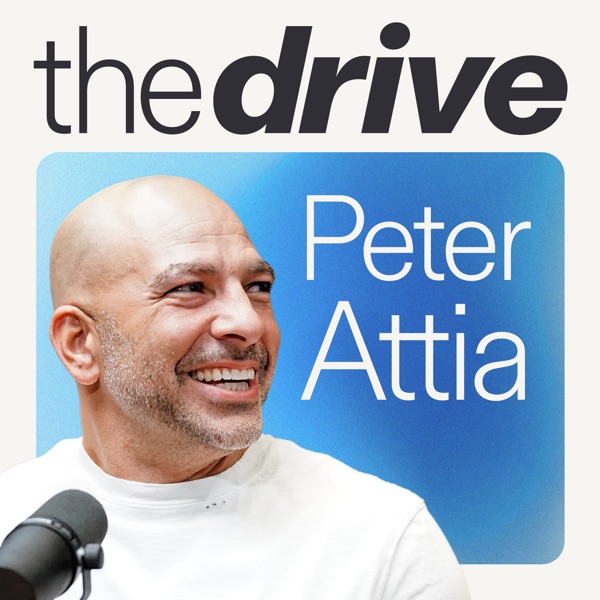
#407 ‒ Preventing cardiovascular and Alzheimer's disease: lowering LDL early, APOE4, and promising new therapies | Michael Davidson, M.D.
View the Show Notes Page for This Episode
Become a Member to Receive Exclusive Content
Sign Up to Receive Peter's Weekly Newsletter
Michael Davidson is a world-renowned cardiologist, lipidologist, and the founding CEO of NewAmsterdam Pharma. He begins this episode by sharing how his family history shaped his interest in lipidology and primary prevention. He explains why prevention should focus on causal drivers of disease rather than near-term risk and examines the causal relationship between LDL and atherosclerotic cardiovascular disease. Michael then traces the complicated history of CETP inhibitors—from the original rationale that raising HDL would reduce cardiovascular risk to the failures of torcetrapib, dalcetrapib, and evacetrapib—and explains how lessons from these trials ultimately led to the development of obicetrapib. He reviews the phase 2 and phase 3 trials of obicetrapib, its effects on LDL-C, apoB, LDL particle number, and Lp(a), the ongoing cardiovascular outcomes trial, and where the drug could fit alongside statins and other lipid-lowering therapies. Peter and Michael discuss the relationship between statins and diabetes risk, then turn to the potential role of obicetrapib in Alzheimer's disease prevention, exploring the genetics of APOE4 and CETP, cholesterol metabolism within the brain, and emerging biomarker data. Finally, Peter and Michael explore the benefits of omega-3 fatty acids and the challenge of delivering DHA to the brain, as well as ongoing work on klotho in preparation for clinical trials. They discuss the potential for AI to transform clinical trials and the scientific and financial challenges of developing new therapies for cardiovascular and neurodegenerative disease.
We discuss:
- Michael's path to lipidology, and his passion for primary prevention [3:30];
- Reframing prevention around causal drivers rather than time horizon [9:30];
- What CETP inhibition does, the evolutionary biology of CETP, the HDL-raising rationale, and Pfizer's torcetrapib failure [15:00];
- Why raising HDL is thought to be beneficial, a quick review of the functions of HDL, and how this connects to torcetrapib [24:00];
- The graveyard of CETP inhibitors: Roche's dalcetrapib, Lilly's evacetrapib, and Merck's REVEAL trial [27:15];
- The causality of LDL in cardiovascular disease [34:30];
- Reviving obicetrapib at NewAmsterdam, and confirming the benefit is LDL lowering: the TULIP data, the abandoned statin-intolerance path, and the Mendelian randomization verdict on HDL [37:30];
- Phase 2 and phase 3 trials of obicetrapib—ROSE, BROOKLYN, BROADWAY, and TANDEM—and the PREVAIL outcomes trial, with the European and US approval paths [44:45];
- Discordance among LDL-C, LDL-P, and apoB with CETP inhibition, and obicetrapib's Lp(a)-lowering effect [50:30];
- Where obicetrapib fits in the lipid-lowering toolkit, the case against high-dose statins, and the problem of drug pricing [57:30];
- The case for obicetrapib in Alzheimer's: the APOE4 and CETP genetics, the animal models, and funding Alzheimer's research [1:03:45];
- Brain cholesterol metabolism and the APOE4 mechanism: the blood-brain barrier, astrocyte cholesterol efflux, the amyloid-tau cascade, the role of HDL, and why statins don't cause Alzheimer's disease [1:08:00];
- The biomarker evidence: the CSF pilot study, Alzheimer's as a disease of middle age, the pharma graveyard problem, and the p-tau 217 results from BROADWAY [1:17:45];
- Whether obicetrapib translates into clinical benefit for Alzheimer's disease: the risk of fooling yourself, the persistence of the amyloid dogma, ARIA in APOE4 homozygotes, and the next prevention trial [1:28:00];
- Fish oil, EPA, and DHA: the cardiovascular trials and the challenge of delivering DHA to the brain [1:32:00];
- Two open problems: using AI to reform clinical trials, and the statin–diabetes signal [1:41:15];
- What it takes to develop a drug, the biotech investment landscape, and the klotho program [1:48:15];
- Closing reflections: what to do if you carry APOE4, balancing motivation against over-testing, and the need for multiple therapies [1:55:15]; and
- More.
Connect With Peter on Twitter, Instagram, Facebook and YouTube
More description
View the Show Notes Page for This Episode
Become a Member to Receive Exclusive Content
Sign Up to Receive Peter's Weekly Newsletter
Michael Davidson is a world-renowned cardiologist, lipidologist, and the founding CEO of NewAmsterdam Pharma. He begins this episode by sharing how his family history shaped his interest in lipidology and primary prevention. He explains why prevention should focus on causal drivers of disease rather than near-term risk and examines the causal relationship between LDL and atherosclerotic cardiovascular disease. Michael then traces the complicated history of CETP inhibitors—from the original rationale that raising HDL would reduce cardiovascular risk to the failures of torcetrapib, dalcetrapib, and evacetrapib—and explains how lessons from these trials ultimately led to the development of obicetrapib. He reviews the phase 2 and phase 3 trials of obicetrapib, its effects on LDL-C, apoB, LDL particle number, and Lp(a), the ongoing cardiovascular outcomes trial, and where the drug could fit alongside statins and other lipid-lowering therapies. Peter and Michael discuss the relationship between statins and diabetes risk, then turn to the potential role of obicetrapib in Alzheimer's disease prevention, exploring the genetics of APOE4 and CETP, cholesterol metabolism within the brain, and emerging biomarker data. Finally, Peter and Michael explore the benefits of omega-3 fatty acids and the challenge of delivering DHA to the brain, as well as ongoing work on klotho in preparation for clinical trials. They discuss the potential for AI to transform clinical trials and the scientific and financial challenges of developing new therapies for cardiovascular and neurodegenerative disease.
We discuss:
- Michael's path to lipidology, and his passion for primary prevention [3:30];
- Reframing prevention around causal drivers rather than time horizon [9:30];
- What CETP inhibition does, the evolutionary biology of CETP, the HDL-raising rationale, and Pfizer's torcetrapib failure [15:00];
- Why raising HDL is thought to be beneficial, a quick review of the functions of HDL, and how this connects to torcetrapib [24:00];
- The graveyard of CETP inhibitors: Roche's dalcetrapib, Lilly's evacetrapib, and Merck's REVEAL trial [27:15];
- The causality of LDL in cardiovascular disease [34:30];
- Reviving obicetrapib at NewAmsterdam, and confirming the benefit is LDL lowering: the TULIP data, the abandoned statin-intolerance path, and the Mendelian randomization verdict on HDL [37:30];
- Phase 2 and phase 3 trials of obicetrapib—ROSE, BROOKLYN, BROADWAY, and TANDEM—and the PREVAIL outcomes trial, with the European and US approval paths [44:45];
- Discordance among LDL-C, LDL-P, and apoB with CETP inhibition, and obicetrapib's Lp(a)-lowering effect [50:30];
- Where obicetrapib fits in the lipid-lowering toolkit, the case against high-dose statins, and the problem of drug pricing [57:30];
- The case for obicetrapib in Alzheimer's: the APOE4 and CETP genetics, the animal models, and funding Alzheimer's research [1:03:45];
- Brain cholesterol metabolism and the APOE4 mechanism: the blood-brain barrier, astrocyte cholesterol efflux, the amyloid-tau cascade, the role of HDL, and why statins don't cause Alzheimer's disease [1:08:00];
- The biomarker evidence: the CSF pilot study, Alzheimer's as a disease of middle age, the pharma graveyard problem, and the p-tau 217 results from BROADWAY [1:17:45];
- Whether obicetrapib translates into clinical benefit for Alzheimer's disease: the risk of fooling yourself, the persistence of the amyloid dogma, ARIA in APOE4 homozygotes, and the next prevention trial [1:28:00];
- Fish oil, EPA, and DHA: the cardiovascular trials and the challenge of delivering DHA to the brain [1:32:00];
- Two open problems: using AI to reform clinical trials, and the statin–diabetes signal [1:41:15];
- What it takes to develop a drug, the biotech investment landscape, and the klotho program [1:48:15];
- Closing reflections: what to do if you carry APOE4, balancing motivation against over-testing, and the need for multiple therapies [1:55:15]; and
- More.
Connect With Peter on Twitter, Instagram, Facebook and YouTube
Listen elsewhere
Available Results
Generated results are saved to your library for reuse and search.