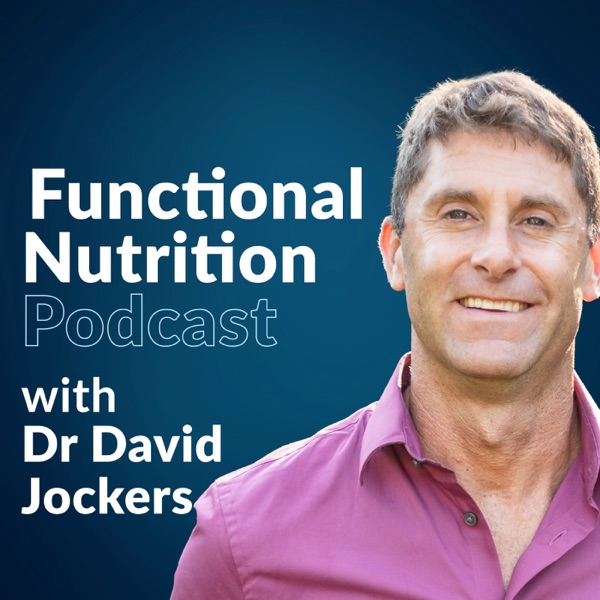
Visceral Fat Drives Up Inflammation and What You Can Do About It
Today's episode is proudly sponsored by Perfect Keto. Perfect Keto Cereal is a grain-free, keto-friendly cereal with ingredients you can actually trust. This is a treat reminiscent of your childhood, with a satisfying crunch and value-added ingredients like collagen and MCTs. They use clean, minimal ingredient formulations backed by research and obsessively tested to be keto-friendly and delicious. No gluten, soy, added sugar, fillers, chemicals, or anything artificial. Enjoy it any time, anywhere. Visit perfectketo.com/drj and use code JOCKERS at checkout to get 20% off your order today.
This episode is also proudly sponsored by C60PurplePower.com. Carbon 60 (C60) is a recently discovered, Nobel Prize-winning, super anti-oxidant that supports a healthy inflammatory response, promotes healthy immune function, and increases energy and mental clarity in most users. C60 Purple Power is the "Swiss Army Knife" of antioxidants because it helps the body replace four critical antioxidants that decrease as we age. If you are interested in healthy aging, you MUST check out C60 Purple Power! Use code DRJOCKERS for 15% OFF at https://c60purplepower.com/jockers.
In our lives, there are good fats and bad fats. The key is knowing which one to keep and which one to eliminate for good so you can achieve optimal health. Dr. Jockers gives more details about the differences between these two types of fats in this episode. Specifically, he highlights how the bad fats drive up inflammation that can lead to more serious, chronic conditions. Is it possible to finally let go of the bad fats and start feeling and looking better? Absolutely! Find out what you can do today!
"Visceral fat is a significant danger. It's increasing inflammation throughout your body and increases the risk of chronic diseases."
- Dr. David Jockers
Subscribe to the podcast on:
In This Episode:
- Which fat poses more danger to your health: visceral or subcutaneous? The answer may surprise you.
- Find out why you would NOT want to remove ALL the fats in your body!
- How fats drive up insulin resistance in your body and how you can reverse it (or just become more insulin sensitive).
- What changes erupt within your body when you consume more calories than you need? (Prepare to be motivated to change your ways!)
- Pin the blame on who is responsible when your body loses its ability to burn body fat.
- Intermittent fasting helps to effectively improve fat-burning capabilities but which fasting strategies should you try? Check out your menu of options.
Resources:
- C60 Purple Flower - Use Code JOCKERS for 15% off!
- Perfect Keto Cereal - Use Code JOCKERS for 20% off!
Connect with Dr. Jockers:
- Instagram – https://www.instagram.com/drjockers/
- Facebook – https://www.facebook.com/DrDavidJockers
- YouTube – https://www.youtube.com/user/djockers
- Website – https://drjockers.com/
- If you are interested in being a guest on the show, we would love to hear from you! Please contact us here! - https://drjockers.com/join-us-dr-jockers-functional-nutrition-podcast/
Available Results
Generated results are saved to your library for reuse and search.
Choose Template
Pick the result you want. You can review provider and model before generating.
A concise first-pass summary for understanding the episode quickly.
A comprehensive, source-grounded extraction of the reusable knowledge in an episode.
A comprehensive extraction focused on health practices, protocols, claims, and safety caveats.
A dedicated analysis of warnings, limitations, trade-offs, weak evidence, and uncertainty.
Repeatable methods, frameworks, mental models, processes, and systems.
Scientific findings, mechanisms, studies, hypotheses, and the limits of the evidence discussed.
A concise first-pass summary for understanding the episode quickly.
A detailed readable summary organized by chapter or topic.
A navigable map of subjects, topic flow, and suggested chapters.
A comprehensive, source-grounded extraction of the reusable knowledge in an episode.
Reusable atomic knowledge units extracted from the episode.
A comprehensive extraction focused on health practices, protocols, claims, and safety caveats.
A comprehensive extraction focused on opportunities, strategy, markets, and company building.
Explicit actions, next steps, habits, recommendations, and things to avoid.
A dedicated inventory of concrete resources named in the episode.
A dedicated analysis of warnings, limitations, trade-offs, weak evidence, and uncertainty.
A concise first-pass summary for understanding the episode quickly.
A detailed readable summary organized by chapter or topic.
A navigable map of subjects, topic flow, and suggested chapters.
A comprehensive, source-grounded extraction of the reusable knowledge in an episode.
Reusable atomic knowledge units extracted from the episode.
A comprehensive extraction focused on health practices, protocols, claims, and safety caveats.
A comprehensive extraction focused on opportunities, strategy, markets, and company building.
Scientific findings, mechanisms, studies, hypotheses, and the limits of the evidence discussed.
Technologies, AI models, technical methods, capabilities, limitations, and adoption implications.
Investment theses, assets, catalysts, valuation reasoning, time horizons, and risks.
Chronologies, actors, causes, consequences, turning points, and competing historical interpretations.
Policies, proposals, stakeholders, arguments, implementation constraints, and predicted effects.
Career paths, skills, hiring signals, workplace decisions, transitions, and limitations of the advice.
Behavioral mechanisms, biases, motivation, habits, emotions, interventions, and evidence limitations.
Economic mechanisms, incentives, indicators, market structure, forecasts, and uncertainty.
Leadership principles, team systems, organizational design, culture, feedback, and failure modes.
Audience, positioning, messaging, acquisition, retention, experiments, metrics, and failed approaches.
Teaching methods, learning strategies, practice, feedback, assessment, and effectiveness evidence.
Theses, premises, arguments, objections, values, thought experiments, and unresolved questions.
Communication patterns, conflict, boundaries, expectations, repair methods, and contextual limitations.
Books, papers, authors, courses, and other learning resources mentioned in the episode.
Repeatable methods, frameworks, mental models, processes, and systems.
Explicit actions, next steps, habits, recommendations, and things to avoid.
Memorable statements and important claims with attribution and source context.
A dedicated inventory of concrete resources named in the episode.
A dedicated analysis of warnings, limitations, trade-offs, weak evidence, and uncertainty.